Imagine unboxing a brand-new human hair wig. It feels incredibly silky, catches the light with a gorgeous gloss, and bounces with perfect vitality. You fall in love with it. But after just three or four washes, a devastating transformation occurs: that beautiful hair suddenly feels dry, brittle, and tangles into an unmanageable “bird’s nest” at the nape of your neck.
If you have ever experienced this “realism paradox,” you are not alone. For individuals navigating hair loss due to alopecia, chemotherapy, or genetics, choosing a premium wig is both an emotional and financial milestone. Before diving into the microscopic biology of hair processing to understand why some wigs fail while others thrive, we highly recommend reading the definitive guide to Follea wigs. This foundational resource will help you understand how selecting the right piece serves as a true investment in unmatched realism and confidence.
To make an empowered decision, you need radical transparency about how hair is sourced, processed, and crafted. Today, we are pulling back the curtain on the hair replacement industry to explain exactly what makes Follea by Daniel Alain the undisputed pinnacle of luxury—and why standard “100% human hair” labels often hide a complicated truth.
The Realism Paradox: Not All Human Hair is Created Equal
When searching for the best human hair wigs, shoppers are bombarded with marketing buzzwords like “virgin,” “Remy,” and “100% real human hair.” Naturally, you might assume that if a wig is made of real hair, it will behave exactly like your biological hair.
Unfortunately, this isn’t true. Direct-to-consumer budget brands often market their products as premium, but the reality of their manufacturing process tells a different story. To understand the gap between standard human hair and luxury European hair, we have to look at a strand of hair under a microscope.
The Biology of Hair Quality: A Quick Cosmetology Cheat Sheet
For students memorizing cosmetology terminology or shoppers trying to decode wig descriptions, here are the essential concepts that determine hair quality:
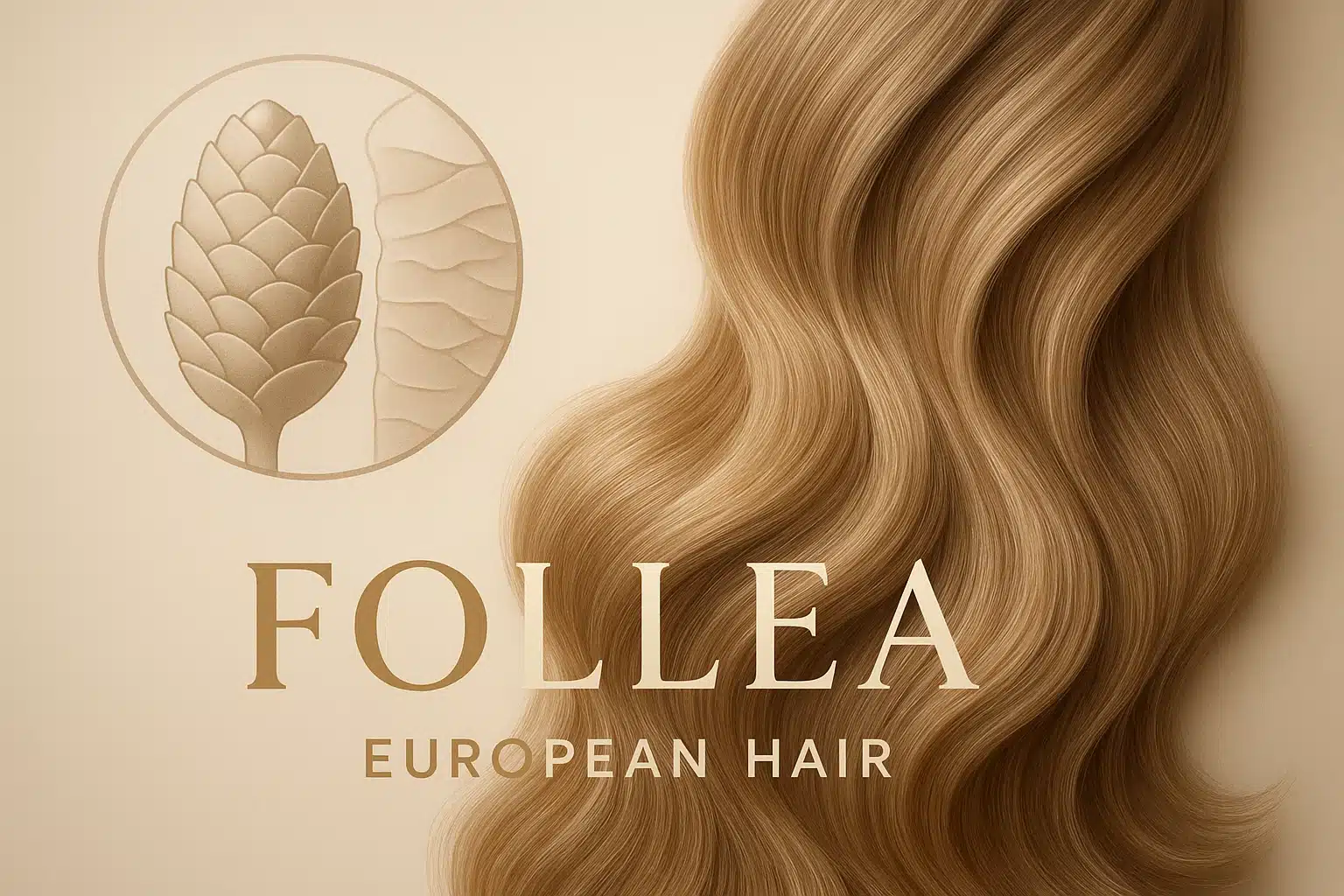
- The Cuticle (The Pinecone Analogy): Every strand of hair has a protective outer layer called the cuticle, which looks like the overlapping scales of a pinecone. When these scales lie flat and point in the same direction, the hair is smooth, reflects light beautifully, and resists tangling.
- Cuticle-Correct (Remy) vs. Fallen Hair: “Remy” simply means the hair was cut from a donor and kept in its natural alignment (root to tip). “Fallen hair” refers to hair gathered from salon floors or hairbrushes. In fallen hair, the cuticles face opposite directions, which causes immediate, severe tangling.
- Cuticle-Intact: This is the holy grail of hair quality. It means the delicate outer layer of the hair has not been chemically stripped away during manufacturing.
The “Acid-Bath” Secret vs. Follea’s Slow-Refining Process
Why do so many affordable human hair wigs lose their luster so quickly? The answer lies in a controversial industry practice known as the “acid bath.”
Standard Processing: The Silicone Illusion
Most budget-friendly human hair wigs use hair sourced from Asia or India. Genetically, this hair is beautiful, thick, and very dark. However, to mimic the fine texture and lighter colors of Caucasian hair, manufacturers must force the hair through an aggressive chemical process.
The hair is submerged in a highly concentrated acid bath to strip away the thick outer cuticle. Once the cuticle is destroyed, the hair becomes thin enough to pass for European hair, but its structural integrity is completely ruined. To hide this damage, manufacturers coat the stripped hair in industrial-grade temporary silicone. This is why cheap wigs feel deceptively soft out of the box. But once you wash the wig a few times, the silicone rinses down the drain, leaving behind dry, highly porous, cuticle-less hair that mats instantly.
The Follea Difference: Cold-Press Purification
Follea takes an entirely different, painstakingly slow approach. First, they source their premium European hair ethically from the cold-climate regions of Eastern Europe (such as Ukraine, Russia, and Belarus). The genetics of these regions yield hair with a naturally fine texture and an array of lighter shades that don’t require heavy chemical lifting.
Instead of acid baths, Daniel Alain utilizes a proprietary 20-day slow-coloration and de-colorization process. This gentle, refined method protects and preserves the natural cuticle.
The Result: Because Follea hair remains cuticle-intact, it never needs a temporary silicone coating. The softness you feel on day one is the exact same softness you will feel three years later.
Navigating the Follea Collection Matrix
Understanding the difference in hair processing makes it much easier to navigate Follea’s elite product lineup. They engineer different collections to suit varying needs, budgets, and stages of hair loss.
1. Grandeur (The Private Reserve)
This is the absolute zenith of luxury. The Grandeur collection utilizes the top 1-2% of premium, completely untreated Eastern European hair. It features zero chemical processing, offering unrivaled natural movement and longevity.
2. Chic & Style (Premium European Hair)
Featuring 100% cuticle-intact European hair, these collections feature exquisite hand-tied monofilament tops. The hair is impeccably soft, highly customizable, and moves with a fluid, natural bounce that perfectly mimics biological hair.
3. René (World Select Hair)
If you are looking for an entry point into luxury, the follea rene wig is a masterpiece of engineering. Instead of pure European hair, the René utilizes “World Select Hair”—a meticulously hand-sorted blend of premium, slightly thicker non-European hair. It undergoes Follea’s gentle refining process to mimic European movement, offering a higher-volume silhouette and incredible durability at a more accessible price point.
4. The Gripper Series (Medical-Grade Innovation)
For women experiencing complete hair loss (alopecia totalis or universalis), security is just as important as hair quality. While looking into different types of wig caps, you’ll find that many standard wigs rely on basic polyurethane strips for wigs to hold tape or adhesive. The Follea Gripper, however, uses a specialized medical-grade silicone perimeter that reacts to body heat, gripping the scalp securely without the need for any messy glues or tapes.
The Smart Buyer’s Diagnostic: How to Test Wig Quality
Whether you are browsing online or trying to find premium human hair wigs dallas shoppers and local buyers alike need to know how to verify hair quality. Here are two insider tests you can perform:
- The Finger-Slide Test: Pinch a few strands of hair between your thumb and index finger and slide your fingers from the root down to the tip. It should feel smooth. Now, slide your fingers backward from the tip up to the root. If the hair is truly cuticle-intact, you should feel a slight resistance or friction (those are the pinecone scales!). If it feels perfectly slick in both directions, the cuticle has been stripped and coated in silicone.
- The Water Droplet Test: Spray a mist of water onto the wig. Healthy, cuticle-intact hair will absorb the moisture naturally after a moment. If the water instantly beads up and rolls off like rain on a waxed car, the hair is heavily coated in synthetic silicone.
A Quick Warning About Used Wigs
Because luxury wigs are an investment, some buyers look into purchasing secondhand real hair wigs. If a wig has had its cuticles chemically stripped, buying it used is a recipe for disaster. However, because Follea’s European hair possesses extraordinary cuticle longevity, a pre-owned Follea can actually be a highly viable investment—provided the lace front and cap construction have been well-maintained.
A Quick Note for Gamers
If you stumbled upon this guide while searching for “hair wigs” for your Animal Crossing: New Horizons (ACNH) avatar, you’ve landed in the world of high-end, real-life hair replacement! While ACNH wigs are wonderfully simple to swap out digitally, our guide is dedicated to helping people navigate real-world hair loss with beautifully crafted, life-changing hairpieces.
Frequently Asked Questions (FAQ)
Why is European hair so much more expensive than Asian or Indian hair?
European hair is incredibly scarce. As global economies have shifted, fewer individuals in Eastern Europe sell their hair compared to decades past. This scarcity, combined with the hair’s naturally fine texture and the painstaking 20-day cold-press purification process required to preserve its cuticle, drives the premium price.
How does Follea compare to cheap virgin hair brands I see on social media?
Many budget direct-to-consumer brands market their hair as “virgin Remy,” but actually use multi-donor, acid-stripped, floor-swept hair. Follea provides radical transparency regarding their ethical Eastern European sourcing and their cuticle-preserving chemistry. A $200 budget wig will likely need replacing in 3 months; a Follea piece is designed to last for years.
What is the lifespan of a Follea wig?
With proper care, rotation, and the use of professional-grade hydrating products, Follea’s cuticle-intact European hair wigs (like the Chic or Grandeur) can beautifully maintain their integrity for two to three years, or even longer, drastically lowering your “cost-per-wear” over time compared to standard human hair wigs.
Your Next Steps Toward Confidence
Understanding the unmatched quality of Follea European hair fundamentally changes how you view hair replacement. You are no longer just looking at a hairstyle; you are looking at the culmination of ethical sourcing, cellular preservation, and master artisanship.
When you invest in cuticle-intact, perfectly aligned hair, you aren’t just buying a wig. You are reclaiming the natural bounce, the effortless shine, and the undeniable confidence that comes with knowing your hair looks flawlessly, authentically yours.