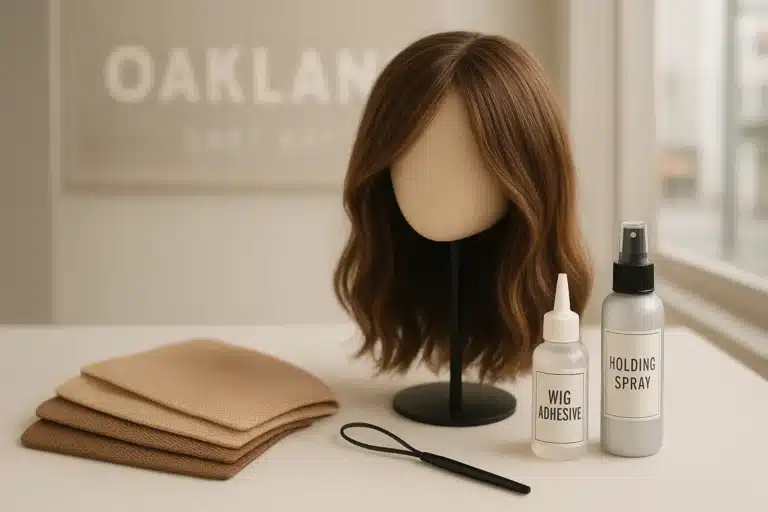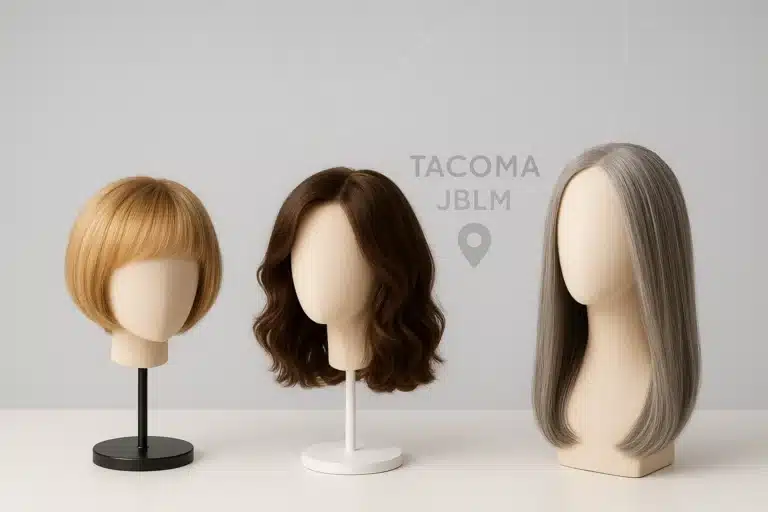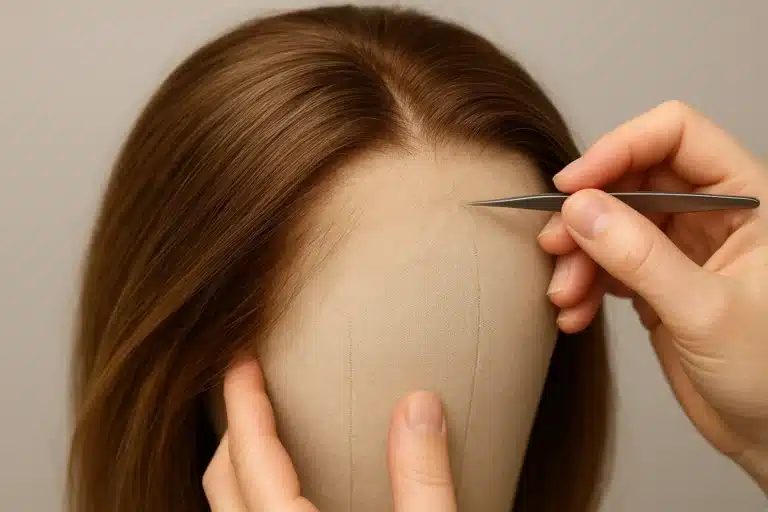
Experiencing hair loss—whether due to genetics, medical treatments, or stress—can feel incredibly isolating. When you first notice a widening part, localized thinning, or an overall loss of volume, stepping into the world of alternative hair can be an emotionally overwhelming journey. You want to touch, feel, and try on pieces in person to find what makes you feel like yourself again, but knowing exactly where to start in the Pacific Northwest can feel like a puzzle.
Fortunately, you don’t have to navigate this transition alone. Exploring local boutiques offers a level of hands-on customization, empathy, and professional guidance that online shopping simply cannot match. If you are just starting your search and want a comprehensive overview of top-tier local specialists, our guide to finding the best wig stores in Portland, OR is the perfect starting point. However, if you are specifically looking to understand the mechanics of hair toppers versus extensions—and exactly where to find the best customized solutions in the Portland metro area—this guide will help you navigate your options with confidence.
The Science of Volume: Hair Toppers vs. Hair Extensions
When researching alternative hair, toppers and extensions are often grouped together as general “hair pieces for volume.” But structurally and anatomically, they serve completely different purposes. Understanding the physics of how they interact with your natural hair is the first step in finding your perfect match.
The Physics of Tension vs. Gravity
Hair extensions consist of individual wefts, tapes, or strands designed to add volume and length to existing hair. However, extensions pull down against gravity. If you have fragile, thinning hair and place extensions too high on the scalp, this downward vertical drag can damage weakened follicles, leading to a condition called traction alopecia. Extensions are best suited for individuals with overall fine or flat hair who do not have visible scalp thinning.
Hair toppers, on the other hand, are fabric-based partial wiglets designed specifically for top-of-the-head hair loss, such as androgenetic alopecia. Because they sit on top of the head, they distribute their weight flat across the perimeter of the scalp. Instead of fighting gravity, toppers work with it, providing essential scalp camouflage while protecting your fragile roots.
The DIY Blueprint: Measuring and Choosing Your Piece
Before you book a consultation at a local boutique, it helps to understand a few fundamental concepts so you can communicate your needs effectively.
The “1-Inch Sizing Rule”
Many beginners make the mistake of measuring only the exact area of their thinning hair to size a topper. This is a critical error. If the base of your topper perfectly matches your thinning area, the clips will attach directly to miniaturized, weakened follicles, causing further damage. Your topper’s base must extend exactly one inch past the thinning area so the clips can safely secure into dense, healthy, strong hair.
The Multi-Base Selector
When you walk into a boutique, you’ll hear terms like “silk,” “lace,” and “monofilament.” Here is a simple rule of thumb for base constructions:
- Silk Base: Best for mimicking an ultra-realistic part line. The hair is injected through a layer of silk, making it look exactly like your natural scalp.
- Monofilament Base: Best for lightweight breathability. Each hair is hand-tied to a sheer, mesh material, allowing you to part the hair in multiple directions.
- Lace Base: Best for an invisible, flat-laying front hairline, particularly if your thinning extends to the very front of your head.
Synthetic vs. Human Hair in the Pacific Northwest
Conventional wisdom often states that human hair is always superior. However, Portland’s damp, rainy climate adds a layer of complexity. 100% Remy Human Hair is beautiful and highly customizable, but just like your bio-hair, it will react to moisture by dropping its style or frizzing in the drizzle. High-quality synthetic hair, while having a shorter lifespan, features “style memory.” It will hold its blowout or curl perfectly, even on the rainiest Oregon days.
Local Spotlight: Navigating Portland’s Premier Boutiques
National retailers offer great educational charts, but they cannot custom-cut a piece to match your face shape or custom-color a topper to flawlessly blend with your biological hair. Here is a curated directory of Portland’s top specialists:
Maven Wigs (Lake Oswego)
14547 Westlake Dr., Suite A, Lake Oswego, ORFounded by Jennifer Noble, Maven Wigs offers high-empathy, medical-grade focus in private, confidential 1-on-1 suites. They specialize in custom-cut, beautifully styled 100% premium virgin human hair pieces designed to last three or more years. Because of their deeply personalized approach, visits are by appointment only.
PDX Hair Extensions (Pearl District)
1801 NW Upshur St., Portland, OR 97209If you are looking for luxury transformation and modern integration, this salon is a standout. They are the only local salon specializing exclusively in ethically sourced, hand-tied toppers (avoiding bulky sewn-in wefts). They utilize a highly customized “hybrid method,” expertly blending toppers with loop or weft extensions for clients with fine, delicate hair seeking ultimate volume.
Brenda Kay Hair Specialties (Downtown Portland)
1975 SW 1st Ave. Ste. A, Portland, OR 97201With over 40 years of local expertise, Brenda Kay is a pillar in the medical hair loss community. Offering a compassionate, therapeutic environment, they provide both custom and pre-manufactured synthetic and human hair pieces. A major benefit is their rapid 24-hour turnaround for piece cleaning and styling.
Wigland (Hollywood District)
4124 NE Broadway, Portland, OR 97212Wigland provides a robust, full-service retail experience with vast synthetic and human hair collections. Beyond their cleaning and repair services, they offer a standard 10% medical discount for clients experiencing hair loss from medical treatments, making them a highly accessible option for those undergoing chemotherapy or managing alopecia.
Preparing for Your First Consultation
The “Mid-Shaft” Color Matching Rule
When you meet with a stylist, they will help you color-match your piece. A common beginner mistake is trying to match the topper exactly to your roots or your tips. Because a topper sits over the crown and drapes down, the most critical blend point is actually the mid-shaft of your natural hair.
Questions to Ask Your Stylist
Walk into your appointment empowered with the right questions:
- “Will you pluck the hairline of this topper so it matches my natural hair density?”
- “Can you dye this human hair topper to match my mid-shaft highlights?”
- “What is the true cost of custom-cutting and future maintenance intervals?”
The “Safe-Clip” Scooping Technique
While at the salon, ask your stylist to teach you the “scooping” method for attachment. Beginners often snap clips straight down onto their scalp, which can pinch and cut off circulation to the follicle. Instead, you should leave the clip open, slide it horizontally into a dense section of bio-hair (scooping it up), and then snap it shut to distribute the weight safely.
Navigating Insurance: The “Cranial Prosthesis”
If you are experiencing medical hair loss, ask your Portland dermatologist or oncologist to write a prescription for a “cranial prosthesis” rather than a “wig.” Many insurance providers will cover anywhere from 80% to 100% of the cost of your topper or hairpiece when it is billed under this specific medical terminology.
Frequently Asked Questions
Can I safely pair a clip-on topper with extensions?
Yes, this is known as a hybrid method. If you have significant crown thinning but also want length, a topper provides the scalp coverage, while lightweight hand-tied or loop extensions (placed safely below the thinning zone) provide the length. Salons like PDX Hair Extensions specialize in this exact integration.
How do I know if I need a topper or a full wig?
This comes down to the health of your biological hair. If your hair loss is isolated to the part line and crown, and the hair on the sides and back of your head is strong enough to support clips, a topper is ideal. If your hair loss is diffuse (all over) or the remaining hair is too fragile to hold clips, a full wig is the safest, most comfortable choice.
Do I have to shave my head to wear a topper?
Absolutely not. Toppers are designed to integrate seamlessly with your existing biological hair. You simply clip them in over your natural hair, allowing your bio-hair to flow freely underneath and blend with the piece.
Your Next Steps
Finding the perfect alternative hair solution is rarely a one-click online purchase; it is a highly personal, tactile experience. By understanding the structural differences between toppers and extensions, measuring safely, and knowing exactly what to ask, you are already steps ahead on your journey.
We encourage you to reach out to one of Portland’s incredible local boutiques. Book a consultation, feel the different base materials, and talk to a compassionate professional who understands exactly what you are going through. Reclaiming your confidence is a beautiful process, and with the right knowledge, your perfect hair day is entirely within reach.