There is a profound shift happening in the world of hair fashion. Embracing grey, silver, and platinum tones is no longer viewed as simply a part of aging; it has become a bold, chic, and highly sought-after aesthetic. But if you have ever tried to find a natural-looking grey wig, you already know the frustrating reality: navigating the transition is incredibly complex. The line between a stunning, dimensional silver and an artificial, flat-looking hairpiece is remarkably thin.
Whether you are gracefully transitioning your natural hair, managing medical hair loss, or simply looking to experiment with a sophisticated salt-and-pepper look, finding the perfect shade requires more than scrolling through online photos. If you want a piece that truly looks and feels like you, exploring the best wig stores in San Jose, CA is an essential starting point. Local boutiques allow for hands-on, realistic tone-matching under natural light—a crucial step in bridging the gap between abstract color charts and a tangible, confidence-boosting reality.
Let’s demystify the science of grey wigs, decode complex color charts, and explore exactly how to find the perfect silver match in the heart of Silicon Valley.
The Technical Realities of Grey Hair: Why “Realistic” Can Be Hard to Find
When shopping for high-quality wigs, most beginners instinctively assume that 100% human hair is always the superior choice. However, the world of grey and silver hair operates by a completely different set of rules. Understanding this “aha moment” can save you from a costly mistake.
The Challenge with Grey Human Hair
Genuine, natural grey human hair is incredibly scarce on the donor market. To create grey or silver human hair wigs, manufacturers typically have to take dark donor hair and aggressively bleach it. This intense chemical process strips the hair of its natural pigments, which often damages the hair cuticle. Over time, bleached human hair tends to oxidize, causing those beautiful icy silvers to turn a brassy, unwanted yellow. Maintaining it requires a strict regimen of purple shampoos and constant color-toning.
The Synthetic Advantage
For grey and silver tones, high-quality synthetic fibers—like advanced Kanekalon or heat-defiant (HD) synthetics—are often technically superior. Why? Because the color is baked directly into the fiber during manufacturing. A premium synthetic silver wig will hold its brilliant, cool tone permanently without ever fading to yellow. Plus, it maintains its style memory, meaning your chic bob or layered pixie will bounce right back into shape after a wash.
Demystifying Dimension: Avoiding the “Costume Trap”
Have you ever looked at a grey wig and instantly thought it looked “fake” or “wiggy”? That is usually because it lacks multi-tonal dimension.
Natural white hair actually has zero melanin (pigment). When our hair goes grey, it doesn’t all lose pigment at the exact same time; the white strands grow right alongside our darker, pigmented hair. A wig that uses only one uniform shade of grey will always look artificial.
Premium wig makers achieve realism by utilizing precise percentage blends. They also use a technique called “shaded roots” (often denoted by an ‘S’ or ‘SS’ in the color name). Because natural hair tends to be darker at the root and lighter at the ends, a wig with a slightly smudged, darker root perfectly mimics the illusion of natural biological hair growth.
Decoding Wig Color Charts Like a Pro
Walking into a wig boutique and looking at a wall of color codes can feel like reading a foreign language. Here is a quick cheat sheet to help you read brand formulations like a seasoned stylist, using industry-leading codes from brands like Jon Renau and Ellen Wille:
- Classic Salt-and-Pepper (e.g., Jon Renau #51 – Licorice Twist): This is a precise blend of 70% light grey mixed with 30% dark brown. It offers deep, realistic contrast.
- Warm, Soft Grey (e.g., Jon Renau #56 – Vanilla Marble): This blends light grey with about 20% medium brown, producing a much warmer, softer grey.
- The Realistic Ombre (e.g., Jon Renau #92 – Moonlight Cool): A highly complex gradient that starts with a bright silver-grey at the front hairline, transitions to a stormy mid-grey, and deepens to a dark brown with 65% grey at the nape of the neck—exactly how natural hair grays.
- Pearly Metallics (Ellen Wille Silver Mink & Sandy Silver): These feature cool, pearly tones blended with soft ash-blonde to prevent the wig from looking stark white or flat.
Matching Your Skin Undertone
- Cool Undertones: If your skin has pink or blue undertones (and your veins appear blue), steer toward icy silvers, pure whites, and pearl mist tones.
- Warm Undertones: If you have olive or yellow undertones (and your veins appear green), look for pewter, sandy silver, and soft ash-blonde blended greys like Vanilla Marble.
Cap Mechanics: The Secret to a Natural Hairline
Color is only half the battle; construction is the other. If you are transitioning, these two features are non-negotiable for a realistic look:
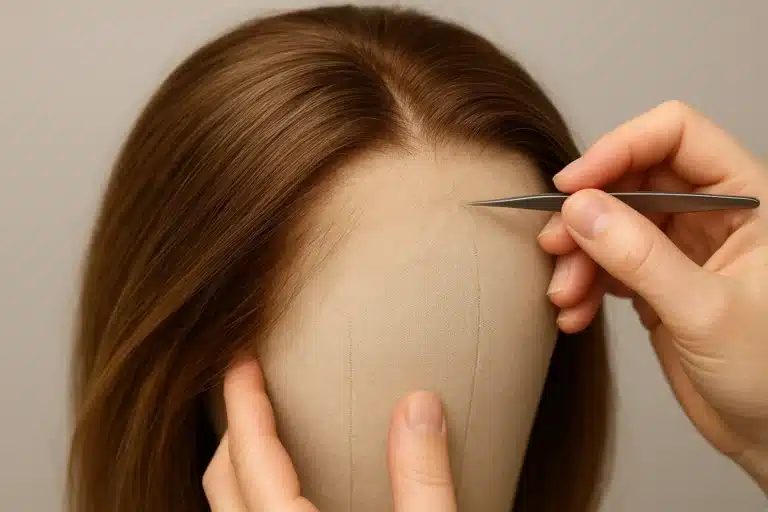
- The Monofilament Top: Instead of being machine-sewn into rows, each individual hair fiber is hand-tied to a soft, sheer micro-mesh. This mimics a real human scalp, allowing you to part the hair anywhere you like.
- The Lace Front: A sheer, nearly invisible lace material at the front of the wig that creates a seamless, natural-looking hairline, allowing you to wear the hair pulled back off your face.
Navigating San Jose’s Local Wig Ecosystem
Buying online often leads to high return rates because grey tones shift radically under different lighting. The artificial fluorescent lights of a studio or a big-box store can make a wig look entirely different than it does in the bright, natural California sun.
This is why the “San Jose Natural Light Test” is crucial. Here are some of the standout local spots where you can view swatches and get personalized help:
- Couture Hair Supply (Willow Glen – 1070 Lincoln Ave): A premium boutique offering private, highly personalized consultations. They are certified carriers of high-end brands and their staff is trained to walk transitioning clients through complex cap constructions to blend seamlessly with existing biological grey hair.
- Join US Beauty Supply (1405 W San Carlos St) & Brittney’s Beauty Supply (1260 S Bascom Ave): These staples offer immense inventories of budget-friendly synthetic options. They are excellent spaces for beginners who want to test out different lengths, cuts, and initial salt-and-pepper styles before investing in a premium piece.
- New Look Institute (1190 S Bascom Ave, Ste 239): For those dealing with progressive thinning rather than just seeking fashion wigs, this clinical center features certified Trichology Practitioners. They design custom medical systems that can be color-matched strand-by-strand to your biological silver growth.
Your First Fitting Blueprint
Ready to find your perfect silver shade? Here is a simple, actionable blueprint for your first boutique visit:
- Book a Private Consultation: Call ahead to boutiques like Couture Hair Supply to secure a private room. This eliminates showroom anxiety and allows for a comfortable, educational experience.
- Wear Your Daily Makeup: Showing up with your everyday makeup ensures that the grey tones you choose will naturally complement your day-to-day complexion.
- Request the Swatch Rings: Ask to see the physical color rings for the specific codes you’re interested in (like 51, 56, or 92).
- Do the Natural Light Test: This is the most critical step. Ask to view the wig or the color swatch near a window or an open-air courtyard. Synthetic indoor lights can cast unnatural violet or blue glares on silver wigs; natural sunlight will reveal the true color.
Frequently Asked Questions
Why do some grey wigs look like plastic?
Inexpensive novelty wigs use thick polyester fibers that reflect too much light, creating a plastic shine. High-quality synthetic wigs use advanced, finely spun fibers and multi-tonal color blending to mimic the natural texture and light absorption of real hair.
Are grey wigs heavy or uncomfortable?
Not at all. Modern premium wigs are incredibly lightweight. Open-wefted caps provide excellent ventilation, and hand-tied monofilament caps offer a soft, comfortable fit that feels weightless on the scalp.
How do I care for a synthetic silver wig?
Maintenance is surprisingly simple. Wash it every 6-8 wears using a sulfate-free shampoo specifically designed for synthetic hair. If it is a heat-friendly synthetic, always keep your styling tools below 300°F. Finally, use a UV-protectant spray to keep those silver tones bright and vibrant.
Next Steps on Your Silver Journey
Stepping into a stunning grey or silver style should be an empowering experience. By understanding the advantages of synthetic fibers, decoding multi-tonal color charts, and utilizing the expertise of local San Jose boutiques, you are well on your way to finding a hairpiece that looks beautifully, undeniably real.
Remember, you aren’t just shopping for a wig—you are investing in how you feel when you look in the mirror. Take your time, lean on the expertise of compassionate local professionals, and embrace the beautiful dimension of the silver revolution.