Navigating hair loss is a deeply personal journey, one that often requires immense resilience and support. For many in our community, that journey involves investing time and emotional energy into finding the perfect hairpiece. Whether navigating chemotherapy, managing alopecia, or experiencing natural thinning, residents often seek out the best wig stores in Salt Lake City, UT to find a style that helps them feel confident and completely themselves again.
But what happens when that wig is no longer needed? For many survivors and those transitioning to a new phase in their hair journey, holding onto an unused wig feels unnecessary, but throwing it away feels wasteful. You want to pass on that feeling of confidence to someone else in need, or at the very least, dispose of it responsibly. Unfortunately, discovering exactly how to do that locally can quickly become a frustrating maze of confusing regulations, rejected donations, and misunderstood hygiene standards.
If you’ve been wondering where to drop off a gently used wig or how to responsibly recycle a worn-out synthetic piece in Salt Lake City, you aren’t alone. Let’s demystify the process and explore exactly how you can turn your hairpieces into a beacon of hope or a win for the environment.
The Local Reality: Why Hospitals Can’t Accept Your Used Wig
It’s a common scenario: a well-meaning donor drives up to a world-class local facility like the Huntsman Cancer Institute, a gently used, high-quality wig in hand, only to be politely turned away.
This rejection often leaves donors feeling confused. Don’t cancer patients need wigs? They absolutely do. However, the barrier isn’t a lack of need; it’s a matter of strict medical hygiene.
Due to FDA guidelines and severe sanitization liabilities, medical centers and hospital-run assistance programs can only distribute brand-new, unworn wigs to immunocompromised patients. Used wigs carry microscopic risks, and local hospitals simply do not have the specialized, professional-grade sterilization equipment required to process pre-owned hairpieces. Similarly, local thrift stores like Deseret Industries generally reject used wigs for hygiene reasons.
Understanding this “hygiene bottleneck” is your first step. By knowing that local drop-offs for used wigs aren’t an option, you save yourself a wasted trip and can instead pivot to the specialized programs that do know exactly how to handle them.
Demystifying Your Options: Hair vs. Wigs vs. Recycling
A major point of confusion for generous donors is the terminology used online. To figure out your next steps, you need to determine which of these three paths fits your situation:
- Path A: Hair Donation: You are cutting your own natural hair (a ponytail or braid) to be manufactured into a new wig.
- Path B: Used Wig Donation: You have a gently worn, pre-constructed wig (synthetic or human hair) that needs professional sanitization before being given to a new owner.
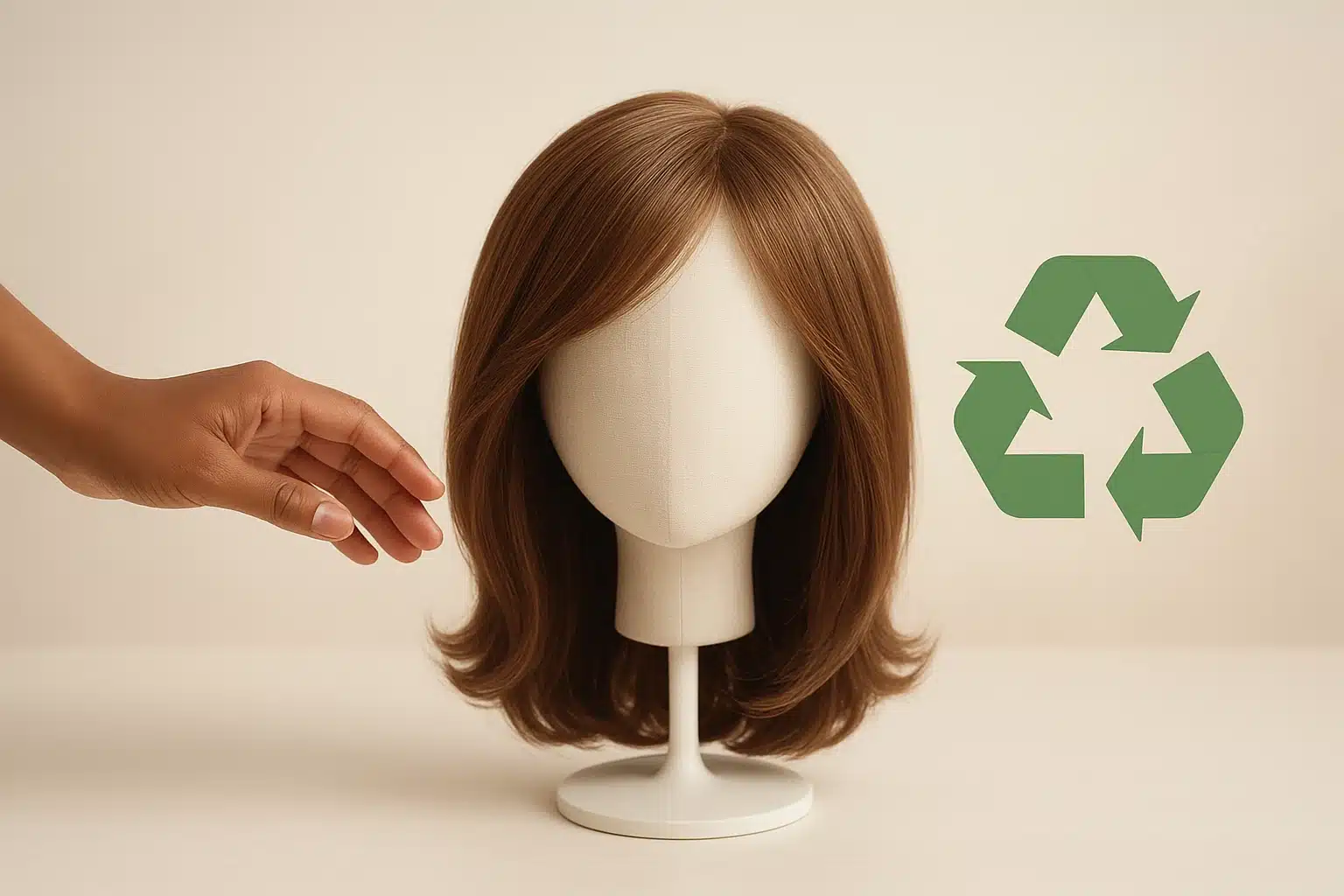
- Path C: Eco-Recycling: You have a synthetic wig that is completely worn out, frizzy, or damaged, and you want to keep its plastic fibers out of Utah’s landfills.
Where to Donate Hair in Salt Lake City (The “Ponytail” Route)
If you are looking to donate your own growing hair, Salt Lake City has several wonderful salon partners equipped to measure, cut, and properly bag your ponytail for national charities.
- Landis Lifestyle Salon (1298 S 900 E): Located near Liberty Park, this is a premier local partner for Wigs for Kids. They understand the exact requirements (such as not accepting color-treated hair) and will handle the structural cut perfectly.
- Jed’s Barber Shop (900 S): A local favorite that has built a reputation for carefully braiding, cutting, and bagging hair specifically for Locks of Love.
- Great Clips (Multiple SLC Locations): Many local franchises offer a complimentary cut-and-prep for eligible donors submitting to major hair replacement charities. Just be sure to call your specific location ahead of time.
Pro Tip: Before you chop, check your length! Different charities have different minimums. Visual markers matter: 8 to 10 inches is typically the bare minimum, while 12 to 14 inches is heavily preferred by organizations making full wigs for children.
How to Donate Gently Used Wigs (Mail-In Restoration)
Since local hospitals can’t accept your pre-owned wig, the absolute best way to pass it on is through national mail-in registries. These incredible organizations collect gently used wigs, professionally sanitize and restore them, and then distribute them free of charge to women battling cancer nationwide.
Top Trusted Mail-In Organizations:
- EBeauty Community: The gold standard for used wig restoration. They accept both synthetic and human hair wigs in good condition.
- The Wig Exchange: An excellent program that connects donated wigs with women undergoing chemotherapy.
- Hairs 2 U Wig Bank: While they focus heavily on new/unused inventory, they are a fantastic resource if you bought a wig, left the tags on, and never wore it.
The Hygiene Checklist: Preparing Your Wig for the Mail
If you send a damp or improperly cleaned wig in a dark cardboard box, it will quickly develop mold during transit and be immediately thrown away. To ensure your donation actually makes it to a patient, follow this strict “Double-Wash, Zero-Product, Air-Dry” protocol:
- The Deep Wash: Wash the wig thoroughly using a mild or weakly acidic wig-safe shampoo.
- No Styling Products: Do not add hairspray, leave-in conditioners, or styling gels after washing. The hair needs to be completely bare.
- 100% Air-Dry: This is non-negotiable. Let the wig air-dry completely on a stand for a full 24 to 48 hours. Even a trace of moisture can ruin the wig in a shipping box.
- Packaging: Place the fully dry wig inside a sealed Ziploc bag, then put it into a bubble mailer or shipping box.
- The Processing Fee: Organizations like EBeauty request a $20 tax-deductible donation included in your package. This is crucial—it covers the cost of the professional, medical-grade sterilization process that makes it safe for an immunocompromised patient to wear.
Sustainable Wig Recycling in SLC (Eco-Friendly Options)
What if your wig has seen better days? Synthetic wigs are incredibly popular because they hold their style so well, but they are ultimately made of synthetic polymers (plastics). If you throw them away, they sit in a landfill for centuries.
Unfortunately, you cannot put a synthetic wig in your blue Salt Lake City recycling bin. The thin plastic fibers will instantly tangle and clog the mechanical sorting machines at municipal recycling plants.
Instead, we look to the beauty industry’s eco-warriors: Green Circle Salons. These certified facilities specialize in diverting up to 98% of beauty waste—including synthetic hair fibers—from local landfills.
Local SLC Eco-Recycling Drop-offs:
- Switch Salon (Country Club Plaza, SLC): A certified Green Circle Salon equipped to handle beauty waste and styling plastics.
- Satellite Salt Lake City (The Avenues, SLC): Another fantastic local champion of sustainability that processes beauty waste properly.
Alternatively, you can utilize a TerraCycle Beauty Box. TerraCycle is a mail-in program that specializes in melting down complex synthetic polymers (like old wigs) and repurposing the plastic into durable goods like park benches and shipping pallets.
Tax Deductions and Financial Guidelines
Generosity pays off in more ways than one. When you donate a wig to a registered 501(c)(3) charity, your donation is tax-deductible.
It is up to you (not the charity) to determine the “Fair Market Value” of your used wig. A general rule of thumb is to evaluate what a thrift store would charge for the item in its current condition. Keep in mind that if you are claiming a deduction of over $500 for a high-end human hair wig, the IRS requires a professional appraisal. Always print and include the charity’s official donation form in your package so they can mail you a receipt for your tax records.
Frequently Asked Questions (FAQ)
Does the American Cancer Society (ACS) in Utah take used wigs?
No, they do not accept used wigs directly. The American Cancer Society Utah Chapter operates several free wig closets across the state, but they only distribute brand-new, manufacturer-donated wigs. However, they highly recommend mailing your gently used wigs to their partner, the EBeauty Community.
Can I track who gets my donated hair or wig?
Usually, no. Due to HIPAA laws and patient privacy, most organizations cannot connect donors directly with recipients. However, some hair-donation organizations, like Hair We Share, offer a “Ponytail Tracking” program for a small fee, allowing you to see the final wig crafted from your hair.
Can I donate human hair wigs that have been permanently dyed?
For used wig donations (mailing in an already constructed wig), lightly colored human hair wigs are generally accepted as long as they are still healthy and not severely chemically damaged. However, if you are donating raw ponytails, most charities will reject hair that has been bleached or heavily color-treated, as it cannot survive the intensive chemical processing required to make a new wig.
Why do I have to pay a sorting fee to donate?
It might feel counterintuitive to pay to give something away, but this fee is the lifeblood of these charities. It costs money to professionally sanitize, re-style, package, and ship a wig safely to a cancer patient. Your small processing fee ensures the wig doesn’t just sit in a warehouse, but actually makes it to a woman in need safely.
The Next Step in Your Journey
Whether you are preparing to cut off a long ponytail at a salon in The Avenues, washing a gently used synthetic piece for its journey to a mail-in restoration center, or responsibly recycling a well-loved topper to keep Utah beautiful, you are making a profound difference.
Hair loss is a delicate transition, but the lifecycle of a hairpiece doesn’t have to end when you no longer need it. By taking a few extra moments to route your wig to the right place, you’re not just clearing out your closet—you’re extending compassion to a stranger, protecting our local environment, and wrapping up your own hair journey with an act of profound kindness.