Picture this: you step out of a cozy coffee shop in the Pearl District, perfectly styled and feeling incredibly confident. Suddenly, you’re met by that famous, unpredictable Oregon drizzle. If you’re wearing a wig, the material you chose is about to be put to the ultimate Pacific Northwest weather test. Whether you are navigating medical hair loss or simply looking to expand your style versatility, stepping into the world of alternative hair is a deeply personal and sometimes overwhelming journey.
Before you can confidently choose the right piece, you need a reliable roadmap for finding the best wig stores in Portland that align with both your budget constraints and styling needs. Choosing between fibers isn’t just about price; it’s a decision grounded in science, daily maintenance, and how your hair reacts to the environment around you. Let’s demystify these options so you can make an empowered, educated choice.
The Portland Weather Impact: Why Geography Matters for Your Hair
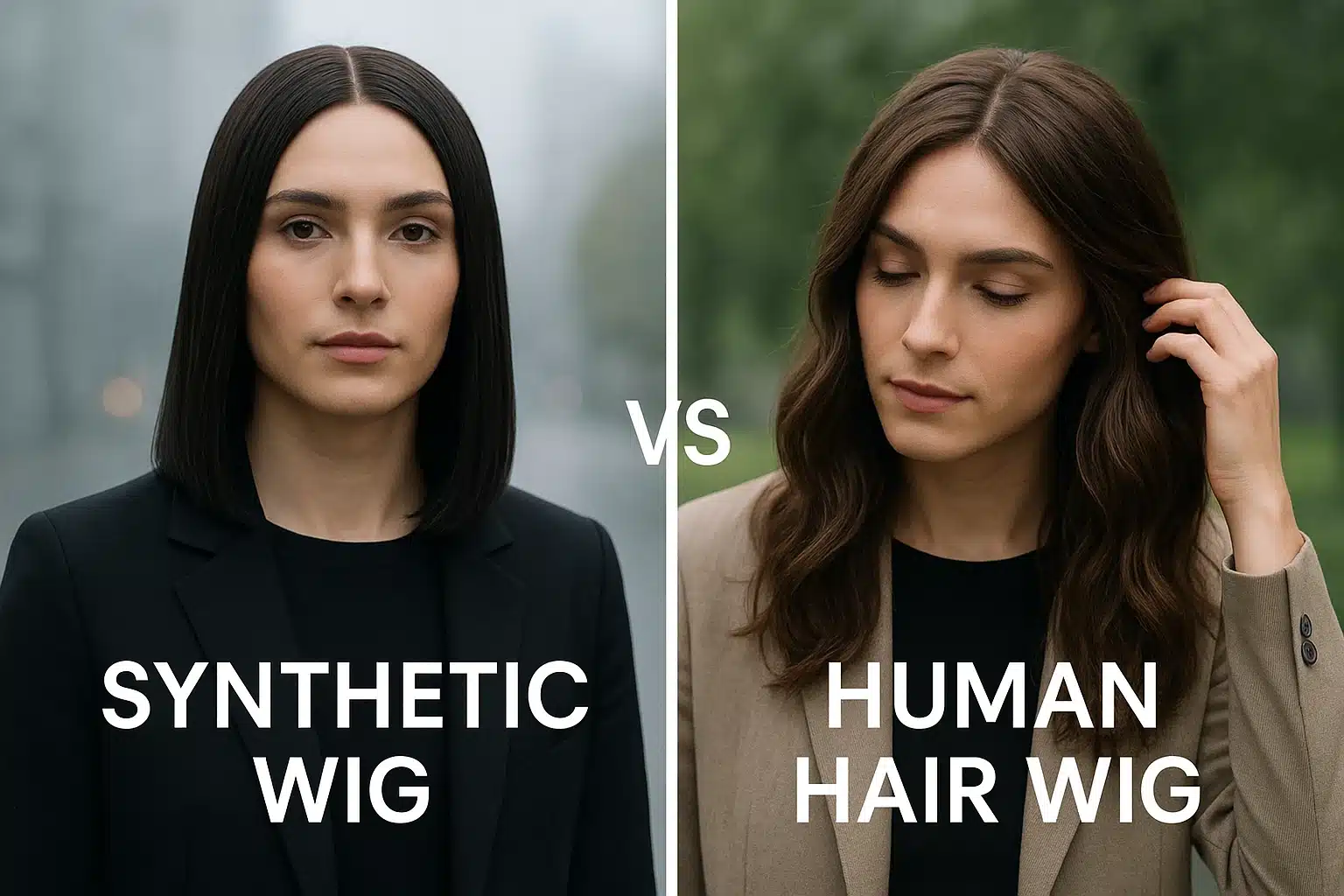
When it comes to alternative hair, we rarely think about how local geography dictates our choices. But in the Portland Metro area, with our nine months of misty rain, high humidity, and overcast skies, the climate is actually a deciding factor in the great debate of human hair vs synthetic wigs.
The Physics of “Style Memory”
Synthetic hair is crafted from modacrylic fibers that are baked and heat-set during manufacturing. This process gives synthetic wigs permanent “style memory.” If you get caught in a sudden downpour near the Columbia River Gorge, a synthetic wig will literally shrug off the water. Once it dries, it returns exactly to its pre-styled curl or straight pattern without you lifting a finger.
Human hair, on the other hand, relies on hydrogen bonds—just like biological hair. When human hair is exposed to Portland’s ambient moisture or rain, those bonds break and reform. That beautiful, salon-quality blowout you spent an hour perfecting will absorb the humidity, fall flat, and likely frizz. If you want the unmatched realism of human hair in the PNW, you must be prepared for the daily styling commitment that comes with it.
The Fiber Spectrum Simplified
Walking into a store without understanding fiber technology is like buying a car without knowing if it takes gas or electricity. Here is a simplified breakdown of what you’ll encounter on the shelves.
- Standard Synthetic: Budget-friendly, vibrant, and incredibly low maintenance. These wigs retain their shape flawlessly but will melt if exposed to heat tools or even a blast of steam from your oven.
- Heat-Friendly Synthetic: These fibers allow you to use curling irons and flat irons on low heat settings. However, there is a catch: heat-friendly fibers are actually more fragile than standard synthetics and tend to have a shorter overall lifespan due to fiber friction.
- Human Hair: Offering the most natural movement, texture, and longevity. The best human hair wigs are meticulously hand-tied and can be custom-colored, cut, and heat-styled just like your own hair.
- Blends: A mixture of human hair and heat-friendly synthetic fibers, designed to offer the natural feel of human hair with the style-retaining benefits of synthetic.
The Cost-Per-Wear (CPW) Formula
Beginners are often shocked by the price gap between materials. Rather than looking at the sticker price, it helps to calculate the Cost-Per-Wear (CPW) to understand the true value of your investment:
Cost-Per-Wear = (Upfront Cost + Maintenance Products) ÷ Lifespan in Days of Wear
- Scenario A: You buy a $300 synthetic wig that you wear daily. It lasts 4 months (120 days). Your CPW is $2.50 per day.
- Scenario B: You invest in a $1,200 human hair wig. With proper care, it lasts 2 years of daily wear (730 days). Your CPW is $1.64 per day.
The “Nape-Burn” Phenomenon: A Warning for Beginners
If you are leaning toward a synthetic wig, there is a critical piece of science you need to know about: friction wear.
Often referred to in the community as “nape-burn,” this happens when long synthetic hair rubs against your collar, scarves, or winter coats. The combination of your body heat and the mechanical friction causes the plastic fibers at the neckline to fray, tangle, and permanently crimp.
A long, shoulder-length synthetic wig might show signs of severe friction wear in just three to four weeks of daily use. Conversely, a short synthetic pixie cut that sits above the collar can easily look pristine for over a year. If you want long flowing locks that will last, human hair is generally the more durable long-term choice.
The Portland Store Inventory & Experience Matrix
The Portland market is wonderfully diverse, but highly fragmented. Finding the right wig store portland residents trust comes down to what specific inventory and experience you are looking for. Here is how the local landscape breaks down:
For the Broad Browser: Wigland
Located on NE Broadway, Wigland has been a staple since 1984. They are an excellent starting point if you want to see a massive variety of colors and styles in person. They offer a more traditional retail browsing experience and provide medical hair-loss discounts, making them a solid choice for exploring standard synthetic options.
For Custom Medical Prostheses: Brenda Kay Hair Specialties
If you are looking for top-tier, custom-molded human hair, Brenda Kay is highly regarded. Their expertise shines when explaining the nuanced differences between processed Indian hair and virgin European hair. Their environment is geared toward high-end, bespoke solutions rather than budget-friendly fashion synthetics.
For Empathetic Consultations: Coco’s Hair Solutions
Based in Hillsboro, Coco’s is a standout for individuals experiencing medical hair loss who require privacy and empathy. Run by a certified specialist who is also a wig wearer, they operate by appointment to provide private, one-on-one consultations. They are an excellent resource for high-quality, reputable brands like Jon Renau and Raquel Welch.
For Budget-Friendly Fast Fashion: Mid-K Beauty Supply
If you are dipping your toes into the wig world for cosplay, drag, or affordable fashion versatility, local community insights frequently point to Mid-K. They are a primary source for budget-friendly synthetic lace fronts in the $50–$100 range.
The First-Time Buyer’s Consultation Checklist
When you finally sit down in a stylist’s chair at a local boutique, use this checklist to guide your consultation:
- “Can I see how this fiber moves in natural light?” (Store lighting can drastically alter the appearance of synthetic shine).
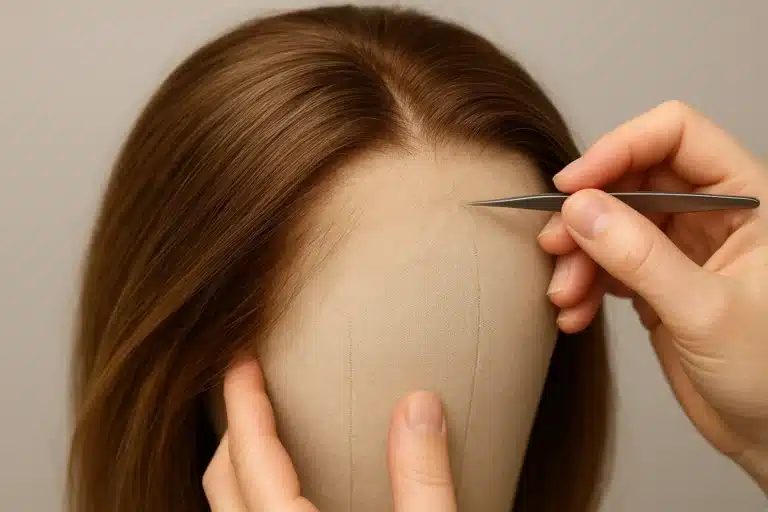
- “What is the cap construction?” (Ask if it is a basic wefted cap, a lace front for a natural hairline, or a monofilament top for realistic hair parting).
- “Do you offer cap alterations?” (A high-quality store will tailor the wig cap to the exact circumference of your head for security).
- “Can we go over the maintenance routine for this specific fiber?” (Never leave a store without knowing exactly how to wash your new piece).
Frequently Asked Questions (FAQ)
Can people tell if I am wearing a synthetic wig?
Not if it’s a high-quality piece! Modern synthetic wigs feature lace fronts that mimic a natural hairline and monofilament tops that look exactly like a real scalp. The giveaway is usually an overly shiny fiber, which can be remedied with a quick dust of dry shampoo.
Why are human hair wigs so much more expensive?
Creating a premium human hair wig is incredibly labor-intensive. Beyond the high cost of ethically sourcing virgin hair, skilled artisans must hand-tie up to 100,000 individual strands into the lace cap. It is a meticulous process that takes days to complete.
How do I test if a wig is human or synthetic?
If you ever buy second-hand and need to verify the fiber, professionals use the “Burn Test” on a tiny snippet of hair. Human hair burns cleanly to ash and smells like a campfire or burning feathers. Synthetic hair melts into a hard, plastic bead and emits a harsh chemical smell.
Your Next Steps
Choosing between human hair and synthetic fibers isn’t about finding the “best” material—it’s about finding the material that is best for your lifestyle, your budget, and the Portland climate you live in.
Take your time. Browse local inventories online, schedule a private consultation when you feel ready, and don’t hesitate to ask questions. Armed with an understanding of fiber science, cost-per-wear, and local store specialties, you are already well on your way to finding a piece that makes you feel beautiful, comfortable, and entirely yourself.