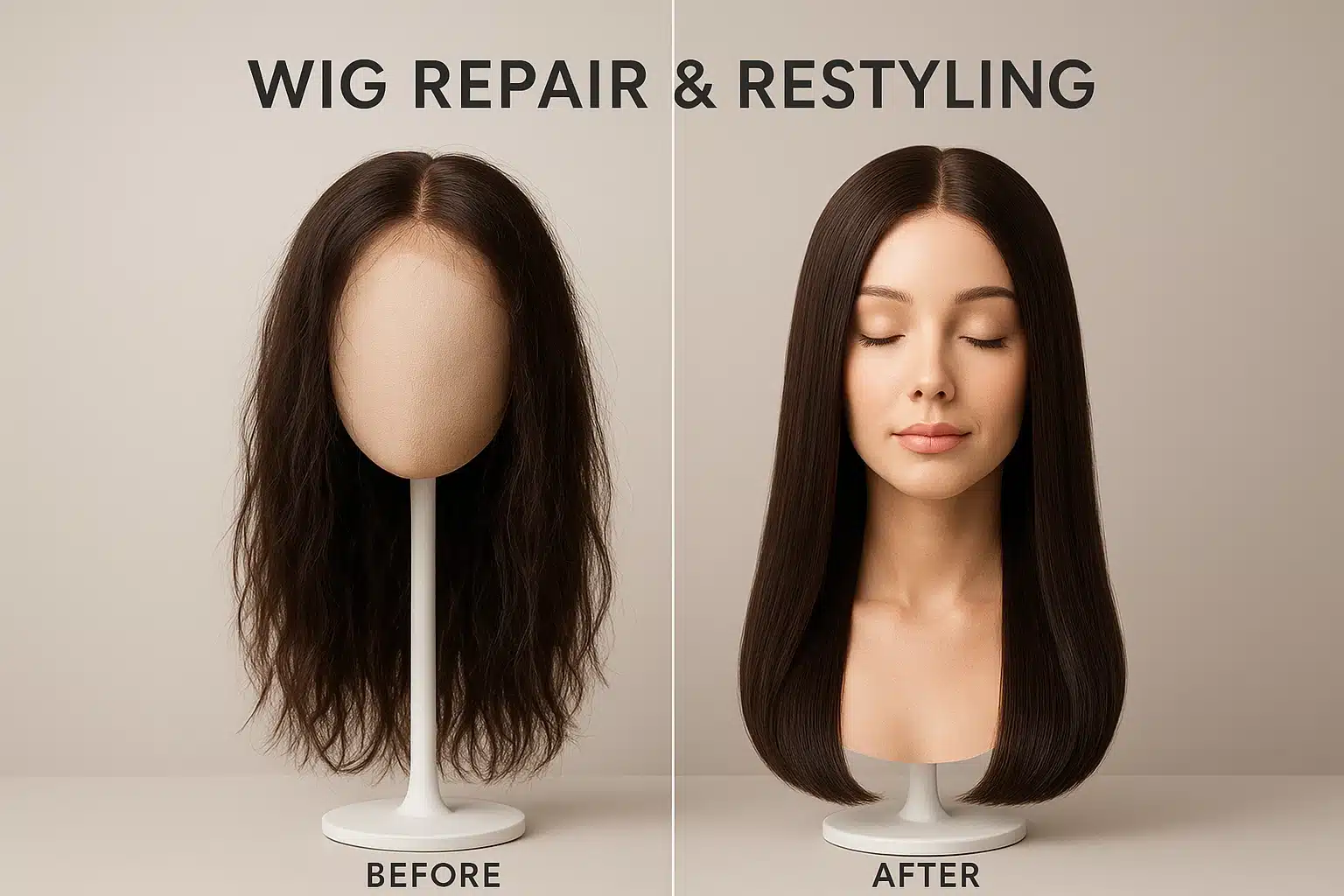
Every wig tells a story. Whether you rely on a cranial prosthesis during medical treatment, wear a human hair unit for daily confidence, or style elaborate alternative pieces for your weekend cosplay, your wig is a true investment. But just like a favorite pair of shoes or a bespoke suit, your wig experiences natural wear and tear. Over time, delicate lace frays, foundation caps stretch, and vibrant synthetic fibers can lose their bounce. When this happens, a moment of panic usually sets in: Do I toss it, or can it be saved?
Fortunately for residents of Charm City, a damaged unit doesn’t necessarily mean a trip to the trash can. Finding reputable professionals to restore your piece can save you hundreds—if not thousands—of dollars while extending the life of a piece you already love. If you’re currently navigating the local scene for the first time, reading through a comprehensive guide to the best wig stores in Baltimore, MD is a great way to start exploring regional vendors. In this guide, we’ll demystify the world of wig repair, cap reconstruction, and professional re-styling so you can make informed decisions about preserving your hair investment.
The “Repair vs. Replace” Decision Matrix
One of the most common questions from wig wearers is simply knowing when a piece is worth saving. The answer comes down to a simple industry rule of thumb: The 40/60 Rule.
If the cost of professional repair exceeds 40% of the unit’s original purchase value, AND the overall hair fiber density has dropped below 60% (meaning the wig is balding significantly), replacement is usually the most economical choice.
Consider this: Purchasing a high-quality, new human hair unit can range anywhere from $800 to $2,500. By contrast, professional local restoration in Baltimore typically ranges between $150 and $300. If your piece has a tear in the lace but the hair density is still lush, investing in a repair is a financially brilliant move.
Material Matters: Diagnosing Human Hair vs. Synthetic Fibers
A common trap for beginners is treating all wigs the same. The materials dictate what can—and absolutely cannot—be done during a restyling or repair session.
Synthetic Fiber Revival
Synthetic wigs are celebrated for their “style memory,” but friction against your shoulders or back can cause the ends to fray and tangle. Many people mistakenly try to fix this with high-heat flat irons, which will instantly melt non-heat-friendly synthetics.
Instead, professionals use specialized steaming techniques to smooth frayed fibers and restore the original texture. When it comes to restyling specific synthetic units—like maintaining the structure of a bs219 wig—it’s vital to use the right products. Heavy oil-based pomades will ruin synthetic fibers. Instead, evaluate the use of water-based sprays or specialized pastes, like a Fix Your Lid styling fiber, which offers hold without leaving an impenetrable residue on synthetic strands. Also, remember: you cannot chemically dye a synthetic wig. Color corrections on synthetics usually involve specialized fabric dyes or refreshing sprays.
Human Hair Restoration
Human hair units offer the ultimate versatility. Because they are made of natural keratin, they can safely withstand chemical coloring, bleaching, and traditional thermal styling tools. However, they lack the natural oils produced by a human scalp, meaning they are prone to severe dryness. Professional restoration for human hair often involves intensive hydration therapies, split-end trimming, and color-depositing glosses to bring a faded unit back to life.
Mastering the Fit: Cap Anatomy and Adjustments
A beautiful wig means nothing if it gives you a headache by noon or slips backward when you talk. Knowing the signs of a poor fit is the first step to fixing it. If you feel pinching at your temples, tension at the nape of your neck, or notice crown bulges, your cap needs adjusting. Head circumference measurements alone don’t guarantee a perfect fit because head shapes vary drastically.
Techniques for a Flawless Fit
When you take a wig to a specialist, they utilize several tailoring techniques to customize the cap:
- Darting: This involves meticulously folding and sewing the cap fabric to reduce its overall circumference or depth, perfect for eliminating baggy gaps.
- Elastic Band Additions: Sewing a custom elastic band around the perimeter provides a secure, glueless hold that relieves tension on your hairline.
- Crown and Corn Head Adjustments: If a wig sits too high or “points” at the top of your head, specialists can alter the cap’s internal structural seams to flatten the crown, creating a flush, natural silhouette.
Face-Framing Geometry
Think of modern wig styling like digital avatar customization—similar to adjusting features in a video game or gacha club face adjustments. To translate that precision into the real world, a stylist looks at the unique geometry of your face. They will trim the ear-tabs so they don’t overlap your actual ears, adjust the sideburn positioning for a natural blend, and thin out heavy bangs so they frame your eyes rather than swallow your face.
Advanced Repairs and Specialty Re-styling
If your wig has suffered structural damage, don’t reach for household glue or craft thread. Professional salons utilize highly specialized techniques to execute advanced repairs.
Technical Restoration
- Ventilating: This is the painstaking process of hand-knotting individual strands of hair back into balding spots on a lace front or parting space.
- Lace and Silk Top Repairs: If your lace is torn from over-trimming or the silk top is separating from the wefts, professionals can delicately re-attach these components, bleach the knots to hide the grid, and ensure the piece looks like it’s growing directly from your scalp.
Niche Style Revival
Not all wig wearers are looking for a standard bob. Baltimore is home to a vibrant creative community, and traditional salons are adapting to handle specialized requests. Whether it’s thinning out dense, heavy euro wigs, or executing gravity-defying character/cosplay silhouettes (such as 2hollis, Silvervale, or Rasputia styles), a skilled local stylist can utilize advanced texturizing and fiber-safe setting methods to bring these bold visions to life.
The Baltimore Benchmark: What to Expect from Local Salons
Baltimore boasts a rich network of hair preservation experts spanning across neighborhoods like Mount Vernon, Downtown Baltimore, Pikesville, and Owings Mills. Salons that specialize in this work—including regional workflows established by experts at local spots like Orna Wigs, Detrix Hair Lab, Agape Hair Salon, and SE Wigs—offer a lifeline for damaged units.
If you are looking to budget for professional services in Charm City, here are the current local pricing benchmarks you can generally expect:
- Weft Removal/Addition: ~$15 per track
- Cap Take-Ins and Sizing Adjustments: $50 – $120
- Wash, Deep Conditioning, & Style: $65+
- Advanced Lacework & Troubleshooting: $170+
- Bespoke Custom Cutting on Human Hair: ~$250
Tip: Always ask your Baltimore wig specialist exactly what their consultation covers before dropping off your unit, as some complex repairs require sending the piece to a dedicated laboratory.
Medical Necessity: Navigating Insurance and Coding
For those experiencing medical hair loss (alopecia, chemotherapy), navigating insurance can feel like learning a foreign language.
When your doctor writes a prescription for a wig, it is technically categorized as a Cranial Prosthesis. For billing purposes, the medical code used for new cranial prostheses is typically HCPCS Code A9282.
However, an important distinction to understand is the difference between buying a new unit and repairing an old one. While many insurance plans cover the initial purchase of a cranial prosthesis under code A9282, distinct CPT codes for wig repairs are rarely covered by standard insurance policies. Therefore, structural repairs and cap resizing are almost always out-of-pocket expenses. Knowing this upfront helps you budget properly for the long-term maintenance of your medical unit.
At-Home Longevity Protocol
The best way to save money on wig repair is to prevent damage from happening in the first place. Establish a rigorous at-home care routine:
- Washing Cycles: Wash synthetic wigs every 8-10 wears, and human hair wigs every 14-20 wears. Over-washing strips moisture; under-washing allows sweat and oils to break down the delicate lace.
- Storage: Never throw your wig in a drawer. Store it on a canvas block head or a specialized wig stand to maintain the cap’s structural integrity.
- Detangling: Always brush from the bottom up using a wide-tooth comb or a wig-specific brush.
- Avoid Common Mistakes: Never use household adhesives for a quick fix, never use dish detergent to strip human hair, and keep standard flat irons far away from non-heat-friendly synthetic fibers.
Frequently Asked Questions (FAQ)
Can a torn lace front wig be repaired, or do I need to replace it?
Yes, torn lace can often be repaired! Professionals can trim away the frayed edges and ventilate (re-knot) new hair into a fresh piece of lace, seamlessly attaching it to your existing cap.
How do I know if my wig cap is too big or small?
If the wig slips backward off your hairline, bunches up at the crown, or overlaps your ears, it is too big. If it rides up at the nape of your neck, gives you a tension headache, or fails to cover your natural sideburns, it is too small.
What is the difference between human hair wig re-coloring and synthetic wig refreshing?
Human hair can be chemically lifted (bleached) and dyed using standard salon hair color. Synthetic hair is essentially plastic; it cannot be chemically altered. It must be “refreshed” or darkened using specialized fabric dyes or tinted sprays.
Can frayed synthetic fibers be saved with steam, or will heat destroy the unit?
Standard dry heat (like a curling iron) will melt traditional synthetic fibers. However, professional-grade steam is the perfect solution for synthetic wigs. The moisture-rich heat gently smooths the plastic fibers, removing frizz and restoring their original texture without melting them.
Your Next Steps
Understanding the mechanics of your wig—from the materials and cap construction to the precise tailoring required for a perfect fit—transforms you from a passive consumer into an empowered owner.
Your wig is an extension of your personal style and confidence. By taking advantage of professional repair and restyling services right here in the Baltimore area, you can ensure your favorite pieces look flawless, feel comfortable, and last for years to come. Start by evaluating the units currently sitting in your closet, apply the 40/60 rule, and take the first step toward reviving your hair wardrobe today.