Imagine walking down Bedford Avenue and spotting someone with hair so perfectly contoured and colored that it looks like they just stepped out of a high-end salon. The secret? It might just be an expertly styled wig. The journey to finding a hairpiece that looks entirely natural can feel overwhelming, especially if it’s your first time navigating the world of alternative hair. Many first-time buyers worry their new look will appear flat or artificial, completely unaware that a hyper-natural result is actually an exact science of custom color matching, facial geometry, and modern cap engineering.
Fortunately, if you know where to look, local experts can guide you through this transformative process. From high-touch custom boutiques to specialized consultation rooms, knowing exactly where to go can make all the difference. If you’re looking to explore top-rated local consultation boutiques, our curated directory of the best wig stores in Brooklyn, NY will help you discover spaces dedicated to compassionate care and flawless styling. But before you step into a boutique, let’s arm you with the foundational knowledge you need to advocate for your perfect style.
The Science of a Seamless Match: Why “Natural” Isn’t an Accident
A common misconception among beginners is that a high-quality wig simply looks flawless right out of the box. In reality, creating a seamless, undetectable look requires a personalized approach. It’s less about simply picking a style you like on a mannequin, and more about finding a piece that harmonizes with your unique biological features.
When you sit down for a private consultation in a specialized wig boutique, an expert stylist is looking at three critical factors: your skin’s natural undertones, the architectural geometry of your face, and the structural mechanics of the wig’s cap. Let’s break down exactly how this process works so you can shop with confidence.
Foundational Science I: Mastering Skin Undertones and Dimensional Color
Have you ever tried on a lipstick or a sweater in a color you love, only to feel like it washed you out? The same principle applies to hair. One of the biggest mistakes first-time buyers make is falling victim to the “Flat Color Fallacy.” Natural biological hair is rarely a single, monochromatic shade; it has dimension, natural highlights from the sun, and darker shadows at the root.
Before selecting a color, you need to identify your skin’s undertone. Here are three quick diagnostic tests you can do at home before your consultation:
- The Vein Test: Look at the veins on the inside of your wrist in natural daylight. If they appear greenish, you likely have warm undertones. If they look blue or purplish, you lean cool. A mix of both indicates a neutral undertone.
- The Jewelry Test: Does gold jewelry make your skin glow, or does silver look more harmonious? Gold favors warm tones, while silver complements cool tones.
- The Blush Test: Does peach/coral blush look most natural on you (warm), or do pink/rosy shades suit you better (cool)?
The Color Matrix: Finding Your Perfect Shade
Once you know your undertone, matching your wig color becomes a breeze:
- Warm Undertones: Look for rich, sun-kissed shades. Honey blonde, warm chestnut, caramel, cinnamon, and golden bronze will bring a beautiful glow to your complexion.
- Cool Undertones: Opt for ashy or rich, jewel-toned colors. Platinum or ash blonde, espresso, cool dark chocolate, and burgundy or violet reds will look exceptionally natural.
- Neutral Undertones: You have incredible versatility. Sandy blonde, soft beige, neutral dark brown, and trendy rose gold are highly flattering.
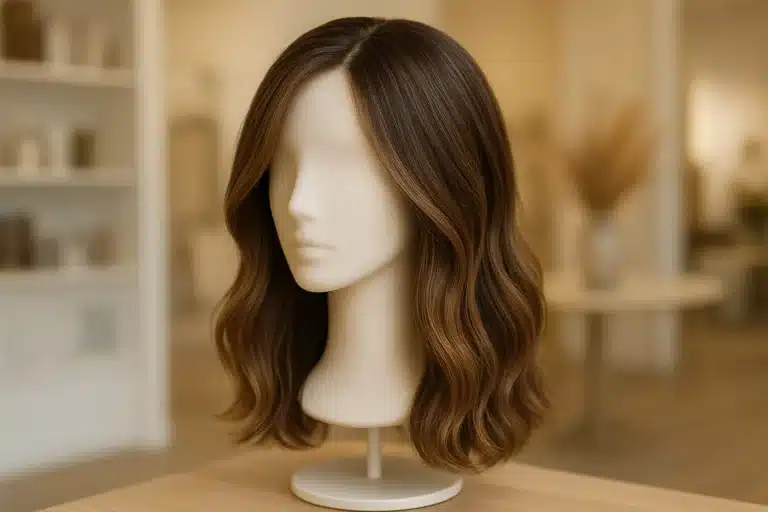
The Pro-Secret: Always look for wigs that feature “root smudging” (a technique where the base is half a shade to a full shade darker than the rest of the hair) and subtle face-framing balayage. This multi-tonal dimension is what separates a premium wig from an artificial-looking one.
Foundational Science II: Face Shape Architectural Styling
Just as a tailored suit balances your body’s proportions, the right wig density, parting depth, and layers can perfectly balance your facial geometry.
- Round Faces: The goal is to elongate your features. Look for styles that offer height and volume at the crown. Longer, face-framing layers that fall below the chin will beautifully slim the sides of the face.
- Square Faces: To soften a strong, angular jawline, opt for wigs with soft, feathery layers. Side-swept bangs and wavy textures work wonders to introduce curves and softness.
- Heart Faces: With a wider forehead and a narrower chin, you’ll want to add volume near the lower half of your face. Chin-length bobs, heavily textured ends, or deep side parts are incredibly flattering.
- Oval Faces: Highly versatile and balanced, oval faces can carry almost any style. Your primary focus during a consultation should be ensuring the wig’s cap scale and neck length proportionality match your unique measurements.
Cap Construction: The Mechanics of Realism
Even the perfect color and cut won’t look natural if the wig’s construction doesn’t mimic natural hair growth. When exploring high-quality options, you’ll encounter a few key terms:
- Lace Front: A sheer mesh at the front of the wig where hairs are individually tied. This creates the illusion of a natural hairline, allowing you to pull the hair away from your face seamlessly.
- Monofilament Top: A breathable, micro-mesh top that allows your natural scalp color to show through the part. It also allows you to change the hair’s parting direction naturally.
- Hand-Tied Caps: The most comfortable and natural-moving option, where every single hair is tied by hand to a soft cap, simulating the natural movement of biological hair.
The Density Rule: Avoid wigs with excessive hair density unless you are going for a highly stylized, theatrical look. A light-to-medium density (around 100% to 130%) is the secret to preventing the dreaded “wiggy” appearance.
The Brooklyn Consultation Field Guide
Brooklyn is a massive borough with distinct neighborhoods that specialize in different aspects of wig customization and styling. Knowing which neighborhood suits your specific needs will save you time and ensure a better experience.
Borough Park & Midwood (13th Ave)
This area is legendary for premium custom craftsmanship. If you are looking for high-touch, human hair sheitels (traditional wigs worn by Orthodox Jewish women) and highly private fitting rooms, this is your premier destination. Stylists here are masters at precise cap measuring and long-term wig maintenance.
Flatbush & Ditmas Ave
Salons in this corridor are renowned for customized lace work and precision cutting. If you need a piece custom-dyed, lace tinted to perfectly match a deeper skin tone, or expert root smudging, the artisans in Flatbush offer incredible technical expertise.
Crown Heights & Nostrand Ave Corridor
If you are prioritizing modern glueless installations, natural hairline plucking, and a wide variety of textured wig options, Crown Heights is a thriving hub. Stylists here excel at making wigs look flawlessly natural without relying on harsh adhesives.
Williamsburg & Downtown Brooklyn
For those seeking boutique, appointment-only studios focusing on modern trend styles, vibrant colors, and high-density event styling, Williamsburg provides an upscale, fashion-forward consultation experience.
Mastering Your Salon Appointment: The 7-Question Script
Stepping into a private salon can be intimidating. To ensure you get the most out of your specialized consultation, screenshot this list of questions to ask your Brooklyn wig specialist:
- “Based on my facial measurements, what cap size and density percentage do you recommend for the most natural everyday look?”
- “Can we check this wig’s color against my skin tone in natural daylight outside the salon?” (Store lighting often distorts color!)
- “Does this specific cap construction allow for multidirectional parting?”
- “What techniques do you use to customize the hairline? Do you offer knot bleaching or tweezing?”
- “Can this unit be worn entirely glueless, using only a wig grip or adjustable band?”
- “How will this specific cut and crown volume balance my face shape?”
- “What is the recommended maintenance schedule to keep the fibers—whether synthetic or human hair—looking hydrated and realistic?”
The Daylight Verification Checklist
Never purchase a wig based solely on how it looks under harsh, fluorescent salon lights. Always ask your stylist if you can step near a large window or step outside with a hand mirror. Verify that the lace melts into your skin tone naturally and that the hair color doesn’t wash out your complexion under the sun.
Frequently Asked Questions
Do wigs actually look natural?
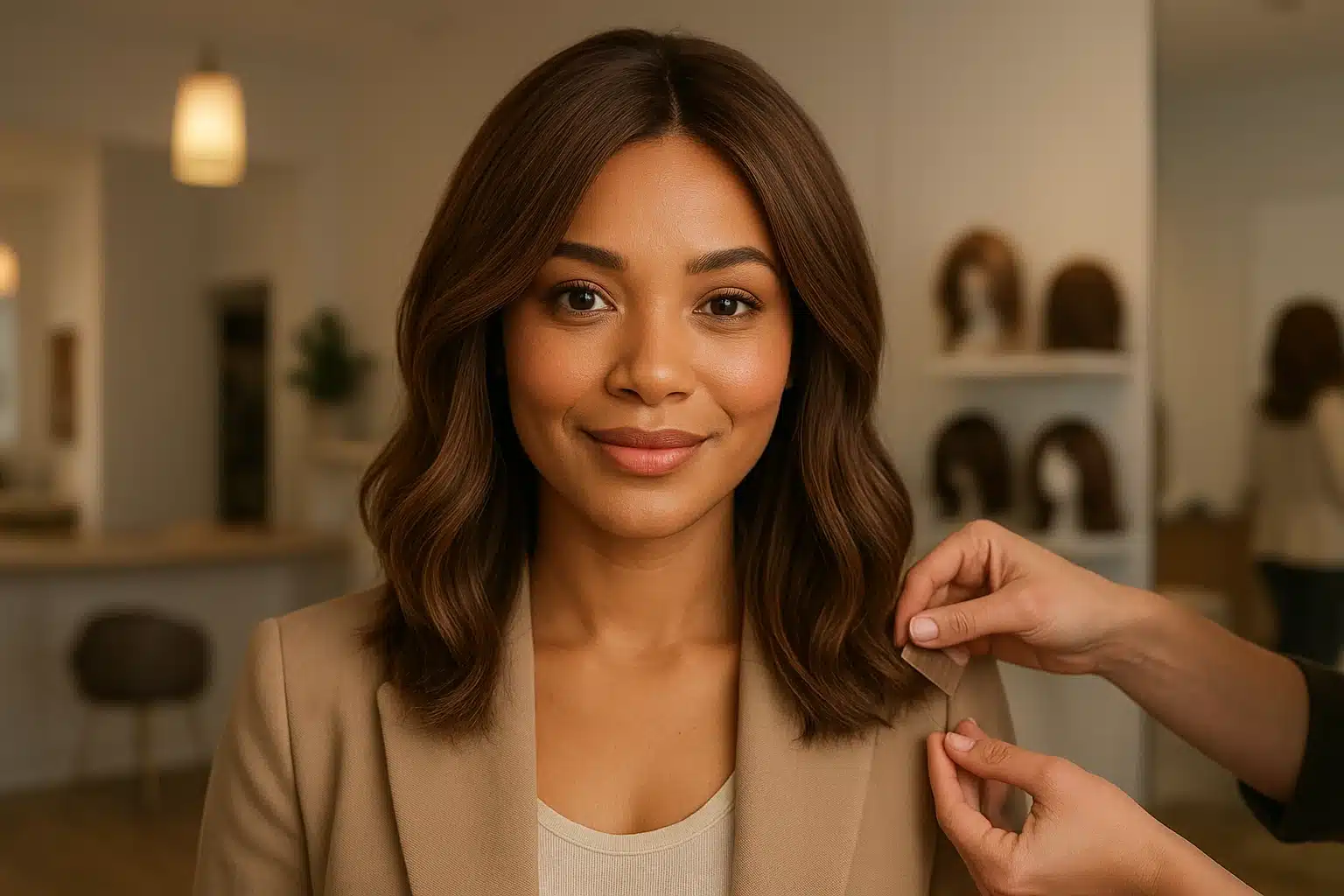
Absolutely. Modern wigs can look entirely undetectable. The realism comes down to three factors: choosing a lace front or monofilament cap (which mimics the scalp), selecting a lower, realistic hair density (100%-130%), and having the piece professionally customized (plucking the hairline and cutting layers to frame your specific face shape).
Can synthetic wigs look natural without glue?
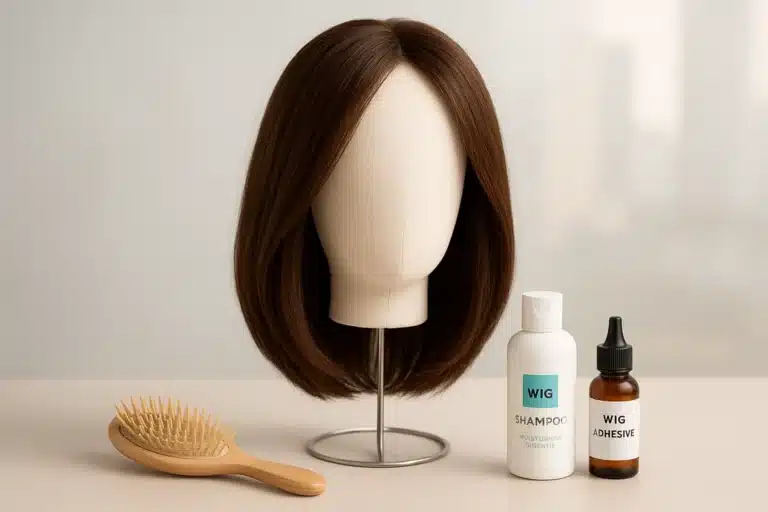
Yes! In fact, we highly recommend modern glueless cap constructions to protect your natural edges. Utilizing a velvet wig grip, elastic security bands, and pre-plucked hairlines allows both human hair and high-quality heat-friendly synthetic wigs to lay incredibly flat and secure without a single drop of adhesive.
How do I know if my skin undertone is warm, cool, or neutral when buying a wig?
The easiest diagnostic tool is the vein test. Look at the veins on your inner wrist in natural daylight. Greenish veins mean warm undertones (opt for honey/caramel colors). Blue/purple veins mean cool undertones (opt for ash/espresso colors). A mix of both means you’re neutral and can wear almost anything!
What is the difference between lace front, monofilament, and hand-tied caps?
A lace front gives you a natural-looking front hairline, allowing you to pull hair away from your face. A monofilament top creates the illusion of hair growing directly from your scalp at the parting line. A hand-tied cap means every single hair is tied by hand across the entire cap, offering the most natural movement and supreme comfort for sensitive scalps.
What should I expect during a private wig store consultation?
A high-quality consultation is a diagnostic, educational experience. You should expect the stylist to measure your head for proper cap sizing, analyze your face shape and skin undertones, and guide you through trying on various cap constructions. They will also discuss your lifestyle needs (e.g., daily wear vs. occasional wear) to recommend the best fiber types and glueless security options.
Your Next Steps on Your Wig Journey
Understanding the science of color matching, facial geometry, and cap mechanics transforms wig shopping from a stressful guessing game into an empowering journey of self-expression. When you know how to identify your undertones and which styles flatter your face shape, you step into a consultation not just as a shopper, but as an informed collaborator in your own beauty journey.
Take the time to do the vein test, assess your face shape in the mirror, and think about what kind of hair movement feels most “you.” With this knowledge in hand, you’re perfectly prepared to explore the incredible retail landscape Brooklyn has to offer and find a piece that doesn’t just look like a beautiful wig, but looks unmistakably like your beautiful hair.