Let’s talk about the elephant in the room: wearing alternative hair shouldn’t feel like wearing a wool sweater on a sunburn. If you are going through chemotherapy, managing alopecia, or simply have a highly reactive scalp, the discomfort of an itchy, irritating wig can be deeply frustrating. Hair loss is an incredibly personal and often challenging journey, and the last thing you need is a solution that adds physical pain to the mix.
For those living in West Michigan, navigating your local options doesn’t have to be overwhelming. Whether you’re researching specialized hypoallergenic materials or consulting the ultimate guide to the best wig stores in Grand Rapids, MI to find a private fitting room, prioritizing your scalp’s health is the crucial first step. Let’s break down exactly why scalps react to certain wigs, how advanced cap engineering can solve these problems, and where you can find genuine relief.
The Root Causes of Scalp Irritation: Why Does My Wig Itch?
To find the right solution, we first need to understand the problem. When your scalp becomes red, itchy, or inflamed under a wig, you are usually experiencing one of two dermatological reactions.
Irritant Contact Dermatitis is the most common culprit. This happens when rough materials repeatedly rub against your skin. Traditional machine-wefted wig caps have thick seams and rows of hair that trap heat and create mechanical friction. If your biological hair is just beginning to grow back, those tiny stubbles can also poke back through standard wig netting, acting like tiny needles when the cap shifts. Add trapped sweat to this microclimate, and your scalp becomes a perfect storm for irritation.
Allergic Contact Dermatitis, on the other hand, is a chemical reaction. Many people are surprised to learn that both synthetic and human hair wigs are heavily processed in factories. They are often coated in alkaline preservatives, textile dyes, or silicone treatments to keep them looking pristine during shipping. If you have sensitive skin, your scalp may be having an allergic reaction to these invisible chemical residues, or to common cap materials like latex and heavy adhesives.
Anatomy of a Comfortable Wig: Cap Engineering Explained
Fortunately, wig technology has evolved beautifully. Today’s medical-grade wigs are engineered with your skin’s health in mind. When shopping for comfortable wigs, here are the construction features you need to look for:
The Double Monofilament Top
In a standard “single monofilament” wig, individual hairs are hand-tied to a sheer mesh material. While this creates a very realistic looking scalp, the tiny knots where the hair is tied sit directly against your skin. For sensitive scalps, these microscopic knots feel like sandpaper.
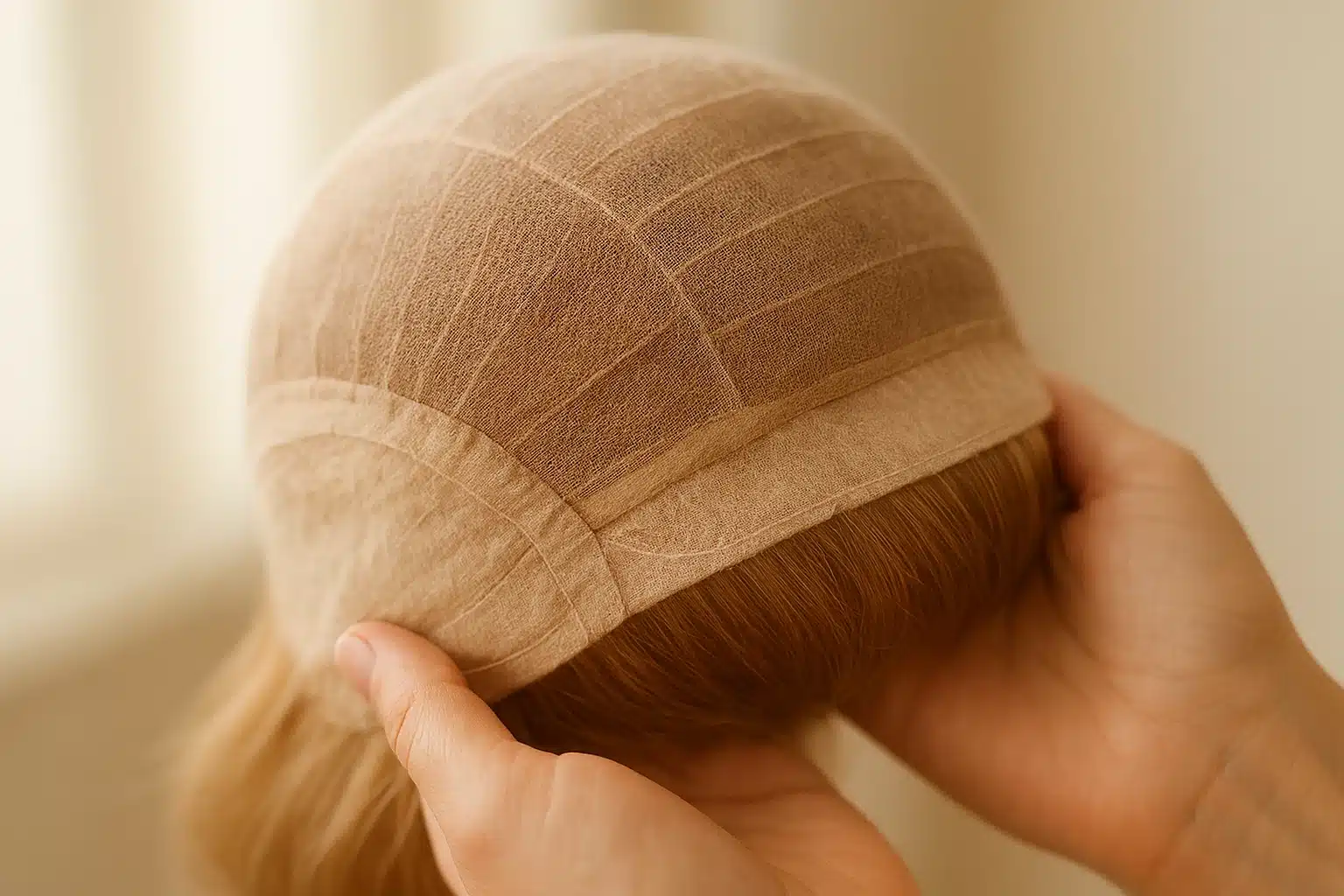
A double monofilament cap adds a secondary, ultra-thin layer of glass-silk underneath the knots. This creates a buttery-smooth barrier between the hair knots and your skin. It’s an instant “aha moment” for anyone who has ever suffered from top-of-the-head friction.
100% Hand-Tied Caps
Unlike machine-wefted caps which feature rows of hair sewn together with bulky thread, 100% hand-tied caps are made of a soft, four-way stretch spandex material. Every single hair is tied by hand. This eliminates rigid seams, reduces the overall weight of the wig, and allows for maximum breathability.
Are Lace Fronts Safe for Sensitive Skin?
You might be wondering if you have to sacrifice a natural hairline for comfort. Are lace front wigs for sensitive skin a viable option? Yes, but with a caveat. Traditional rigid lace can be scratchy. Look for “welded” Swiss lace fronts paired with velvet ear tabs and velvet napes. Better yet, look for caps that incorporate medical-grade silicone strips along the hairline, allowing you to secure the wig using your body’s natural heat rather than relying on harsh glues or tapes.
How to Detox Your Wig and Relieve Scalp Itch
Even the most luxurious, premium wig can cause irritation if not properly prepped. Here is a practical scalp care protocol to ensure maximum comfort.
1. The Factory Chemical Detox
Never wear a brand-new wig straight out of the box for a full day. To remove disperse dyes and factory coatings, give your new piece a gentle detox. Fill a basin with cool water and a splash of apple cider vinegar (for synthetic hair) or a high-quality clarifying shampoo (for human hair). Let it soak for 15 minutes, rinse thoroughly, and follow up with the appropriate conditioner. This simple step neutralizes pH levels and washes away irritants.
2. Daily Scalp Hygiene
To relieve scalp itch during the day, focus on moisture barriers. Instead of standard nylon wig caps, invest in an organic bamboo viscose liner. Bamboo is naturally hypoallergenic, antimicrobial, and regulates temperature far better than synthetic caps. It wicks away sweat before it can pool and cause itchiness.
3. Gentle Customization and Maintenance
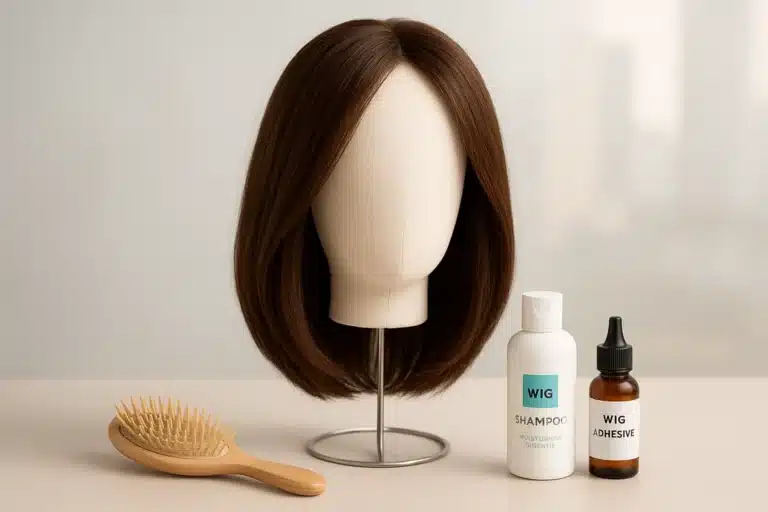
How you care for your wig impacts how it feels on your head. Always use a specialized brush for sensitive scalp maintenance—like a loop brush. Unlike traditional bristles, loop brushes glide over the wig cap without snagging the delicate mesh or pulling on the hair knots, which prevents the cap from warping and rubbing against your skin.
If you are purchasing a human hair wig that requires custom coloring, insist that your stylist uses a low-volume developer for sensitive scalp safety. Ammonia-free colors paired with a 10-volume developer will prevent harsh chemicals from bleeding through the lace and aggravating your skin.
Pediatric Hair Loss: Finding Wigs for Kids in Grand Rapids
Children facing hair loss due to alopecia or pediatric cancer treatments require entirely different considerations. A child’s scalp is significantly thinner and more reactive than an adult’s, making hypoallergenic materials absolutely mandatory.
When searching for wigs for kids Grand Rapids offers several compassionate resources. Standard adult “petite” sizes rarely fit children properly, leading to shifting and friction. Look for specialized pediatric cranial prostheses that utilize silicone-lined, glue-less caps so kids can run, play, and just be kids without the discomfort of adhesives. Local affiliations, such as the Wigs for Kids network and Hair Society GR, are incredible resources for families navigating this delicate journey, ensuring children get perfectly tailored, sensory-friendly solutions.
Navigating Grand Rapids Stores for Sensitive Scalps
West Michigan is home to a wonderfully supportive hair loss community. When you are ready to explore physical storefronts, your focus should be on stores that understand the nuances of medical hair loss, not just fashion wigs.
Local boutiques like Breton Designer Wigs in Grand Rapids and Hidden Secrets Wigs in nearby Zeeland are known for offering private fitting rooms—an absolute must for a comfortable, dignified experience. When booking a consultation, ask if they carry double monofilament or 100% hand-tied caps in stock.
Additionally, tap into the local support network. Organizations like Gilda’s Club Grand Rapids provide immense emotional support and can often point you toward stylists and stores that specialize in compassionate care and cranial prosthesis insurance claims.
Frequently Asked Questions (FAQ)
What is the best wig material for a highly sensitive, bald scalp?
If you have total hair loss, a 100% hand-tied cap with a double monofilament top and a polyurethane (PU) or medical-grade silicone perimeter is the gold standard. It provides the softest touch and grips the scalp naturally without tape.
Will my health insurance cover wigs for sensitive scalps?
Many insurance policies cover “cranial prostheses” if your hair loss is due to a medical condition like alopecia or chemotherapy. Because medical wigs inherently feature sensitive-skin upgrades (like bamboo linings and seamless caps), they often qualify. You will need a prescription from your dermatologist or oncologist.
Why does my scalp still itch even with a soft wig cap?
If you are wearing a high-quality cap and still experiencing itchiness, the culprit is likely trapped heat and sweat, or a reaction to the shampoo you are using to wash the wig. Try wearing a bamboo liner to wick away moisture, and ensure you are thoroughly rinsing all wig care products out of the hair before wearing it.
Are there specific scalp wigs designed for conditions like eczema or psoriasis?
Yes. If you have active eczema or psoriasis on your scalp, you should avoid any friction-heavy materials. Look for silk-top wigs or caps lined with bamboo, and avoid using any glues or tapes, which can tear the skin upon removal.
Moving Forward with Confidence
Experiencing hair loss is a profound transition, but living with an uncomfortable, itchy wig doesn’t have to be part of your story. By understanding the anatomy of comfortable wigs and knowing how to detox and care for your alternative hair, you take back control of your comfort.
Take your time exploring your options. Arm yourself with this knowledge, reach out to specialized Grand Rapids stores that offer private, empathetic consultations, and remember that you deserve to feel beautiful, confident, and completely comfortable in your own skin.