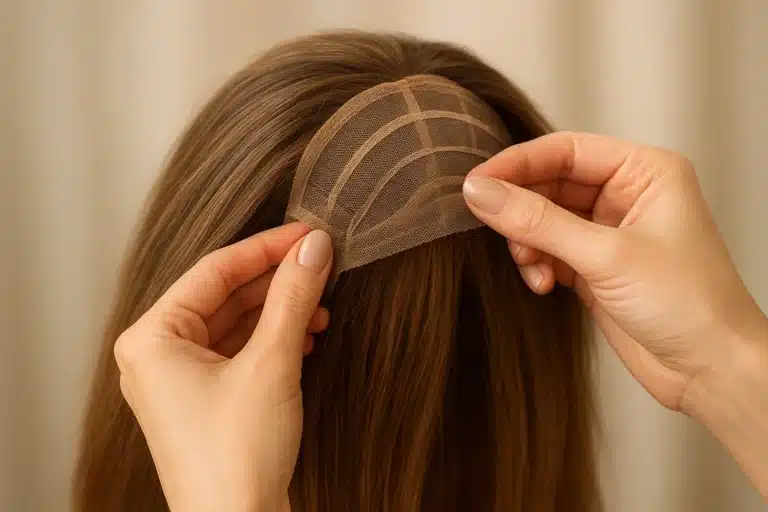
You finally found it—the perfect wig. You carefully take it out of the box, expecting an immediate transformation into the glamorous, effortless style you saw in the catalog photos. But as you slip it on, you’re greeted by a heavy, stiff, overwhelming wall of hair that feels less like a natural style and more like a helmet.
If this sounds familiar, take a deep breath. You haven’t made a mistake, and there is nothing wrong with your new hairpiece. Factory wigs are manufactured with standardized cap sizes, uniform perimeters, and anywhere from 130% to 180% hair density. They are designed to fit the contours of an average mannequin head and heavily packed with fiber to ensure the underlying cap tracks stay hidden during shipping. While many first-time shoppers focus entirely on finding the right piece by exploring a guide to the best wig stores in Tacoma, WA, the most critical step in a wig’s journey actually happens after you buy it.
Transforming a bulky, out-of-the-box hairpiece into a customized, undetectable crown requires specialized cutting, de-bulking, and face-framing. Here is everything you need to know about professional wig trimming and where to find expert wig stylists in the Tacoma and Pierce County area.
The Fundamental Difference: Cutting Wigs vs. Biological Hair
A common—and sometimes costly—mistake beginners make is assuming that any local hairdresser can trim a wig. After all, hair is hair, right?
Not quite. Biological hair grows from living follicles with a directional grain, a natural root-to-tip taper, and a cycle of natural shedding. Wig fiber, whether it is Kanekalon synthetic or Remi human hair, is fundamentally different. It features artificial root angles and stationary fibers anchored to mesh or wefts. And the golden rule of wig customization is simple but unforgiving: Wig hair never grows back.
When a traditional stylist approaches a wig with standard techniques, disaster often follows. Here is why specialized training is non-negotiable:
The “Wet Cut” Disaster
Standard salon haircuts begin at the shampoo bowl because wet biological hair stretches and is easier to cut evenly. However, synthetic fibers do not absorb moisture. If a stylist cuts a synthetic wig while wet, the fibers stretch unnaturally during the tension of the comb. Once dry, the hair shrinks back unpredictably, ruining the shape—especially on wavy or curly textures. Expert wig trimming is almost always done dry.
The Danger of Thinning Shears
Wigs are notoriously bulky, and the instinct is to grab thinning shears to remove weight. On a natural head of hair, this works beautifully. On a wig, thinning shears cut arbitrary fractions of hair. If used too close to the cap (within 2 to 3 inches) or across open-wefted machine caps, they create short, bristly “stubble.” These short hairs act like springs, pushing the longer hairs outward and exposing the machine-sewn tracks beneath.
Specialized Shears for Synthetic Fibers
Standard salon scissors can actually slip or bend high-denier synthetic fibers, while traditional razoring shreds the ends of synthetic hair into frizzy micro-hooks. Professional wig stylists use ultra-sharp, specialized convex shears or micro-serrated blades to cleanly slice through synthetic materials without causing fraying.
The Art of Layering and Face-Framing
So, how does a professional take a wig from a static curtain of hair to a kinetic, flowing hairstyle? The secret lies in a combination of anatomical placement and specialized cutting geometry.
The Four-Finger Rule
Before a single scissor snip is made, the wig must be positioned correctly. Beginners often pull wigs too far forward over their brows, which immediately distorts facial harmony. The standard baseline is the “four-finger rule”: place four of your fingers flat against your forehead, with the bottom finger resting on the bridge of your nose and eyebrows. Your wig’s front lace or hairline should sit right above your top finger.
The Hybrid Cutting Method: Block to Head
True custom wig styling is a two-phase process:
- Phase 1 (The Canvas Block): The stylist pins the wig to a calibrated canvas block head to establish the baseline length, balance, and perimeter symmetry.
- Phase 2 (The Human Head): The wig is placed on your head. This is where the magic happens. The stylist customizes the cut to align face-framing angles exactly with your unique jawline, cheekbones (zygomatic arch), and natural hairline.
Customizing for Your Face Shape
A skilled wig specialist will use slide-cutting and low-elevation point-cutting (snipping vertically at a 45-degree angle rather than making blunt, horizontal chops) to craft a silhouette that flatters your specific bone structure:
- Round Faces: Graduated face-framing layers beginning below the jawline help create vertical elongation, drawing the eye up and down.
- Square Faces: Wispy, textured perimeter layers and a soft side-swept fringe diffuse sharp angles along the jawline.
- Heart Faces: Chin-hugging textured bobs or volume-boosting mid-layers balance out a narrower chin.
- Oval Faces: Proportional perimeter framing, classic curtain bangs, or modern adaptations of a texturized 90s mod cut work beautifully to complement natural symmetry.
Navigating the Tacoma Wig Salon Landscape
Taking your $500 investment to a discount walk-in chain salon is a massive risk. Fortunately, Pierce County is home to several specialized salons that understand the delicate architecture of cranial prostheses, lace blending, and custom shaping.
Upscale Hair Salon & Wigs (Tacoma)
Known for their specialized luxury wig fittings, Upscale Hair Salon & Wigs offers in-depth consultations for those needing heavy customization. They are highly experienced in custom lace trimming, human hair blending, and safe thinning techniques that won’t compromise the integrity of the cap.
Sherwood Styling Salon (East Pierce County / Puyallup)
A staple in the region, Sherwood Styling Salon brings multi-generational expertise to the table. Beyond traditional hair services, they have established regional capabilities in cutting, trimming, and custom styling personal hairpieces and toppers.
Hair Art Beauty Outlet & Salon (Tacoma)
If you are looking for inclusive styling and strong community trust, Hair Art is a local favorite. They offer fast customization, thorough unit installations, and excel at helping everyday fashion wearers achieve a seamless look.
Shari’s Hair Loss Consulting & Wig Sales (Steilacoom / Pierce County)
For medical hair loss patients navigating chemotherapy or alopecia, the salon chair can be an emotionally vulnerable place. Shari’s specializes in compassionate, private cranial prosthesis customization. They focus heavily on bespoke fitting and gentle, gradual trimming.
The Client Audit Checklist: Protecting Your Investment
Before you let anyone near your wig with a pair of shears, you need to conduct a consultation. A reputable wig stylist will gladly answer these questions to put your mind at ease.
Ask Your Stylist These 5 Questions:
- Have you been specifically trained in cutting synthetic (or human hair) wigs?
- Will you be cutting the wig dry or wet? (If it is synthetic, the answer must be dry).
- How do you plan to de-bulk the wig without exposing the cap wefts? (Listen for terms like “internal channel cutting” rather than just “thinning shears”).
- Do you customize the face-framing layers while the wig is on my head?
- Can you use shears that won’t fray my synthetic fibers?
What to Expect for Pricing
In Western Washington, professional wig customization typically ranges from $45 to $150+. The cost depends heavily on the complexity of the unit, whether it is synthetic or human hair, and if you are getting a simple bang trim versus a full foundational restyle with lace customization.
Frequently Asked Questions (FAQ)
Can regular hair salons cut and trim a wig?
While a regular salon has the physical tools to cut hair, most traditional cosmetologists are not trained in wig cap construction or synthetic fiber behavior. Taking a wig to a stylist who only cuts biological hair often results in blunt, choppy ridges or exposed cap wefts. Always seek out a certified wig specialist.
Why does my new wig look so fake and helmet-like out of the box?
Wig manufacturers pack wigs with excess hair (often up to 180% density) to ensure that the tracks and cap materials remain hidden during shipping and handling. A professional wig cut will remove up to 30% of this excess weight, giving you a customized, natural density.
Can you cut layers into a synthetic wig, or does it have to be 100% human hair?
Yes, you can absolutely cut layers into a synthetic wig! In fact, most synthetic wigs benefit greatly from custom layering to break up the static, uniform look. However, synthetic fibers require highly specialized, ultra-sharp shears and must be cut completely dry to avoid stretching and fraying.
How do I prepare my wig for a salon appointment?
Before arriving at your Tacoma salon, gently detangle the wig using a wide-tooth comb, starting from the ends and working your way up to the roots. Ensure the wig is clean and dry. Most importantly, bring reference photos of the style you want, but be open to your stylist’s feedback on what is possible based on your specific wig’s cap construction.
Taking the Next Step in Your Hair Journey
Navigating hair loss or stepping into the world of alternative hair should be an empowering experience, not a stressful one. By understanding the distinct science behind wig customization and knowing exactly what to ask a stylist, you are already well on your way to achieving a look that feels entirely your own.
Remember, a high-quality wig is a blank canvas. With a bit of patience, the right anatomical placement, and the skilled hands of a local Tacoma wig specialist, you can transform that out-of-the-box hairpiece into a flawless, natural extension of your personal style.