For many mature women experiencing age-related thinning, hormonal changes, or medical hair loss, the thought of transitioning to alternative hair can feel incredibly daunting. You might remember the wigs of the past—heavy, unnatural-looking, and unbearably hot—and wonder if wearing one today will just leave you with a headache and a sweaty scalp. But wig engineering has evolved dramatically. Today, millions of stylish women in their 60s, 70s, and 80s are rediscovering their confidence through modern hairpieces that are virtually undetectable and featherlight.
If you’ve been searching for relief from heavy, itchy headwear, you aren’t alone. Finding the perfect fit requires more than just picking a color online; it requires understanding cap construction, evaluating breathability, and knowing exactly where to go for a professional, compassionate fitting. Before you head out, checking our comprehensive guide to the best wig stores in Cincinnati can help you discover certified fitters, private consultation studios, and community boutiques tailored to your specific needs.
Let’s demystify the science of wig comfort and explore how you can find the perfect, lightweight solution right here in the Greater Cincinnati area.
The Comfort Crisis: Why Traditional Wigs Fail Mature Wearers
As we age, our biomechanics change. Our scalps experience epidermal thinning and decreased sebaceous gland activity, making the skin much more prone to micro-abrasions and sensitivity. Neck arthritis or tension headaches can turn a beautiful but heavy wig into a source of daily pain. Furthermore, arthritis or hand tremors can make fastening tiny nape straps an exhausting daily hurdle.
Most generic wig advice ignores these realities. To find a wig that you can wear all day with joy, you need to look at three foundational pillars of comfort: weight, thermal regulation, and cranial pressure relief.
The “Weight vs. Volume” Formula
There is a common misconception that human hair is always the better choice. While human hair is luxurious, it often weighs 30% to 50% more than high-grade modacrylic synthetic fibers. For seniors, carrying 4.5 ounces of human hair on the head can trigger neck strain.
Think about the “Featherweight Scale”: A standard human hair bob weighs about as much as two large eggs. In contrast, a pre-styled, high-grade synthetic pixie cut weighs around 1.8 to 2.2 ounces—less than a single tennis ball. For daily wear, lightweight synthetic memory fiber provides significantly superior physical comfort.
Thermal Regulation and Airflow
Hot flashes and temperature deregulation are real challenges. If a wig traps heat against your scalp, you won’t want to wear it. The secret to a cool scalp lies in convective cooling—allowing continuous airflow through the foundation of the wig to release body heat naturally.
Relieving Cranial Pressure Points
Many older wigs rely on tight interior combs or messy adhesives for security. Aging scalps suffer contact dermatitis from adhesives, and tight combs pull painfully on frail biological hair. The modern solution relies on a “Friction & Silicone Anchor System”—using velvet-lined ear tabs and soft silicone grip bands to secure the hair effortlessly without a drop of glue.
Decoding Cap Anatomy for Sensitive Scalps
When you walk into a Cincinnati wig boutique, you will hear terms like “capless” or “monofilament.” Understanding what these mean will transform you into an empowered buyer.
Capless / Open-Wefted: The Cooling Champion
Often mistakenly dismissed as a “budget” or “basic” option, open-wefted (or capless) construction is actually a deliberate ventilation advantage. These caps are built with lightweight elastic ribs separated by open spaces. This design allows maximum airflow to your scalp, making it the premier scientific solution for hot flash relief and temperature regulation.
Monofilament Tops: Ultimate Scalp Protection
A monofilament top features hairs individually tied to a sheer, breathable mesh that creates the illusion of natural scalp growth. If you have a highly sensitive scalp, ask your fitter for a double monofilament top. This includes an extra layer of soft silk or glass-silk that shields your fragile skin from the friction of the hand-tied knots.
100% Hand-Tied: The Friction-Free Choice
In a fully hand-tied cap, every single hair is individually knotted to a soft, stretchy cap. This provides the ultimate contouring to your head shape, multidirectional movement, and zero friction, making it incredibly comfortable for total medical hair loss.
Senior Ergonomics: The Dexterity Audit
How easy is the wig to put on? Frame your selection through this simple ergonomics audit:
- Level 1 (Zero-Fuss): Pre-styled synthetic shake-and-go capless pixie with hook-and-loop (Velcro) adjustable tabs. Ideal for arthritic hands.
- Level 2 (Moderate Care): Monofilament part with a pre-cut soft lace front. Requires gentle handling but offers incredible realism.
- Level 3 (High Maintenance – Proceed with Caution): Uncut full-lace human hair requiring daily glue application, heat styling, and blowouts. Usually not recommended for seniors seeking low maintenance.
Styling for Mature Elegance: Textures, Tones, and Inclusivity
Seniors often purchase standard 130% or 150% density wigs and look completely overwhelmed by unnatural hair volume that accentuates age lines rather than softening them. What you want is “Natural Mature Density” (80%–100% fiber distribution). This mimics natural biological thinning and avoids the dreaded “helmet” silhouette.
Inclusive Styling for Older Black Women:Look for styles that celebrate natural textures without the weight. Short textured curls, soft yaki pixies, and elegant salt-and-pepper finger waves in breathable glueless caps are highly popular and incredibly chic.
Inclusive Styling for Older White Women:Beautiful, face-framing feathered crops, softly layered fringe bobs, and stunning silver-mist or cool platinum rooted blends offer a youthful yet age-appropriate glow. Rooted colors (where the base is slightly darker than the tips) add multidimensional authenticity.
Navigating Cincinnati’s Local Wig Boutiques
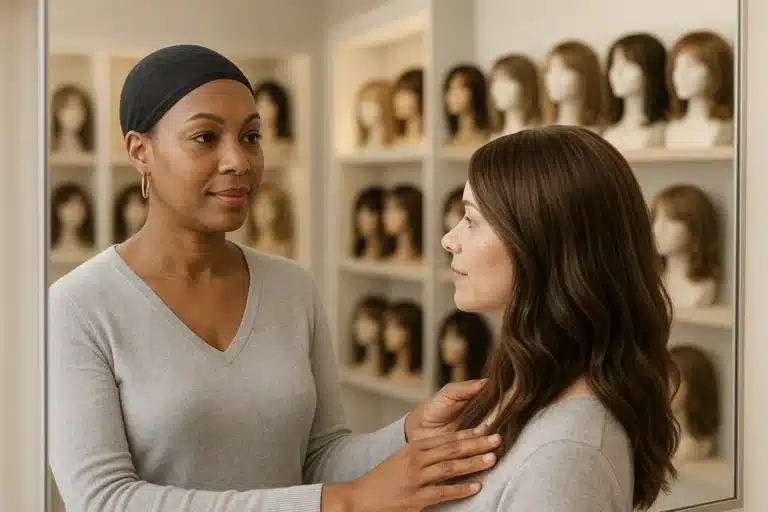
Shopping online cannot replace the tactile verification, accurate cranial measurement, and empathetic face-to-face styling required for a first-time wig wearer. Here is a field guide to navigating your options in Greater Cincinnati:
Clinical & Medical Hair Specialists
- Allusions Hair Solutions (Montgomery Road): If you are experiencing medical hair loss (such as from chemotherapy or alopecia), clinical centers offer private fitting rooms and trichology expertise. They can also help navigate medical insurance and process cranial prosthesis receipts (CPT code A9282).
Compassionate Regional Boutiques
- Jag’s Boutique (Fairfield): A wonderful option for personalized fitting and hair-loss specialization. Boutiques like Jag’s pride themselves on private, empathetic consultations that take the anxiety out of the process.
High-Selection Retail Centers
- The Hair Palace (North College Hill) & Superior Hair Depot (Kemper Commons): If you are looking to browse a massive inventory of ready-to-wear short styles, diverse textures, and beautiful gray blends, these bustling retail depots are excellent places to explore different looks.
Your Local Shopping Checklist
When you visit a local Cincinnati fitter, bring this checklist:
- Do you offer private fitting rooms?
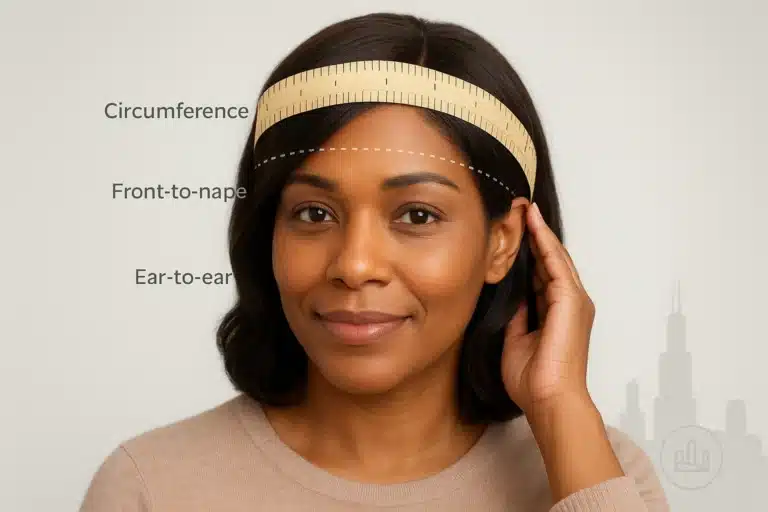
- Can you measure my head to ensure a petite, average, or large cap size?
- Do you carry capless (open-weft) wigs under 2.5 ounces?
- Do your wigs have Velcro adjusters instead of metal bra-hooks?
- Do you offer double-monofilament caps for sensitive scalps?
Maintenance Masterclass for Aging Hands
Caring for your wig shouldn’t require an advanced degree in cosmetology. Adopt the “Wash-and-Forget” routine.
Simply soak your synthetic wig in a basin of cold water with specially formulated wig shampoo. Rinse, apply a synthetic-safe conditioner, and let it air-dry. Crucial tip: Always dry your wig on a collapsible wire or plastic wig stand. Never use those heavy styrofoam heads for a wet wig, as they can permanently stretch out your comfortable cap! Finally, only use wide-tooth detangling picks, as stiff bristle brushes will damage the fibers.
Frequently Asked Questions (FAQ)
Do older women actually wear wigs?
Absolutely. Millions of women over 60 wear alternative hair daily to combat age-related thinning, alopecia, or simply for the sheer convenience of having a perfect hair day, every day, without sitting in a salon chair.
Why do my past wigs give me headaches or feel so hot?
Older or mass-market wigs were often extremely dense (holding too much hair) and built on solid, closed caps that trapped body heat. Switching to a featherweight, capless wig (under 2.5 ounces) with open wefting allows heat to escape and removes pressure from your neck and scalp.
What are the best wigs for a 70-year-old woman?
The best options are generally short pixie cuts, cropped bobs, or shake-and-go styles made of high-quality synthetic fibers. These require almost zero maintenance, hold their style after washing, and utilize Velcro adjusters that are easy on arthritic hands.
What is a capless wig and is it good for thinning hair?
A capless wig features open vertical ribbons of fabric (wefts) rather than a solid material. It is fantastic for thinning hair because it is incredibly lightweight, allows air to circulate to your biological scalp, and prevents you from overheating.
Taking Your Next Steps
Transitioning to a wig should be a journey of regaining your confidence, not adding stress to your life. Take your time, lean on the expertise of local Cincinnati fitters, and don’t be afraid to ask for exactly what you need—whether that’s a lighter cap, a softer interior, or a more natural hair density. By focusing on ergonomic comfort and cap science, you’ll find a style that looks beautiful and feels like you aren’t wearing anything at all.