
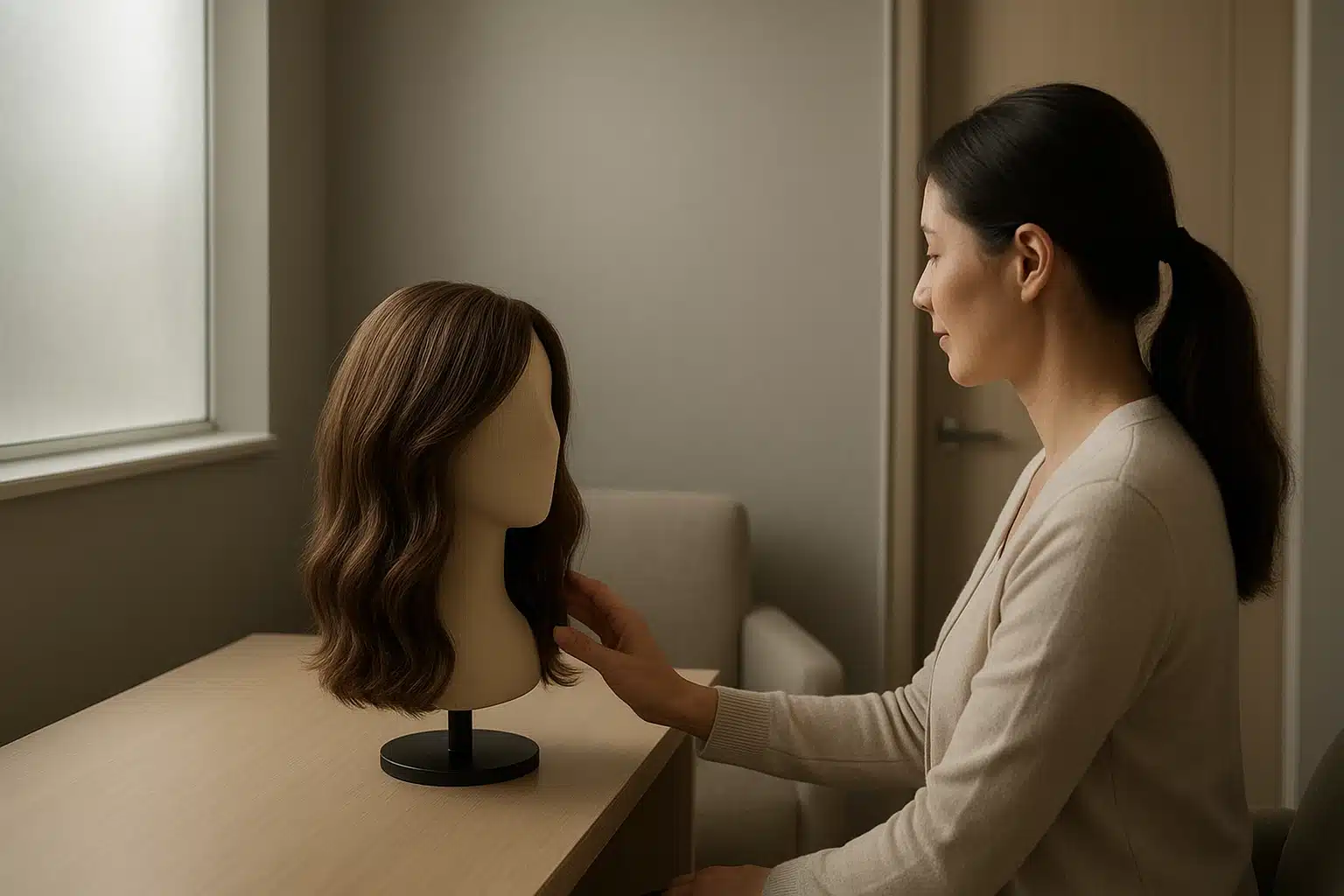
Losing your hair—whether due to medical treatments, alopecia, or natural thinning—is an intensely personal and often vulnerable experience. The very last thing you want is to try on a hairpiece for the first time in the middle of a crowded, brightly lit retail floor while casual shoppers browse nearby. Finding the right solution requires time, emotional space, and above all, privacy.
Walking into a store shouldn’t feel like a public spectacle. You deserve an environment that honors your dignity, offering dedicated fitting rooms and one-on-one appointments. If you’re navigating this transition, locating a compassionate provider is paramount. For many, the journey begins by exploring a comprehensive guide to the best wig stores in Chicago IL that prioritize your peace of mind over a quick sale.
The “Dignity-First” Standard: Why Privacy Matters
A discreet fitting room isn’t a luxury; it is a fundamental standard of care for medical hair loss. The initial consultation is often the first time individuals see themselves with a new profile, which can bring up a complex mix of emotions. Chicago’s top wig retailers understand this, shifting their store layouts from traditional retail displays to clinical, boutique-style sanctuaries.
When vetting a provider, look for “appointment-only” hours, street-level privacy (like frosted windows or discreet side entrances), and fully enclosed, soundproof consultation rooms.
Decoding the Medical Language: Wigs vs. Cranial Prostheses
One of the biggest “aha moments” for first-time buyers is learning the vocabulary of hair replacement. Understanding these terms doesn’t just help you find a better product—it can save you hundreds, if not thousands, of dollars.
- The Fashion Wig: Typically mass-produced, these are designed for occasional wear. They often feature standard wefted caps that can irritate a bare scalp.
- The Cranial Prosthesis: This is the medical term for a custom or high-end hairpiece designed specifically for patients experiencing hair loss. These feature medical-grade constructions, such as hand-tied monofilament caps, making them the ideal choice when seeking comfortable wigs for sensitive scalp conditions.
The Insurance Blueprint: Unlocking Reimbursement
Most beginners use the word “wig” when calling their insurance company and are immediately denied coverage. However, many insurance plans cover a portion (or all) of the cost if you use the correct terminology.
To navigate this:
- Get a Prescription: Ask your doctor for a prescription specifically for a “cranial prosthesis” due to your medical condition (e.g., alopecia or chemotherapy-induced hair loss).
- Request the Right Invoice: Ensure your retailer writes “Cranial Prosthesis” and includes their Tax ID number on the receipt.
- Submit with CPT Codes: Work with your provider to include the correct medical billing codes (like A9282) in your claim.
The Chicago Discretion Audit: Navigating Local Options
Chicago is home to several specialized retailers that have pioneered the bridge between clinical necessity and boutique luxury. Understanding the different models of service can help you choose the one that feels safest for you.
- The Clinical Partners: Established locations like Jerome Krause Fashion Hair have spent decades building referral networks with local oncology departments. They excel at the “no-obligation” consultation, providing a low-pressure, highly educational environment.
- The Problem-Solvers: Boutiques like Chrysalis Custom Hair focus deeply on lifestyle integration. They are masters of the details—teaching you how to sleep, exercise, and live confidently in your new hair.
- The Spacious Sanctuaries: Providers like Christine Pusateri Hair Solutions have prioritized physical store architecture, offering spacious, deeply private wig rooms that allow you to bring a loved one along for support.
- The Ultimate Discretion (In-Home): For those who prefer to bypass the storefront entirely, mobile services like Kaelyss and Alopecia Hair Solutions bring the consultation directly to your living room.
The “Pre-Loss” Consultation: Timing Is Everything
One of the most common mistakes people make is waiting until their hair has completely fallen out to seek help. If you know you will be undergoing medical treatments, book your consultation before the hair loss begins.
A pre-loss appointment allows your stylist to see your biological hair’s natural density, texture, and color. They can take photos, snip a small sample for color matching, and guide you through essential wig care routines so you feel entirely prepared when the time comes to make the transition.
Beyond Full Coverage: Navigating the Regrowth Journey
Hair loss is rarely a static condition. For many, especially post-chemotherapy or during fluctuating alopecia treatments, hair eventually begins to regrow. During this transition, a full wig might suddenly feel too warm or bulky, but your natural hair may not yet be at a comfortable length or density to wear alone.
This is the perfect transitional phase to explore lighter alternatives. Solutions like toppers or specialized hair extensions for thin hair can seamlessly blend with your natural regrowth, providing volume and coverage right where you need it without fully covering your scalp.
Frequently Asked Questions for First-Time Buyers
Do I need to shave my head before a fitting?
Absolutely not. A professional consultant can easily flatten and wrap your existing hair under a wig cap to ensure an accurate fit. The decision to shave your head is entirely personal and should only be done when you feel ready.
Can I bring a friend to a private consultation?
Yes! In fact, most professionals encourage it. Bringing a trusted friend or family member provides emotional support and offers a helpful second opinion when trying on different styles.
Why shouldn’t I use traditional clips if I have Alopecia?
Traditional metal clips grip tightly to biological hair to keep the wig secure. For individuals with alopecia or actively thinning hair, these clips can pull on fragile follicles, leading to further hair loss known as “traction alopecia.” A qualified specialist will introduce you to gentler alternatives, such as silicone-lined caps or velvet grips.
Taking the Next Step
Stepping into the world of alternative hair is a deeply courageous act. By seeking out Chicago wig stores that offer private consultations and discreet fitting rooms, you are choosing an environment that respects your journey. Take your time, ask questions, and remember that you don’t have to navigate this transition alone. The right professionals are waiting to help you rediscover your confidence in a safe, dignified space.






