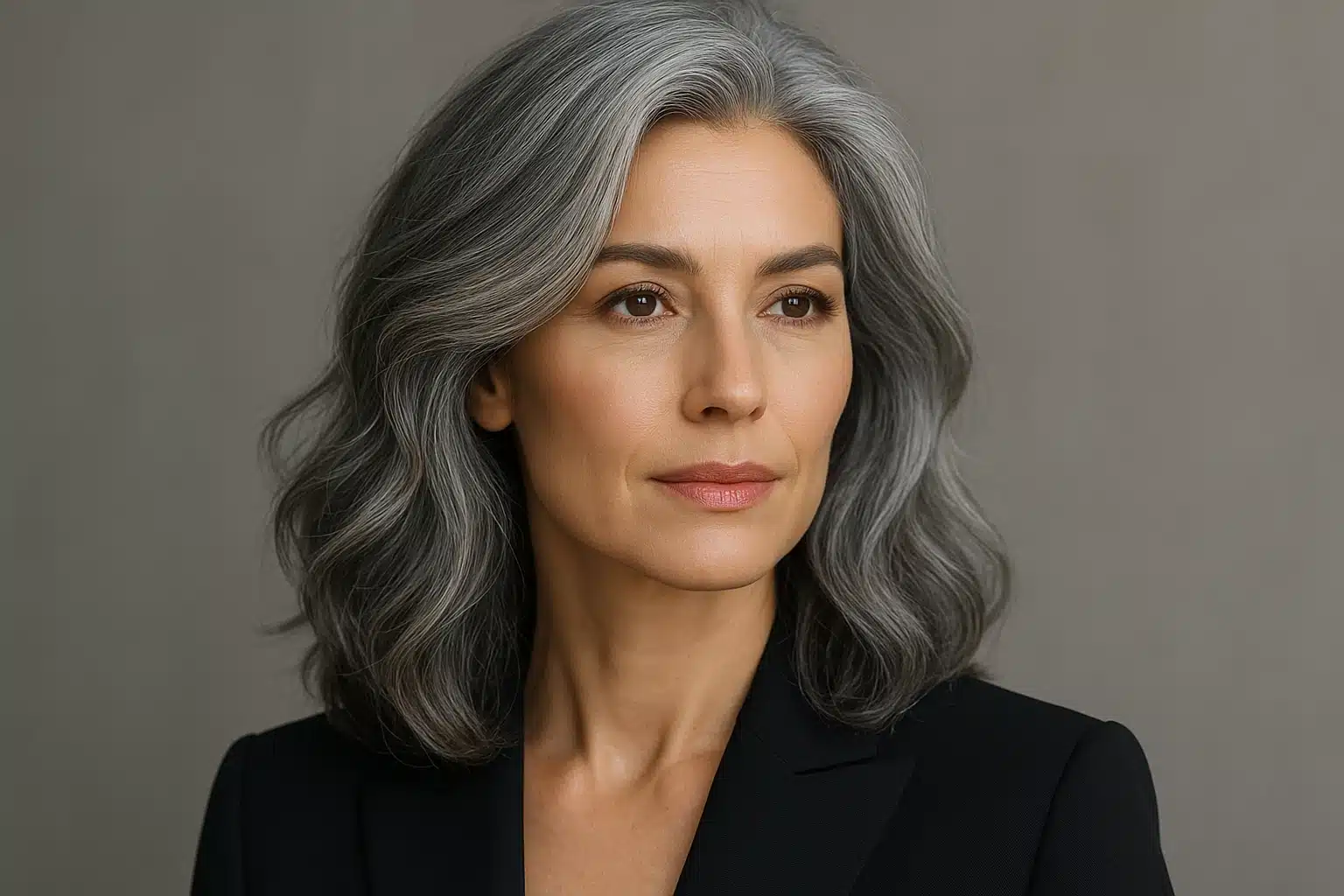
For decades, the wig industry treated grey hair as an afterthought—a flat, monochromatic “costume” color that lacked the nuance of biological hair. But the tide has turned. We are currently witnessing a “Silver Revolution,” where grey is no longer just a sign of aging, but a sought-after aesthetic of sophistication and grace. However, for those seeking authenticity, the challenge has shifted from finding grey wigs to finding believable ones.
Natural grey hair is never just one color; it is a complex mosaic of white, translucent silver, and your original pigmented strands. When you begin the journey of selecting your ideal wig brand to match your lifestyle, understanding which manufacturers have mastered this complexity is the ultimate test of quality. The brands that excel in this niche don’t just dye fibers grey; they engineer dimensional rooting and varied strand thickness to mimic the natural aging process, ensuring your look is indistinguishable from biological hair.
The Realism Barrier: Why Grey is Harder to Engineer
Before diving into specific brands, it is helpful to understand why realistic grey is the “final boss” of wig manufacturing. In standard colors like brunette or blonde, manufacturers can easily hide fiber uniformity with shine. With grey, the fibers must mimic the texture of hair that has lost its pigment.
Bio-hair that has turned grey is often coarser and more wiry. If a wig manufacturer uses the same silky, high-shine fiber for a grey wig as they do for a jet-black one, the result looks artificial. The top-tier brands use specific blending techniques and “transition colors” to overcome this, creating what we call a “Color Authenticity Masterclass” in every piece.
The Titans of Tone: Breaking Down the Industry Leaders
Different brands cater to different needs. Some prioritize variety, while others focus on specific rooting techniques. Here is how the leaders stack up.
Jon Renau: The King of Variety
If you are looking for sheer options, Jon Renau is the dominant force. With over 27 variations of grey, they have moved beyond standard colors into complex blends.
- The “O” and “FS” Factor: Jon Renau’s mastery lies in their coding. Their “FS” (Fashion Syrup) and “O” (Ombre) collections offer dimensional blending that places lighter grey tones around the face and darker tones at the nape, mimicking how the sun naturally lightens hair over time.
- The Standout: Look for codes like FS17/101S18 (Palm Springs Blonde/Grey). This is a masterclass in blending warmer blondes with cool silvers to create a modern, youthful grey.
Ellen Wille: The European Aesthetic
Based in Europe, Ellen Wille wigs generally feature a lower density, meaning there is less hair on the cap. This is crucial for mature wearers, as natural hair tends to thin slightly with age.
- Micro-Rooting: Ellen Wille wins on “Micro-Rooting.” This technique simulates soft regrowth at the follicle level. Instead of a harsh dark root, they use a soft, shadowed root (often called “Stone Grey Rooted”) that provides depth without looking like you missed a salon appointment.
Raquel Welch: The Transition Specialist
Going grey is often a journey, not a sprint. Raquel Welch excels in “Transition Colors”—shades that blend grey with soft browns or ash blondes.
- Psychological Ease: Colors like “Iced Granita” allow wearers to ease the psychological transition to silver. These shades bridge the gap, making them perfect for those who aren’t ready for a full “snow white” look but want to embrace their natural progression.
Beyond the Straight and Narrow: Texture Inclusivity
A massive gap in the wig market has historically been the lack of texture for mature women of color. Natural grey hair behaves differently across ethnicities, and for a long time, the industry ignored salt and pepper kinky wigs or tight curls.
Soul Lady Wigs: The Texture Innovator
While legacy brands dominate straight and wavy styles, Soul Lady Wigs has emerged as a rising authority for salt and pepper afro wigs and salt and pepper curly wigs.
- Why It Matters: If you have naturally textured hair, a silky straight grey wig might feel foreign to your identity. Brands focusing on texture inclusivity ensure that the curl pattern is just as realistic as the color blend.
Decoding the Matrix: How to Read Grey Color Codes
One of the most common frustrations for beginners is the “Over-Salting” issue—ordering a wig that looks like a 50/50 blend in the photo but arrives looking 90% white. Understanding the ratios is key.
- 50/50 vs. 75/25: Most color codes will indicate the percentage of grey. A standard “Salt and Pepper” usually implies a 50/50 split. However, to achieve a modern look, many stylists recommend a 25/75 blend (25% grey, 75% dark) for a youthful frame, or the reverse for a distinguished, mature look.
- The Dimensionality Rule: Avoid flat colors. Always look for descriptions that mention “blends,” “mix,” or “rooted.” A flat grey reflects light uniformly, which highlights the synthetic nature of the fiber.
The Unspoken Challenge: Men’s Salt & Pepper Styling
The search for a salt and pepper wig male option is high, yet authoritative advice is scarce. Men’s hairlines are exposed, making realism even more critical.
- The Gradient Requirement: For men, the temple area is usually the first to go grey. High-quality men’s pieces will feature a higher concentration of grey at the temples and sideburns, graduating into darker tones at the crown.
- Lace Front Essentials: Men should prioritize lace front options that allow the hair to be styled back, as this exposes the “gradient” of the grey, proving that the hair isn’t a monochromatic helmet.
Maintenance Myths: The Tangle Paradox
There is a common misconception that synthetic hair is “low maintenance.” While it holds its style, grey synthetic fibers have a unique quirk known as the “Tangle Paradox.”
Because grey fibers lack pigment (or are pigmented white), their chemical structure can sometimes be slightly coarser than darker fibers. This makes them more prone to friction tangling at the nape of the neck.
The Longevity Checklist
- Avoid Standard Shine Sprays: Never use a standard shine spray on a grey wig. It magnifies the synthetic look. Instead, use a dry shampoo or a texturizing spray to matte down the fibers.
- Violet-Based Care: If you choose a human hair grey wig, remember that it can yellow over time due to oxidation and UV exposure. Using violet-based conditioners (purple shampoo) is essential to neutralize brassiness and keep the silver cool and crisp.
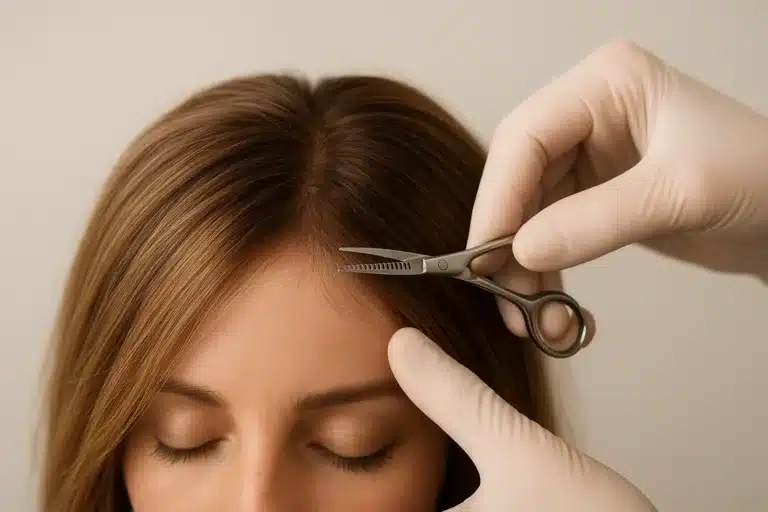
- The Professional Touch: When customizing your wig, treat it with the respect of biological hair. Professional stylists use hair salon capes and aprons during steaming and trimming to protect the fiber and clothing. Adopting this “salon mindset” at home encourages better care habits.
Frequently Asked Questions
Will my grey wig turn yellow?
If it is synthetic, no. Synthetic fiber is colorfast and will not oxidize. However, human hair grey wigs can yellow due to sun exposure and environmental pollutants. This is easily corrected with violet-toning products.
How do I match cool-toned silver to my skin?
This is the “Skin Tone Chart” challenge. If you have cool undertones (veins look blue), opt for “Iced,” “Platinum,” or “Silver” shades. If you have warm undertones (veins look green), look for “Champagne,” “Moonlight,” or “Cream” greys which have a slight beige base to prevent you from looking washed out.
Why does my grey wig look “flat”?
You may have chosen a non-rooted color. Natural grey hair usually has shadowing at the root where new growth appears. Choosing a “Rooted” or “Shaded” color option adds immediate dimension and realism.
Can I find a realistic grey afro wig?
Yes. The market has expanded significantly. Look for brands like Soul Lady Wigs that specialize in salt and pepper kinky wigs. The key is to ensure the fiber does not have an unnatural sheen, which is more noticeable on tight curl patterns.
Moving Forward in Your Journey
Selecting a grey wig is about more than covering hair loss; it is about embracing a new, sophisticated aesthetic. By focusing on brands that prioritize dimensional blending, rooting, and texture accuracy, you ensure that your hair commands respect and admiration. Whether you are looking for a sharp, professional bob or a soft, curly style, the perfect blend exists—you now have the knowledge to find it.