Imagine finally finding the perfect wig. It moves beautifully, matches your skin tone flawlessly, and gives you that immediate surge of confidence every time you look in the mirror. You wear it, you love it, and it becomes a part of your daily life.
But fast forward six months. That beautiful bounce has slowly morphed into stiff “helmet hair.” The delicate fibers at the nape of the neck are suffering from an incurable case of frizz. The panic sets in: Did I do something wrong? Do I need to buy a brand new wig already?
If you’ve ever felt this way, you are not alone. Most wig wearers find themselves trapped in a frustrating cycle of “buy, wear out, and discard.” We spend hours learning basic care tips—like how to wash and store our pieces—but eventually, DIY maintenance hits a wall.
The good news? Your wig might not be at the end of its life. Enter the world of professional wig re-styling and restoration—a “Wig Spa” experience that goes far beyond basic washing. Understanding what professional wig services entail is the key to transforming your current wig’s look, feel, and lifespan.
The Lifespan Reality Check: Is Your Wig Actually “Dead”?
Before you toss your favorite piece, it’s time for a Wig Health Audit. Many wearers misdiagnose a wig that desperately needs professional restoration as a wig that is beyond saving.
Consider the “Nape Frizz” scale:
- Level 1 (The Warning Signs): Mild tangling and slight texture changes at the neckline where the hair rubs against your clothes. Verdict: Totally salvageable. A professional steam treatment can reset this completely.
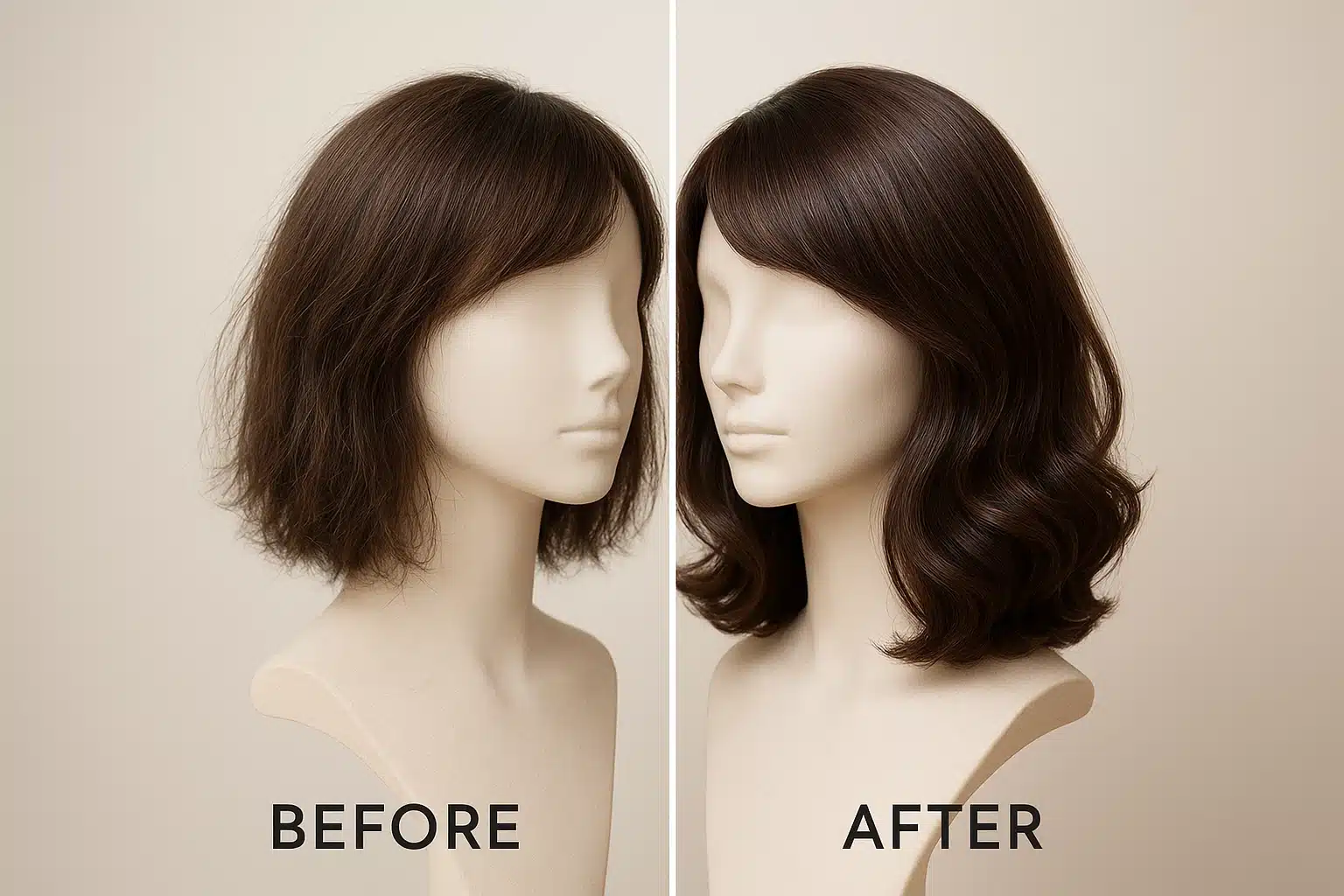
- Level 2 (The Warning Bell): Noticeable matting, loss of original style shape, and dullness. Verdict: Time for a professional Revamp. Bulk removal and fiber renewal are needed.
- Level 3 (The Point of No Return): Severely torn lace, permanently melted fibers from improper heat styling, or massive hair loss leaving tracks completely exposed. Verdict: It’s likely time to invest in a new, high-quality piece.
Knowing the difference between “tired” and “expired” is the first step in maximizing your investment.
Translating the Symptoms: A Service-to-Symptom Map
When your natural hair feels off, you know exactly what to ask your stylist for—a trim, some layers, or a deep condition. But wig terminology can feel like a foreign language. Here is how to translate your wig frustrations into professional service requests:
- The Symptom: “It looks too bulky and unnatural on top, giving me ‘helmet hair.'”The Professional Solution: Strategic Bulk Removal. This is vastly different from standard “thinning.” A wig expert knows how to remove density without leaving blunt, prickly stubble that pushes the remaining hair outward.
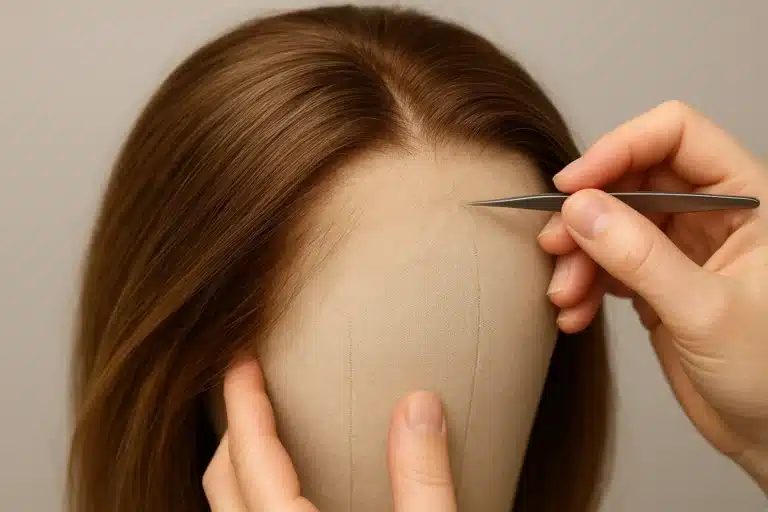
- The Symptom: “The hairline looks harsh and obvious.”The Professional Solution: Lace Customization and Face-Framing. By delicately plucking the hairline and cutting tension-based, face-framing layers, an expert creates the illusion of hair growing directly from your scalp.
- The Symptom: “My synthetic wig has lost its curl and feels like straw.”The Professional Solution: Fiber Renewal via Steam Treatment.
The Big Three: Essential Services Every Great Wig Shop Should Offer
When exploring professional wig restoration, you should look for experts who offer more than just a wash and a trim. A true wig professional understands the physics of alternative hair. Here are the three pillars of a great wig shop’s service menu:
1. The Revamp (Chemical & Heat Restoration)
This isn’t your average shampoo. For synthetic wigs, the magic lies in The Science of Steam. Did you know you can completely change the style of a pre-styled synthetic wig? It all comes down to “Fiber Memory.”
Synthetic fibers are essentially high-grade plastics that remember their shape when exposed to controlled steam. While standard flat irons can cause irreversible “hooks” at the ends of the hair or even melt the piece, professional steamers safely break the fiber’s memory. This allows an expert to smooth out deep friction frizz, reset a curl pattern, and bring the movement back to life.
2. The Re-style (Precision Cutting)
Cutting a wig requires an entirely different skill set than cutting natural hair. Two major concepts separate a standard cosmetologist from a wig expert:
- Tension-Based Cutting: Natural hair grows from the scalp and has a natural downward weight. Wigs lack this pull. A professional must cut a wig on a specialized block (mannequin) using specific tension techniques; otherwise, the hair will bounce up unnaturally once it’s on your head.
- The “Return Hair” Concept: If you look closely at the root of a hand-tied wig, you’ll see tiny, short hairs. This is the “return”—the folded-over end of the hair knot that keeps the wig from unraveling. If an untrained stylist tries to thin a wig too close to the root and cuts these return hairs, the wig will quite literally start falling apart.
3. The Reconstruction (Structural Repair)
Wig caps stretch over time, and delicate lace fronts can fray. A premier wig shop understands cap integrity. Services like lace replacement, cap resizing (fixing a stretched cap so it fits securely again), and “ventilation” (the meticulous process of hand-tying new hair into thinning spots to restore density) are the hallmarks of true structural restoration.
Synthetic vs. Human Hair: Understanding the Nuances
It’s crucial to understand that professional services vary drastically depending on your wig’s fiber.
If you have a Human Hair Wig, your restoration options lean heavily into chemical treatments. Color toning, deep hydration masks, and heat styling with traditional salon tools are highly effective.
If you have a Synthetic Wig, color treatments are off the table. Instead, restoration is all about structural integrity and steam. A great shop will clearly explain what can and cannot be done based on your specific piece, ensuring realistic expectations and brilliant results.
The Economics of Wig Maintenance: Understanding the ROI
Why pay for a professional restyle? It comes down to basic economics.
Imagine you’ve invested in a beautiful, high-quality medical-grade wig. As it starts to show signs of wear after several months, the temptation is to replace it. But comparing the cost of a $100-$150 professional “Revamp” against a $600 to $1,200+ replacement piece completely changes the math.
By incorporating professional maintenance into your routine every few months, you drastically lower your “cost per wear.” You aren’t just paying for a haircut; you are protecting an investment and extending the lifespan of your wig by months, if not years.
Choosing Your Expert: Questions to Ask Before Handing Over Your Hair
Not all salons are equipped to handle wigs. Before you hand over your beloved hairpiece, ask these fundamental questions:
- “Do you use steamers or just flat irons?” (If they intend to use a flat iron on a standard synthetic wig, politely take your wig and leave.)
- “How do you thin a wig to avoid cutting the return hair?” (Listen for answers that mention strategic sectioning rather than just taking thinning shears to the roots.)
- “Do you cut the wig on me, or on a block?” (The best professionals will often do a combination: cutting the foundational layers on a block for proper tension, and doing the final face-framing while the wig is on your head to match your unique features.)
Frequently Asked Questions (Beginner Guide)
Can I just take my wig to my regular hairstylist?
Usually, no. Unless your regular hairstylist has specific training in alternative hair, they may accidentally ruin your wig. Techniques used on natural hair (like blunt cutting, high-heat styling, and standard thinning) can cause permanent damage to wig fibers and cap construction.
Can you really change the style of a “pre-styled” synthetic wig?
Yes! Thanks to fiber memory, a professional with a commercial steamer can turn a curly synthetic wig bone-straight, or add waves to a straight wig. Once the new style is set with steam and allowed to cool, it becomes the wig’s new “permanent” style until it is steamed again.
How often should I get a professional revamp?
It depends on how often you wear your wig. For a piece worn daily, visiting a wig professional every 3 to 4 months for a deep clean, steam treatment, and slight trim will keep it looking incredibly natural and fresh.
Your Next Steps to a Revitalized Look
Navigating hair loss and alternative hair is a deeply personal journey. At Wig Superstore, we believe that you deserve to feel beautiful, confident, and supported every step of the way. With nearly two decades of experience in the industry, our mission goes far beyond providing high-quality wigs; we are dedicated to compassionate customer care and profound industry education.
Understanding the value of professional wig re-styling is your secret weapon. It frees you from the panic of inevitable wear-and-tear and empowers you to view your wig not as a disposable item, but as a customizable accessory that can evolve right alongside your personal style.
Take a closer look at your current wig today. Does it need to be replaced, or is it just begging for a professional spa day? By choosing a wig expert who understands the delicate science of alternative hair, you can breathe new life into your favorite styles and wear them with confidence for months to come.