Navigating hair loss—whether from chemotherapy, alopecia, or another medical condition—is an incredibly emotional journey. Suddenly, you are thrust into a world you never planned to visit, forced to make decisions about your appearance while managing your health. To add to the stress, finding the right hairpiece often comes with a significant, unexpected price tag.
If you are currently researching your options, you’ve likely felt the sting of “sticker shock” when looking at premium pieces. But here is a truth that many patients discover far too late: you might not have to pay for it entirely out of pocket.
New York City is home to some of the most compassionate and specialized medical hair boutiques in the world. However, the secret to unlocking insurance coverage doesn’t just lie in finding a great store; it lies in knowing exactly how to navigate the medical terminology and insurance landscape before you even walk through their doors.
Let’s demystify the process of finding the right boutique and securing the financial coverage you deserve.
The Diagnosis “Aha” Moment: Why Words Matter
The biggest hurdle most hair loss patients face when dealing with insurance companies is a simple matter of vocabulary.
If you call your insurance provider and ask, “Do you cover wigs?”, the representative will almost certainly say no. In the eyes of an insurance company, a “wig” is classified as a cosmetic item, much like makeup or designer clothing.
However, if you ask, “Do you cover a cranial prosthesis for medical hair loss?”, the answer often changes to yes.
A cranial prosthesis is the medical term for a custom-fitted hairpiece designed specifically for patients experiencing clinical hair loss. Specialized boutiques understand this distinction, which is why they operate differently than your standard fashion beauty supply store. They are equipped to provide the precise documentation your insurance company requires to classify your hairpiece as a necessary medical device.
The Paperwork Trifecta: What You Need Before Shopping
Before you book a private consultation at a specialized wig shop nyc, you need to gather your “Paperwork Trifecta.” Having these three documents in hand transforms you from a retail consumer into a medical patient in the eyes of your insurance provider:
- The Prescription: A standard prescription from your treating physician (such as your oncologist or dermatologist).
- The Letter of Medical Necessity (LMN): A brief letter from your doctor explaining why the cranial prosthesis is essential for your mental well-being and physical recovery.
- The ICD-10 Diagnosis Code: The specific medical billing code for your condition (e.g., L65.9 for non-scarring hair loss).
The “Copy & Paste” Prescription Script
Doctors are incredibly busy and may not know the exact phrasing insurance companies want to see. To avoid claim denials, ask your doctor to write the following on your prescription:
“Cranial Prosthesis for medical hair loss. Procedure Code A9282. Condition is [Temporary/Permanent].”
Demystifying the Codes: Synthetic vs. Human Hair
When reviewing your medical documents, you might notice specific billing codes, known as HCPCS codes. Understanding these is crucial, especially if you have your heart set on a specific type of hair.
- Code A9282: This is the standard code for a synthetic cranial prosthesis. Insurance companies are very familiar with this code and generally process it smoothly.
- Code L8499: This is an “unlisted procedure” code often used for custom, high-end human hair prostheses.
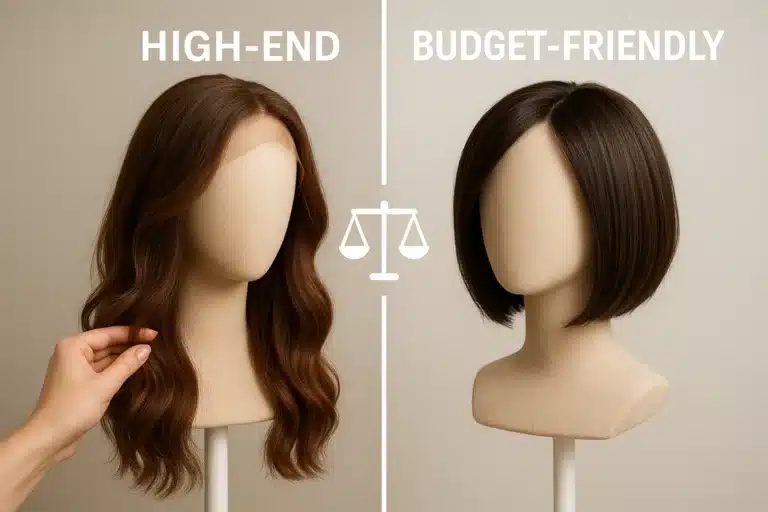
If you are searching for the best human hair wigs nyc, be aware that human hair pieces come with a higher price tag. While insurance may still cover them under code L8499, they might only reimburse you up to the standard allowance of a synthetic piece. Knowing this upfront helps you budget effectively for the difference.
NYC Boutiques: Direct Billing vs. Reimbursement
Not all medical wig boutiques handle insurance the same way. The most significant financial friction point for patients is the Upfront Cost Gap. When choosing where to shop, you will encounter two primary types of billing models:
1. The “Direct Billing” Providers (In-Network Style)
These are the “holy grail” for patients tight on liquid cash. A boutique that offers direct billing will verify your benefits, fit you for your cranial prosthesis, and bill your insurance company directly. You are only responsible for your co-pay or deductible. Because the boutique takes on the administrative work and waits for the insurance check, very few locations offer this—but those that do provide immense peace of mind.
2. The “Reimbursement Support” Providers (Out-of-Network Style)
This is the most common model. You pay the total cost of the wig upfront, and the boutique provides you with a “Denial-Proof Toolkit.” This typically includes a finalized CMS-1500 claim form, the boutique’s National Provider Identifier (NPI) number, and their Federal Tax ID. You submit this packet to your insurance company, who will then mail a reimbursement check directly to you.
Tip: When calling around to find the best wig store in manhattan, always ask: “Do you direct bill my insurance, or do you provide a CMS-1500 form for me to submit for reimbursement?”
The New York State Safety Net: The $750 Mandate
If you live in New York, you have a unique legislative advantage. Navigating insurance policies can be exhausting, but recent legislative efforts have stepped in to protect patients.
New York State Bill A2683 requires certain health insurance policies to provide coverage for cranial prostheses for those experiencing hair loss due to medical conditions. Under this mandate, eligible policies must provide a minimum of $750 in coverage per year for a cranial prosthesis. While this may not cover the entirety of a premium human hair piece, it provides a crucial safety net that dramatically lowers your out-of-pocket expenses.
Financial “Plan B”: When Insurance Falls Short
If you are still wondering does health insurance cover hair loss treatment and find that your specific policy strictly excludes cranial prostheses, you still have options to soften the financial impact:
HSA and FSA Accounts
Because a cranial prosthesis is prescribed by a doctor for a medical condition, it is almost always an eligible expense for your Health Savings Account (HSA) or Flexible Spending Account (FSA). Using these pre-tax funds can save you anywhere from 20% to 30% depending on your tax bracket.
The IRS Medical Deduction
The IRS recognizes medical hair loss. If your total out-of-pocket medical expenses for the year (including copays, treatments, and your cranial prosthesis) exceed 7.5% of your Adjusted Gross Income (AGI), you can deduct the cost of your wig on your taxes. If you are purchasing a premium custom human hair piece that costs several thousand dollars, this tax strategy is highly beneficial.
Frequently Asked Questions (FAQ)
Is a medical wig different from a regular fashion wig?
Yes. Medical wigs (cranial prostheses) are constructed differently. Because medical treatments can make the scalp incredibly sensitive, these pieces feature specialized caps made from softer, breathable, and hypoallergenic materials designed to be worn against a bare scalp without causing irritation.
Do I need an appointment to visit a medical wig boutique?
Almost always, yes. Unlike traditional retail stores, medical boutiques prioritize privacy and emotional comfort. Consultations are usually held in private fitting rooms with compassionate specialists who need dedicated time to measure your head and review your medical documentation.
How long does the insurance reimbursement process take?
If you are paying upfront and submitting a claim for reimbursement, it typically takes insurance companies 30 to 60 days to process the CMS-1500 form and mail your check.
Next Steps on Your Journey
Losing your hair is a challenging chapter, but reclaiming your reflection shouldn’t require fighting a solitary battle against your insurance company. By understanding the terminology, gathering your paperwork early, and knowing the difference between direct billing and reimbursement, you are taking back control of your journey.
Take the time to research specialized boutiques in New York City that prioritize private, compassionate consultations. Armed with the knowledge of how cranial prosthesis billing works, you can step into your consultation focusing on what truly matters: finding the perfect fit that makes you feel beautiful, confident, and utterly yourself again.