Imagine finding a high-quality human hair wig that feels incredibly comfortable, moves beautifully, and restores your confidence—but the color just isn’t quite you. Maybe it lacks the sun-kissed dimension of your natural hair, or perhaps it sits flat against your skin tone. If you are one of the many people in the Gateway City looking for personalized alternative hair, you are likely discovering a major shift: off-the-shelf colors are no longer your only option. Today, custom coloring, balayage, and highlighting can transform a beautiful wig into your perfect hair.
However, venturing into the world of custom wig coloring can feel intimidating. Not every salon has the technical expertise to handle alternative hair, and a single mistake can ruin a significant investment. If you are just beginning to explore your local options, checking out a comprehensive guide to the best wig stores in St. Louis, MO, will help you find the perfect fit as you start your customization journey. In this educational guide, we will demystify the science of wig coloring, reveal what the top local St. Louis professionals do differently, and help you confidently navigate your custom color options.
The Science of Altering Human Hair Wigs
To understand how custom coloring works on a wig, we first have to unlearn a few things about natural, biological hair.
When hair is growing from your scalp, it is constantly nourished by natural oils (sebum) and maintains a relatively healthy, closed outer layer known as the cuticle. Human hair wigs, however, are created using hair from multiple donors that has often undergone factory chemical processing to sanitize it, strip its original color, and dye it to a uniform shade.
The Porosity Differential Rule
Because of this factory processing, the cuticles on a human hair wig are highly porous. Think of the hair like a dry sponge. When dye is applied, wig hair absorbs color 30% to 50% faster than the hair growing out of your head.
If a traditional hairstylist applies standard salon chemicals to a wig without adjusting their formula, the results can be disastrous—turning the hair overly dark, patchy, or severely damaging the fibers. Professional alternative hair colorists know they must use much lower developer strengths (typically 10 to 20 volume maximum) and process the hair for a fraction of the usual time.
The Virgin vs. Processed Color Boundary
When you are shopping for a wig with the intent to customize it, you must understand the golden rule of alternative hair: It is always safer to deposit color (go darker) than to lift color (go lighter).
- Processed Human Hair: If you buy a beautiful brunette wig (like a color #4) and decide you want platinum blonde highlights, bleach will likely destroy the already-processed fibers.
- Virgin Hair: If you want a dramatic blonde balayage, you must start with unprocessed Virgin European hair, or purchase a light blonde base (like a color #613 or #27 honey blonde) and have a professional add lowlights and a “shadow root” to create dimension without bleach.
Custom Coloring Techniques Decoded
When you visit a specialized St. Louis wig salon, what exactly are they doing in that back room to transform your piece? Here are the most popular custom color requests and how professionals safely execute them.
Highlights and Lowlights
Flat, single-tone hair rarely looks natural because biological hair naturally varies in color due to sun exposure and genetics. Stylists use foils or hand-painting techniques to weave in highlights (lighter strands) or lowlights (darker strands). For St. Louis residents wanting a subtle upgrade, adding a few lowlights to a stock blonde wig instantly tones down the brightness and creates a rich, natural depth.
Balayage and Shadow Roots
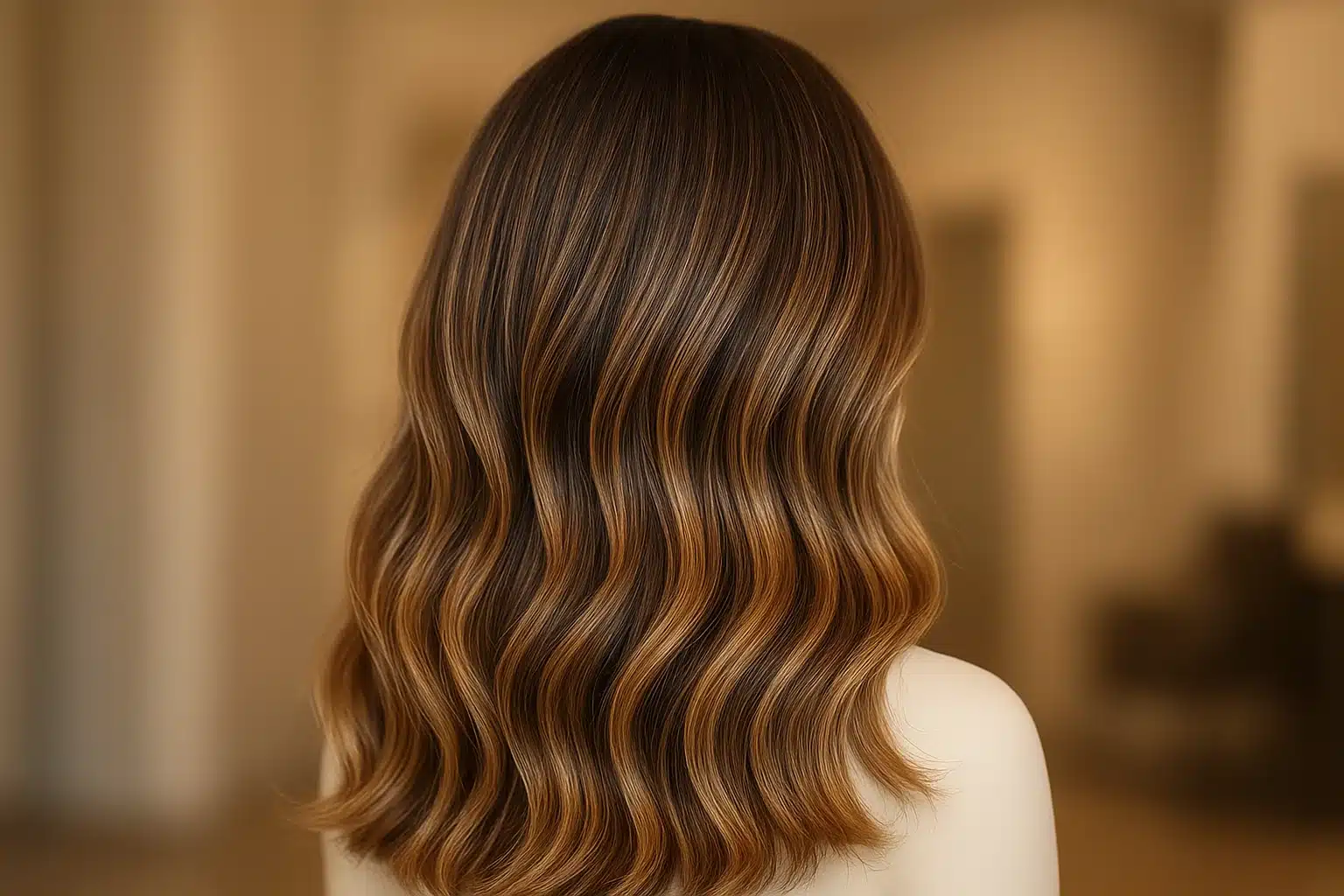
Balayage—a French word meaning “to sweep”—is a freehand painting technique that creates a soft, natural gradient from darker roots to lighter ends. Because wigs don’t grow, a “shadow root” (dyeing the top inch of the wig a slightly darker color) is incredibly popular. It mimics natural hair growth and beautifully hides the transition line where the wig meets your skin, making the lace front appear seamlessly natural.
The Crucial Step: Knot Preservation
Here is the biggest “aha moment” for new wig wearers: traditional salon dyeing can destroy a wig’s cap. High-quality human hair wigs feature hand-tied caps, meaning each hair is meticulously tied into a delicate lace base.
If bleach or dye seeps through the lace and hits those tiny knots, two things happen: the lace becomes permanently stained, and the harsh chemicals cause the knots to break. This leads to massive shedding, leaving bald patches at the crown of your wig. Elite St. Louis wig colorists use specialized barrier creams, inverted cap protection methods, and meticulous foil placements to ensure chemicals never touch the delicate lace foundation.
Evaluating St. Louis Wig Salons and Stylists
While St. Louis is home to hundreds of fantastic traditional hair salons, coloring a human hair wig requires a distinct cosmetology skill set. If you are considering local retailers like The Custom Wig Shoppe, Lake St. Louis Wigs & Cuts, or A+ Wigs & Cuts, or if you are looking for an independent alternative hair colorist, here is your evaluation matrix:
- Alternative Hair Certification: Ask if the stylist is specifically trained in alternative hair or wig ventilation. Traditional cosmetology schools rarely teach wig chemistry.
- Strand Testing Policy: A trustworthy professional will always insist on performing a strand test on a hidden section of the wig before committing to a full color process to see how the factory-processed hair reacts.
- Private Consultation Rooms: Hair loss can be a deeply personal and emotional journey. The best local retailers offer private fitting rooms where you can discuss your custom color needs without sitting in a crowded, noisy salon floor.
The Customization Journey: What to Expect
If you’re ready to personalize your look, knowing what to expect can ease the anxiety of altering your piece.
Pricing Realities
Custom wig coloring is an artisan service. While prices vary across the St. Louis metro area depending on hair length, density, and the complexity of the color, you should generally expect to invest anywhere from $150 to $400+ for professional coloring. When weighing this cost, consider that a masterfully customized wig often outlasts and outshines an off-the-shelf alternative.
Pre-Consultation Checklist
When heading to your St. Louis consultation, come prepared:
- Bring Inspiration Photos: Bring pictures of the exact balayage, highlight placement, or root depth you want.
- Bring Bio Hair Samples: If you are blending a wig or topper with your biological hair (such as matching a specific salt-and-pepper gray), bring a few strands of your natural hair or wear it down for the stylist to evaluate.
- Know Your Wig’s History: Be ready to tell the stylist the brand, fiber type (Virgin vs. Remy), and whether the wig has been previously altered.
Post-Color Maintenance
Once you have your dream color, protecting it is your next priority. Colored human hair wigs require strict hydration routines. Wash your piece only when necessary (usually every 6-8 wears) using color-safe, sulfate-free shampoos. Because the hair cannot replenish its own moisture, deep conditioning treatments and leave-in UV protectants are essential to keep your custom highlights from becoming brassy or brittle.
Frequently Asked Questions About Custom Coloring Wigs
Can I use drugstore box dye on my human hair wig?
Absolutely not. Box dyes are formulated with high-volume developers meant to break through the resistant cuticles of biological hair. Applying this to a porous, factory-processed wig will almost certainly result in severe chemical damage, unpredictable colors, and irreversible drying.
I bought a dark brown human hair wig. Can a local salon bleach it to platinum blonde?
It is highly unlikely. Lightening a pre-processed dark wig to platinum will degrade the fiber integrity, leading to severe breakage. If you want a platinum or light blonde style, you must purchase a wig that is already that color, or start with premium Virgin hair.
How long does custom color last on a wig?
Because a wig is not exposed to the daily natural oils, frequent washing, and environmental stressors that biological hair faces, custom color lasts significantly longer. With proper sulfate-free care and limited UV exposure, a custom balayage or root shadow can remain vibrant for the entire lifespan of the wig.
Taking the Next Step in Your Journey
Customizing a human hair wig bridges the gap between simply wearing hair and truly feeling like yourself. By understanding the unique chemistry of alternative hair and knowing what to look for in local St. Louis professionals, you are empowering yourself to make safe, confident decisions about your investment.
Whether you are navigating medical hair loss or simply elevating your everyday style, education is your most valuable tool. Take your time, ask the right questions, and remember that the perfect, personalized look is entirely within your reach.