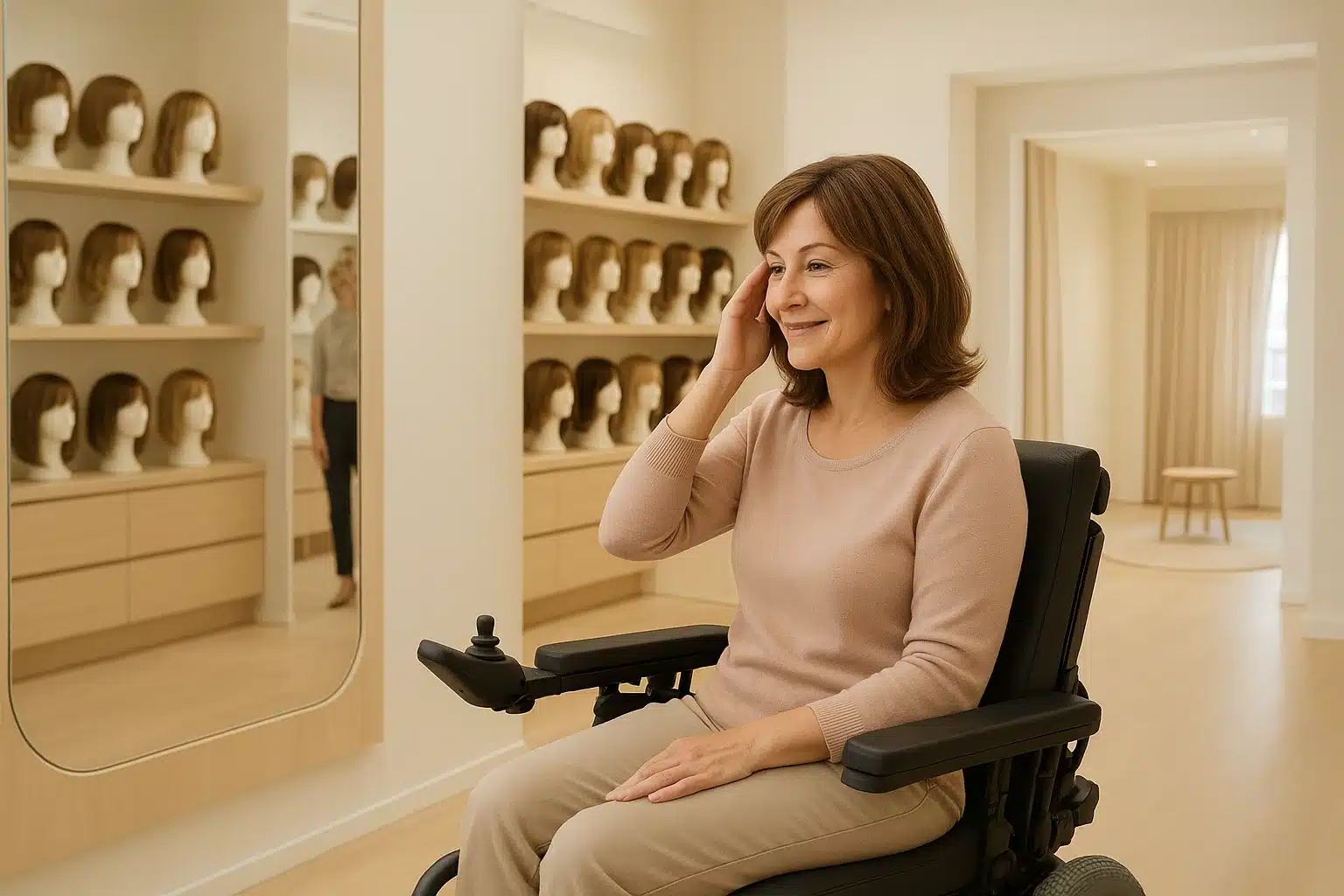
Shopping for a wig should be an empowering experience—a moment where you reclaim your confidence and explore new styles in a supportive environment. But when you are balancing hair loss with physical mobility challenges, the logistics of simply getting into a retail store can quickly overshadow the joy of finding your perfect look. Whether you use a power wheelchair, rely on a walker, or are simply conserving your physical energy during medical treatments, navigating steep coastal curbs, cramped aisles, and distant parking spaces is the last thing you need.
The reality of California’s beautiful, historic coastal towns is that charming storefronts don’t always align with modern accessibility needs. As you research your options and select best wig stores in Santa Cruz, CA to visit, having ground-truth information about parking gradients, door clearances, and fitting room sizes is essential. This guide is here to bridge that gap, helping you and your caregivers easily identify spaces that offer both physical accommodation and the emotional dignity you deserve.
The Big Difference: “Store Access” vs. “Fitting Access”
If you’ve ever checked a generic online directory or Yelp to see if a business is wheelchair friendly, you’ve probably experienced the frustration of arriving only to find it doesn’t meet your actual needs. This happens because most directories only measure “Store Access.”
Store Access simply means you can get through the front door. There might be a curb cut, and the entrance might lack a step. But buying a wig—especially a medical cranial prosthesis for hair loss—isn’t like buying a greeting card. It requires privacy, time, and space.
Fitting Access is what you actually need. This means a store doesn’t just let you in the door; it accommodates your entire shopping journey. A truly accessible wig boutique should offer:
- 36-Inch Aisles: Enough space to navigate between displays without knocking over mannequins or snagging your mobility device.
- 60-Inch Turning Radius: The private fitting room must be large enough for a wheelchair to execute a full 360-degree turn, especially if a caregiver or partner is joining you.
- Accessible Mirrors and Seating: Mirrors should have a maximum bottom height of 40 inches from the floor, and seating should allow for easy lateral transfers if needed.
Santa Cruz Neighborhood Breakdown: Parking and Terrain
Santa Cruz County has distinct micro-zones for shopping, and your experience will change dramatically depending on which neighborhood you visit. Here is a breakdown of what to expect from a mobility standpoint.
Downtown Santa Cruz (Pacific Avenue Corridor)
Downtown offers a high density of retail options, but it comes with unique friction points. While the municipal parking garages (like the Soquel/Front garage) offer designated handicap spaces and elevators, reaching the storefronts requires navigating city sidewalks, brick pavers, and heavy pedestrian traffic. If you are experiencing fatigue from chemotherapy or other treatments, the distance from your car to the fitting chair might feel overwhelming, even with step-free curbs.
Westside Santa Cruz (Mission Street)
The Westside is generally much easier for mobility-impaired shoppers. This area features many strip-mall-style private lots. Here, you’ll find flat terrain, wider storefronts, and direct front-door parking. If you are traveling in a wheelchair-accessible van that requires side-ramp deployment, the private surface lots on the Westside (like those near Fair Avenue) offer a much less stressful loading and unloading experience than downtown street parking.
Capitola and Mid-County
Capitola Village itself can be famously tight and crowded, but the broader Capitola and Soquel retail corridors offer some of the best accessibility in the region. Stores located in modern shopping plazas here typically provide dedicated van-accessible spaces (complete with the required 8-foot parking space and 5-foot access aisle) and lower crowd density, ensuring a quiet, smooth entry into the building.
The Anatomy of an Accessible Wig Shop
According to the standards highlighted by local resources like the Access Santa Cruz County Guide (created by Shared Adventures) and the California CCDA, a fully accessible retail space relies on precise measurements.
When you are looking for a welcoming environment, here is what goes into an accessible design:
- Door Clearances: The entryway must have at least 32 inches of clear width.
- Thresholds: The bump at the doorway should be capped and no higher than half an inch. Anything taller can act as a frustrating roadblock for walkers and manual wheelchairs.
- Counter Heights: Consultation desks and checkout counters should not exceed 36 inches in height, allowing you to comfortably review styles, caps, and payment options without having to reach up uncomfortably.
- Knee Clearance: If you are sitting at a styling table for a fitting, there should be at least 27 inches of vertical knee clearance underneath.
The Pre-Visit Checklist: 5 Questions to Ask Before You Drive
To save your energy and prevent disappointment, we highly recommend calling any wig store or hair replacement salon before you make the trip. Use this quick script to verify their accessibility:
- “Do you have a private parking lot, and are there designated van-accessible spaces?” (This helps you avoid the stress of metered street parking).
- “Is there a step or a high threshold at your front entrance?”
- “Do you offer private, enclosed fitting rooms?” (Crucial for emotional privacy during hair loss consultations).
- “Is the fitting room wide enough to comfortably fit a power wheelchair and my caregiver?”
- “Can I book a private, appointment-only consultation?” (Booking off-peak hours ensures the staff can dedicate their full attention to clearing aisles and assisting you).
Exploring Virtual and Home Alternatives
If you find that the physical retail landscape in your specific area of Santa Cruz poses too many obstacles on a given day, remember that you are not out of options. Many reputable wig providers now offer virtual consultations. You can speak with licensed stylists over video chat, discuss your cap sizing, and have high-quality wigs shipped directly to your door for at-home try-ons. This serves as an excellent backup plan on days when physical travel simply isn’t feasible.
Frequently Asked Questions
Do disabled parking placards work at Santa Cruz municipal meters?
Yes. In California, displaying a valid disabled person placard or license plate allows you to park at any metered spot for free, and exempts you from time limits at streetside parking. However, this does not apply to privately owned retail lots, which enforce their own time limits, though they are still legally required to provide accessible spaces.
Can my caregiver come into the fitting room with me?
Absolutely. A reputable wig boutique understands that a caregiver, partner, or loved one is often essential for both physical support and emotional validation. Just be sure to verify over the phone that their private fitting rooms are spacious enough to accommodate two people plus any mobility devices.
What is a cranial prosthesis, and do stores have special access for this?
A cranial prosthesis is the medical term for a custom wig designed specifically for patients experiencing clinical hair loss (such as from alopecia or chemotherapy). Stores that specialize in these medical units are usually far better equipped for accessibility. They prioritize private consultation rooms, appointment-based scheduling, and empathetic, dignified care that standard fashion wig shops may lack.
Why do some stores claim to be wheelchair accessible when they aren’t?
Many online directories automatically tag businesses as “accessible” if the building’s exterior meets basic municipal code. They rarely account for temporary interior obstacles, like seasonal product displays blocking aisles, or the specific dimensions of back-room fitting areas. This is why ground-truth verification—calling ahead and asking specific questions—is always your best strategy.
Your Next Steps
Finding the perfect wig is an intimate, transformative process, and physical limitations should never stand between you and feeling like yourself again. By understanding the local landscape of Santa Cruz, knowing the difference between a front door and a fitting room, and calling ahead with the right questions, you take back control of your shopping experience.
Take a moment to jot down the pre-visit questions above, assess which Santa Cruz neighborhood best fits your transit needs, and take your first confident step toward finding a wig specialist who truly caters to all of your needs.