If you’ve recently experienced hair loss due to alopecia areata, chemotherapy, or another medical condition, you might have already discovered a frustrating truth: most wigs aren’t designed with sensitive scalps in mind. When you lack the natural barrier of your own hair, trying on a standard wig can feel scratchy, heavy, and overwhelmingly uncomfortable—especially when the Arizona summer hits.
Navigating this transition can feel daunting, but you don’t have to sacrifice comfort for confidence. The secret lies in moving away from standard fashion pieces and exploring medical-grade alternatives. Knowing exactly what to look for when visiting a wig store in Phoenix will save you from costly mistakes, ensuring you find a piece that protects your scalp while looking entirely natural.
Let’s explore the science of medical wigs, how to beat the desert heat, and the insider tips you need to navigate your local options.
The Medical Difference: Why Standard “Fashion Wigs” Fall Short
One of the biggest “aha moments” for those dealing with hair loss is learning the difference between a standard fashion wig and a medical wig (clinically known as a cranial prosthesis).
Fashion wigs are built for people who already have hair. They are typically machine-made with thick wefts of hair sewn onto rigid, structured caps. If you have a sensitive, bare scalp, these stiff seams and harsh materials can cause severe friction, redness, and irritation.
A cranial prosthesis, on the other hand, is engineered specifically for individuals with partial or total hair loss. The materials used inside the cap are intentionally soft, hypoallergenic, and designed to grip the scalp safely without the need for harsh tapes or glues.
Cap Science: Engineering Comfort for Sensitive Scalps
When you’re dealing with alopecia or medical treatments, the inside of the wig matters far more than the outside. Here are the specialized cap features you should look for:
100% Hand-Tied Caps
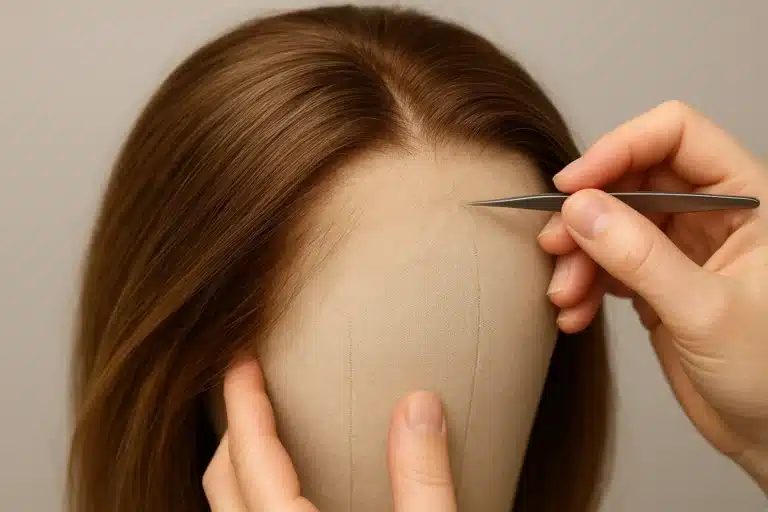
For active alopecia areata, a hand-tied cap is a necessity, not a luxury. Instead of machine-sewing rows of hair, artisans tie each individual hair by hand to a soft, four-way stretch mesh. This eliminates bulky seams entirely, resulting in a cap that feels like a silky second skin while mimicking natural hair movement.
Monofilament Tops
A monofilament (often called “mono”) top features a sheer, breathable micromesh material at the crown. Individual hairs are tied to this mesh, allowing your natural scalp color to show through. It provides an incredibly realistic part and protects the sensitive skin at the top of your head from irritation.
Silicone and Polyurethane Features
For those with alopecia totalis or universalis, wigs equipped with silicone or polyurethane strips are game-changers. These materials use your body’s natural heat to create a gentle, secure suction against the scalp, completely eliminating the need for adhesives.
If you want to dive deeper into how these elements come together, exploring the different types of wig caps is a great next step in your educational journey.
The Phoenix Factor: Beating the 110°F Heat
Perhaps the biggest challenge for wig wearers in Arizona is the infamous “Heat Gap.” How do you wear a wig when it’s 110°F outside without overheating?
Standard synthetic wigs can trap heat, creating a greenhouse effect on your scalp. To survive the desert climate comfortably, look for these specific heat-friendly solutions:
- Bamboo Liners: Bamboo viscose is a phenomenal material for the desert. It is naturally moisture-wicking, breathable, and antibacterial. Wearing a seamless bamboo liner under your wig can drastically reduce sweat buildup and friction.
- Open Wefted Backs: While hand-tied caps are the softest, some wearers prefer caps with open wefting at the back and sides. This construction leaves deliberate spaces between the hair panels, allowing maximum air circulation to cool the scalp.
- Hypoallergenic Cap Designs: If you are prone to heat rashes, finding comfortable wigs for sensitive scalp made entirely of soft, breathable materials is non-negotiable for the Phoenix climate.
What to Expect at a Medical Wig Consultation
When you start visiting specialty boutiques in the Phoenix valley, pay attention to the environment. A true medical wig specialist operates much differently than a standard beauty supply store.
Here is what you should expect (and advocate for) during your visit:
- Privacy: You should be offered a private, HIPAA-compliant fitting room, ensuring you can try on pieces without feeling exposed to the general public.
- Scalp Analysis: A knowledgeable consultant will ask about your specific type of hair loss, skin sensitivities, and lifestyle before pulling any styles off the shelf.
- Specialized Inventory: They should carry reputable medical wigs that prioritize cap softness and medical-grade materials, rather than just fashion brands.
- Custom Measurements: To prevent rubbing and slipping, a cranial prosthesis must fit perfectly. The specialist should take multiple measurements of your head, including circumference, ear-to-ear, and front-to-back.
The Insurance Secret: Navigating “Cranial Prosthesis” Coverage
One of the best-kept secrets in the hair loss community is that your new hair might be partially or fully covered by your health insurance.
Many local insurance providers recognize that hair loss caused by alopecia or chemotherapy is a medical condition. However, if you submit a claim for a “wig,” it will almost certainly be denied. The key to reimbursement is the terminology.
Steps to getting covered:
- Get a Prescription: Ask your dermatologist or oncologist to write a prescription specifically for a “Cranial Prosthesis.” The prescription should include the medical diagnosis code (ICD-10) for your specific type of hair loss.
- Know Your Codes: When filing, you or your boutique will need to use the correct healthcare codes. Familiarizing yourself with the cranial prosthesis cpt code ensures your claim is processed as durable medical equipment rather than a cosmetic accessory.
- Request an NPI: Ensure the local boutique you purchase from can provide an NPI (National Provider Identifier) number and an itemized receipt for your insurance company.
Frequently Asked Questions
Can I wear a wig if I have no hair at all to clip it to?
Absolutely. In fact, medical wigs are specifically designed for this scenario. Features like silicone suction bases, polyurethane tabs, and velvet-lined ear tabs ensure the piece grips your scalp securely and safely without the need for hair clips.
How do I clean my medical wig without irritating my scalp later?
The products you use to wash your wig can transfer to your scalp. Always clean your cranial prosthesis using gentle, sulfate-free products designed specifically for alternative hair. Be sure to thoroughly rinse the inside of the cap to remove any soapy residue that could cause contact dermatitis.
Are human hair wigs always better than synthetic for alopecia?
Not necessarily. While human hair offers unmatched realism and longevity, it is also heavier and requires regular heat-styling. High-quality synthetic wigs are incredibly lightweight, highly breathable, and have “style memory”—meaning they hold their style perfectly even in the brutal Phoenix heat.
Taking the Next Step
Experiencing hair loss is a profoundly personal journey, but you don’t have to navigate the transition alone. By understanding the science behind cap constructions, planning for the desert climate, and knowing how to utilize your insurance, you are well on your way to finding a solution that brings you comfort and peace of mind.
When you’re ready, take the time to research specialty boutiques that prioritize medical empathy over high-pressure sales. You deserve a space where your comfort is the priority, and a cranial prosthesis that makes you feel entirely like yourself again.