New Orleans is a city defined by self-expression. From the grand pageantry of Mardi Gras krewes and the vibrant French Quarter drag scene to a thriving cosplay community and the everyday elegance of medical hair restoration, wigs are central to local culture. But anyone who has worn a wig in the deep South knows that our unique environment—especially that legendary Louisiana humidity—demands a lot from our hairpieces.
While finding the perfect wig shop in New Orleans is an exciting first step in your hair journey, what happens when your investment starts showing its age? A torn lace front, frizzy synthetic ends, or a style that simply melted during Southern Decadence shouldn’t mean the end of your favorite wig’s life.
Whether you wear a wig for medical reasons, theatrical performance, or daily fashion, learning how to maintain, repair, and customize your piece is the secret to extending its lifespan. Let’s dive into the world of wig restoration and customization in the Big Easy.
The New Orleans Humidity Challenge
Before we talk about repair, we have to talk about the weather. General wig care guides often ignore extreme climates, but in Southern Louisiana, humidity is the ultimate test of your wig’s durability.
Moisture in the air aggressively degrades wig adhesives and causes human hair wigs to swell and frizz. Synthetic wigs, while immune to humidity-induced frizz, face their own challenges. Because synthetic fibers are essentially finely spun plastics (like Kanekalon), they are highly susceptible to heat and friction. When an inexperienced wearer uses a standard flat iron to smooth a frizzy synthetic wig, they often accidentally melt the fibers, causing irreversible damage.
The Humidity-Proofing Equation: To survive a New Orleans summer, heavy-duty styling requires proper sealants. For extreme theatrical or cosplay styles, professional wig-setters, Got2b Glued freezing spray, or classic Aquanet are non-negotiable. For daily human hair wearers, anti-humectant serums that coat the hair shaft are essential to block out the dense, damp air.
The New Orleans Professional Wig Directory
When a wig needs more than a simple brush-out, knowing where to turn locally is crucial. New Orleans boasts an incredible array of specialists, each catering to different needs within the wig-wearing community:
1. Wigs by Tiffani (Metairie)
Located on N Causeway Blvd, this is the absolute regional authority on medical human hair wigs and alopecia styling. If you are experiencing hair loss and need delicate customization, a cap resizing, or a deeply empathetic, private consultation, this is your premier destination.
2. Fifi’s Custom Wigs (French Quarter)
A legendary staple on Royal Street, Fifi’s is the home of high-energy, avant-garde festival styles. When you need a massive, custom-styled Mardi Gras piece or a theatrical drag wig customized to perfection, their unmatched local credibility makes them the go-to experts.
3. Lacexclusive (New Orleans)
For those seeking high-end virgin human hair, custom lace closures, and professional sew-in installs, Lacexclusive provides specialized expertise in blending and securing hair flawlessly.
4. Wig World NOLA (Metairie / New Orleans)
Known for their exceptional synthetic brands and hairpieces, they offer specialized, compassionate fittings perfectly tailored for chemotherapy patients looking for high-quality synthetic alternatives.
Masterclass: DIY Invisible Lace Repair
Even with the best local professionals available, knowing how to execute a basic repair at home will save you time and money. One of the most common “save my wig” emergencies is a torn lace frontal.
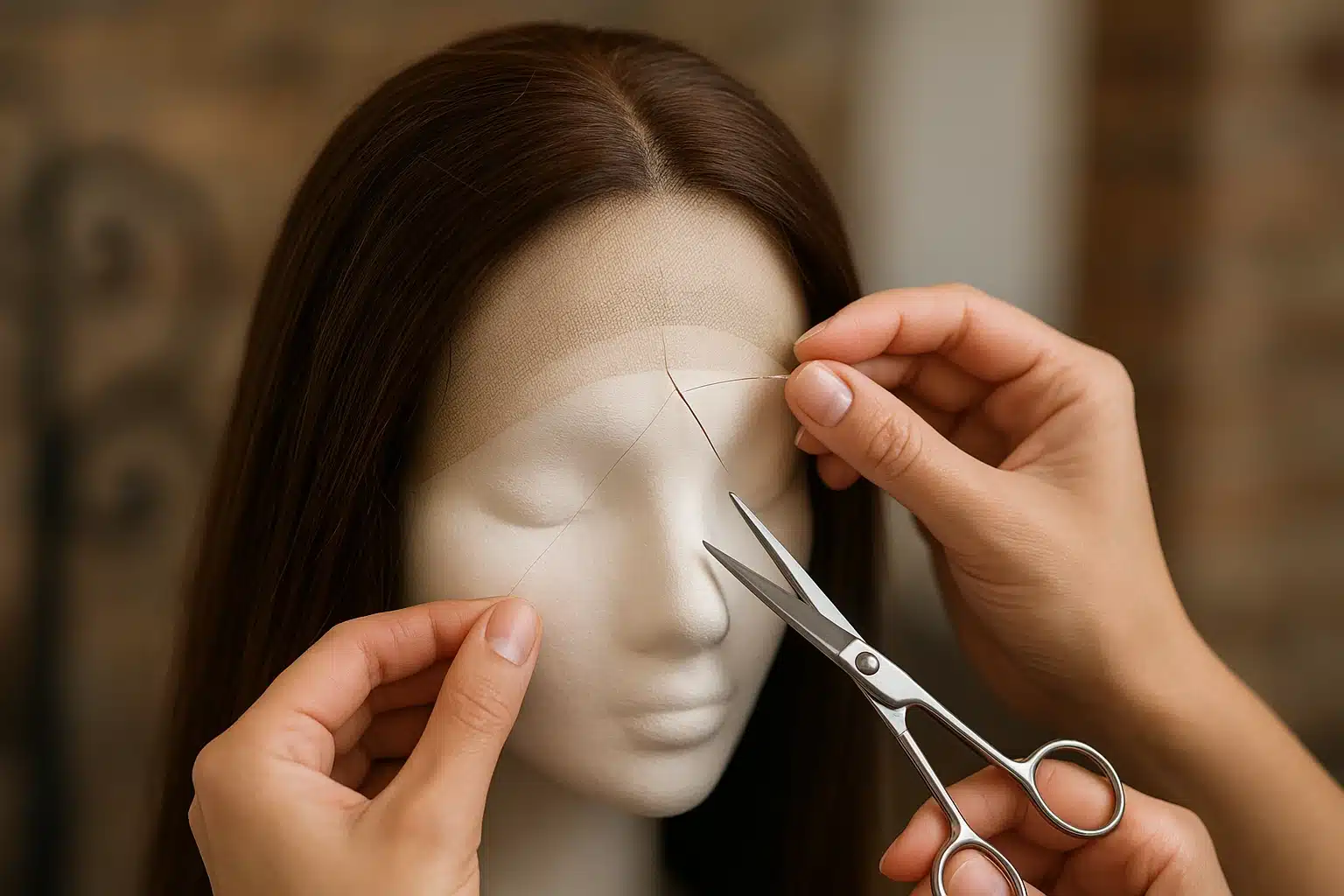
Here is the “Aha!” moment of lace repair: Never just sew a tear shut. Pulling the two sides of a rip together shrinks the wig cap, distorts the hairline, and creates a painful, puckered ridge against your forehead. Instead, you must bridge the gap.
The Repair Toolkit
- Curved C-needle
- Invisible clear nylon thread
- A scrap patch of matching wig lace
- Canvas block mannequin head
- T-pins
- Fabric sealant (like Fray Check)
- 99% Isopropyl alcohol
Step-by-Step Restoration
- Prep and Tension: First, gently clean any old adhesive off the lace using the 99% alcohol. Turn the wig inside out and pin it to your canvas block head. Pull the torn area taut enough to lay flat, but do not stretch it out of shape.
- The Patch Placement: Cut your scrap lace patch so it is slightly larger than the tear itself. Place this patch underneath the rip. This reinforces the structure without altering the cap size.
- The Blanket Stitch: Thread your curved C-needle with the clear nylon. Carefully use a looping blanket stitch to sew the patch to the torn edges. The key is to thread the needle precisely between the existing hair knots—if you pierce the knots, you will cause hair shedding.
- Sealing the Deal: Trim any excess patch material. Apply a tiny, precise dab of Fray Check to the raw lace edges and thread knots. This prevents future fraying and ensures a smooth, scratch-free feel against your scalp.
The Customization Lab: Pop-Culture, Cosplay & Specialty Wigs
New Orleans is a hub for costuming. Transforming a basic, store-bought wig into a recognizable character requires structural engineering. Here’s how the pros tackle complex requests:
Gravity-Defying Anime Structures
Creating a flawless Gojo wig styling tutorial look, a massive spiked Goku wig, or a heavy new Broly wig Xenoverse 2 build defies gravity. The secret is internal scaffolding. Cosplayers crimp the roots of synthetic wigs to create invisible volume, then build lightweight EVA foam or wire shapes underneath the hair. The synthetic fibers are then wrapped over this structure and frozen in place with high-hold spray and a hairdryer.
Historical Powdered Sculpting
Mardi Gras balls often require an elegant Mozart wig or a towering Beethoven’s wig. Restoring these historical silhouettes without ruining the synthetic structure requires a delicate touch. Dry shampoo is used generously to mimic historical powdered textures, while setting lotion and traditional foam rollers hold the structured side-rolls securely without the need for damaging high heat.
Flowing Fantasy & Texture Engineering
Managing extreme synthetic length—like detangling a waist-length Dumbledore wig and matching beard attachment—requires steam styling to gently coax the plastic fibers straight without frizzing. For modern, textured rapper wigs or colorful dread extensions, experts use a “boil-styling” method, dipping the synthetic twists in boiling water to permanently lock the style into the plastic memory of the fiber.
Casual & Classic Designer Customization
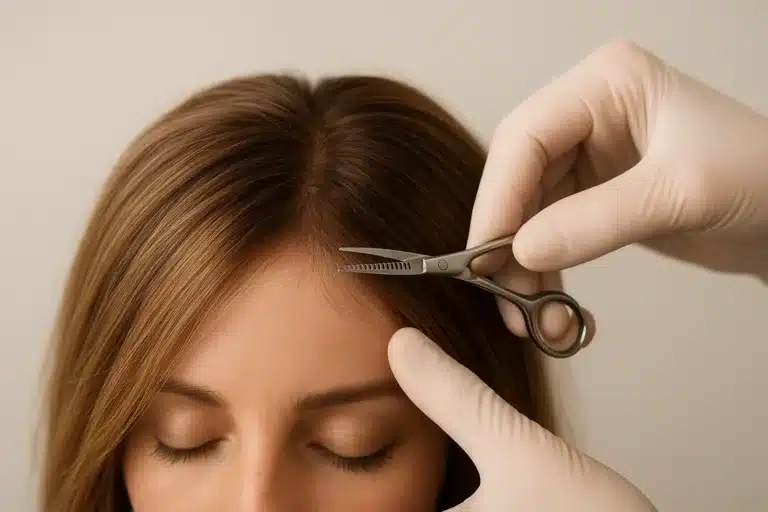
Customization isn’t just for costumes. Sometimes, a beautiful daily wear synthetic piece, like an Armani wig or a casual, half-bun Eren wig style, simply feels too bulky. Thinning shears are carefully used at the nape and crown to thin out thick, machine-wefted caps, allowing the hair to lay completely flat and natural against the head.
Preventative Care: Knowing When to Call a Pro
Understanding the limits of DIY care is just as important as knowing how to sew a lace patch.
You can safely handle this at home:
- Minor tangles and standard washing
- Small lace tears requiring a patch
- Basic low-heat re-styling for synthetic fibers
- Adding standard styling products
Bring it to a local professional when:
- You need to ventilate (hand-tie) new hair into a balding lace closure
- Your wig cap needs structural darting/resizing for a smaller head or medical hair loss fitting
- You are transitioning human hair from dark to light (bleaching)
- The lace frontal is entirely shredded and needs a complete replacement
Frequently Asked Questions (FAQ)
Can a torn lace front wig be repaired?
Yes! As long as you bridge the tear with a scrap piece of matching lace rather than sewing the hole tightly shut, you can invisibly repair a torn frontal.
How do I fix a frizzy synthetic wig?
Frizz in synthetic wigs is actually micro-kinks in the plastic fibers caused by friction. You can smooth this by using a garment steamer and a wide-tooth comb. The low-temperature steam gently warms the plastic, allowing it to snap back to its smooth, straight shape without melting.
Where can I get a wig professionally customized in New Orleans?
For compassionate, medical-grade human hair styling and alopecia needs, Wigs by Tiffani in Metairie is exceptional. For theatrical, drag, and Mardi Gras festival wigs, Fifi’s Custom Wigs in the French Quarter is the historic local favorite.
What products will keep styled spikes from melting in New Orleans humidity?
For synthetic cosplay and drag wigs, moisture-resistant freezing sprays (like Got2b Glued) set with a hairdryer provide a concrete hold. Avoid water-based gels, as the ambient humidity will prevent them from ever truly drying.
Your Next Steps in Wig Mastery
A high-quality wig is an investment in your confidence, your art, and your self-expression. By understanding the climate challenges of New Orleans, knowing which local experts to trust, and mastering a few fundamental at-home repair skills, you ensure your favorite wig remains beautiful for years to come.
Take a moment to evaluate your current wig collection. Do you have a piece tucked away in a closet because of a small lace tear or some frizzy ends? Armed with this knowledge, you now have the power to revive it. Happy styling!