We’ve all experienced that mixed feeling of anticipation and slight disappointment. You finally receive a beautiful new wig, take it out of the box, and place it on your head. On the mannequin, it looked flawless. But in the mirror? The hairline feels a little too heavy, the crown has a bit too much volume, and the color—while pretty—doesn’t quite match your skin tone.
If you are experiencing this, take a deep breath. There is absolutely nothing wrong with you or your wig. What you are experiencing is the reality of “out-of-the-box” alternative hair. It is essentially a beautiful canvas waiting to be tailored specifically to you. As you begin researching the best wig stores in Denver CO, you’ll quickly discover that finding the perfect hairpiece is only the first step. The true magic happens during customization—the cutting, coloring, and re-texturing processes that transform a standard wig into a seamless extension of your personal identity.
Let’s pull back the curtain on the fascinating science and artistry behind custom wig styling, and explore how you can achieve a look that is completely indistinguishable from natural hair.
The “Out-of-the-Box” Illusion: Why Customization Matters
Most wigs are manufactured to fit a universal standard, which means they are created with extra density (thickness) and blunt hairlines. This is actually a good thing! It gives a specialized wig stylist the material they need to carve out a shape that perfectly frames your unique facial symmetry.
But taking a wig to a traditional hair salon can be a recipe for disaster. The techniques used to cut and color biological hair growing from a human scalp are fundamentally different from the techniques required for wigs. Let’s break down the science of why.
The Science of Wig Coloring: Human Hair vs. Synthetic
One of the most common questions beginners ask is, “Can I dye my wig?” The answer is a resounding yes, but the how depends entirely on the chemistry of the hair fibers.
The Human Hair Canvas
Human hair wigs are exquisite, but they have already undergone significant processing to sanitize the hair and lock in a specific color. They are essentially stripped of their natural cuticles.
- Going Darker: Depositing color (like adding a root smudge, lowlights, or an all-over darker shade) is generally safe when done by a professional using demi- or semi-permanent dyes.
- Going Lighter: Bleaching a dark human hair wig is highly destructive. If you dream of vivid fashion colors or ashy platinum balayage, your stylist will almost always require you to start with a “613 Blonde” wig—a virgin, pre-lightened canvas that safely accepts custom color.
The Synthetic Challenge
Have you ever wondered why you can’t just put regular box dye on a synthetic wig? It comes down to molecular structure. Synthetic fibers are non-porous plastics (usually polyester or acrylic). Traditional ammonia-based hair dyes will simply slide right off and wash down the drain.
To color synthetic hair, professionals use a “molecular stain” method. They utilize specialized alcohol inks or disperse fabric dyes (like Rit DyeMore) that chemically fuse with the synthetic polymer. Because this requires heat, the process is incredibly delicate. The water temperature must be meticulously regulated—usually kept strictly under 300°F—to ensure the plastic cap doesn’t melt and the fibers don’t singe.
Customization Complexity Matrix
To help visualize the different approaches, here is a quick breakdown of how human and synthetic wigs are treated during customization:
| Customization Type | Human Hair Wigs | Synthetic Hair Wigs |
|---|---|---|
| Coloring Process | Uses standard demi/semi-permanent hair dyes. | Strictly alcohol inks or disperse fabric dyes. |
| Bleaching/Lifting | Possible, but high risk. Best to start with a blonde (613) base. | Impossible. You cannot lighten synthetic fibers. |
| Cutting Technique | Dry point-cutting on a block or the client’s head. | Strictly dry slide-cutting with specialized texturizing shears. |
| Heat Styling Limits | Can safely handle up to 350°F. | Varies by fiber; strictly under 300°F using digital irons. |
The Art of the Wig Cut (Why Regular Stylists Often Get It Wrong)
If you take your wig to a standard hair stylist, their instinct will be to wash it and cut it while wet, pulling the hair taut to create a straight line.
Never let anyone cut your wig wet with blunt shears.
Wigs lack natural tension and root growth. When a wig dries, it doesn’t shrink and settle the same way biological hair does. True wig artisans use techniques like slide-cutting, razor slithering, and dry point-cutting. This removes bulk from the inside of the hair without leaving choppy steps on the outside.
Furthermore, they utilize the “Four-Finger Rule”—aligning the wig’s hairline exactly four finger-widths above your eyebrows—before they ever pick up their shears, ensuring the face-framing layers fall exactly where they should.
Solving the “Climb”: The Secret to Synthetic Re-Texturing
If you wear synthetic wigs, you know the frustration: after a few weeks, the hair at the nape of your neck starts to frizz, tangle, and “climb into knots.”
This isn’t a defect; it’s physics. High-density synthetic fibers generate static electricity as they rub against your clothing, causing individual strands to cling together. A specialized wig stylist performs a service called “re-texturing” to fix this. It is often a meticulous, multi-hour process that involves high-pressure steaming to reset the fiber memory, dry-weight thinning to reduce friction, and applying professional-grade silicone sealants to eliminate unnatural plastic shine.
The “Wiggy” Diagnostic Checklist
Not sure what your wig needs? Use this quick self-assessment to identify common issues and their professional solutions:
- Is the top of the head too puffy? You likely have “perm-tease” (crimped short hairs at the root for volume). A stylist can use heat-taming techniques and thinning shears to flatten the crown.
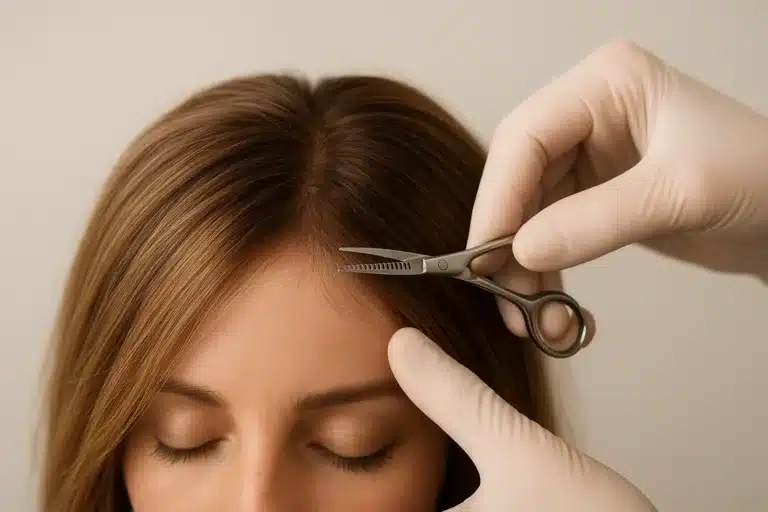
- Does the hairline look like a solid wall of hair? Your lace front needs plucking. A professional will carefully tweeze the hairline and carve out custom “baby hairs” to mimic a natural, imperfect growth pattern.
- Does the part look too straight or dense? Your stylist can pluck the parting space and apply skin-toned concealer underneath the lace to create the illusion of a natural scalp.
The Denver Custom Wig Directory: Where to Go
While search engines will show you dozens of salons, finding a true alternative hair artist in the Denver metropolitan area requires knowing who specializes in what. (Note: Always check current listings, as popular legacy spots like A Selah Hair & Wig Salon are now permanently closed).
- Kim’s Wig Botik (Denver): A trusted name for decades. They excel with premium European human hair pieces, classic wash-and-sets, and crucial structural adjustments for medical hair loss patients, such as sewing in custom clips and tightening lace fronts.
- The Loft Salon (Parker): Known for their high-empathy, private, consultation-first method. They are fantastic for the psychological transition of hair loss, focusing on lifestyle fit, scalp health analysis, and custom wave matching.
- A Bolder Blonde (Parker): A hyper-specialized destination for bold transformations. They are masters of the rigorous 6-to-8 hour synthetic re-texturing process, dry-point-cutting, and creating high-end fashion colors on alternative hair.
The Global Vetting Checklist: How to Interview a Wig Stylist
Whether you are local to Colorado, or reading this while searching for a “wig stylist dallas,” “atlanta wig stylist,” “wig stylist nj,” or even a “wig stylist london,” the rules for vetting a professional remain exactly the same. Before handing over your precious hairpiece, ask these five questions:
- Do you cut wigs wet or dry? (The answer should always be dry).
- Do you use standard shears or texturizing/channel shears on synthetic hair? (Standard shears leave blunt, unnatural lines).
- What temperature do you use when steaming or heat-treating synthetic fibers? (They should specify strict temperature control, usually under 300°F).
- Do you require a blonde base for custom fashion colors? (If they say they can bleach a dark synthetic wig, run!)
- Can you thin out the lace front and create baby hairs? (This shows they understand hairline realism).
Frequently Asked Questions (FAQ)
What are the heat limits for styling synthetic wigs?
Traditional synthetic wigs cannot be heat styled at all. “Heat-defiant” or “heat-friendly” synthetic wigs can typically handle temperatures between 270°F and 300°F. Always use a digital styling tool where you can explicitly control the temperature, and keep the tool moving to prevent melting.
How often should a customized human hair wig be deep conditioned by a professional?
Because human hair wigs do not receive natural sebum (oils) from a scalp, they are prone to drying out. Depending on how often you wear it, a professional deep conditioning and restorative treatment every 6 to 8 weeks will dramatically extend the lifespan of the wig.
Can my hair stylist dye my eyebrows to match my custom wig color?
Yes! If you are undergoing a major color transformation with your wig, a licensed cosmetologist can safely tint your biological eyebrows to complement your new hair color, completing the seamless, natural illusion.
Continuing Your Hair Journey
Navigating the world of alternative hair is a deeply personal, often emotional experience. But it is also an incredible opportunity to express yourself exactly the way you want to be seen. You no longer have to settle for a style that feels “almost right.”
By understanding the science of wig fibers and seeking out specialized artistry, you can transform any piece into the hair of your dreams. Take your time, ask the right questions, and remember that your perfect look isn’t just pulled out of a box—it’s crafted just for you.