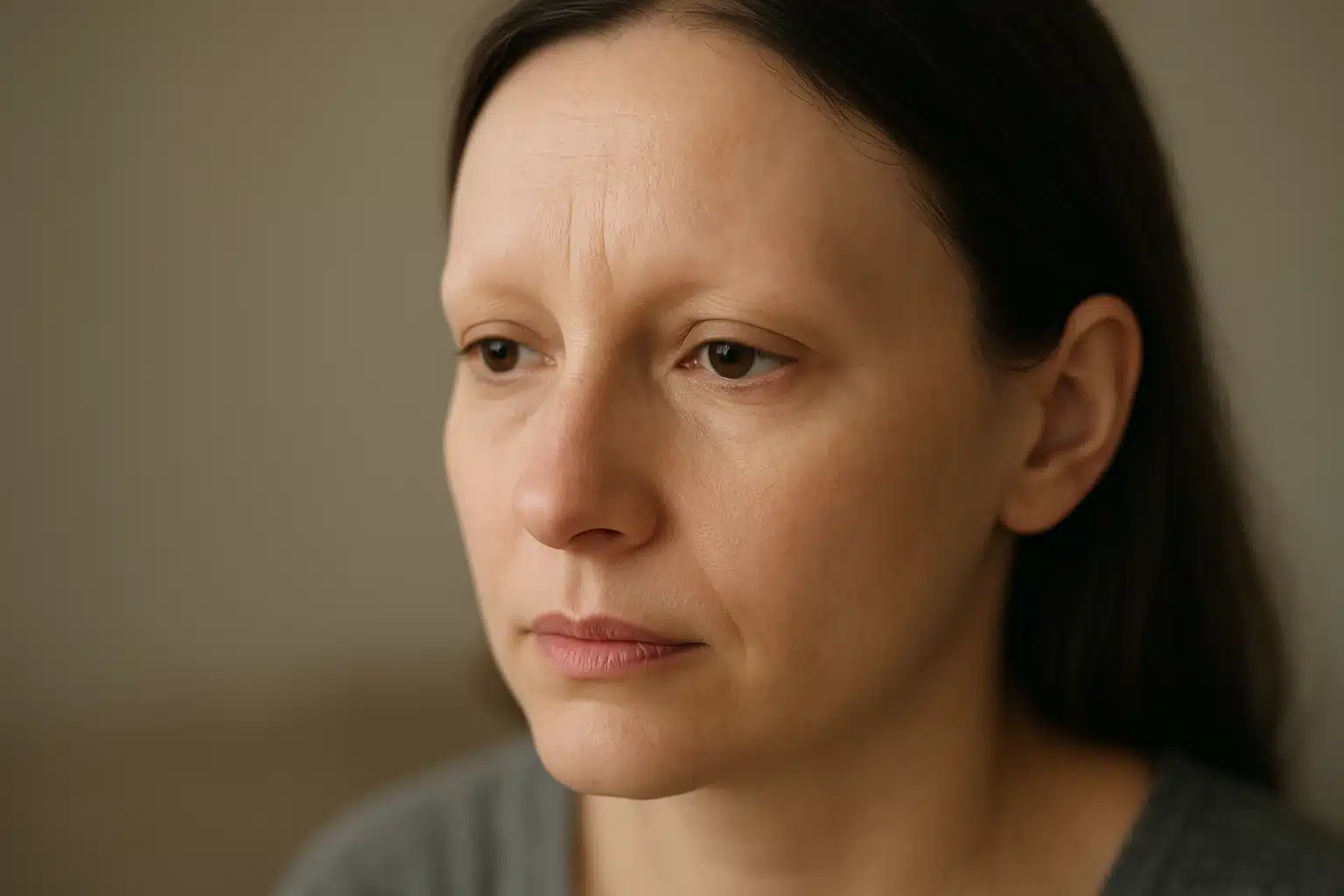
There is a distinct, often unspoken moment in the hair loss journey that stops you right in your tracks. It’s the moment you look in the mirror and realize that your eyebrows and eyelashes have begun to thin or disappear entirely. Suddenly, the face looking back at you feels like a stranger’s.
When you first begin shedding your locks, it feels like a monumental shift. For many, navigating the emotional landscape of hair loss serves as a vital first step in processing this profound change. However, when hair loss progresses beyond the scalp to the brow ridge and lash line, it transcends standard coping mechanisms. You are no longer just dealing with a changing hairstyle; you are confronting an altered facial identity, physical discomfort, and surprising new barriers in how you communicate with the world.
If you have been feeling an overwhelming sense of grief over these “seemingly insignificant strands,” you are not being vain. You are experiencing a deeply rooted biological and psychological response. Let’s explore the science, the somatic symptoms, and the emotional realities of facial frame hair loss, and discover how you can gently navigate this unique terrain.
The Invisible Frame: Validating a Unique and Silent Grief
Losing your scalp hair is incredibly difficult, but we have established cultural frameworks for it. There are beautiful wigs, scarves, and hats, and society generally understands the visual language of a bare scalp.
Eyebrows and eyelashes, however, are the invisible frames of our faces. We rarely notice how heavily we rely on them until they are gone. Losing them feels like losing your “face value.” Without brows to anchor your expressions or lashes to define your eyes, you might feel like your features are floating or blending together. This loss triggers a very specific, silent grief—one that bridges the gap between how you feel inside and how the world interprets you on the outside.
The Clinical Landscape: Demystifying Madarosis
In the medical world, the loss of eyebrows and eyelashes is called Madarosis. While the clinical jargon can feel sterile and devoid of empathy, understanding the “why” behind your physical changes can be incredibly empowering.
Madarosis isn’t a disease itself, but rather a symptom of an underlying condition. Some of the most common causes include:
- Alopecia Areata & Frontal Fibrosing Alopecia (FFA): Autoimmune conditions where the body mistakenly attacks its own hair follicles.
- Chemotherapy-Induced Shedding: Certain cancer treatments, such as Taxol or Taxotere, aggressively target rapidly dividing cells, which includes facial hair follicles.
- Thyroid Dysfunction: Both overactive and underactive thyroid glands can disrupt the hair growth cycle, particularly causing thinning at the outer edges of the eyebrows.
Regardless of the clinical cause, the emotional fallout is universally challenging. Knowing the medical terminology simply gives you a name for your experience, helping you advocate for yourself with dermatologists and oncologists.
The Neurobiology of the Face: Why You Experience “Mirror-Panic”
Have you ever caught your reflection without your eyebrows and felt a sudden, jolting sense of panic? It’s common to feel a rush of anxiety, followed by a wave of guilt for being “too focused” on your appearance.
Give yourself grace—this reaction has nothing to do with vanity. It is deeply rooted in neuroscience.
In a landmark 2003 study conducted at MIT, researchers discovered something fascinating: eyebrows are mathematically more critical for human facial recognition than the eyes themselves. When researchers showed participants images of familiar celebrities without eyes, they could still identify them. But when shown the same celebrities without eyebrows, recognition plummeted.
When you look in the mirror without brows or lashes, your brain’s predictive coding registers a visual “error.” Your internal facial-recognition software momentarily fails to process the image as “self.” This triggers a brief, subconscious survival response—a phenomenon we can call the “Mirror-Panic” Error Code. Understanding that this is a neurological mismatch, rather than a flaw in your self-esteem, is a massive step toward self-compassion.
The Evolutionary Empathy Tool: Losing Our Social Superpower
Beyond recognizing ourselves, eyebrows play a massive role in how we connect with others.
According to a fascinating 2018 evolutionary biology study published in Nature Ecology & Evolution, early human ancestors traded rigid, heavy brow ridges for the smooth, flat foreheads and highly mobile eyebrows we have today. Why? Because as our ancestors began building larger social networks, they needed a way to signal empathy, trust, and subtle emotions across a distance.
Your eyebrows are an evolutionary empathy tool. They knit together in concern, raise in surprise, and soften in sympathy. When you lose them, you experience a “Nonverbal Expression Gap.” You might feel like people are misreading your moods or that you look constantly tired or unwell.
How to adapt: While you navigate this gap, you can overcompensate for the lack of expressive eyebrows by leaning into other forms of communication. Utilizing warmer vocal inflections, tilting your head when listening, and using open-hand gestures can help convey the warmth and sympathy that your eyebrows usually handle on autopilot.
Physical and Somatic Protection: The Science of Eyelash Aerodynamics
If you’ve lost your eyelashes, you’ve likely noticed that your eyes constantly water, burn, or feel painfully sensitive to light. Again, this isn’t just in your head.
A 2015 study from Georgia Tech analyzed the eyelashes of 22 different mammalian species and discovered a universal rule: eyelashes are optimized at exactly one-third the width of the eye. At this precise length, they act as tiny aerodynamic wind-deflectors. They divert incoming airflow away from the eye, preventing dust from entering and, most importantly, reducing the evaporation of your protective tear film by a staggering 50%.
Losing your eyelashes is a functional physical injury. The somatic pain of having dry, burning eyes constantly triggers your nervous system into a low-grade “fight-or-flight” state, which heavily compounds your psychological vulnerability.
The Somatic Protection Checklist
To mimic the physical protection your lashes once provided, consider these actionable steps:
- Wear wrap-around sunglasses: When outdoors, UV wrap-around glasses act as a physical barrier against wind and debris.
- Use preservative-free eye drops: Keep your eyes lubricated throughout the day to replace the moisture lost to increased evaporation.
- Invest in a silk sleep mask: Protect your eyes from drafts and ceiling fans while you rest.
The Practical Toolkit: Navigating Daily Life with Confidence
Integrating this profound physical change requires both emotional grief work and practical daily solutions.
1. The Eyebrow-Mapping Guide
If you choose to recreate your brows using makeup, facing a blank canvas can be intimidating. Use your natural facial landmarks to map them out:
- The Start: Hold a pencil vertically against the dimple of your nostril straight up to your brow bone.
- The Arch: Angle the pencil from the tip of your nose through the center of your pupil.
- The Tail: Angle the pencil from the outer corner of your nostril past the outer corner of your eye.
2. A “Mirror Exposure” Psychological Exercise
To gradually desensitize the “Mirror-Panic” response, practice safe mirror exposure. Spend just one minute a day looking softly at your reflection while practicing deep, regulated breathing. Speak a neutral, grounding truth out loud, such as: “My face is changing, but my identity is safe.”
3. The Product Decision Matrix
There is no “right” way to handle the visual aspect of brow and lash loss. Here is an objective look at your options:
| Cosmetic Option | Durability | Skin Sensitivity Risk | Skill Required | Est. Cost |
|---|---|---|---|---|
| Pencils & Powders | Low (Washes off daily) | Low | High (Hard with no template) | $ |
| Temporary Transfers | Medium (2–4 days) | Low (Avoid harsh adhesives) | Medium (Fiddly at first) | $$ |
| False Brows/Lashes | Medium (Days/Weeks) | Medium (Requires glue) | High | $$$ |
| Microblading | High (12–18 months) | High (Infection risk) | Professional Only | $$$$ |
| Doing Nothing | Permanent | None (Safest) | None | Free |
Note: Doing nothing is a highly valid, empowering choice. You do not owe the world a societal standard of beauty. Your comfort always comes first.
Frequently Asked Questions (FAQ)
What is the medical term for eyebrow and eyelash hair loss?
The clinical term is Madarosis. It can be caused by various factors, including autoimmune conditions like Alopecia Areata, thyroid dysfunction, and chemotherapy.
Is eyebrow and eyelash loss after chemotherapy permanent?
For the vast majority of people, brows and lashes begin to regrow a few weeks after treatment ends. However, some studies show that about 1 in 4 individuals may experience persistent thinning or altered texture.
Why do my eyes water so much without eyelashes?
Eyelashes act as aerodynamic shields that deflect airflow. Without them, the wind hits your eye directly, causing your natural tears to evaporate 50% faster. Your eyes overproduce watery tears to compensate for this severe dryness.
How can I protect my eyes without lashes?
Mimic the protective boundary of lashes by wearing wrap-around sunglasses outdoors, utilizing preservative-free lubricating eye drops daily, and sleeping with a contoured eye mask to prevent drafts from drying your eyes at night.
Next Steps in Your Journey
Navigating the grief of losing your eyebrows and eyelashes is a journey of both physical adaptation and profound identity integration. By understanding the biology of your symptoms and the neuroscience behind your mirror anxiety, you can begin to treat yourself with the deep compassion you deserve.
For nearly two decades, we have been dedicated to providing compassionate care and industry expertise for those walking the challenging path of hair loss. You don’t have to navigate this alone. Take your time, lean into the solutions that bring you the most physical comfort, and remember that your capacity for empathy, connection, and beauty remains untouched.