Living in Silicon Valley means understanding the value of a good investment. When a high-end luxury handbag needs a stitch or a premium smart appliance starts making a strange noise, residents don’t hesitate to seek out specialized repair services. Yet, when a beautifully crafted, multi-hundred or even thousand-dollar wig starts to tangle or stretch, many wearers assume it’s the end of the road. Driven by panic and a lack of local resources, many turn to risky DIY fixes that do more harm than good, or worse, they throw their expensive investment in the trash.
It doesn’t have to be this way. Before deciding your piece is a lost cause, it’s vital to understand what professional restoration can achieve. Of course, if your piece is truly beyond salvation, consulting our complete evaluation of the best wig stores in San Jose, CA is the perfect starting point to find a beautiful replacement. But if you have a piece you love that is simply showing its age, the right professional care can extend its lifespan by years.
Welcome to the ultimate guide to the preservation and restoration of wigs in San Jose. Let’s demystify the science of wig care and map out exactly where to go to bring your favorite hairpieces back to life.
The Preservation Mindset: The Science of Wear
If you’ve ever wondered how long do human hair wigs last, the answer directly correlates to how you approach their maintenance. Wigs degrade through four primary environmental factors: UV exposure, friction (especially at the nape of the neck), sweat, and sebum.
However, human hair wigs and synthetic pieces react to these elements quite differently.
- Human Hair: Without a scalp to supply natural hydrating sebum, human hair wigs are entirely dependent on external moisture. When exposed to the elements without proper hydration, the hair cuticles dry out, split, and fracture.
- Synthetic Hair: Plastic fibers don’t absorb moisture, but they are highly susceptible to “friction frizz.” The constant rubbing against collars or car seats physically warps the plastic memory of the fiber, creating a matted, coarse texture.
Understanding these differences is the foundation of proper synthetic wig care versus human hair preservation.
Demystifying the Professional Restoration Process
What actually happens when you take a wig to a professional? It is much more than a simple shampoo and blow-dry. Local specialists utilize highly technical restoration methods.
The “Steam Reset” Breakthrough
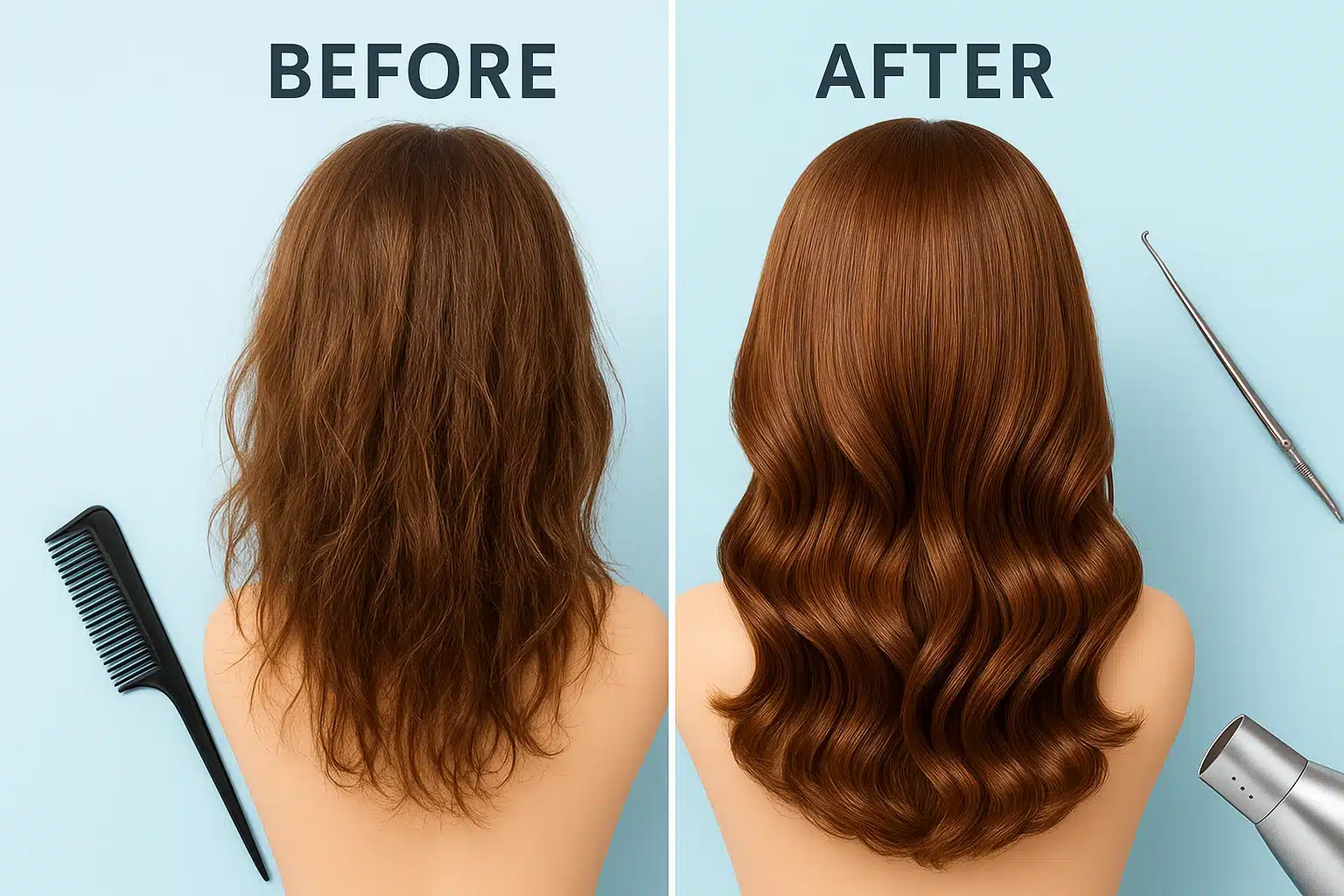
Beginners often discard frizzy synthetic wigs, believing the plastic is irreparably damaged. Professional stylists, however, use precise, handheld garment steamers to gently melt and “reset” the memory of synthetic plastic fibers. By applying controlled steam while combing through the tangles, the fiber’s factory-smooth texture is instantly restored.
Torn Lace Repair & Re-Ventilating
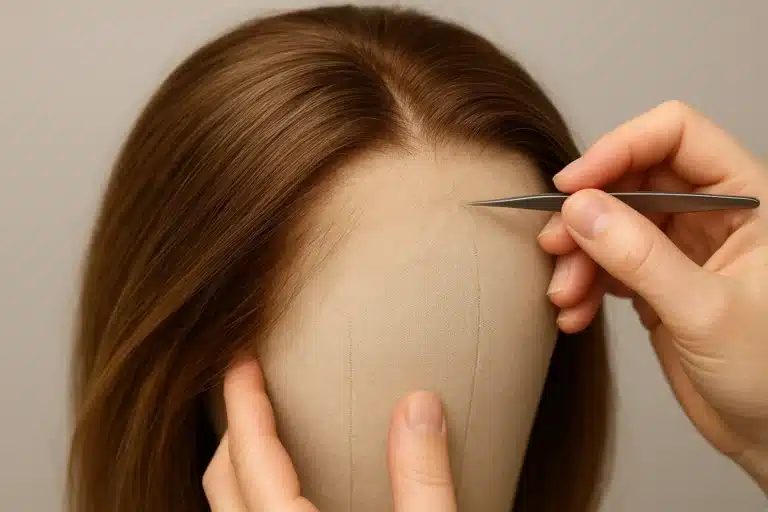
Lace fronts are notoriously delicate. When a lace tears or begins to lose hair (a common occurrence from regular brushing), professionals use a technique called “hand-ventilating.” Using a tiny, specialized ventilating hook, a technician meticulously hand-ties individual replacement hairs back into the bald patches of the lace, restoring the illusion of a natural hairline.
Cap Resizing and the “Four Finger Rule”
Over time, wig caps stretch. You can easily test your fit at home using the “Four Finger Rule.” Place four fingers horizontally between your eyebrows and the front hairline of your wig. If the cap easily shifts backward or feels loose during this test, the elastic has likely stretched. Professionals can open the wefting, replace the elastic bands, and restructure the cap to give you a secure, custom fit once again.
The San Jose Professional Service Directory
Instead of wandering through generic salon directories, here is your specialized local map for wig restoration and maintenance in San Jose, CA:
Clinical & Medical Restoration
New Look Institute (1190 S Bascom Ave #239, San Jose, CA 95128)Ideal for medical-grade wigs and custom human hair systems. They offer trichology-backed scalp health services, custom fitting, and highly specialized medical-grade maintenance for premium pieces.
Luxury Scalp & Wig Washing
Lana Hair Wash Spa (1157 Saratoga Ave. Ste 122, San Jose, CA 95129)Renowned for luxury Japanese-style head spas, Lana Hair Wash Spa also provides specialized wig washing and sensory restyling services, treating your piece with the high-end spa care it deserves.
Fashion Installs & Customization
Devine Beauty Studio (1700 Newbury Park Dr) & Strictly Styles (San Jose)Perfect for casual wig wearers needing structural customization, cap adjustments, or professional sew-in and lace-melting services.
Wig Supplies & Walk-In Care
Join US Beauty Supply & Nefertiti Beauty Supply (292 N Capitol Ave)Your go-to local spots for picking up specialized adhesives, structural tapes, and emergency styling tools between professional salon visits.
The “Repair vs. Replace” Decision Matrix
Should you fix it or toss it? Use this quick diagnostic guide:
- Invest in Repair (Typically $30–$150): Your wig cap is stretched, there is mild friction frizz at the nape of the neck, or there is a small tear in the lace that can be patched.
- Consider Replacement: The hair density has decreased by more than 40%, the foundation cap is severely ripped in multiple structural zones, or the synthetic fibers have been heavily burned by an unauthorized heat tool.
Pro DIY Care: Checkpoints Between Salon Visits
While professional care is vital, day-to-day maintenance dictates your wig’s longevity. Good routine wig care requires specific techniques.
The Chemical Trap Warning
A common mistake beginners make is washing their wig with regular drugstore shampoo or, even worse, harsh household detergents like Dawn dish soap. Standard hair products contain heavy silicones and proteins designed to bond with natural scalp sebum. Because wigs lack these natural oils, standard shampoos cause extreme chemical buildup, ultimately leading to severe matting. Always use a low-surfactant, pH-balanced cleanser specifically formulated for alternative hair.
The Anatomy of Wear-and-Tear
When doing your home maintenance checks, focus on these common points of failure:
- The Lace Front: Check for tiny tears or makeup buildup that weakens the mesh.
- The Ear Tabs: Look for adhesive residue and structural bending.
- The Nape: Brush out minor friction matting daily before it becomes a major tangle.
Whether you’re looking for local San Jose specialists or reading up on wig maintenance techniques from across the country, consistency is the key to preserving your piece.
Frequently Asked Questions (FAQ)
Can I wash my wig with normal shampoo?
No. Regular shampoos contain harsh surfactants that permanently strip moisture from human hair wigs and can degrade synthetic fibers. Always use specialized wig cleansers.
How often does a wig actually need to be washed?
For daily wearers, washing your wig every 10 to 15 wears is ideal. Washing too frequently breaks down the fibers, while washing too rarely allows sweat and adhesive to rot the cap.
My synthetic wig feels coarse at the ends. Can it be saved?
Yes! This is known as “friction frizz.” A professional stylist can perform a steam reset to smooth the plastic fibers back to their original texture.
Can a stretched wig cap be fixed?
Absolutely. Local repair centers can open the cap’s seams, replace the stretched elastic banding, and stitch it back together to give you a snug, secure fit.
Next Steps for Your Hair Journey
Your hairpiece is an investment in your confidence, and it deserves to be treated with care. By utilizing the San Jose specialists listed above and adopting a preservation mindset, you can keep your wig looking flawless for years to come.
If you are ready to expand your collection or want to explore foundational products that make home-care a breeze, continue exploring our educational resources on advanced storage techniques, fiber care, and longevity strategies. Your perfect hair day shouldn’t be left to chance—it should be maintained by design.