Stepping into the world of alternative hair is a deeply personal experience. Whether you are navigating medical hair loss, seeking a protective style, or simply looking to change up your everyday look, the sheer volume of choices can feel overwhelming. The most significant hurdle you will face right out of the gate is navigating the massive quality, price, and lifestyle gaps between synthetic and natural fibers.
If you’re beginning this journey and evaluating the best wig stores in San Jose, CA, you need more than just a list of addresses. You need a definitive evaluation framework that pairs deep fiber education with real-world local shopping dynamics. Knowing what local physical retailers actually offer—and understanding the science behind the strands on their mannequins—is the secret to making a confident, lasting choice.
Let’s demystify the alternative hair market so you can walk into any boutique or beauty supply with the knowledge of an industry insider.
Fiber Chemistry Demystified: Expectation vs. Reality
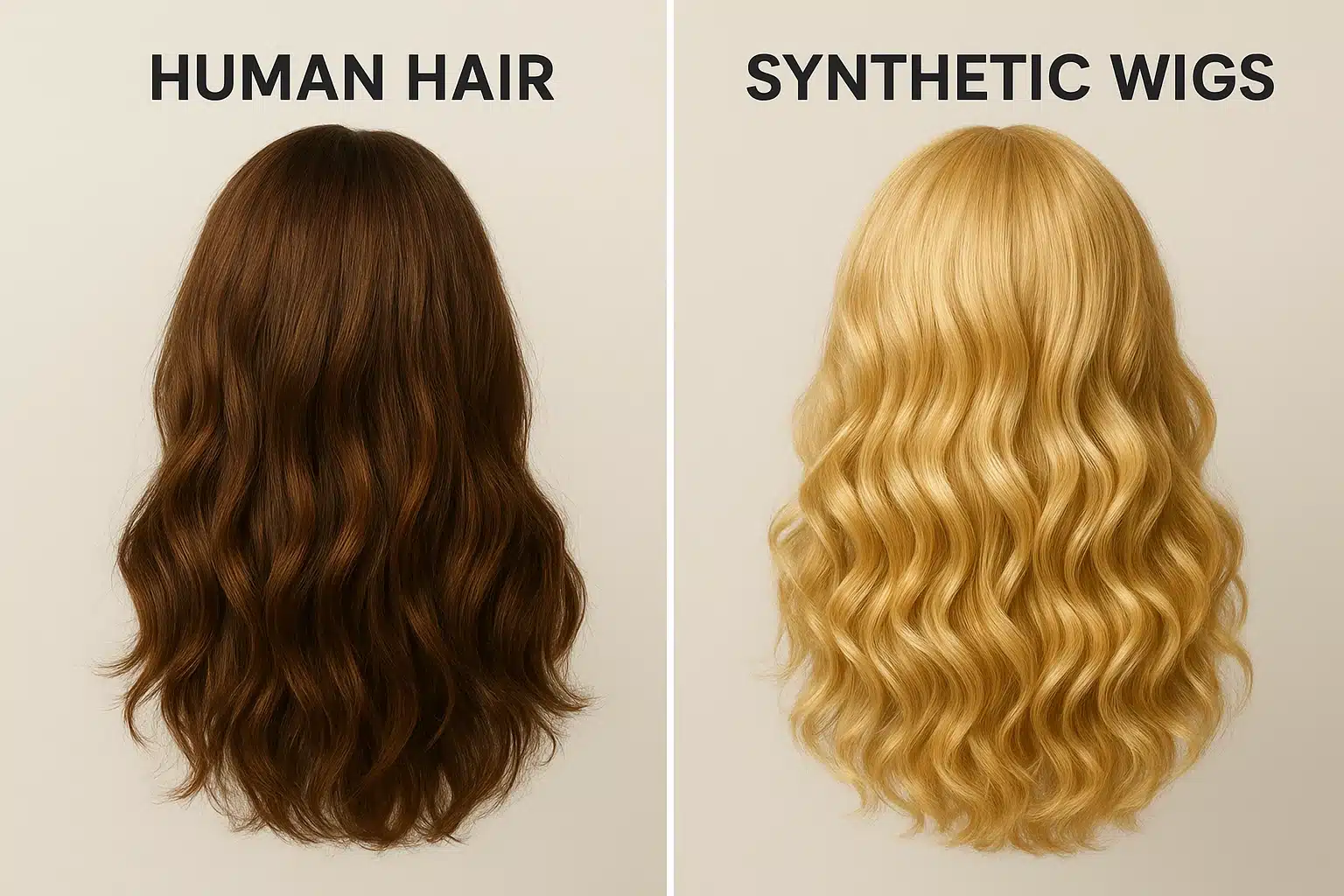
To make an informed decision, we have to look past the marketing language and understand the actual physics of wig fibers. When you are comparing human hair vs synthetic wigs, you are essentially comparing organic biology to advanced polymer science.
The Science of Synthetic Hair and “Style Memory”
You will often hear that synthetic wigs have “style memory.” This isn’t magic; it is material science. Synthetic fibers are made of fine plastic polymers that are heat-set at the factory. When you wash a synthetic wig, the polymer naturally returns to this original baked-in state because its “glass transition temperature” has not been crossed. This means your perfectly styled curls will bounce back after a wash with zero effort.
However, standard synthetic fibers cannot withstand heat. If you use a flat iron or a blow dryer, the plastic will melt and permanently ruin the wig.
The “Heat-Friendly” Paradox
Many beginners gravitate toward “heat-friendly” or “heat-resistant” synthetic wigs, assuming they offer the best of both worlds. While it is true that these fibers allow for low-temperature styling (usually under 300°F or 148°C), there is a catch. Heat-friendly fibers actually have a shorter lifespan (typically 2 to 3 months) compared to traditional synthetic hair (4 to 6 months). Because the fibers are formulated to accept heat, they are highly susceptible to daily environmental friction—like rubbing against your collar or the back of your car seat—which leads to rapid fraying and tangling.
Premium Remy and European Human Hair
Human hair wigs offer the ultimate in realism, movement, and styling versatility. But not all human hair is created equal. The gold standard is “Remy” hair. In a Remy human hair wig, all the hair cuticles (the microscopic overlapping scales on the outside of the hair shaft) run in the same downward direction, just as they do on your own head. This alignment prevents the severe tangling and matting that plagues cheaper, non-Remy human hair options.
The In-Store Touch Check: Tackling the Intimacy Factor
One of the most common, yet rarely discussed, anxieties among new wig wearers is the “intimacy factor.” How does the hair feel when you hug someone? What happens if you are on a date?
When browsing in-store, perform a tactile check. Standard synthetic hair often has a slightly coarser, almost glossy texture that can feel harsher to the touch than natural hair. If physical intimacy and hyper-realistic movement are your top priorities, Remy human hair is typically the standard to aim for.
You also need to understand Permatease. If you try on a synthetic wig and find it looks unnaturally “puffy” at the crown, you are experiencing permatease. These are short, tightly crimped fibers built into the base of the cap by the manufacturer to hide the wefts and provide built-in volume. While some wearers love the lift, it can look overwhelmingly voluminous to a beginner. Knowing this allows you to ask a stylist to help you “debulk” the crown, rather than just assuming the wig is a bad fit.
The 4-Step Fiber Authenticity Verification Suite
If you are shopping in a new store or buying from an unfamiliar supplier, how do you know you are getting what you pay for? Here are four physical verification methods you can use to test fiber authenticity (always ask for a loose strand or test a discreet shedding hair—never perform these on a brand-new, unpaid wig on the shop floor!):
- The Friction Test: Pull a single strand tightly between your fingernails. Synthetic hair will immediately kink and curl up like ribbon on a gift. Real human hair will remain relatively straight.
- The Burn Test: If you ignite a small strand of synthetic hair, it will melt into a hard plastic bead and emit a sweet chemical odor. Human hair will burn to ash and smell distinctly like sulfur (the classic “burning hair” smell).
- The Bleach Test: Human hair will lift and lighten when exposed to bleach. Synthetic fibers are color-fast plastics and will not react to bleach at all.
- The Steam Test: Applying steam will easily relax or re-shape heat-friendly synthetic fibers without burning them, a technique often used by professionals to smooth out frizzy synthetic ends.
The San Jose Retail Evaluation Matrix
Not all alternative hair shopping is equal, and Silicon Valley offers a highly varied retail landscape. Knowing which type of wig store san jose to visit depends entirely on your specific needs, budget, and desired level of privacy.
High-Volume Fashion Synthetics
Stores like Join US Beauty Supply and Brittney’s Beauty Supply are excellent for fast, affordable synthetic acquisitions. These spaces typically feature open-rack displays where you can browse dozens of trendy, colorful, and protective styles. They are ideal for the low-budget fashion shopper who wants to change their look frequently and doesn’t require a private fitting room or specialized medical cap construction.
Medical & Custom Human Hair Consultations
On the other end of the spectrum, establishments like New Look Institute and Couture Hair Supply cater to a different clientele.
- New Look Institute specializes in trichological scalp mapping and medical-grade cranial prostheses. If you are experiencing severe thinning or medical hair loss, you need a private, compassionate consultation space, not an open retail floor.
- Couture Hair Supply operates as a boutique offering individualized consultations for premium Remy options, guiding clients through the nuances of lace fronts, monofilament tops, and hand-tied caps.
Matching your personal profile to the correct retail environment prevents the frustration of looking for premium custom solutions in a mass-market beauty supply, or feeling intimidated by high-end boutiques when you just want a fun weekend style.
The Real Cost Calculator: 12-Month True Cost of Ownership
It is easy to look at a $1,500 human hair wig and a $200 synthetic wig and assume the synthetic is the better financial choice. However, calculating the true 12-month cost of ownership often reveals a different story.
If you wear a synthetic wig daily, its lifespan is roughly 3 to 4 months before friction causes irreversible frizzing at the nape of the neck. Replacing a $200 wig four times a year equals $800.
A high-quality human hair wig, when treated with the proper wig care regimens and specialized gentle cleansers, can easily last 12 to 24 months with daily wear. When you factor in replacement frequency, the long-term economics of a premium human hair piece often balance out, while offering a significantly more realistic and comfortable daily experience.
Frequently Asked Questions for Beginners
Why are human hair wigs so expensive compared to synthetic ones?
Human hair requires a labor-intensive, global sourcing process. The hair must be carefully collected to keep cuticles aligned (Remy), gently color-treated over weeks to prevent damage, and often hand-tied into the wig cap strand by strand. Synthetic fibers are mass-produced in factories, significantly lowering the cost.
Can I use my regular shampoo on my wig?
No. Whether you choose human hair or synthetic, standard drugstore shampoos contain sulfates and heavy silicones that will strip moisture from human hair (which no longer has a scalp to supply natural oils) or degrade the synthetic polymers. Always use products specifically formulated for alternative hair.
How do I stop my synthetic wig from looking so shiny and “fake”?
New synthetic wigs often have a high-shine finish from the factory coating. A common trick among daily wearers is to lightly dust the wig with dry shampoo or a tiny amount of translucent setting powder to mattify the fibers and give them a natural, healthy luster.
Your Next Steps
Choosing between human hair and synthetic fibers isn’t about finding the “best” wig in the world—it’s about finding the right wig for your lifestyle, your budget, and your personal comfort.
Take the time to evaluate how often you plan to wear the piece, how much time you are willing to dedicate to styling, and what your local San Jose retail environment can offer you. By understanding the science behind the strands and knowing exactly what to look for when you walk through those store doors, you are already well on your way to a beautiful, confident new look.