You’ve finally found it. After hours of researching, you unbox a stunning, high-quality wig. The color is radiant, the fiber is soft, and you can’t wait to put it on. But when you look in the mirror, something is slightly off. The hairline looks a bit too dense, the crown feels heavy, and the overall shape just doesn’t frame your bone structure the way it did on the mannequin. If you are experiencing this, take a deep breath—you haven’t done anything wrong, and you certainly haven’t bought a bad wig. You’ve simply discovered one of the best-kept secrets in the hair replacement industry: straight out of the box, a wig is merely a blank canvas.
While locating the right retailer through our complete guide to the Best Wig Stores in Oakland, CA: The Ultimate Shopper’s Guide is the essential first step, transforming a store-bought piece into a seamless, undetectable crown requires professional custom cutting and fitting. The Oakland and greater East Bay area is home to a rich landscape of high-touch, salon-grade customization studios. In this guide, we will explore exactly how local professional wig artisans transform factory-standard pieces into deeply personalized, natural-looking hair.
The Factory Density Paradox: Why Your New Wig Needs a Haircut
To understand why a wig needs custom styling, we first need to understand how they are made.
Manufacturers intentionally craft wigs with a higher hair density—often between 130% and 180%—to ensure that the internal track wefts remain completely hidden during shipping, handling, and initial wear. However, natural biological hair growth usually sits closer to a 100% to 120% density.
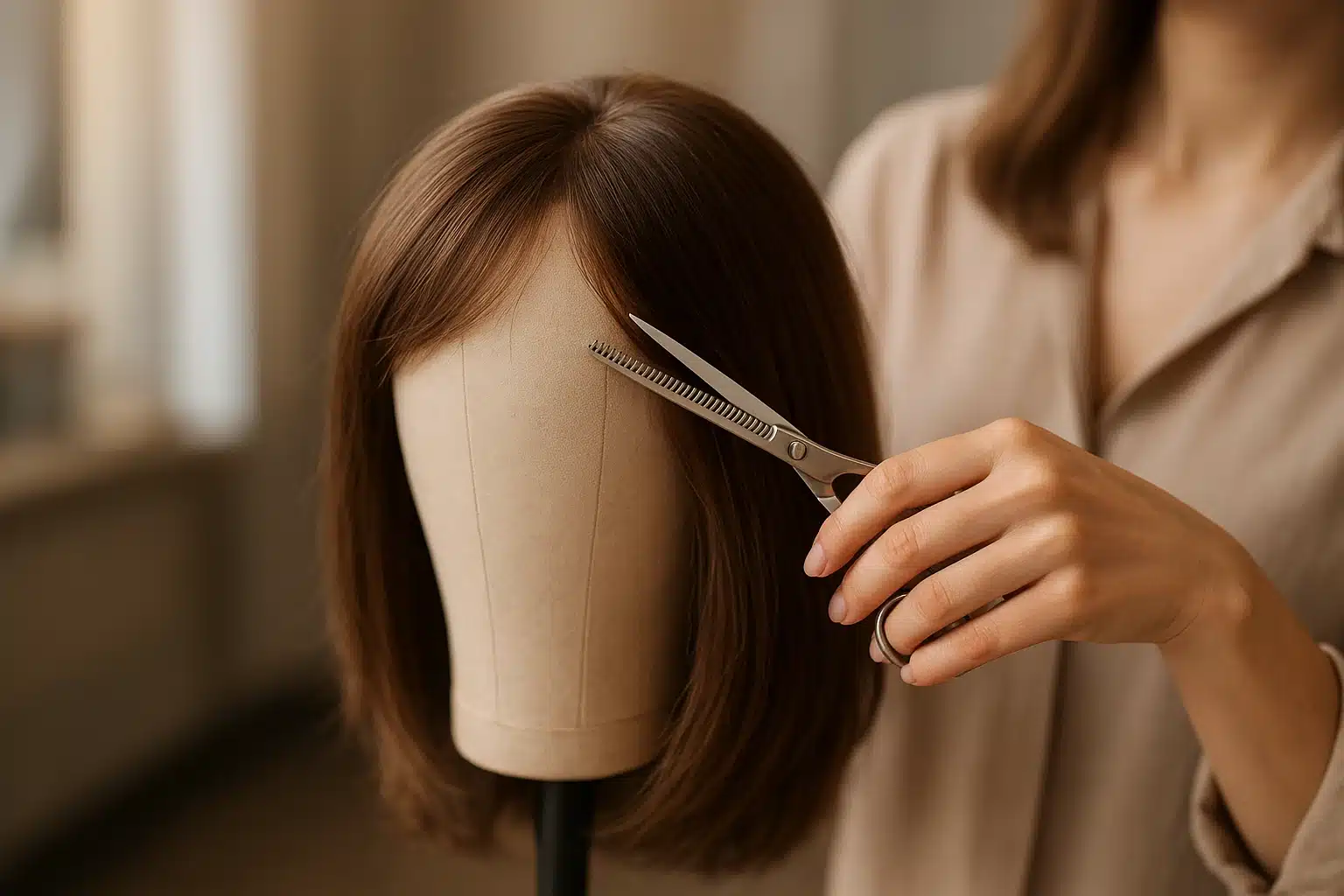
This creates the “Factory Density Paradox.” A wig with 180% density will inevitably look “wiggy” because it features more volume around the ears, crown, and hairline than human biology naturally produces. Professional wig stylists use specialized techniques, such as internal weight removal and texturizing shears, to thin out this bulk without creating blunt chop marks or exposing the underlying cap.
The Anatomy of Professional Wig Customization
Taking a wig from raw to ready-to-wear involves a highly specialized set of mechanical and chemical transformations. When you visit a specialty wig boutique or a dedicated salon in Oakland, your stylist will walk you through a multi-step personalization process.
The 6-Point Head Mapping & Cap Resizing Process
Standard “small, medium, or large” stretch caps rarely account for the unique topography of your scalp. Professional local wig makers rely on a precise 6-point cranial measurement protocol to prevent common issues like ear tab bunching (which causes headaches) and crown lift. These measurements include:
- Circumference: The total distance around your hairline.
- Front-to-Nape: The length from the center of your forehead down to the base of your neck.
- Ear-to-Ear across the Forehead: Vital for naturalizing lace frontals.
- Ear-to-Ear over the Top: Prevents the cap from hovering above your scalp.
- Temple-to-Temple around the Back: Ensures secure track placement.
- Nape Width: Keeps the back of the wig sitting flush against the neck.
By using these micro-measurements, a stylist can add darts, reposition elastic glueless bands, or integrate silicone grips so your wig fits as securely as a glove.
Hairline Customization: Plucking, Single Knots, and Lace Melting
If a wig looks unnatural, the hairline is usually the culprit. Biological hairlines are naturally sparse and graduated, while factory wigs often feature dense, wall-to-wall hair.
Professional customization involves delicate plucking to mimic a natural, receding gradient. Additionally, stylists address the tiny dark dots (knots) where the hair is tied to the lace base. Through a chemical process called knot bleaching or neutralization, they lighten these knots to match your scalp. Finally, through lace tinting, the translucent lace is color-matched precisely to your unique skin undertones, allowing the unit to “melt” seamlessly into your forehead.
Precision Cutting Mechanics: The Dry Cut
Wig hair behaves very differently from growing biological hair. It lacks natural hair follicles and scalp sebum. If you cut a wig while it is wet—a common mistake made by traditional hair salons and DIYers—the hair will experience extreme “bounce-back” once it dries, resulting in an accidentally chopped, overly short style.
Expert wig cutters in the East Bay cut and frame human hair units entirely dry, often while the wig is placed on the client’s head. This allows the stylist to use razor graduation and slide-cutting techniques to assess the exact drape, movement, and face-framing angles in real-time.
Navigating the Oakland Wig Salon & Boutique Landscape
The East Bay wig market is wonderfully diverse, spanning everything from high-volume beauty supply stores to specialized, private studios like Xplosion Hair Salon, Paparazzi Beauty Bar, and CNS Hair Designs. Understanding the local service spectrum helps you budget appropriately and know what to ask for.
Oakland Customization Cost & Service Benchmarks
If you are planning to have a store-bought wig customized locally, here is a transparent look at typical East Bay service costs and turnaround times:
- Initial Consultations ($30–$50): A 30-to-45-minute deep dive into your lifestyle, scalp health, and head measurements.
- Braid-Down Prep ($100–$125): The foundation of a flat wig install. Stylists create a specialized braid pattern tailored to your natural hair density to ensure the wig lays perfectly flat without lumps.
- Custom Cuts & Styling ($65–$175+): Depending on the complexity, ranging from simple face-framing layers to intricate Deva curl dry-cuts for heavily textured units.
- Full Custom Unit Construction ($300–$800+): If you are having a wig built from scratch using raw bundles and custom lace, expect a 1 to 2-week fabrication window.
Medical Cranial Prosthetics vs. Cosmetic Wigs
For those experiencing hair loss due to alopecia, chemotherapy, or other medical conditions, a standard cosmetic wig may cause scalp irritation. Specialized Oakland studios (such as Miracles Hair Studio) focus on Medical Cranial Prosthetics. These units feature breathable, hypoallergenic bases (like monofilament or French lace) and polyurethane perimeters. Often, professional salons can provide you with the proper HCPCS codes required for medical insurance reimbursement, turning a cosmetic purchase into a covered medical necessity.
The “4-Finger Rule” and Pro Secrets
Even the most beautifully customized wig will look artificial if it is applied incorrectly. A foundational metric used by professionals is the 4-Finger Forehead Alignment Rule.
To find your natural biological origin point, place four fingers horizontally starting from your brow bone upwards. The top of your index finger generally marks where your wig’s hairline should begin. Pulling a wig too far forward onto the forehead is the most common beginner pitfall, immediately giving away the illusion.
Preparing for Your Salon Appointment
Before you book a customization service with an East Bay stylist, empower yourself with this pre-appointment checklist:
- Identify your wig fiber: Is it synthetic, heat-friendly synthetic, or 100% human hair? Human hair can be color-treated and heat-styled freely; synthetic fibers have strict heat tolerance limits and cannot be lightened.
- Do not cut the lace yourself: Leave the excess lace completely intact. Your stylist needs that canvas to cut the exact contours of your hairline.
- Go with clean, dry hair: If you are bringing your natural hair, arrive with it freshly washed and detangled, ready for a flat braid-down.
- Bring reference photos: Visuals of how you want the layers to fall around your face are invaluable for your stylist.
Frequently Asked Questions (FAQ)
Can I just take my wig to my regular hair stylist?
Not always. While traditional stylists are masters of biological hair, wig customization requires a completely different skill set. Wigs do not grow back. Techniques like internal weight removal, knot bleaching, and dry-slide cutting are specialized wig-making skills that prevent irreversible damage to your investment.
Can synthetic wigs be custom-cut?
Absolutely. However, they require different tools than human hair. Synthetic fibers can dull standard haircutting shears very quickly. A professional wig stylist will use specialized thinning shears and razors designed specifically to prevent synthetic fibers from fraying at the ends.
How long does a customized human hair wig last?
With proper at-home maintenance—including clarifying detox washes, avoiding excessive heat, and storing the unit on a proper canvas blockhead—a high-quality, customized human hair wig can last beautifully for a year or more with daily wear, and much longer if worn occasionally.
Continuing Your Hair Journey
Entering the world of wigs can feel overwhelming, especially when navigating hair loss. But understanding that the wig you buy is merely the starting point is incredibly liberating. By leveraging the expertise of local Oakland wig artisans, you can transform any high-quality piece into a reflection of your true self.
Take the time to explore your options, seek out compassionate professionals who understand your unique needs, and embrace the personalization process. Your perfect, natural-looking crown is well within reach.