Imagine finding a wig that looks like it was made just for you. The color is radiant, the style frames your face flawlessly, and the hair fibers feel incredibly soft. But just two hours into wearing it, your scalp is itching, heat is trapped against your skin, and all you want to do is take it off. While it’s easy to focus solely on the hair itself, over 70% of wig wearer dissatisfaction originates at the base. Whether it’s friction against sensitive tissue or a lack of ventilation during a humid Midwest summer, your comfort ultimately comes down to cap construction.
Selecting the right cap is the single most critical factor in determining whether you experience all-day comfort or premature garment wear. In the Ohio River Valley, where we transition from oppressive summer humidity to freezing, dry winters, this choice becomes even more vital. When navigating local showrooms to select your ideal hairpiece, consulting our guide on the wig stores in Cincinnati ensures you partner with experts who understand how cap construction dictates daily comfort.
If you are just beginning your hair loss journey or looking to upgrade your current piece, let’s demystify the mechanics of different types of wig caps, break down their durability, and give you the tactile evaluation tools you need before you buy.
The Anatomy of a Wig Cap: More Than Just a Base
Before we explore materials, it’s essential to clear up a common point of confusion: the difference between a wig’s built-in structural base (the wig cap) and the separate, protective fabric you might wear underneath it (a wig liner or under-cap). This guide primarily focuses on the structural base of the wig itself.
Every wig cap is a balancing act of three elements:
- Airflow (Breathability): How well moisture and heat escape.
- Camouflage (Realism): How closely the parting and hairline mimic organic root growth.
- Structural Lifespan (Durability): How well the textile holds up to daily tension and friction.
Depending on your lifestyle, scalp sensitivity, and budget, you will need to prioritize these elements differently.
Navigating the Types of Wig Caps
Walk into any quality wig boutique, and you’ll encounter an array of construction styles. Here is a breakdown of how they perform in the real world.
Basic / Open-Wefted (“Capless”) Caps
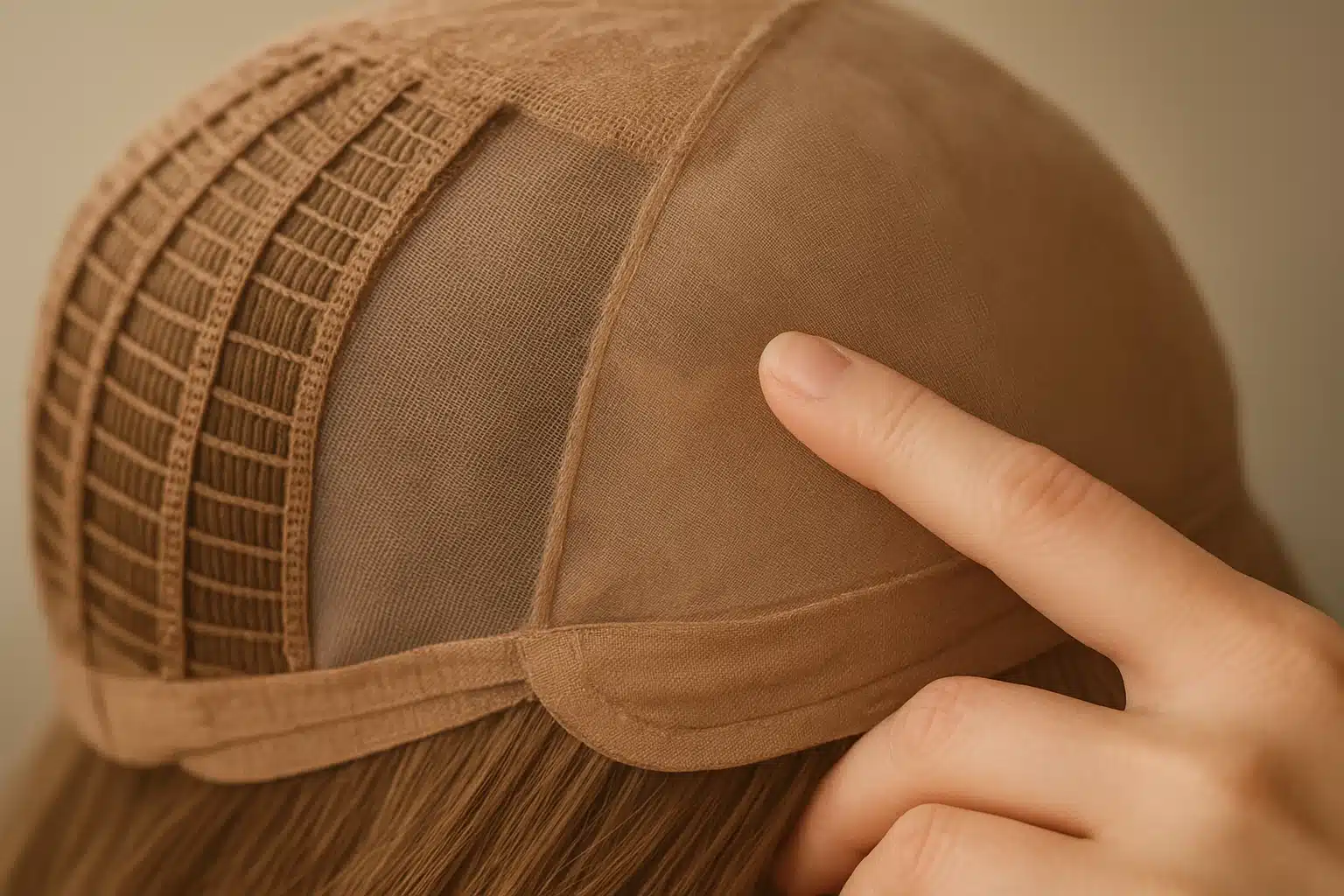
Often referred to as “capless” wigs, these bases are constructed using machine-sewn hair tracks spaced apart by elastic ribbons.
- The Mechanism: The open spaces between the wefts allow air to flow directly to the scalp.
- Breathability & Durability: They offer maximum breathability (perfect for those who run hot) and boast a high lifespan, often lasting 12 to 24 months with proper care.
- Best For: Active lifestyles, beginners, and anyone looking for maximum cooling. Because the tracks can be visible if parted too deeply, these wigs often feature a technique called “permatease” at the crown to hide the base.
Monofilament (Single vs. Double Mono)
Monofilament bases use a fine nylon or polyester mesh where each hair is individually hand-tied. This allows the hair to pivot dynamically, meaning you can change your part and it will look like the hair is growing right out of your scalp.
- The Double Monofilament Breakthrough: If you are experiencing total hair loss or have a highly reactive scalp, a double monofilament cap is the gold standard. Single monofilament leaves the tiny, scratchy hand-tied knots exposed against your skin, which can cause micro-abrasions. Double monofilament adds a second layer of ultra-soft silk or micro-mesh to buffer those knots, delivering soothing, medical-grade comfort.
The Lace Spectrum: French, Swiss, and HD
Lace wig caps (including lace fronts, 360 lace, and full lace) utilize sheer netting with micro-ventilation holes to create the illusion of a natural hairline. However, there is a distinct durability paradox you must consider:
- French Lace: Sturdy, resilient, and offers a great balance of structural integrity and realism. Expect a lifespan of 6 to 12 months.
- Swiss Lace: Softer against the skin and slightly more invisible, but more delicate.
- HD Lace: Offers flawless, invisible melting into the skin but is incredibly fragile (15-denier fabric). Under daily friction, it typically has a cosmetic lifespan of just 2 to 4 months.
Silk Top / Injected Skin Caps
These feature a triple-layer construction that completely conceals all knots between a layer of silk and monofilament. The result replicates human dermal pores perfectly, making the hair look precisely like it’s growing from your head. The tradeoff? The extra layers lower the breathability, which can trap heat in humid environments.
Polyurethane (PU) & Silicone Gripping Strips
Many high-quality medical wigs feature non-slip PU or silicone zones along the ear tabs and nape. These strips adhere gently to bare skin using your body heat, eliminating the need for messy glues or tapes. While they offer incredible security, they provide zero breathability along those specific contact bands.
Medical Sensitivities: Protecting Your Scalp Barrier
If you are dealing with alopecia, telogen effluvium, or post-chemotherapy hair loss, your scalp lacks the natural protection of intact hair follicles. In these cases, you are looking for a true sensitive scalp wig cap.
The Nylon Trap
Many beginners make the mistake of buying a $2 convenience store nylon stocking cap to wear under their beautiful, $800 hand-tied wig. This destroys the wig’s breathability. Nylon is a petroleum-based synthetic fiber that traps sebum, blocks moisture vapor transmission, and can quickly breed the bacteria that causes contact dermatitis and itching.
The Superior Alternatives
Instead of nylon, opt for hypoallergenic bamboo viscose or pure silk under-liners. Bamboo is naturally antimicrobial and wicks moisture away from the scalp, maintaining your skin’s natural lipid balance without suffocating it.
When trying to match a wig cap to your scalp tone, avoid caking heavy makeup on the inside of the wig, which clogs the mesh. Instead, rely on breathable lace tint sprays, specialized micropore tape, or light, translucent pressed powders.
The Ohio Valley Climate Matrix: Adapting to Cincinnati Weather
Your wig doesn’t exist in a vacuum—it exists in the environment you live in. The severe climatic swings of the Midwest require a strategic approach to your hairpiece.
- The Summer Protocol (July/August): When temperatures hit 85°F with 80% humidity, ambient moisture prevents sweat from evaporating. Solid caps create an occlusive sauna effect that can lead to heat rash. During these months, open-wefted caps, lightweight French lace fronts, and moisture-wicking bamboo liners are your best defense against sweat slippage.
- The Winter Protocol (January/February): Sub-freezing winds and forced-air central heating pull moisture directly from your skin. This environment causes static cling, scalp flaking, and heightened sensitivity to friction. Transitioning to a double monofilament wig or wearing a satin-lined barrier can protect your skin barrier and eliminate static charge.
The Tactile Boutique Checklist: What to Test In-Store
Shopping for a wig online treats cap construction like an abstract manufacturing diagram. Shopping in a local Cincinnati boutique allows you to execute physical tests. Before you purchase, perform this 4-step checklist:
- The Seam Abrasion Test: Gently rub the nape band and the ear tabs against your inner wrist (which mimics the delicate sensitivity of your scalp). If it feels scratchy on your wrist, it will feel unbearable on your head after eight hours.
- The Light Permeability Test: Hold the cap up to the showroom lighting. This allows you to inspect the knot density and see exactly how much open-air space the base provides.
- The Stretch Recovery Test: Gently pull the elastane perimeter band and release it. You want to see strong “memory” (it snaps back to its original shape). Poor stretch recovery means the wig will stretch out and begin slipping within a few months.
- The Knot Inspection: Turn the wig inside out. Look closely at the hand-tied areas to see if the interior lace points are trimmed flush and smoothly finished.
(Note: If you are purchasing a raw wig cap for wig making to construct custom protective hairstyles at home, ensure the base material offers enough tension resistance to hold up heavy bundles of wefted hair without warping.)
Frequently Asked Questions (FAQ)
What is a wig cap, and do I need one under my wig?
“Wig cap” can refer to two things: the structural base of the wig itself, or the thin, separate liner you wear underneath it. You do not always need to wear a liner underneath your wig. If you have a sensitive or bald scalp, a high-quality double monofilament wig is designed to be worn directly against the skin.
Can wearing a wig cause breakouts or hair thinning underneath?
Wigs themselves do not cause hair thinning, but a poor scalp environment can. Wearing a heavy, non-breathable wig over a nylon liner in hot weather traps sweat, dead skin cells, and natural oils, which can lead to folliculitis (inflamed hair follicles) or breakouts. Choosing breathable materials and washing your cap regularly prevents this.
Why does my wig cap cause burning or sweating?
If your scalp feels like it’s burning, it’s rarely an allergy to the hair. It is usually caused by friction from rough seams, trapped heat due to a lack of ventilation, or chemical processing residues left on synthetic cap bases. Switching to an open-wefted base or using a bamboo liner usually resolves this immediately.
Which cap construction holds up best for active lifestyles?
Machine-wefted (capless) wigs are the most durable and breathable, making them perfect for active individuals, gym-goers, and busy daily wearers.
Your Next Steps Toward Comfort
Understanding wig cap materials transforms you from a nervous shopper into an empowered buyer. You now know that breathability, durability, and scalp health are just as important as hair color and length. The secret to finding your perfect fit isn’t found on a spec sheet—it’s found by touching, testing, and trying on pieces in person.
By familiarizing yourself with these materials, you can walk into any boutique ready to ask the right questions and find a piece that doesn’t just look beautiful, but feels like an effortless extension of you.