You are sitting in your car outside a boutique, heart racing, gripping the steering wheel. Whether you are navigating chemotherapy, managing alopecia, experiencing thinning hair, or simply looking for an aesthetic transformation, that first step across the threshold of a wig salon carries an immense emotional weight.
For many first-time buyers, the search for alternative hair is fraught with vulnerability, decision paralysis, and a fear of the unknown. Will I have to take my hair off in front of people? Will they pressure me to buy something today? How much does this even cost?
If you are preparing for your initial consultation at a Chicago wig shop—whether it’s a luxury studio in River North, a discreet boutique in Lincoln Park, or a medical hair loss clinic in the Western Suburbs—knowing exactly what happens behind closed doors is your greatest superpower.
Here is your transparent, step-by-step master guide to your first wig consultation, designed to dissolve the intimidation and put you entirely in control of your journey.
The Emotional Reality: What You Actually Walk Into
The biggest fear most first-timers have is public exposure. You might be picturing a bustling, open-floor salon where everyone turns to look as you try on pieces. The reality of reputable Chicago boutiques is completely different.
Professional wig consultations happen in private styling suites. You will be paired with a dedicated specialist in a closed-door room equipped with companion seating (for your support person), sanitized trial caps, and mirrors. There is zero public exposure, and the etiquette is entirely built around compassion, privacy, and judgment-free education.
A consultation is an educational fitting, not a forced transaction. Reputable specialists know that finding the right piece takes time, and you should never feel pressured to swipe your credit card on day one.
How to Prepare for Your Chicago Wig Consultation
Generic advice often says, “just come with clean hair,” but proper preparation can make or break your consultation experience.
1. Preparing Your Natural Hair and Scalp
How you prep depends on your current biological hair:
- Full but thinning hair: Arrive with your hair clean, dry, and styled as flat as possible. Braid it down or pin it flat against your scalp so the specialist can accurately measure your head without excess bulk.
- Complete hair loss or patchy shedding: Ensure your scalp is clean and gently moisturized. If you have a sensitive scalp, let your specialist know before they begin the fitting so they can select friction-free cap liners.
2. The Golden Rules of Cosmetics
Wear your daily makeup. This is crucial for matching hair colors and tones to your everyday complexion. However, keep your forehead free of oily foundations or heavy moisturizers. Oils prevent lace fronts from adhering properly during try-ons and make it difficult to evaluate how the lace blends with your natural skin tone.
3. Build a Visual Dossier
Bring 3 to 5 photos of your hair at its absolute peak, or photos of your dream hair aesthetic. Pay special attention to photos that show your natural parting placement and your pre-loss hairline recession. This gives your fitter a clear blueprint for recreating your identity.
Pro Tip: Bring exactly one trusted companion. Navigating the emotional waters of hair loss is hard, but bringing too many friends often leads to “too many opinions” paralysis.
Step-by-Step: Inside the 60-Minute Consultation
Understanding the choreography of a consultation removes the anxiety of the unknown. Here is the chronological breakdown of a standard 60-minute visit.
0–10 Minutes: The Lifestyle Audit
Your specialist won’t immediately start putting wigs on your head. They will begin by asking about your microclimate, daily routine, and physical activity. Do you commute on the CTA in the biting winter wind? Do you spend July navigating Chicago’s heavy lakefront humidity? Are you dealing with hot flashes? Your answers dictate the fiber and cap materials they pull for you.
10–20 Minutes: Precision Cranial Measurements
Fit is everything. A specialist will take three non-negotiable measurements:
- Circumference: Around the entire hairline.
- Front-to-Nape: From your forehead hairline over the crown to the base of your neck.
- Ear-to-Ear: Across the top of your head.
A note on sizing: Different brands have different sizing standards. You might wonder, do rene of paris wigs run small? Your specialist will know the exact manufacturer quirks and guide you toward brands that fit your unique measurements perfectly.
20–45 Minutes: The Tactile Try-On
This is the “aha moment.” First-timers are often surprised by the tactile sensory threshold—the weight of the hair and the friction of the interior cap.
During this phase, your specialist will teach you the “Four-Finger Rule”. Beginners often pull wigs too far down on their foreheads, creating an unnatural “helmet” look. By placing your index through pinky fingers flat above your brow bone, you can identify exactly where a natural frontal hairline should sit.
45–60 Minutes: Customization, Maintenance, and Quotes
Finally, you will discuss how the piece can be tailored. Can the lace be trimmed? Does the density need to be thinned out? You will also review maintenance cycles, return policies, and receive an itemized quote.
Decoding the Salon Jargon: Caps, Density, and Fibers
If you don’t know the terminology, a consultation can sound like a foreign language. Here are the core concepts you need to grasp.
The Cap Construction Matrix
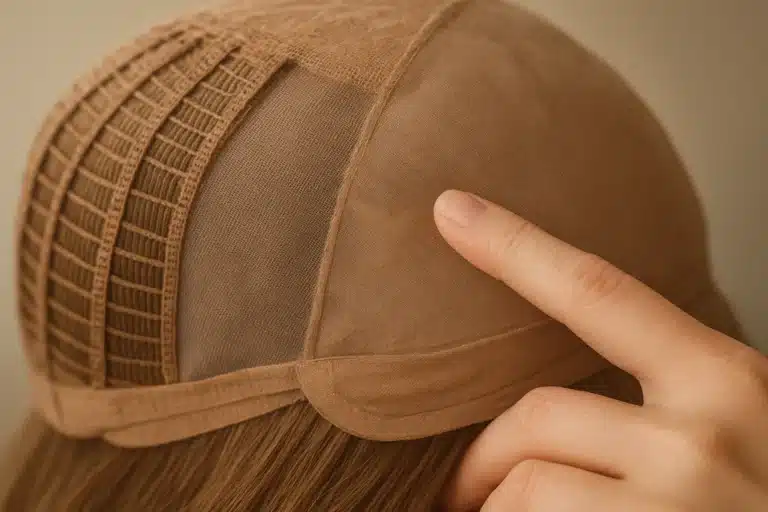
The foundation of any wig is its cap. Learning about wig cap construction will help you understand why prices vary so wildly:
- Open Wefted: A breathable, lightweight everyday workhorse. Great for hot Chicago summers.
- Monofilament: A sheer material at the crown or part that creates the illusion of hair growing directly from your scalp.
- Silk Top & 100% Hand-Tied: The gold standard for compromised or sensitive scalps. These caps offer featherweight, friction-free luxury. Because every single hair is individually knotted, hand tied wigs move exactly like natural biological hair.
The Density Dilemma
First-time buyers often gravitate toward wigs with 150% density because they think “more hair is better.” The reality? It usually looks unnaturally thick. A skilled boutique fitter will steer you toward a natural density of 110% to 130% for a highly realistic look.
The “First Wash” Surprise & Silicone Myth
Here is a secret many boutiques won’t tell you: most retail human hair wigs are coated in a factory-finish silicone. This makes them look incredibly shiny and soft on the display mannequin. However, after the first wash, this coating strips away, revealing the true texture of the hair. Always ask your fitter: “Has this display piece been pre-laundered?”
Understanding proper wig maintenance is essential to extending the life of your investment, especially when battling dry radiator heat in the winter that can cause collar-line friction frizz.
Financial Protection & Insurance Navigation in Illinois
Consultation fees in Chicago can range from $0 to over $100. Always ask upfront if this fee is credited toward your final purchase (it usually is). But more importantly, if you are experiencing medical hair loss, you need to understand your insurance options.
Many patients ask, does health insurance cover wigs for cancer patients? The short answer is yes, but the terminology is critical.
Insurance companies will routinely deny claims that use the word “wig.” Instead, you must request a prescription from your Illinois physician (like an oncology nurse or dermatologist at Northwestern or Rush) for a “Cranial Prosthesis.”
When submitting your claim to providers like Blue Cross Blue Shield of Illinois or UnitedHealthcare, ensure your specialist provides an invoice using the HCPCS billing code A9282 (along with the relevant ICD-10 diagnosis code for your specific condition). Much like shopping for medical wigs in other major healthcare hubs, navigating Chicago’s medical billing landscape requires having the right paperwork in hand before you buy.
The Ultimate First-Time Wig Consultation Checklist
Don’t go in empty-handed. Write down these consumer advocacy questions and bring them to your appointment:
- Does my consultation fee apply toward the purchase of a wig?
- Are custom alterations (lace trimming, thinning, face-framing) included in this price quote?
- What exactly voids the salon’s warranty or return policy once I take this piece home?
- Has the piece I am trying on been washed, or does it still have its factory silicone coating?
- How will this specific fiber hold up to Chicago’s humidity and winter winds?
- Can you provide an itemized receipt with HCPCS Code A9282 for my insurance reimbursement?
Frequently Asked Questions for First-Time Buyers
Do I have to shave my head?
Absolutely not. Unless you personally want to, there is no requirement to shave your head. Specialists use specialized caps and wrapping techniques to comfortably hide your biological hair under the piece.
Are consultations private, or out in the open?
Reputable boutiques always conduct consultations in private styling suites with doors. You will never be required to remove your hair or cap in front of other customers.
Should I choose human hair or synthetic for my first piece?
It depends entirely on your budget, energy level, and physical capability. Synthetic fibers hold their style perfectly even in humid weather (a massive plus for low-maintenance wearers), while human hair offers unparalleled styling versatility but requires the same upkeep as biological hair.
Your Next Steps Toward Confidence
Walking into a Chicago wig boutique for the first time is a courageous step toward reclaiming your identity. By understanding the anatomy of the consultation—from the privacy of the suite to the cranial measurements, cap constructions, and medical billing protocols—you transition from an anxious buyer to an empowered, educated consumer.
Take a deep breath. Gather your inspiration photos, review your medical insurance policy for cranial prosthesis coverage, and step through those boutique doors with confidence. Your perfect hair is waiting.