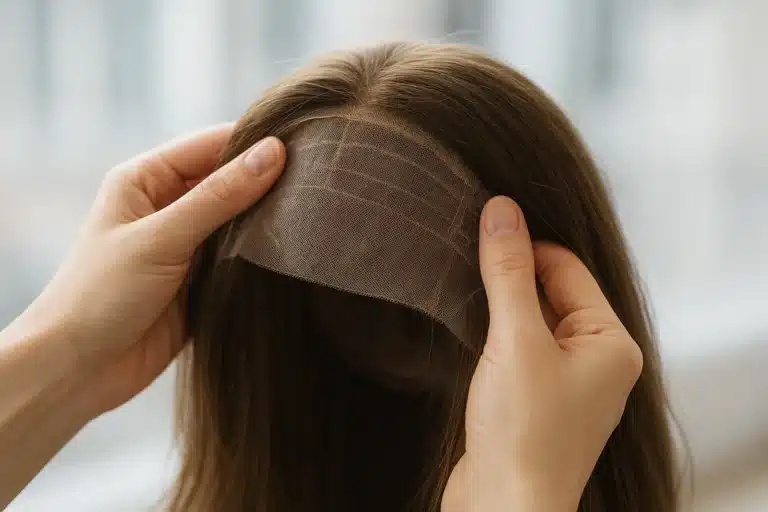

Have you ever purchased a beautiful wig, only to spend the entire day pulling it down in the back, adjusting the hairline, or fighting off a pounding tension headache behind your ears? If your head circumference falls outside the standard 21.5 to 22.5-inch “average” range, you already know the profound frustration of shopping for alternative hair. For petite and plus-size wearers, navigating the racks of standard-sized units often leads to painful wear, visible bunching, and costly online return fees.
Finding alternative hair that fits securely and comfortably is a deeply personal journey, especially when you are dealing with hair loss. The good news is that you don’t have to rely on trial-and-error online ordering. By exploring specialized wig shops in Orlando, you can find physical boutiques that offer custom measurements, personalized cap tailoring, and dedicated petite and plus-size inventory.
Here is everything you need to know about navigating cap sizing and finding the perfect fit in Central Florida.
Why “One Size Fits Most” Fails in Alternative Hair
Walk into most retail stores, and you’ll find that roughly 90% of the display floor models are standard “Average” caps. When these units don’t fit, a well-meaning salesperson might advise you to just use the interior straps at the nape of the neck to tighten or loosen the wig.
This is what industry experts call the “Tightening Strap Fallacy.”
While those velcro or bra-style straps offer slight adjustments, relying on them to dramatically alter a cap size ruins the wig’s architecture.
- If you have a petite head and over-tighten an average cap, the ear tabs will buckle and fold painfully over your ear cartilage. The lace front will drop too low, and the excess fabric at the top will billow out, creating an unsightly “conehead” bubble at the crown.
- If you have a plus-size head and attempt to stretch a standard cap, the hairline will recede unnaturally, the ear tabs will pinch your temples, and the sheer tension will likely trigger a migraine.
A properly fitted wig should feel like a gentle, secure hug on your scalp—not a vice grip or a loose hat.
The 3-Point Cap Sizing Blueprint (Your New Secret Weapon)
Before booking a consultation at a local boutique, you need to understand your own measurements. Many beginners fall into the “circumference-only trap,” measuring around their hairline and stopping there. But head shape is three-dimensional. You could have a petite circumference (21 inches) but a large front-to-back depth (14.5 inches). If you only buy based on circumference, your wig will constantly slip backward.
Using a soft tailor’s tape, take these three measurements with your natural hair braided or wrapped tightly against your scalp:
1. Circumference
Trace the tape from your front hairline, behind your ears, down to the nape of your neck, and back up.
- Petite: 20″ to 21.25″
- Average: 21.5″ to 22.5″
- Large/Plus: 22.5″ to 24″+
2. Ear-to-Ear
Measure from the top of one ear, over the crown (about 7 inches behind your front hairline), to the top of the other ear.
- Petite: 12.75″ to 13″
- Average: 13.5″ to 14.25″
- Large/Plus: 14″ to 15.25″
3. Front-to-Back
Measure from the center of your front hairline directly back to the fold of your neck (the nape).
- Petite: 13″ to 13.25″
- Average: 14.25″ to 14.5″
- Large/Plus: 15″ to 15.5″
The Golden Fitting Rule: If your measurements span across two different sizes (e.g., you have an average circumference but a large front-to-back), always fit for the largest measurement. A professional wig technician can easily dart and take in excess cap perimeter, but an undersized base cannot be safely enlarged without tearing the delicate lace.
Brand Sizing Biases: Knowing Who Makes Your Size
As you browse local Orlando boutiques, it helps to know that wig designers have distinct sizing biases.
- European Fit (Runs Smaller): Luxury brands like Ellen Wille design their caps closer to a Petite/Average standard (around 21.25″). Their caps are incredibly streamlined, making them a phenomenal off-the-rack starting point for women with petite heads who usually drown in American brands.
- American Fit (Runs Larger/More Structured): Brands like Jon Renau and Raquel Welch offer dedicated Large lines (spanning 22.5″ to 24″). Furthermore, their proprietary open-wefted “Memory Caps” offer up to half an inch of mechanical stretch, making them highly forgiving for borderline plus-size measurements.
Surviving the Central Florida Climate: Cap Mechanics
Living in Orlando means navigating subtropical heat and intense humidity. Your cap construction interacts directly with our climate.
If your cap is too large, the weight of the hair combined with scalp sweat will cause the unit to sag and slip. If it’s too small, heat-induced swelling will create painful tension marks on your forehead. When shopping locally, ask to feel the difference between open-wefted caps (which offer superior airflow and stretch for larger heads) and 100% hand-tied monofilament caps (which provide ultimate scalp comfort for hair loss patients but have less rigid elasticity).
A Curated Guide to Orlando Boutiques for Non-Standard Sizes
Finding a boutique that actually caters to non-standard sizes—rather than just selling whatever is in stock—requires knowing where to look. Here are specialized retail environments across Central Florida equipped to help hard-to-fit wearers:
Ritzy Rags Wigs & More (College Park)
Located in the heart of College Park, this boutique excels in compassionate, experiential consultations. With over 40 years of experience serving cancer patients and individuals undergoing medical hair loss, they are highly skilled at evaluating head shapes and discussing custom cap adaptability to ensure you leave with a piece that feels like your own hair.
Sassy Sistas Boutique (Altamonte Springs)
If you are looking for custom construction, this North Metro boutique features bespoke human hair cap building. Rather than trying to force an off-the-rack wig to work, their private booking structure allows them to tailor cap construction specifically to non-standard head shapes and circumferences.
Bonne Vie Salon (Winter Park)
Bridging the gap between medical hair loss solutions and high-end private salon styling, Bonne Vie is an excellent resource for cranial prosthesis sizing. They can assist with taking exact biometric measurements and ordering specific medical-grade units that aren’t typically available in standard retail shops.
Natural Hair Wigs & Weaves by Lovette (Maitland)
For those needing intimate, specialized private cap fit consultations, this Maitland staple shines. They excel at density adjustments—an important factor, as many people mistakenly believe they need a larger cap size when they actually just need the hair density thinned out to reduce the wig’s bulkiness.
The Wig Factory / Halo Hair Solutions (Downtown Orlando)
Specializing in machine-sewn custom units and medical-grade cranial prostheses, this Downtown hub is highly experienced in the structural mechanics of cap drafting and HIPAA-compliant medical hair loss coordination.
The Orlando Boutique Vetting Script: What to Ask Before You Go
To save yourself time and emotional energy, don’t just walk into a boutique hoping for the best. Call ahead and use this exact script to vet the store’s inventory and expertise:
- “Do you carry physical floor stock of petite (under 21.5″) or large (over 22.5″) cap sizes that I can try on today, or are those sizes strictly special-order?”
- “Do you offer professional 3-point cap measuring services during your consultations?”
- “If an average cap doesn’t fit me perfectly, do you have an in-house technician who can alter the cap (like sewing nape darts) without voiding the manufacturer warranty?”
- “Do you process paperwork or provide itemized receipts for medical cranial prostheses for insurance reimbursement?”
Frequently Asked Questions (FAQ)
Can an average wig cap be altered to fit a petite or large head?
Yes and no. An average cap can be made smaller by a skilled technician who will take in “darts” (tiny folds sewn into the base) at the nape and behind the ears to remove excess fabric. However, you cannot safely make an average cap larger without destroying the integrity of the lace and the wefts. If you have a large head, you must purchase a Large/Plus cap from the start.
Why does my wig have extra fabric bunching at the crown even though it fits around the hairline?
This happens when your circumference matches the wig, but your front-to-back measurement is smaller than the wig’s depth. The excess fabric has nowhere to go but up, creating a tenting or bunching effect at the crown. You either need a true petite cap or a professional alteration to remove the excess depth.
Does hair volume affect cap size?
It is a common misconception that having a lot of natural hair underneath requires a “Large” cap. If you have thick natural hair, you actually need to focus on compression (like flat-wrapping or tight cornrows) rather than sizing up, as a larger cap will often just slide around on top of your natural hair. Compression can reduce your working circumference by up to 0.75 inches.
Your Next Steps to Finding the Perfect Fit
Finding the perfect wig when you have a petite or plus-size head requires a blend of anatomical science and local guidance. Now that you understand the 3-point measurement standard and the realities of brand sizing, you are empowered to shop with confidence.
Take your measurements at home, use the vetting script to call a few of the specialized boutiques mentioned above, and schedule a private consultation. Remember: you deserve a hairpiece that allows you to step out into the Orlando sun feeling secure, comfortable, and unequivocally beautiful.