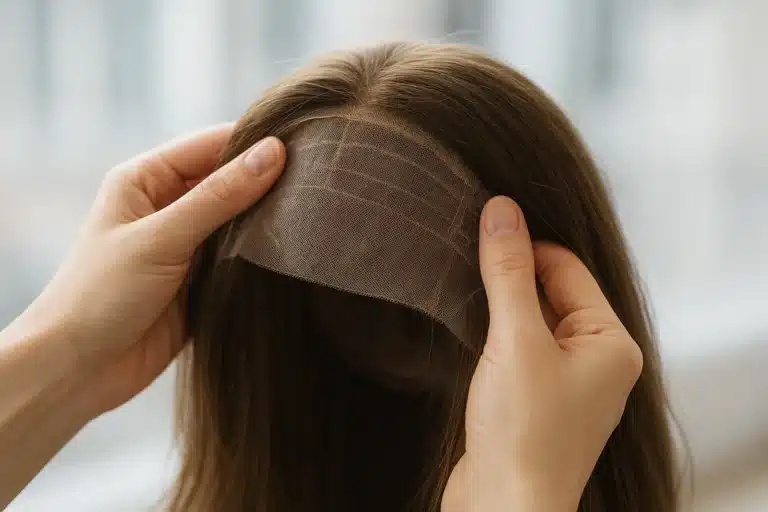
Imagine finding the absolute perfect hairpiece. It frames your face flawlessly, the color is vibrant, and the density is incredibly natural. You’ve successfully navigated the journey of evaluating the best wig stores in Washington, DC and made a beautiful investment. But within a few short weeks, the lace begins to lift in the midday humidity, the cap feels strangely stretched, and the hair loses its initial luster.
The culprit? It’s almost never the wig itself. Instead, it’s a fragmented, often confusing accessory ecosystem.
Beginners and experienced wearers alike quickly discover that maintaining a wig’s longevity, natural wearability, and their own scalp health requires an entirely separate set of tools. Unfortunately, big-box beauty supply stores rarely offer technical guidance, and the internet is flooded with risky influencer hacks.
Welcome to the ultimate educational field guide for decoding wig maintenance. We’re pulling back the curtain on cap chemistry, demystifying adhesives, and providing a neighborhood-by-neighborhood map for navigating the accessory retail landscape in the District of Columbia.
The Hidden Science of Wig Wear: The “Cap Chemistry” Framework
Before you step onto the Metro to hunt for supplies, it helps to understand exactly what your wig is fighting against.
Human skin naturally secretes sebum (which has a pH of 4.5–5.5) alongside daily perspiration. When you introduce Washington, DC’s famously humid subtropical summers into the mix, you create an environment that actively attacks hair attachments. This is why a water-based adhesive that holds flawlessly in dry, cool climates might completely dissolve within 48 to 72 hours during a humid DC August.
Understanding “Cap Chemistry” means recognizing that you aren’t just slapping glue on your forehead. You are building a protective barrier. By pairing a scalp-barrier primer with a medical-grade hair tape adhesive, you can dramatically transform your retention rate and protect your natural edges from tension.
The Adhesive and Tape Masterclass: Decoding the Jargon
Walk down the aisle of any beauty supply store, and the sheer volume of bonding products is overwhelming. Let’s translate the industry jargon so you know exactly what you’re buying.
Tape vs. Glue: Protecting Your Natural Hairline
The debate between tape and glue is often framed purely around strength, but the real conversation should be about scalp safety. For beginners prone to edge breakage, an adhesive hair tape provides cleaner mechanical boundaries. Tape prevents the liquid migration that often traps fragile natural baby hairs. Whether you are opting for a high-quality walker tape wig tape for multi-day wear, a comfortable luvme wig tape, or a gentle silicone wig fix tape, double-sided tapes are often the safest starting point for preserving your natural hairline.
The Mystery of “Red Wig Glue”
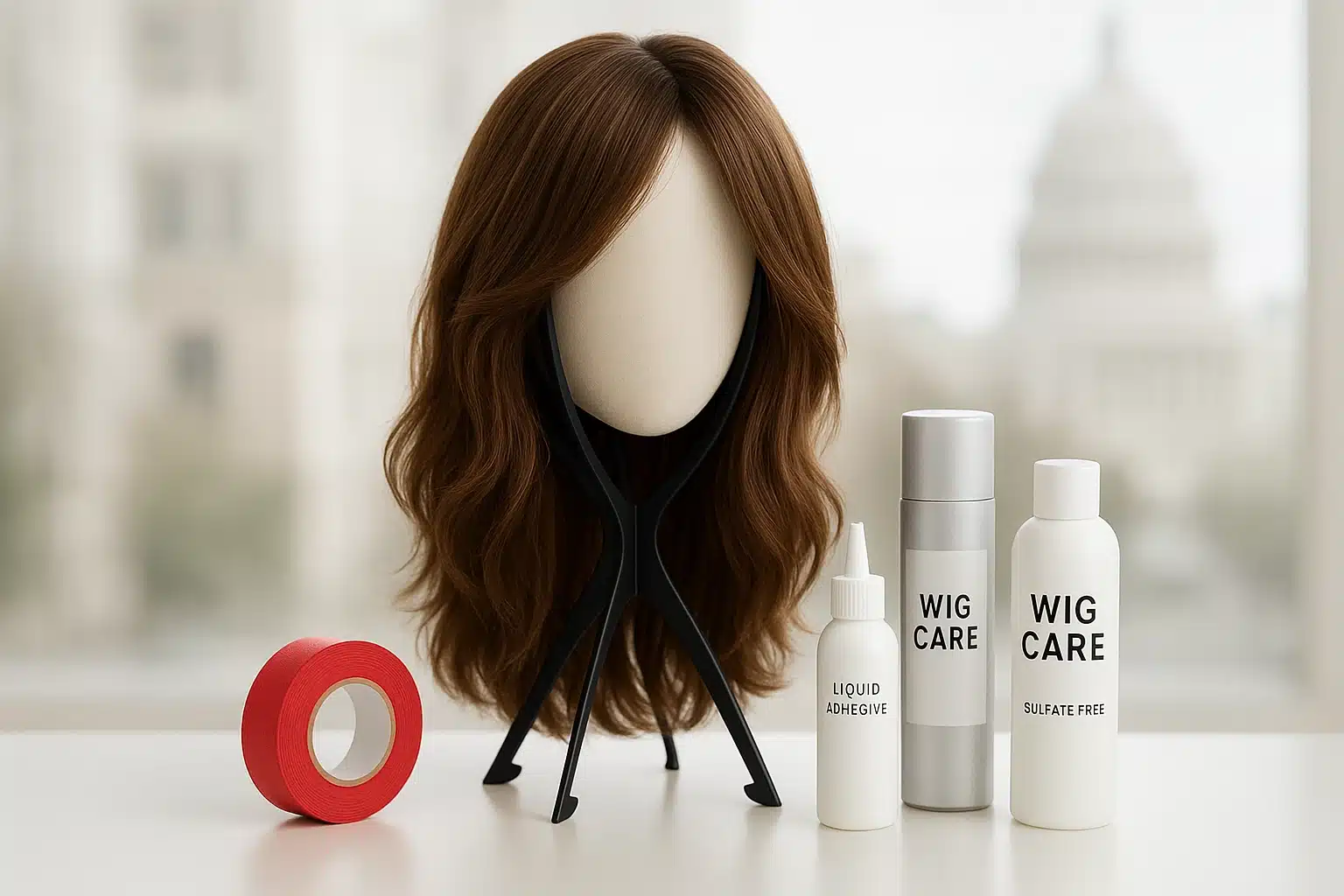
If you’ve browsed online forums, you’ve likely seen people swearing by “red wig glue.” Here is your first major aha moment: red wig glue isn’t a red liquid at all! This is consumer slang for red-liner hair tape—a double-sided acrylic pressure-sensitive tape featuring a red peel-off backing. It is beloved in the hair community specifically because it provides a strong hold with a remarkably clean, residue-free removal.
Melting Sprays vs. Liquid Bonds
Are you looking for a glue spray wig installation, or do you need a liquid bond? These are fundamentally different chemistries:
- Melting Sprays (Glue Sprays): These are aerosolized polymers designed for temporary, 24-hour holds. They are fantastic for daily perimeter blending and won’t leave heavy buildup.
- Liquid Adhesives: A true liquid bond (or a cling adhesive hair glue) creates a cross-linked polymer barrier engineered to resist perspiration for days or even weeks. These are ideal for long-term wear but require careful, solvent-based removal.
The Danger of Craft Adhesives
Occasionally, a viral social media video will promote cheap household hacks for wig installations. Let us be incredibly clear: you should never let uhu wig glue or any other craft/theatrical paste touch your skin or fragile Swiss HD lace. These solvent-based household adhesives are meant for synthetic craft wefts or stage prosthetics. Applying them to human skin risks severe contact dermatitis, chemical burns, and the permanent dissolution of your wig’s delicate hand-tied knots.
The Great Stand Debate: Why Styrofoam Could Be Ruining Your Wig
One of the most common mistakes in wig care happens right after washing. Many wearers place their soaking wet wig on a solid styrofoam head to dry.
Here is another aha moment: drying a wet wig on solid styrofoam traps moisture inside the cap mesh. With no air circulation, this creates a dark, damp environment that invites bacterial colonization and mildew odors. Worse, the solid shape of the foam will permanently stretch out the elastic of your wet cap.
The Golden Rule of Wig Stands:
- Collapsible Open-Air Stands: Mandatory for drying freshly washed wigs to allow 360-degree airflow.
- Canvas Block Heads: Perfect for pinning, cutting, and styling dry wigs.
- Styrofoam Heads: Should be reserved strictly for the display of fully dry wigs.
Navigating Washington DC’s Wig Accessory Retail Landscape
Instead of guessing which stores carry what you need, here is a localized breakdown of where to find specialized accessories across the District.
Georgia Avenue NW Corridor
Stores along this stretch (like No. 1 Beauty Supply and Hair Depot DC) are fantastic hubs for daily essentials. If you need holding sprays, basic daily hair adhesive tape, nylon wig caps, and those crucial collapsible drying racks, this is your go-to corridor.
Florida Ave & U Street Corridor
Shops like Beauty Island and Galaxy 5000 cater to the modern lace wearer. This area is the center for aerosol lace melts, glueless elastic bands, HD lace replacement pieces, and premium sulfate-free care products formulated specifically for human-hair wigs.
Brentwood / NE Commercial Strip
If you are looking for massive square footage and bulk professional supplies, the commercial strip in Brentwood (home to 1 Beauty Supply of Brentwood) is ideal. You’ll find everything from budget-friendly synthetic care lines to heavy-duty professional installation accessories used by salon stylists.
Capitol Hill & Downtown Specialty Studios
For those dealing with medical hair loss or sensitive scalps, specialty studios (like Kay Wigs or Eivind and Hans) offer a different tier of accessories. Here, you can source medical-grade cranial prosthesis care products, monofilament-friendly cleansers, and hypoallergenic tapes designed specifically for dermatological safety.
The “Call-Ahead” Protocol for DC Shoppers
Before you ride the Metro across the city, always call ahead with specific terminology. Instead of asking, “Do you have wig tape?”, ask, “Do you stock Walker No-Shine tape or red-liner tape?” Instead of asking for a wig stand, ask, “Do you carry cork canvas block heads for styling?” Using precise language ensures you don’t waste a trip.
Essential Maintenance Regimens for Scalp and Fiber Health
The true secret to an undetectable, long-lasting wig isn’t just how you apply it—it’s how you remove it.
Clinical dermatology studies frequently highlight the dangers of traction alopecia (hair loss caused by constant pulling). To prevent tearing your lace or ripping your baby hairs, proper chemical dwell time is non-negotiable. When removing liquid adhesives or strong tapes, apply a citrus- or alcohol-based solvent and let it sit for a full 2 to 3 minutes. The lace should slide off with zero resistance. If you have to pull, the solvent hasn’t done its job yet.
Furthermore, always separate your fiber care. Synthetic fibers have different thermodynamics than human hair; washing a synthetic unit with regular salon shampoo will destroy the fiber memory and leave it looking frayed. Always use synthetic-formulated cleansers for synthetic units, and reserve your hydrating, sulfate-free reconstructors for human hair.
Frequently Asked Questions (FAQ)
What is the difference between wig glue, wig tape, and wig spray?
Wig tape is a double-sided pressure-sensitive adhesive offering clean removal and great boundary control. Wig glue is a liquid bonding agent meant for multi-day, sweat-resistant hold. Wig spray (melting spray) is an aerosol designed for temporary, 24-hour lace blending without heavy residue.
Can I wash my synthetic wig with regular salon shampoo or dish soap?
No. Regular salon shampoos contain conditioning agents that coat and dull synthetic fibers, while dish soap is far too abrasive. Always use a shampoo specifically formulated for synthetic hair to maintain its chemical structure and baked-in style memory.
Why is my lace lifting after 48 hours in DC summer humidity?
Water-based liquid adhesives break down when exposed to excessive sweat, high humidity, and your scalp’s natural oils. To combat this, use an alcohol-based scalp protector primer before applying your adhesive, or switch to a high-tack blue-liner tape designed for heavy perspiration.
Continuing Your Journey
Navigating the world of alternative hair is a journey of continuous learning. By understanding the chemistry behind your adhesives, utilizing the right stands, and knowing exactly which DC neighborhoods stock the professional tools you need, you are taking the vital steps from being a casual wig wearer to an empowered consumer.
At Wig Superstore, we believe that education and compassionate care are the cornerstones of a beautiful hair journey. With nearly two decades of industry expertise, we know that the right support system—both in the products you use and the advice you receive—makes all the difference in helping you feel beautiful, confident, and completely yourself.