
Navigating the professional dress codes of Washington, DC, requires a delicate balance of decorum, precision, and personal expression. From Capitol Hill hearing rooms and K Street legal practices to federal executive agencies and defense consultancies, the capital’s workforce operates under intense visual scrutiny. If you are experiencing medical hair loss, transitioning your style, or looking for ways to protect your natural hair during the workweek, finding professional looking wigs that appear completely undetectable under harsh fluorescent office lights and high-definition committee cameras is more than a preference—it’s an urgent professional necessity.
Stepping into the world of alternative hair can feel overwhelming, especially when you need a piece that flawlessly aligns with your executive presence. While many professionals begin their journey by reading our Best Wig Stores in Washington, DC: The Ultimate Evaluation Guide to pinpoint top-tier regional retailers, the foundation of a great choice starts with education. Let’s demystify the technical architecture, climate considerations, and demographic nuances required to find the perfect office-ready hairpiece for the capital’s demanding environment.
The Anatomy of an Undetectable Office Wig
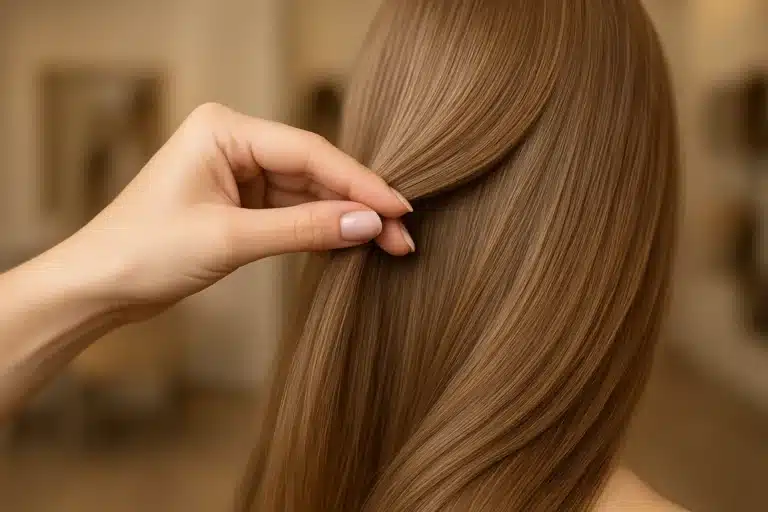
Before worrying about style or color, we need to talk about construction. The foundation of natural looking hair wigs lies entirely in how they are built and how they mimic biological hair growth.
Cap Architecture: Passing the “Fluorescent Light Litmus Test”
Institutional lighting—specifically the 4000K–5000K LED lights found in federal buildings and corporate offices—is famously unforgiving. To pass this visual test, the top of your wig must look like a natural human scalp.
- Monofilament Tops: This construction involves hand-tying individual hairs into a sheer, breathable micro-mesh. When you part a monofilament wig, it creates the illusion of hair growing directly from your scalp, making it the gold standard for eye-level conference table meetings.
- Swiss HD Lace Fronts: An undetectable, sheer lace front allows you to pull the hair away from your face naturally.
- Silk Bases: These feature a layer of silk beneath the lace, hiding the tiny knots where hair is tied to the cap, resulting in a hyper-realistic part.
The Density Trap: Why Less is More in Corporate Spaces
One of the most common mistakes first-time buyers make is choosing a wig with too much volume. While 130% to 150% density might look glamorous on social media, it is the number one telltale sign of a wig in a conservative office setting.
For the most professional, undetectable look, embrace the “Graduated Density Protocol.” Seek out wigs that feature 80% to 100% density at the hairline, gradually transitioning to 110% or 120% at the crown. This mirrors biological human hair, falling naturally without looking bulky or theatrical.
Beating the Mid-Atlantic Swamp: Fibers & Climate
Washington, DC’s climate presents a unique challenge: subtropical summer humidity (often exceeding 66% relative humidity with triple-digit heat indices) juxtaposed with arid, heavily air-conditioned offices.
Human Hair vs. Heat-Friendly Synthetics
While many assume 100% human hair is always superior, DC’s July humidity can turn beautifully styled human hair frizzy before your Red Line commute is even over.
Alternatively, closed-memory, heat-friendly synthetic fibers hold their baked-in style regardless of the weather. When navigating the “DMV Commuter Fiber Matrix,” consider pairing high-grade synthetic fibers with an open-wefted cap design. This provides superior ventilation, keeping your scalp cool during hot Metro commutes, while ensuring your style remains pristine through 12-hour agency shifts.
The Power of the Professional Bob
There is a reason natural looking short wigs—like tailored A-line bobs, textured lobs, and chic pixies—dominate K Street and Capitol Hill. They don’t trap heat against your neck, they avoid the friction that causes synthetic fibers to tangle on office chair backs, and they exude a polished, no-nonsense executive presence.
Tailoring to DC’s Diverse Workforce
The capital’s workforce is incredibly diverse—bipartisan, multiracial, and multi-generational. Alternative hair solutions must be just as inclusive.
Natural Color Restraint and Transitioning
In conservative offices, color restraint is key. Flat block colors often look artificial. Instead, look for multi-tonal root shading that mimics natural regrowth. If you are exploring natural looking blonde wigs, opt for dimensional ash or honey tones that avoid brassiness.
For mature professionals, the rise of sophisticated natural looking gray wigs (think salt-and-pepper, ash pewter, or silver slate) offers a beautiful way to embrace gray without dealing with the unnatural, plastic shine that cheaper synthetic gray fibers sometimes exhibit.
Inclusive Corporate Aesthetics
DC’s Black professionals often utilize alternative hair as protective styling. Whether integrating raw hair textures, seeking kinky-straight blowouts that mirror natural textures, or utilizing glueless lace fronts, modern cap constructions allow for incredible versatility while navigating corporate aesthetics and maintaining hair health.
Subtle Excellence for Caucasian and Male Professionals
For those seeking natural looking wigs for caucasian professionals, matching fine-to-medium hair density is critical to avoid an overly dense, unnatural appearance.
Similarly, executive solutions for men have evolved dramatically. Today’s natural looking wigs for men (often called hair replacement systems) feature sweat-resistant polyurethane bases, natural nape tapering, and customized temple recession that looks entirely biologically accurate.
Balancing the Budget
You don’t need a $3,000 custom cranial prosthesis to look the part. There are many affordable natural looking wigs available under $300. By investing in a high-quality basic piece and taking it to a trusted local stylist to thin the density, customize the hairline, and trim the ends, you can elevate an affordable piece to look like luxury hair.
The Master Class: Fit, Desheening, and Glueless Security
A wig is only as good as its installation. Fear of a wig shifting during a firm handshake or a brisk walk down Constitution Avenue is a common anxiety.
Mastering the Hairline: The Four-Finger Rule
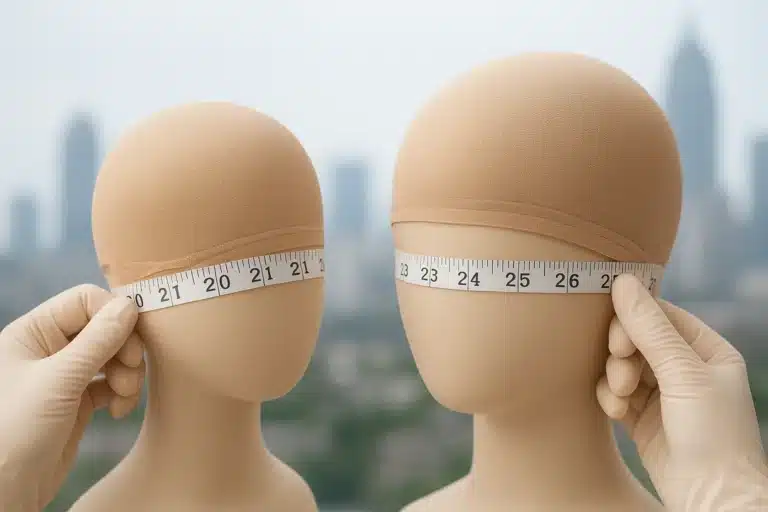
Many guides suggest placing a wig’s hairline four fingers above your eyebrows. However, human anatomy is more nuanced. You must account for facial thirds. Placing a wig even half a centimeter too low creates a crowded, unnatural forehead that colleagues will subconsciously register. Measure your natural hairline placement before biological hair loss, or use the golden ratio of your face to find the precise resting spot.
The Workplace De-Shining Routine
Standard synthetic fibers feature a silicone coating that reflects artificial light, creating an obvious “wig shine.” You can effortlessly eliminate factory glare using a gentle dry shampoo with a micro-fine cornstarch base, or by giving the piece a gentle baking soda soak. This creates a soft, matte finish that mimics healthy human hair.
The Glueless Security Audit
You don’t need messy liquid adhesives to feel secure. Modern glueless security relies on friction and tension. Invest in velvet ear tabs, silicone wig grips, and adjustable nape straps. A proper glueless setup guarantees zero slippage, keeping you focused on your work, not your hair.
Workplace Readiness and Peace of Mind
Navigating workplace grooming standards can feel daunting. Fortunately, evolving federal policies and the CROWN Act provide significant protections regarding how you choose to wear your hair. Employers cannot mandate biological hair over protective styles or medical prostheses.
To maintain peace of mind, create a “Desk Drawer Emergency Kit” for the office. Include a wide-tooth comb, matte blotting sheets (to remove forehead shine that might highlight lace), mini bobby pins, and a backup silicone wig grip.
By understanding cap construction, respecting the regional climate, and mastering the art of density and placement, you can step into any DC office with absolute confidence. Great alternative hair should be the last thing on your mind—and the last thing your colleagues ever notice.
Frequently Asked Questions (FAQ)
How do I choose natural looking wigs for women that don’t look like a wig?
Focus on three things: lower hair density (80%-120%), a monofilament or silk top for a realistic scalp part, and a lace front to create a natural-looking hairline.
Will people in my office notice if I start wearing a wig?
If you choose a piece that aligns with your natural hair density, matches your facial proportions, and lacks artificial shine, it is highly unlikely. Most people simply assume you got a great new blowout or haircut.
What cap construction is the most undetectable under office lighting?
A hand-tied monofilament top is the most undetectable under harsh fluorescent office lights, as it allows the color of your natural scalp to show through the parting space.
Are wigs allowed under strict federal and corporate workplace dress codes?
Absolutely. Wigs, hair systems, and protective styles are widely accepted and protected in professional environments. The focus of dress codes is on a neat, professional appearance, which high-quality wigs easily provide.
How do I remove the unnatural shine from a synthetic wig?
Use a high-quality, lightly tinted dry shampoo, a specialized matte finishing mist, or gently wash the wig using a diluted baking soda bath. This breaks down the factory silicone coating without damaging the fibers.