
Facing medical hair loss due to chemotherapy, alopecia, or radiation therapy is an emotionally taxing experience. You are already navigating treatments, appointments, and the physical toll of your diagnosis. The last thing you need to encounter is a sudden, administrative brick wall when trying to find a hair replacement solution. Fortunately, Houston is home to the world-renowned Texas Medical Center and an incredible community of oncology and dermatology support. Yet, when patients turn to their health insurance to cover the cost of a medical wig, they are often met with a frustrating reality: carriers routinely deny these claims, labeling them as “elective cosmetic expenses.”
If you’ve experienced this, you are not alone, and it is not a dead end. While exploring our comprehensive guide to the top wig shops in Houston reveals premier salons across the Galleria, Spring, and Memorial areas, patients coping with clinical hair loss require a specialized financial roadmap. Bridging the gap between medical necessity and insurance reimbursement requires a specific kind of literacy. This guide is designed to demystify the reimbursement lifecycle, giving you the knowledge and local Houston resources you need to transform administrative confusion into tangible financial relief.
The “Cosmetic Trap”: Why Claims Are Denied
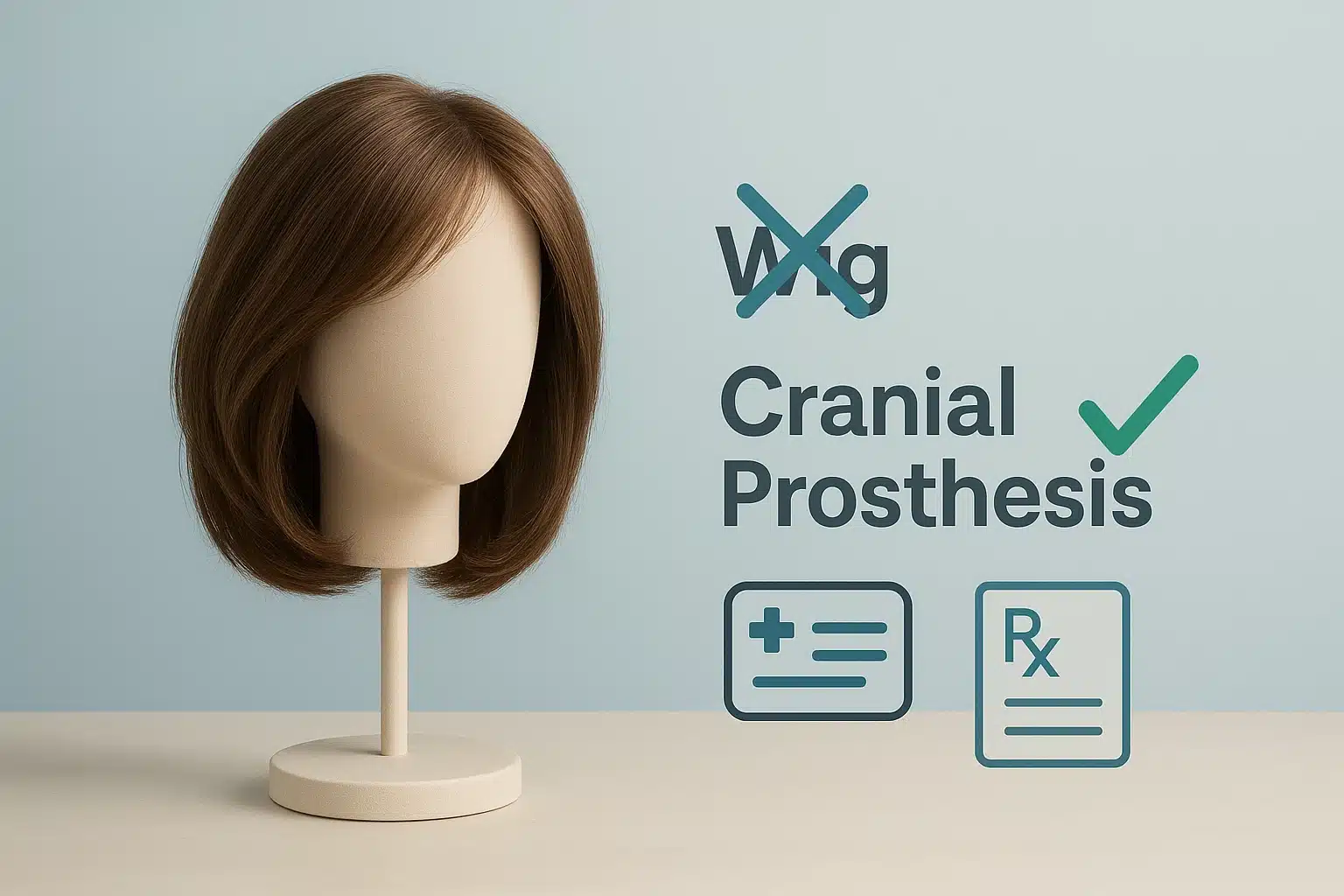
One of the biggest “aha moments” for patients navigating hair loss is learning how health insurance companies categorize products. If your claim or receipt uses the word “wig,” automated insurance systems will almost universally reject it as a cosmetic fashion accessory.
To an insurer, a standard fashion wig and a medical-grade hairpiece are entirely different things. The turning point for reimbursement success is legally establishing your hairpiece as Durable Medical Equipment (DME) or a Prosthetic Device.
In the medical community, a wig prescribed for medical hair loss is called a Cranial Prosthesis. Unlike fashion wigs, cranial prostheses are designed with medical-grade caps, silicone grips for sensitive or bare scalps, and monofilament materials that simulate natural hair growth without causing irritation. By simply changing your language from “wig” to “cranial prosthesis,” you unlock the potential for coverage.
Decoding the Medical Language: Essential Codes to Know
To “think like an insurer,” you need to speak their language. Insurance companies rely on specific billing and diagnostic codes to process claims. When submitting a reimbursement request, you must ensure two types of codes are clearly documented:
1. HCPCS Codes (The Product)The Healthcare Common Procedure Coding System (HCPCS) identifies the item you purchased. For a cranial prosthesis, you will use:
- A9282: Wig, any type, each
- S8095: Cranial prosthesis, custom-designed
2. ICD-10 Codes (The Diagnosis)This code explains why you need the prosthesis. Your doctor must provide the exact medical necessity code, such as:
- L63 Series (e.g., L63.0, L63.1): Alopecia Areata, Alopecia Totalis, or Alopecia Universalis
- C50-C96: Malignant Neoplasms (Cancer)
- T45.1X5A: Adverse effects of antineoplastic (chemotherapy) agents
The Financial Reality: Direct Billing vs. Reimbursement
Many local salon directories or websites proudly display badges stating, “We Take Insurance.” Unfortunately, this often creates false expectations. It is crucial to understand the difference between direct billing and out-of-network reimbursement.
The vast majority (over 95%) of independent wig boutiques and salons do not have in-network, direct-billing contracts with insurance companies. This means you cannot simply hand them your insurance card and walk out with a fully covered prosthesis. Instead, you will typically pay for the piece out-of-pocket upfront. The store will then provide you with the specialized, itemized paperwork required for you to file a third-party reimbursement claim with your insurance provider.
Most commercial plans that cover cranial prostheses (like BCBSTX, Aetna, Cigna, and UHC) reimburse 50% to 100% of the cost up to an annual maximum allowable limit—typically between $500 and $2,500 every 12 to 24 months. Knowing this in advance prevents financial shock and empowers you to shop within your policy’s allowable limit.
Your 5-Step Insurance Reimbursement Blueprint
Navigating a DME claim requires strict attention to detail. Follow these five steps to maximize your chances of approval.
Step 1: The Pre-Verification Call
Before booking a consultation or purchasing a hairpiece, call the customer service number on the back of your insurance card.
- Ask: “Does my policy cover a cranial prosthesis for medically induced hair loss under Durable Medical Equipment (DME)?”
- Ask: “Is this covered under HCPCS code A9282 or S8095?”
- Ask: “What is my annual maximum allowance, and do I need to meet my deductible first?”
- Ask: “Do I require an out-of-network gap exception if there are no in-network DME suppliers in my area?”
Step 2: The Physician Prescription
A standard doctor’s note saying “My patient needs a wig” will not work. Your oncologist or dermatologist must write a formal prescription.
- The Blueprint: Ensure the prescription includes the doctor’s NPI number, your specific ICD-10 diagnosis code, the doctor’s signature, and the explicit phrase: “Cranial Prosthesis for Medically Induced Alopecia.”
Step 3: Sourcing the Prosthesis in Houston
When you visit a boutique, let them know immediately that you will be filing an insurance claim. You must demand specific paperwork before paying.
- Red Flag: Never accept a receipt that says “Hand-tied Brazilian Lace Front Wig.” Insurers will reject it.
- Must-Have: Ask for an itemized DME medical invoice containing the store’s Tax ID or W-9, the HCPCS code, and the term “Cranial Prosthesis.” Taking a pre-purchase photograph of yourself without hair can also serve as powerful supplemental evidence of medical necessity.
Step 4: Submission Package Assembly
Assemble your documents carefully. You will generally need to submit a CMS-1500 form (the standard health insurance claim form), your itemized invoice, your doctor’s prescription, your doctor’s diagnostic notes, and a completed claim form from your specific carrier.
Step 5: The Appeal Process
If your initial claim is denied, do not panic. Denials are incredibly common and are often generated by automated systems. Submit an appeal letter citing your Texas Department of Insurance (TDI) rights, reiterating your diagnosis code, and explaining that the item is a medical necessity for physical protection and mental health parity, not a cosmetic enhancement.
Navigating Local Support: Medical Wig Stores and Resources in Houston
Houston offers a rich ecosystem of retail and nonprofit support for those experiencing medical hair loss. Finding a location that understands insurance paperwork is half the battle.
Houston Salons Offering Insurance-Ready Paperwork
These local establishments are known for their experience with oncology and dermatology patients, offering custom fittings, privacy, and the specific itemized medical invoices (with business tax IDs) you need to file your claim:
- Hous of Wigs: Serving the Houston metro, they offer a dedicated medical wig line and provide properly coded invoices.
- Ruby’s Wig Salon & Wigs by Andre: Located near Bingle Rd and the Medical Center area, these legacy shops have extensive, compassionate experience guiding chemo patients through hair restoration.
- Mel’s Wigs & Co: Situated in the Post Oak/Galleria area, specializing in custom luxury cranial prostheses.
- Changing Images & Main Street Hair: Specialized salons that focus deeply on chemo recovery and holistic hair restoration.
Houston Community Nonprofits & Wig Banks
If your insurance plan has an absolute cosmetic exclusion, or if the upfront costs are prohibitive, the Houston oncology community offers incredible free or subsidized alternatives:
- Wig Out: A beloved Houston-based nonprofit providing free wigs, headwear, and makeup kits to underserved cancer patients.
- Beauty Beyond Breast Cancer: Offers complimentary wigs and professional styling specifically for oncology patients.
- MD Anderson Patient Assistance: Social work navigators at the Texas Medical Center can often connect you with localized hospital wig banks and patient grants.
The Texas Insurance Landscape: Who Covers What?
Coverage varies wildly depending on your specific provider and plan type. Here is a brief overview of the payer landscape in Texas:
- Commercial Carriers: Major providers like Blue Cross Blue Shield of Texas (BCBSTX), UnitedHealthcare, Aetna, and Cigna frequently cover cranial prostheses, but coverage depends on your employer’s specific group plan. Always check your specific DME benefits.
- Original Medicare: It is vital to know that Original Medicare (Parts A & B) explicitly excludes cranial prostheses, classifying them as cosmetic.
- Medicare Advantage: If you have a Medicare Part C (Advantage) supplemental plan, you may have “carve-out” benefits that offer partial or full coverage.
- Texas Medicaid: STAR and CHIP managed care guidelines have specific variances; coverage usually requires strict pre-authorization and medical necessity documentation.
- HSA/FSA: Even if your insurance denies the claim, cranial prostheses qualify as an IRS-approved medical expense. You can legally use your Health Savings Account (HSA) or Flexible Spending Account (FSA) funds to purchase your piece tax-free.
Frequently Asked Questions
What is a cranial prosthesis, and how is it different from a regular fashion wig?
A cranial prosthesis is a medical-grade hairpiece created for individuals with severe hair loss due to clinical conditions. Unlike fashion wigs, they are constructed with specialized caps made from hypoallergenic materials, silicone grips to prevent slipping on a bare scalp, and breathable fabrics designed to protect skin that may be compromised by radiation or chemotherapy.
Will health insurance pay for a wig if I lose my hair from chemo or alopecia?
Insurance will rarely pay for a “wig.” However, many commercial insurance plans will partially or fully reimburse the cost of a “Cranial Prosthesis” if it is prescribed by a doctor for medically induced hair loss and falls within your Durable Medical Equipment (DME) benefits.
Does Medicare or Texas Medicaid cover medical wigs in Houston?
Original Medicare does not cover cranial prostheses. However, some Medicare Advantage plans may offer coverage. Texas Medicaid coverage varies by managed care plan, often requiring stringent pre-authorization. Always verify your specific policy details.
What exact words must my oncologist or dermatologist write on the prescription?
Your physician should write: “Cranial Prosthesis for Medically Induced Alopecia.” The prescription must also include your doctor’s NPI number, their signature, and your specific ICD-10 diagnosis code (e.g., L63.0 for alopecia totalis, or the appropriate code for your cancer diagnosis).
Why did my insurance company deny my claim, and how do I appeal?
Claims are most commonly denied because the invoice used the word “wig” (triggering an automatic cosmetic exclusion) or lacked proper HCPCS codes (like A9282). To appeal, request a detailed explanation of benefits (EOB), ensure all your paperwork says “Cranial Prosthesis,” and submit a formal appeal letter accompanied by your doctor’s note emphasizing medical necessity.
Your Next Steps Toward Confidence
Navigating medical hair loss is a profound journey, but you do not have to walk it without support. By understanding the terminology insurers require, utilizing proper billing codes, and partnering with knowledgeable Houston boutiques that supply the correct paperwork, you can advocate for the financial reimbursement you deserve.
Take a breath, download your insurance provider’s claim forms, and schedule a consultation with a local specialist. Armed with the right information, you can focus less on administrative hurdles and more on feeling like yourself again.