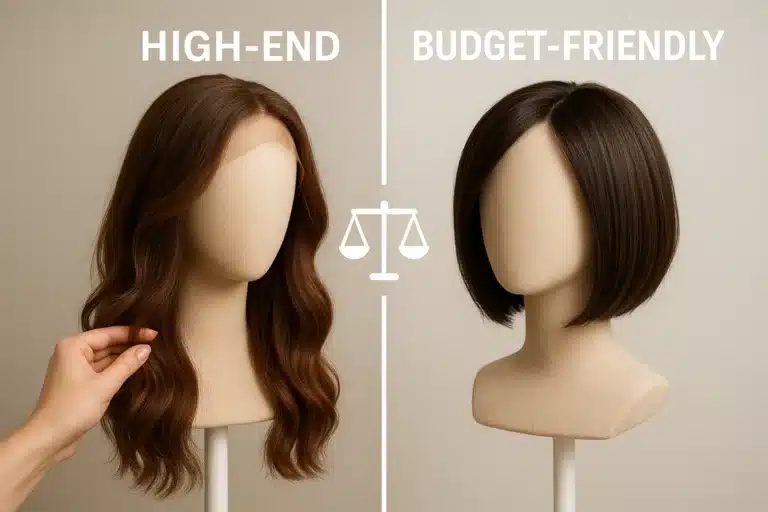
Imagine walking into a beautiful local wig boutique. The walls are lined with hundreds of gorgeous styles, the lighting is bright and inviting, and an associate is eagerly waiting to help you. It’s an exciting moment, but if we’re being honest, it can also feel incredibly overwhelming. When a piece is priced at $500 or more, how do you know if it’s actually worth the investment, or if you’re just looking at a heavily marked-up, mass-produced synthetic?
If you’re shopping locally, researching the Best Wig Stores in St. Louis MO Your Guide to Finding the Perfect Fit is an excellent first step to locating reputable shops across the metropolitan area. But once you step inside, you need to know exactly how to evaluate what’s sitting on the mannequin in front of you. Unlike shopping online, visiting a brick-and-mortar store gives you a unique advantage: the ability to touch, inspect, and test the product. Let’s explore how you can assess any wig to guarantee you’re walking out with exceptional, lasting quality.
The Local Retail Dilemma: Why You Need an Evaluation Strategy
The retail wig market in St. Louis spans a wide variety of establishments, from traditional beauty supply hubs to specialized medical hair loss salons and high-end boutique ateliers. While local associates can be wonderfully helpful, their job is ultimately to make a sale.
Furthermore, because of strict hygiene standards, the vast majority of local beauty supply shops and wig boutiques enforce an “All Sales Final” policy on hair goods. This makes your pre-purchase evaluation absolutely critical. You cannot afford to discover a scratchy cap, poor ventilation, or excessive shedding two days after bringing your new hair home. You need an actionable, hands-on framework to verify product excellence before making a financial commitment.
Foundation: Understanding the Anatomy of Quality
Before we dive into the physical tests you can perform in the store, it helps to understand the terminology you’ll encounter on price tags and packaging.
Decoding Cap Construction
The “cap” is the base material that the hair is attached to. It dictates how natural the wig looks, how breathable it is, and how comfortably it sits on your scalp.
- Basic Machine-Wefted: Rows of hair sewn together on a machine. These are the most affordable, offering great volume but limited parting versatility.
- Lace Front: Features a sheer lace material at the front hairline, giving the illusion of hair growing directly from your scalp. This allows you to pull the hair away from your face naturally.
- Monofilament (Mono) Top: A fine, breathable mesh where hairs are individually hand-tied. This allows you to part the hair anywhere within the mono area, mimicking the look of a natural scalp.
- 100% Hand-Tied: The gold standard for comfort. Every single hair is tied by hand to a soft, stretchy cap. It moves naturally and is ideal for sensitive scalps or those experiencing medical hair loss.
Fiber Science: What Are You Really Touching?
- Synthetic Hair: Ready-to-wear and holds its style even after washing. However, standard synthetic cannot be heat-styled.
- Heat-Friendly Synthetic: Allows for styling with curling irons or straighteners (usually up to 275°F – 350°F), but typically has a shorter lifespan due to friction wear.
- Human Hair: Offers the most natural look, feel, and movement. “Remy” human hair means all the cuticles are facing the same direction, preventing tangling. “Virgin” means the hair has never been chemically processed or dyed.
The 5-Point In-Store Physical Audit
You don’t have to be a professional wigmaker to spot a high-quality piece. Use this 5-step physical inspection protocol to confidently assess wigs right in the store aisle.
1. The Visual Scalp and Parting Analysis
Ask the associate to place the wig on a mannequin or hold it under the store’s brightest light. Part the hair down the middle. Look closely at the “knots” (where the hair is tied to the lace).
- The Green Flag: Knots should be tiny (single knots) and ideally “bleached” to a lighter color so they blend in with the lace, looking like natural hair follicles.
- The Red Flag: Large, dark, heavy black knots that look like tiny dots on the lace. This is a sign of rushed, machine-assisted manufacturing that will look unnatural against your scalp.
2. The Tactile and Cuticle Integrity Audit (The Touch Test)
Take a small section of hair and gently run your thumb and index finger down the hair shaft from the root to the tip. Then, run your fingers up the shaft from tip to root.
- For Human Hair: It should feel smooth going down, but you should feel a very slight resistance or microscopic “catch” going up. This confirms the presence of natural cuticles (Remy hair). If it feels artificially slippery in both directions, it may be low-grade hair coated in a temporary silicone wash that will wear off after a few washes, leaving a tangled mess.
- For Synthetic Hair: Look out for an unnatural, plastic “shine.” High-quality synthetics feature a natural, subdued sheen, not a glossy glare.
3. The Cap Tension and Stretch Test
Gently stretch the ear tabs and the nape adjusters of the wig cap.
- What to Look For: The cap should have good “memory retention”—meaning it snaps back to its original shape immediately. Check the seams inside the cap. Are they bulky and scratchy, or are they flat and covered with a soft felt or velvet material? Velvet-lined ear tabs (often containing a flexible comfort wire) are a strong indicator of a high-quality, thoughtfully constructed piece.
4. The 4-Finger Rule and Hairline Transition
There is a common misconception that “high density” (more hair) equals higher quality. This is the density fallacy. Natural human hair is not uniformly thick everywhere; it is lighter at the hairline and temples, tapering down to the nape.
- The Test: Place four fingers flat against your forehead, right above your eyebrows. Your natural hairline should start just above your top finger. When trying the wig on, position it here. Look at the transition. A high-quality wig will have graduated density—meaning the hair is slightly thinner right at the lace edge and gradually gets fuller, mimicking a natural growth pattern.
5. The Friction and Shedding Audit
Gently run your fingers through the hair from the cap to the tips about three times.
- What to Expect: A strand or two of shedding is normal for a brand new wig. However, if you are pulling away small clumps of hair, or if you can feel loose wefts lifting away from the cap, this points to poor track stitching and cheap ventilation. It’s better to discover this in the store than in your bathroom sink.
Spotting Red Flags: Dispelling Common Wig Myths
As you shop around St. Louis, you might hear a few myths or encounter clever labeling. Here is how to translate what you’re seeing.
“Return Hair” vs. Damage and Breakage
If you look closely at the crown of a high-quality, hand-tied wig, you might notice short, fuzzy hairs near the root. Many beginners panic, thinking this is breakage or a defective return. In reality, this is called “return hair.” When hair is hand-tied to a lace cap, the strand is folded over and knotted. The short end of that fold is the return hair. It actually serves a purpose by acting as an invisible cushion that gives the wig natural root volume.
The Label Loophole: “100% Human Hair Mix”
Always read labels carefully. If a local shop features a beautiful wig boxed as a “100% Human Hair Mix” or “Human Hair Blend,” be aware that this is not a pure human hair wig. It is a blend of synthetic fibers and human hair. While blends can be wonderful for holding styles, they should not carry the price tag of a 100% Virgin Remy human hair wig.
Your In-Store Action Plan
To empower yourself during your next shopping trip, keep these quick questions in your back pocket to ask the retail associate before you hand over your credit card:
- “Can I view this piece near a window in natural daylight to check the lace transparency and hair color?”
- “Are the knots on this lace front bleached or unbleached?”
- “What is the specific return or exchange policy on this piece if I haven’t cut the lace?”
- “Is this cap 100% hand-tied, or are there machine wefts in the back?”
Frequently Asked Questions
What is the difference between human hair and synthetic wigs?
Human hair wigs offer the most natural look, longevity, and styling versatility (you can dye and heat-style them), but they require the same maintenance as biological hair. Synthetic wigs are typically more affordable, lighter, and feature “style memory,” meaning they hold their shape perfectly even after washing, but they have a shorter lifespan.
How do I know if a wig is good quality just by looking at it?
Look for a natural, subtle sheen rather than a plastic shine. Inspect the parting space to ensure it mimics a natural scalp without heavy, visible grid lines or bulky black knots. A high-quality wig will also have graduated density, meaning the hair isn’t unrealistically thick right at the front hairline.
What does a lace front vs. monofilament top actually mean for daily wear?
A lace front gives you an invisible front hairline, allowing you to wear the hair pulled back or tucked behind your ears. A monofilament top provides a natural-looking scalp at the crown, allowing you to part the hair dynamically (left, right, or center) while maintaining the illusion of natural hair growth.
How can I test wig cap elasticity without damaging the store display?
You don’t need to pull aggressively. Simply place your thumbs inside the ear tabs and gently pull outward by about an inch, then release. The cap should feel smooth, offer gentle resistance, and immediately snap back to its original shape without leaving the fabric looking warped.
Next Steps for Your Wig Journey
Navigating hair loss or simply searching for a beautiful new style should be an empowering experience, not a stressful one. By understanding the anatomy of cap construction and utilizing a hands-on physical audit, you instantly transform from a vulnerable shopper into an educated buyer.
Remember, finding the perfect wig is about finding what makes you feel beautiful, comfortable, and confident. Take your time, test the materials, ask questions, and trust your hands. The right wig isn’t just an accessory; it’s a bridge back to feeling fully like yourself.