If you’ve recently purchased a beautiful, high-quality wig only to find it slipping, sliding, or causing a tension headache after a few hours, you aren’t alone. Buying a luxury wig is actually only fifty percent of the journey. The real magic—and the secret to a piece that looks incredibly natural and feels virtually weightless—happens in the millimeter-precision adjustments of the hairline and cap.
When individuals begin their journey to find a premium hair replacement system, they often start by researching the best wig stores in Cleveland, OH to see what off-the-rack options are available. However, a common beginner roadblock is realizing that even a high-end luxury wig rarely fits perfectly straight out of the box. Just like a designer suit, a wig needs to be tailored to your unique anatomy. Fortunately, the Cleveland metro area is home to highly specialized boutiques that offer advanced customization services, transforming a good wig into your perfect hair.
The Diagnostics: Why Your Off-The-Rack Wig Feels Wrong
Before we look at the solutions, it helps to understand the “physics of the slip and slide.” Wigs don’t usually shift just because they are “too big.” Often, the culprit is the unique shape of your skull, such as a flat occipital bone (the curve at the lower back of your head) or a sloping forehead.
Here is a quick diagnostic matrix to help you identify what structural alteration you might need:
- Symptom: Persistent tension headaches or red, sore marks on your temples.
- The Fix: Ear tab lifting/relief or cap expansion.
- Symptom: The wig continuously slides backward throughout the day.
- The Fix: Nape darting, adjusting your foundation braids, or adding custom silicone lining.
- Symptom: Heavy, high-volume wigs or long synthetic character styles tipping backward.
- The Fix: Integration of internal elastic tension bands and a velvet wig grip.
- Symptom: The hairline looks like a solid “wall of hair” or buckles right at the front.
- The Fix: Lace plucking, knot bleaching, or strategic hand-tying.
The Science of the Custom Hairline: Beyond the Lace
Creating a seamless hairline is where science meets artistry. When you look closely at a natural human hairline, it isn’t a dense, straight line. It has a delicate gradient, baby hairs, and unique directional growth.
The “Four-Finger Rule” Diagnostic
To find exactly where your wig’s hairline should sit, try the four-finger rule. Place four of your fingers horizontally starting from the top of your eyebrows upward. The top of your fourth finger is the “golden ratio” coordinate where your custom hairline should naturally begin to maintain balanced facial proportions.
To achieve this natural look, professionals use several techniques:
- Lace Plucking (Tweezing): This isn’t just random pulling. A stylist carefully removes hair from the front of the lace to create a natural density gradient—thinner at the very front, gradually thickening as it moves back.
- Bleaching Knots: Every hair on a lace wig is tied by hand, leaving a tiny, visible dark knot. By carefully bleaching these knots, stylists make the hair look as though it’s growing directly out of your scalp.
- Hand-Tying (Ventilating): This is the master craft of wig making. Using a tiny micro-ventilating needle, a specialist physically ties individual hair strands into the sparse lace grids. This allows them to shift a hairline forward, craft custom baby hairs, or even build a natural widow’s peak. Think of it like a video game avatar creator (like adjusting facial coordinates in Gacha Club)—the stylist is meticulously scaling your hair coordinates to perfectly match your facial landmarks.
Cap Alterations: Structural Engineering for Your Scalp
While the hairline handles the aesthetics, the cap handles your physical comfort. Tightening the adjustable straps on a wig only changes the circumference. If you have excess fabric bunching at the top of your head, pulling the straps tighter will only cause the lace to buckle and give you a headache.
Sizing Down Through Cap Darting
To fix a puffy crown, a master stylist performs “darting.” They carefully cut vertical V-shaped wedges into the cap’s wefts and hand-sew them back together. This structurally reduces the volume of the cap to hug your head perfectly.
Ear-Tab Relief
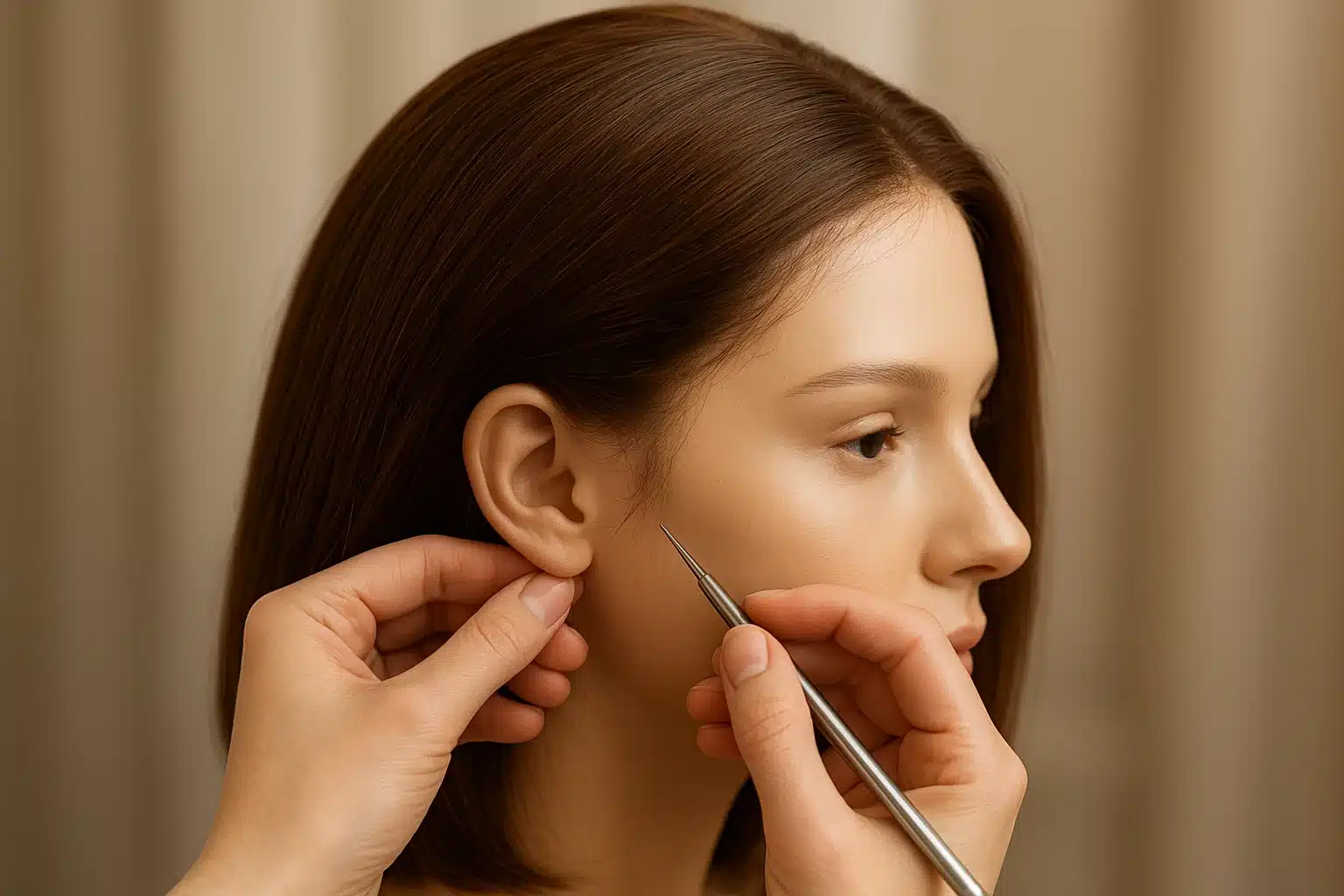
If your wig digs into your ears, a stylist can cut, lift, and re-bind the ear tabs. This clears the top of the ear completely, preventing friction sores and making it possible to wear glasses comfortably.
The Foundation Matters: Braid Prep
For those who wear their natural hair braided under their wig, the foundation is everything. If your flat braids (cornrows) are too thick at the nape of your neck, it creates a “corn head” bulge that lifts the wig cap. A cap that fits perfectly on a bald head will suddenly feel too small or buckle if placed over an unadjusted, bulky braid pattern.
A Crucial Warning: Never take your wig to a standard garment tailor. Because wig alterations involve sewing, people often search for general tailors. However, garment seamstresses lack the sanitization standards, specialized curved hair needles, and invisible nylon thread required for wigs. A standard sewing needle will instantly rip and ruin delicate Swiss lace.
Navigating Medical Customizations & Insurance in Ohio
For individuals experiencing medical hair loss due to alopecia, chemotherapy, or other conditions, the terminology shifts from “fashion wigs” to “cranial prostheses.”
Medical-grade caps are distinct. They are often crafted from softer, hypoallergenic materials and can be lined with medical-grade silicone that grips the scalp securely without the need for adhesives or clips. While patients in the UK often rely on subsidized NHS wigs, clients in the US can utilize specialized clinics right here in Cleveland that handle private insurance or Medicare paperwork. By using specific medical billing codes (like HCPCS code A9282 for a Cranial Prosthesis), you can often get your custom medical wig partially or fully covered.
Cleveland’s Elite Wig Customization Boutiques: Verified Providers
If you are ready to have your piece expertly altered, the Cleveland metro area boasts several incredible specialists, each with their own unique focus:
- Complete Image (Mayfield, OH) – The Medical Mold Masters: Complete Image is highly compassionate and clinically focused. They specialize in creating actual plaster molds of a client’s scalp to craft custom, handmade caps lined with silicone for a secure, medical-grade fit.
- Van Scoy Hair Clinics (Cleveland/Parma, OH) – The Human Hair Authority: With decades of legacy experience, they focus on top-tier material quality, specifically European human hair. They are the go-to for understanding the superior movement of hand-knotting over machine-wefted caps.
- Mika’s Wig Boutique for Women (University Heights, OH) – The Structural Adjusters: Mika’s is a premier destination for altering brand-name wigs (like Jon Renau and Ellen Wille) and executing flawless custom cap resizing to ensure absolute comfort.
- CS WIGZ (Wickliffe, OH) & Elite Independent Stylists – The Lace Slayers: For high-fashion installations, advanced lace melting, flawless knot bleaching, and protective styling, Wickliffe and Cleveland’s independent experts offer top-tier cosmetic transformations.
Frequently Asked Questions (FAQ)
Can a professional make a large wig cap smaller?
Yes! Through a structural process called cap darting, a licensed cosmetologist can remove excess material from the crown or nape and hand-sew the cap back together for a snug, custom fit.
What is the difference between plucking a hairline and hand-tying?
Plucking is a subtractive process; it involves removing hair from a dense wig to create a thinner, more natural hairline gradient. Hand-tying (ventilating) is an additive process where a specialist uses a tiny needle to individually knot new hair strands into the lace to change the hairline’s shape.
Can synthetic wigs be structurally altered like human hair wigs?
Yes, the cap of a synthetic wig can absolutely be darted, resized, and tailored for comfort. However, synthetic fibers cannot be chemically bleached (so knots cannot be lightened), and heat styling must be done with extreme caution using specialized synthetic-safe tools.
Is it safe to put a wig cap in the dryer to “shrink” it?
Absolutely not! This is a very common beginner mistake. Placing a wig in the dryer will completely destroy synthetic fibers and permanently ruin the elasticity of a human hair wig cap. Always seek professional cap darting for a loose wig.
***
Finding the perfect hair replacement solution is an empowering, highly personal journey. By understanding the science behind cap alterations, custom hand-tying, and proper diagnostics, you can advocate for exactly what you need. Whether you are dealing with medical hair loss or simply stepping into the world of luxury wigs, knowing your options for customization ensures you walk out the door feeling beautiful, comfortable, and undeniably confident.