Navigating hair loss—whether from alopecia, chemotherapy, or natural thinning—is an intensely personal and often emotional journey. When you first begin looking for solutions, it is completely normal to feel overwhelmed by the sheer volume of terminology and options available. While many individuals begin this journey by browsing ready-to-wear options at the various wig shops in San Francisco, those requiring precise, undetectable, or medical-grade hair replacement eventually find themselves seeking something entirely unique: a bespoke custom hairpiece.
Unlike an off-the-shelf product, a custom wig is engineered to function as a seamless “second skin.” The Bay Area is uniquely positioned to offer world-class solutions in this space, thanks to a rare intersection of world-renowned medical institutions (like UCSF Health) and a rich theatrical heritage (including the San Francisco Opera and Ballet). This unique blend has cultivated a highly skilled local community of artisan wig makers and stylists who blend medical empathy with unparalleled craftsmanship.
If you are exploring luxury hair solutions or medical cranial prosthetics, this guide will demystify the bespoke process, explain the incredible artistry behind custom wig making, and help you navigate the financial and insurance landscape unique to California.
The Human Artistry of Bespoke Hair
For many, initial knowledge of hairpieces is incredibly basic. Sometimes, people even stumble into basic terminology playfully through word puzzles—searching for a “hairpiece wig crossword clue” only to find simple answers like toupee or wig. But when you step into the world of true bespoke hair solutions, you quickly realize these pieces are incredibly complex works of engineering and artistry.
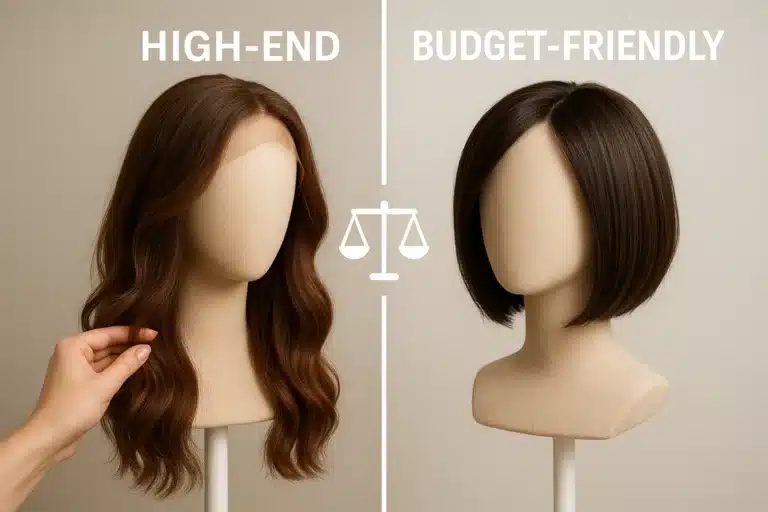
There is a distinct difference between “Customized Ready-to-Wear” (taking a factory-made wig and simply cutting or coloring it) and “True Bespoke.” A truly bespoke piece is crafted from scratch, tailored to the exact topography of your scalp, your specific skin tone, and your desired hair density. It requires dozens, sometimes hundreds, of hours of meticulous hand-labor.
The Bespoke Journey: Step-by-Step Construction
Understanding how custom wigs are made transforms an intimidating purchase into an empowering educational journey. Here are the four fundamental phases of custom wig construction.
Phase 1: Cranial Mapping (Making the Mold)
One of the most common questions beginners ask is, “How does a wig stay on without tight, uncomfortable elastic bands?” The secret lies in a perfect, customized fit.
A local wig maker begins by creating a 3D replication of your scalp. Using a specialized technique involving plastic wrap and clear packing tape, the artisan takes six critical head measurements (including circumference, front-to-nape, and ear-to-ear). This physical mold maps out any irregular hair loss zones or specific hairlines, ensuring the final foundation grips the natural curves of your head securely and comfortably, eliminating slippage.
Phase 2: Sourcing the Perfect Fiber
The realism of a custom wig heavily depends on the origin and quality of the hair used. Artisan wig makers meticulously source different hair types depending on the client’s needs:
- Virgin European Hair: Highly prized in San Francisco for its exceptionally fine texture and natural movement. Because it has never been chemically treated, it is considered the gold standard for those with naturally fine hair.
- Remy Human Hair: Hair where the cuticles are kept intact and aligned in the same direction, preventing tangling and ensuring a smooth, natural flow.
- Raw Asian/Vietnamese Hair: Known for its incredible durability and thicker strand diameter, making it the superior choice if the wig will undergo heavy custom coloring or bleaching without losing structural integrity.
Phase 3: Building the Foundation
The “cap” is the architectural foundation of the wig. To achieve absolute realism, artisans use advanced materials:
- Swiss Lace: A highly delicate, nearly invisible mesh that creates a flawless natural hairline.
- Silk Tops (French Tops): The ultimate in realism. In a silk top, the hair knots are injected between two layers of material to perfectly mimic a real human scalp, leaving zero visible knots.
Phase 4: The Art of Hand-Ventilation
Perhaps the most labor-intensive part of the bespoke process is “ventilation”—the art of hand-knotting hair onto the cap.
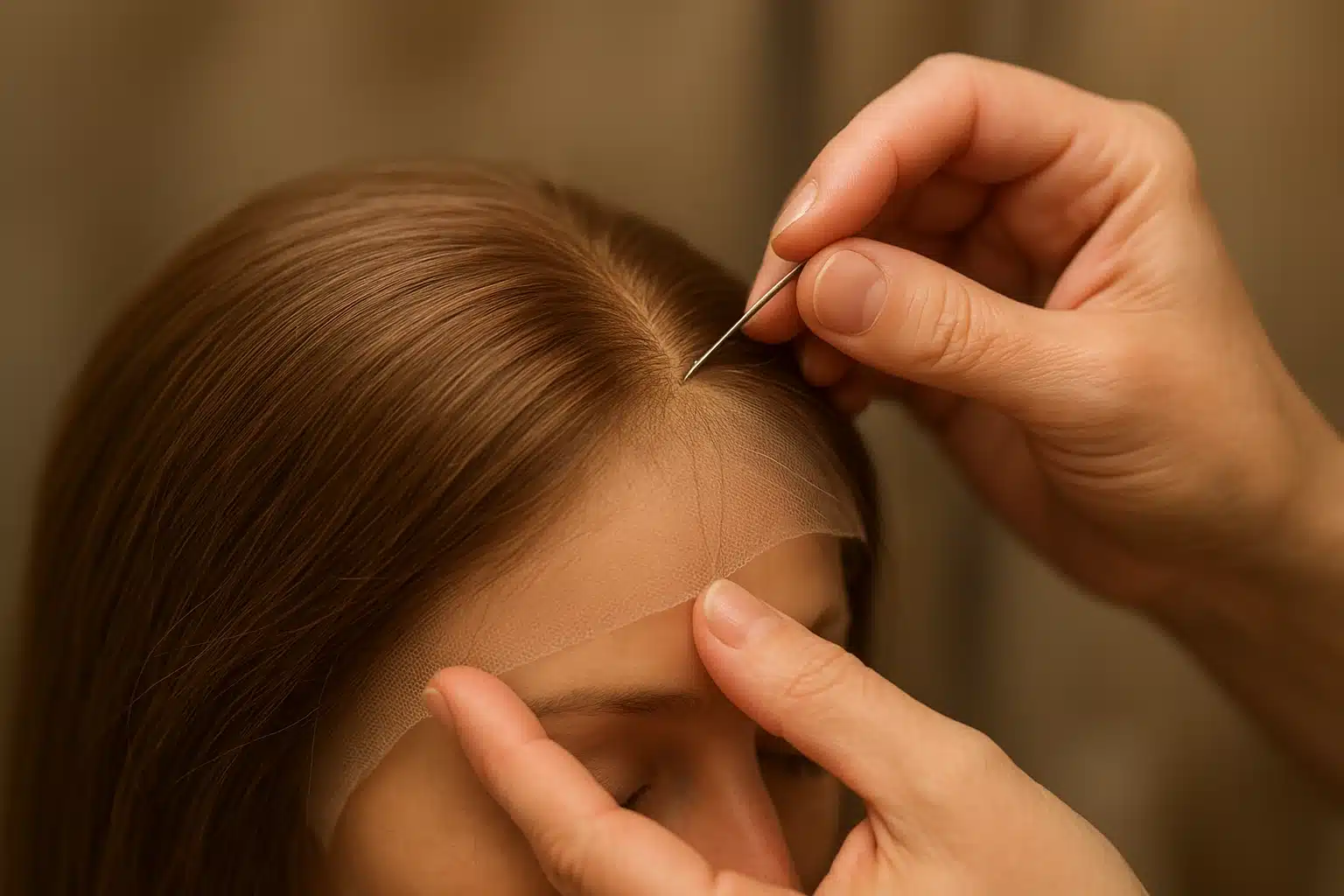
Using a tiny, specialized needle, a wig maker knots 1 to 2 individual hair strands at a time onto the lace. They strategically use “single knots” at the delicate front hairline for maximum realism, and “double knots” at the crown for structural durability. Afterward, the artisan will often “bleach the knots” to eliminate the look of tiny black dots against the lace, ensuring the hair looks exactly as if it is growing directly from your scalp. A single, fully hand-tied unit can require 80 to 120 hours of manual labor.
The Custom Color & Styling Masterclass
Once the physical wig is constructed, the artistry of color and styling begins. A specialized custom color wig maker will hand-paint the hair using techniques like balayage, root stretching (shadow roots), and strategic highlighting. Because the hair doesn’t have a natural scalp to supply it with oils, this coloring process requires highly specialized, gentle chemical knowledge.
Finally, the wig must be precision-cut. The most crucial step occurs when a local wig stylist in San Francisco performs the final “custom cut” directly on your head. This ensures the lace hairline blends seamlessly with any natural sideburns or baby hairs, and that the layers fall perfectly around your unique facial structure.
Navigating Medical Insurance & California Law
For those experiencing hair loss due to medical conditions like Alopecia Areata or chemotherapy, a custom wig is not a cosmetic accessory—it is an essential medical device. However, getting insurance to cover the cost can feel like navigating a maze.
1. The Magic Term: Cranial ProsthesisHealth insurance companies rarely cover a “wig,” but many policies cover a “cranial prosthesis.” To secure reimbursement, you will need a prescription from your oncologist or dermatologist specifically using this terminology, along with the proper diagnostic codes (such as L63.9 for Alopecia Areata) and the HCPCS billing code A4282.
2. California Assembly Bill 2668San Francisco residents benefit from California’s progressive legislative landscape. California Assembly Bill 2668 was designed to strengthen insurance coverage requirements for cranial prostheses. According to the California Health Benefits Review Program (CHBRP), out-of-pocket costs for a medical wig can range from an average of $1,530 to upwards of $5,000 for fully hand-tied bespoke units. Understanding your rights under AB 2668 empowers you to confidently approach your provider (whether it is Kaiser Permanente, Blue Shield, or another carrier) to demand the coverage you are entitled to.
Organizations like the National Alopecia Areata Foundation (NAAF), headquartered just across the Golden Gate Bridge in San Rafael, are excellent resources for providing authoritative medical frameworks and step-by-step templates for filing these claims.
Curated San Francisco Artisan & Boutique Directory
San Francisco is home to several esteemed boutiques and private studios that cater specifically to the high-end, bespoke hair market. While this is not an exhaustive list, these institutions represent the pinnacle of local craftsmanship and compassionate care:
- Studio Hair Prosthetics: A landmark in the Potrero/Mission area for over 50 years. They specialize in medical cranial prosthetics for women, offering a deeply compassionate, highly private concierge service model with secure parking and private entry.
- Hansen Fontana: Located in the iconic 450 Sutter St. medical building, this private Art Deco studio represents the high-end salon standard. They are known for utilizing luxury Virgin European hair and providing private styling rooms with individual shampoo bowls to ensure absolute discretion.
- David Carver-Ford’s San Francisco Wig Studio (Diva Hair): Located in the Mission District, this studio is highly regarded for its custom fitting and specialized styling expertise, bridging the gap between everyday wear and high-fashion custom solutions.
- Celebration Salon: A trusted local boutique focusing heavily on hair loss solutions, specializing in custom integration, high-end toppers, and personalized styling.
Frequently Asked Questions
What is the difference between a standard wig and a custom cranial prosthesis?
A standard wig is mass-produced to fit average head sizes and is generally made for cosmetic or fashion purposes. A custom cranial prosthesis is a bespoke medical device, crafted from a custom mold of the wearer’s head, utilizing hyper-realistic materials like French silk tops, and is designed for individuals experiencing severe or total hair loss.
How do you maintain a custom human hair wig?
Never use standard drugstore shampoo on a custom human hair wig. Because the hair is hand-tied and lacks natural scalp oils, standard shampoos will cause the hair to dry out, leading the delicate knots to snap. Always use pH-balanced, sulfate-free products specifically formulated for high-end human hairpieces, and wash the piece gently in cold to lukewarm water.
How much does a bespoke human hair wig cost in San Francisco?
Pricing varies significantly based on the materials used (e.g., Virgin European hair vs. Remy) and the amount of hand-ventilation required. Generally, true custom cranial prostheses in the Bay Area range from $1,500 to over $5,000. Fortunately, proper medical documentation can often help offset these costs through insurance.
Taking the Next Step
Investing in a bespoke hairpiece is about much more than just restoring hair; it is about restoring confidence, comfort, and a sense of self. By understanding the intricate craftsmanship behind custom wigs and knowing your rights as a medical patient in California, you are well-equipped to make an informed, empowering decision. Take your time, consult with local artisans who prioritize your privacy and education, and remember that you deserve a solution that feels as perfectly unique as you are.