There is a distinct feeling that comes with wearing a fresh, high-quality wig for the first time. The movement is fluid, the shine is natural, and the confidence it instills is transformative. But for many, a month or two into wearing their new piece, a quiet panic sets in. The ends might feel a little drier, the nape starts to tangle, or the style just doesn’t bounce back the way it used to.
If this sounds familiar, you aren’t doing something “wrong”—you simply haven’t been taught the specific science behind the fibers you’re wearing. Longevity isn’t about luck; it’s about understanding the engineering of your hairpiece. When you are choosing your confidence: the definitive guide to envy wigs serves as your foundation, you realize that maintaining that fresh-out-of-the-box look requires a care routine tailored specifically to the unique chemistry of Envy’s fibers.
Decoding the “Hybrid Complexity” of Envyhair
To understand how to care for your wig, you first have to understand what it is made of. While standard synthetic wigs are straightforward, Envy introduces a game-changer with their Envyhair technology. This is a “luxury hybrid” blend consisting of 70% heat-friendly synthetic fibers and 30% human hair.
Why this specific ratio? It is the “Golden Ratio” of the wig world. The 70% synthetic portion provides “style memory”—meaning the wig returns to its baked-in style after washing—while the 30% human hair adds the realistic texture, movement, and moisture absorption that pure synthetic lacks.
However, this blend creates a unique maintenance intersection. You cannot treat it entirely like a synthetic wig, nor can you treat it entirely like human hair. It requires a “best of both worlds” approach.
The Temperature “Dead Zone”: Mastering Heat
One of the most common reasons wigs deteriorate prematurely is heat damage. The term “heat-friendly” is often misinterpreted as “heat-proof,” leading many wearers to use the same tools and temperatures they would on biological hair.
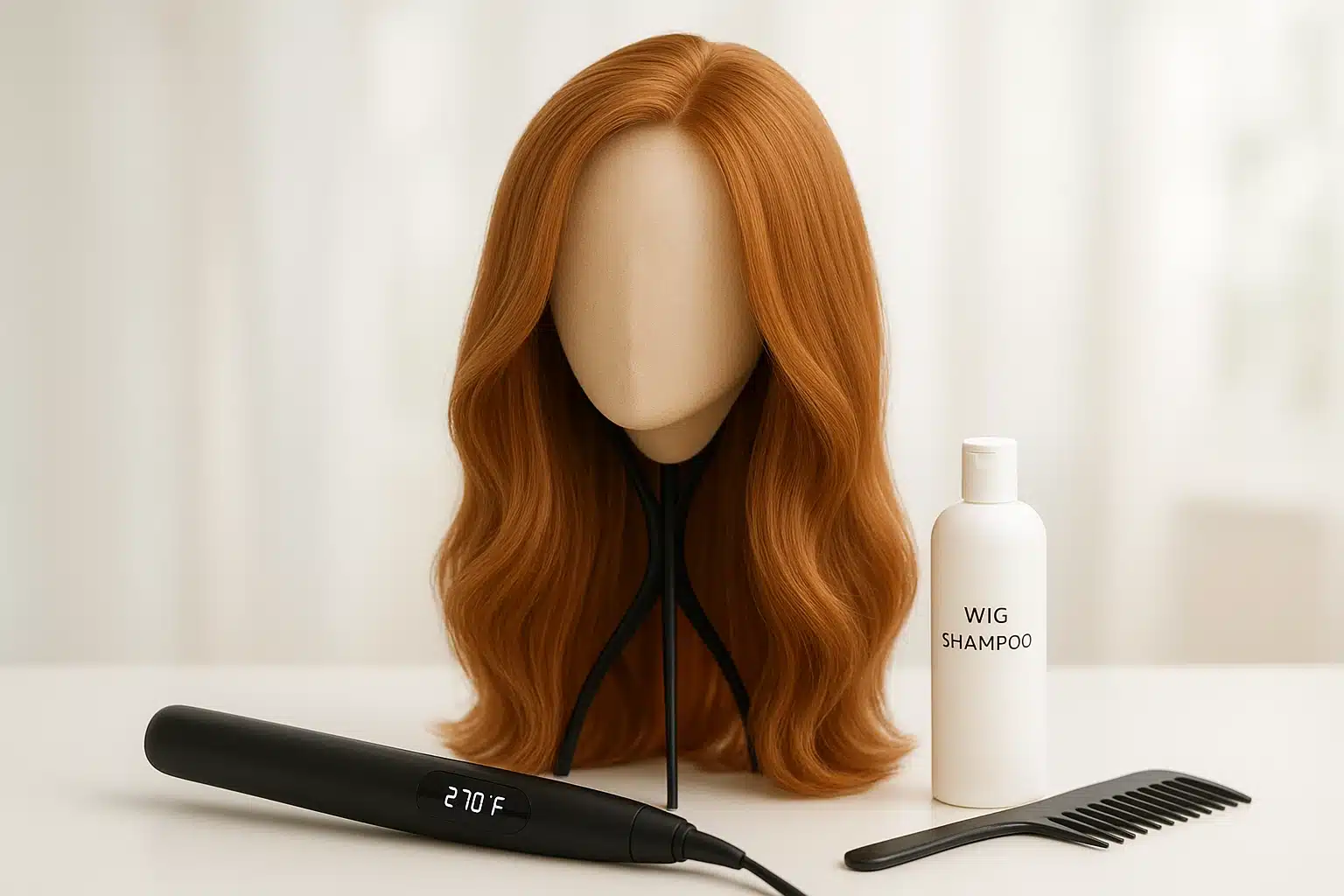
Here is the critical rule for Envyhair: You must stay within the 270°F – 280°F (132°C – 138°C) range.
If you go above 280°F, you risk melting the synthetic fibers, causing irreversible frizz and matting. If you go too low (below 260°F), the heat may not be sufficient to smooth the human hair portion of the blend. Investing in a digital styling tool where you can control the exact temperature is the single best investment you can make for your wig’s lifespan.

The Washing Science: Water Temperature Matters
A common misconception is that hot water cleans better. While that might be true for dishes, it is the enemy of synthetic fibers. Hot water can relax the mechanical curl pattern baked into the synthetic strands, effectively “erasing” the wig’s style memory.
The Perfect Wash Routine
- De-tangle Gently: Before water touches the fiber, use a wide-tooth comb to remove knots, starting from the ends and working your way up.
- Go Cold: Always wash your Envy wig in cold water. This preserves the fiber’s integrity and style memory.
- Soak, Don’t Scrub: Submerge the wig in a basin of cold water mixed with wig-specific shampoo. Let it soak for 5-10 minutes. Agitating or scrubbing the hair like you would biological hair creates friction that leads to matting.
- Condition Correctly: Avoid the roots! Apply conditioner only from the mid-shaft to the ends. If you are looking for the best conditioner for synthetic wigs, look for products free of sulfates and parabens that are formulated to hydrate without weighing down the fibers.
The “Nape Factor”: Managing the Friction Zone
If you have ever noticed that the hair at the back of your neck (the nape) gets frizzy or tangled faster than the rest of the wig, you are experiencing the “Nape Factor.” This is not a product defect; it is simple physics.
The nape area is subject to constant friction from your neck movement, body heat, and the collar of your clothing. Envy strategically places human hair at the nape to help reduce this, but it still requires targeted care.
To combat this, perform a daily “friction check.” Gently comb out the nape area every time you take the wig off. If you are wearing heavy collars or scarves, consider using a specialized silicone spray to create a protective barrier against friction.
Revival Surgery: The Steam Method
Even with perfect care, the ends of a synthetic or blend wig can eventually become “crunchy” or frizzy due to friction. Before you assume the wig is ruined, try the steam method.
Because synthetic fibers are essentially plastic, steam allows you to smooth out the frizz without applying direct, damaging heat.
- Pin your wig to a canvas block head.
- Comb through the frizzy section.
- Use a handheld steamer to direct steam at the fiber while combing through it continuously.
- Allow the fiber to cool completely in the straight position.
This process helps reset the fiber, smoothing out the microscopic kinks that cause the “crunchy” texture.
Storage and Daily Maintenance
How you store your wig is just as important as how you wash it. Throwing a wig into a drawer or a box traps moisture and can distort the cap shape.
The ideal storage solution allows for air circulation. If you are wondering how to store a wig without a head, a collapsible wig stand is a perfect, breathable alternative to a Styrofoam head. This is particularly important after wearing the wig all day, as it allows the cap to dry out from any perspiration.
Speaking of perspiration, comfort is key to longevity. If you find yourself asking how to keep from sweating while wearing a wig, utilizing bamboo wig liners can help absorb moisture and protect the cap from oils, reducing the frequency with which you need to wash the wig itself.
Frequently Asked Questions
Can I use regular human hair shampoo on my Envyhair wig?
While the 30% human hair portion would be fine, regular shampoo can strip the synthetic fibers and dry them out. It is always safer to use products formulated for synthetic blends. If you want to dive deeper into what does human hair blend mean regarding product compatibility, sticking to blend-safe formulas is the golden rule.
How often should I wash my wig?
Over-washing is a common mistake. A good rule of thumb is to wash your wig after 6-8 wears, or when it fails the “scent and shine” test (if it smells like environmental odors or looks dull/stiff).
Can I dye my Envyhair wig?
Generally, no. While the human hair portion can technically take color, the synthetic fibers cannot. Dyeing a blend usually results in a patchy, uneven look that can ruin the piece.
Is there a difference in maintenance compared to 100% human hair?
Yes. How to care for human hair wig protocols are much more intensive, requiring deep conditioning and frequent hydration. Envy blends are designed to be lower maintenance, requiring less “babying” than fully human hair options.
A Path to Lasting Confidence
Caring for your Envy wig doesn’t have to be a chore—it is simply a ritual of self-care. By understanding the unique 70/30 blend and respecting the temperature limits, you aren’t just cleaning a hairpiece; you are preserving your investment and ensuring that every time you look in the mirror, you see the confident, beautiful reflection you deserve.
For more insights into wig maintenance and keeping your style fresh, explore our library of resources designed to help you navigate your hair journey with ease.