If you’re reading this, chances are you or a loved one have recently crossed a major milestone. Whether you’ve completed medical treatments and your natural hair is growing back, or you are simply refreshing your style collection, you now find yourself holding a beautifully crafted, high-quality wig that you no longer need. This is a moment of celebration, but it often brings up an unexpected question: What do I do with this now?
While there are countless resources dedicated to finding the best wig stores in Louisville, KY to help you begin your journey, there is a surprising lack of guidance for what happens at the end of it. Every year, thousands of gently used synthetic and human hairpieces sit idle in closets simply because their owners aren’t sure how to safely and responsibly pass them on.
This guide is designed to bridge that gap. We’re going to explore exactly how you can give the gift of confidence to someone else in the Louisville area and beyond, clearing up common misconceptions, explaining hygiene protocols, and even unpacking the tax benefits of your generosity.
The “Hair vs. Wig” Confusion: What Are You Actually Donating?
Let’s clear up the single biggest roadblock people face when trying to donate a wig. If you type “where to donate a wig” into a search engine, you’ll likely be bombarded with requirements for cutting your natural hair (like needing 10 to 12 inches of unbleached ponytails).
More than 70% of search results confuse hair donation with wig donation.
- Hair Donation (e.g., Wigs for Kids, Locks of Love): This involves cutting your growing, biological hair. If you are looking to do this in Louisville, certified hair-giving salons like TRIM NuLu specialize in harvesting natural ponytails for these organizations.
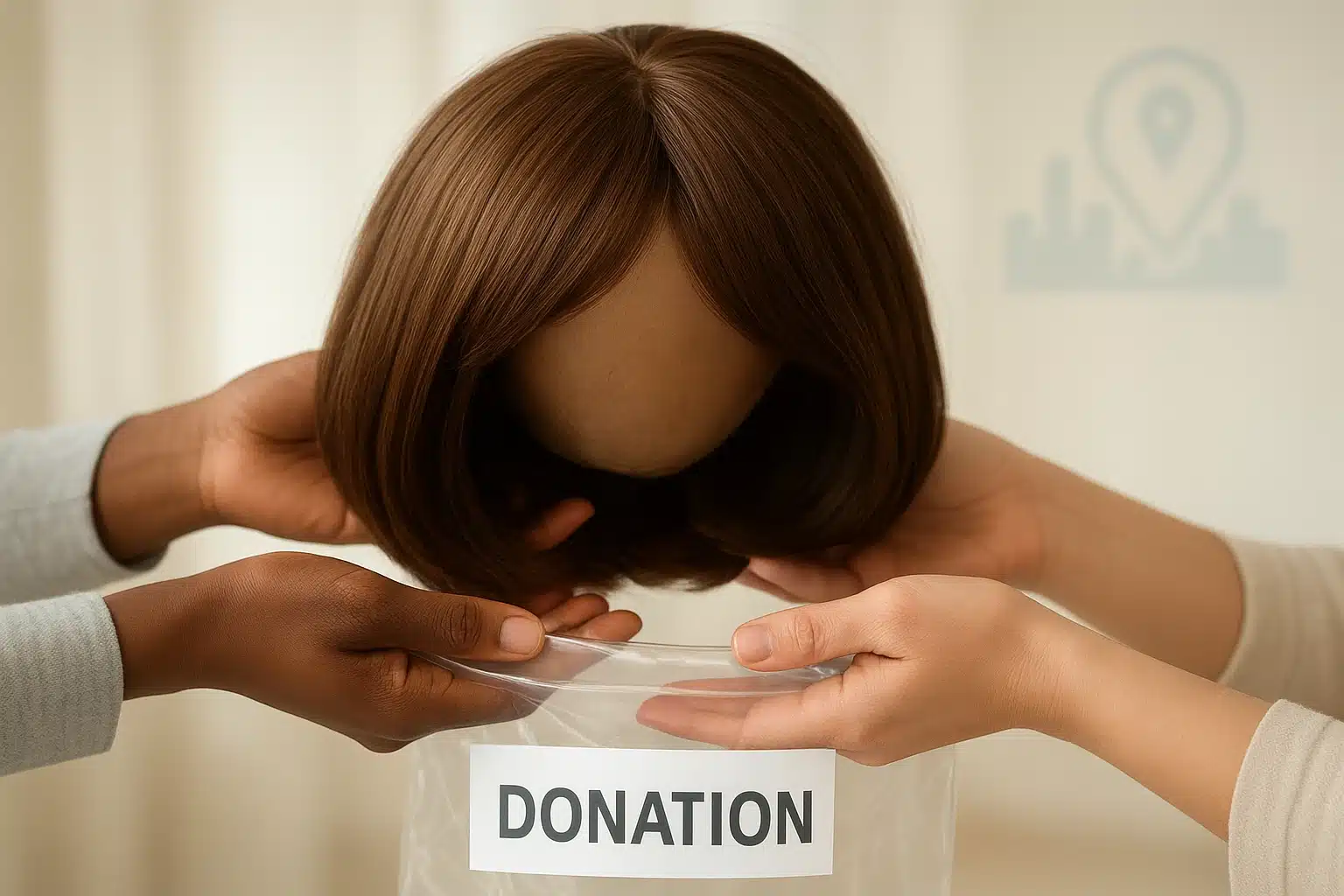
- Wig Donation: This is the act of gifting a fully constructed, ready-to-wear wig unit (whether synthetic or human hair) that you have previously worn or purchased.
If you are holding an actual wig unit in a box, you belong in the second category.
Local Louisville Wig Donation Drop-Offs
For those who prefer to keep their impact local, Louisville has a deeply compassionate network of medical wig banks and cancer support organizations. Because local inventories fluctuate, it is always best to call ahead before dropping off your donation.
Kentucky CancerLink
Kentucky CancerLink serves as a massive lifeline for local patients navigating the heavy financial burdens of a diagnosis. They help coordinate intake for personal care items, including gently used wigs, to distribute to Kentuckians in need.
Gilda’s Club Kentuckiana
Renowned for their comprehensive cancer support networks, Gilda’s Club Kentuckiana often partners with local resources to help patients find the hairpieces they need. While they focus heavily on emotional and social support, they can be an excellent directory for navigating local, current donation needs.
Local Hospitals and Cancer Centers
Regional hubs like the UofL Health – Brown Cancer Center and Norton Cancer Institute affiliates frequently host boutiques for patients. A quick note on hospital drop-offs: Many local hospital boutiques have strict immunocompromised safety policies and will only accept brand-new wigs with the original tags still attached. If your wig is gently used, you may need to look at national mail-in exchanges instead.
Trusted National Mail-In Wig Clearinghouses
If local Louisville organizations are currently at capacity or cannot accept gently used pieces, national mail-in clearinghouses are your best route. These non-profits have mastered the art of professional reconditioning.
EBeauty Community
EBeauty is the gold standard for mail-in wig donations, having successfully delivered over 100,000 wigs to women nationwide. Their process is wonderfully simple: you place your clean wig in a gallon-sized Ziploc bag, print out their online form, and ship it. One of the most beautiful aspects of EBeauty is their “Dear Sister” initiative, which allows you to include an anonymous, encouraging note to the future recipient of your wig.
The Wig Exchange (by Soul Ryeders)
The Wig Exchange is famous for its rigorous sanitization standards. They accept gently used pieces and put them through a professional reconditioning process before matching them with patients undergoing chemotherapy. This completely removes the stress of wondering if your home-washed wig is safe for an immunocompromised patient.
Is My Wig Eligible for Medical Donation? The “Pass/Fail” Checklist
Not every wig is suited for a medical cancer bank. Before you box up your piece, run it through this quick checklist:
The Pass Criteria:
- Fiber: Both synthetic and 100% human hair are widely accepted by national exchanges.
- Cap Elasticity: The cap still has a good stretch and securely grips the head.
- Lace Condition: Lace fronts (if applicable) are intact and not overly stretched or torn.
The Fail Criteria:
- Severely matted or tangled fibers at the nape of the neck.
- Melted ends on synthetic wigs (caused by improper heat styling or friction).
- Heavy, lingering odors from cigarette smoke or strong perfumes.
- Heavy residue from used wig adhesives or tapes that cannot be washed out.
Step-by-Step: How to Prep and Sanitize a Wig for Donation
Donors often worry about whether they need to dry-clean a wig before donating. While organizations will professionally re-sterilize the cap to medical standards, they do ask that you perform a baseline cleaning at home.
- Gentle Detangling: Using a wide-tooth comb, gently detangle the hair starting from the very ends and slowly working your way up to the cap. Never pull forcefully from the roots.
- The Cool Soak: Fill a basin with lukewarm or cool water (never hot, especially for synthetics). Add a capful of sulfate-free, wig-safe cleanser. Let the wig soak for 5 to 10 minutes. Gently swish it, but do not wring or rub the fibers.
- Proper Drying: Rinse thoroughly with cool water. Blot the wig gently with a clean towel to remove excess water. Place it on a wig stand to air-dry completely. Never box a damp wig, as this can cause mold to form in the cap.
- Packaging: Once 100% dry, place the wig inside a breathable hairnet to preserve the style, slide it into a gallon Ziploc bag with the air pressed out, and pack it in a secure bubble mailer.
Alternative Paths for Well-Loved Wigs
What if your wig has a few melted ends or a stretched cap, disqualifying it from medical donation? Please don’t throw it away! There is a vibrant alternative giving ecosystem.
Local Louisville community theater troupes, high school drama departments, and cosplay networks are constantly in need of hairpieces for character building. Additionally, LGBTQ+ youth resource centers and shelters often welcome donations of wigs and styling tools. Finally, if the wig is completely beyond repair, ethical textile recyclers can repurpose the synthetic plastics and cap materials.
Navigating the Financial Side: IRS Tax Deductions
Because high-quality human hair and premium synthetic wigs are significant investments, donating them qualifies as a non-cash charitable contribution under IRS guidelines, provided you donate to a registered 501(c)(3) organization.
Here is how to ensure your generosity is recognized come tax season:
- Understanding Fair Market Value (FMV): According to IRS Publication 561, you cannot deduct the original retail price you paid for the wig. You must deduct its thrift shop value—what a willing buyer would pay for the item in its current, used condition.
- The $250 Threshold: If you claim your used wig is worth $250 or more, the IRS requires a contemporaneous written acknowledgment letter from the charity. Make sure to request this receipt when you donate.
- The $500 Threshold: If your donated wig (or collection of wigs) is valued at over $500, you must fill out and attach IRS Form 8283 to your tax return.
Tip: Always take photos of the wig’s condition and keep your original purchase receipt in your tax files to substantiate your valuation.
Frequently Asked Questions (FAQ)
Do organizations accept synthetic wigs, or do they only want human hair?
Both are highly sought after! In fact, many cancer patients prefer high-quality synthetic wigs because they hold their style effortlessly and require much less maintenance during exhausting medical treatments.
Can I donate opened accessories like wig caps, stands, and shampoos?
Most medical wig banks prefer to receive only the wig itself. Partially used styling products and opened wig caps are usually discarded due to hygiene protocols. Unused, still-in-packaging accessories, however, are generally welcomed.
Are home-washed wigs truly safe for immunocompromised patients?
Yes, because your home wash is only step one. Established non-profits like The Wig Exchange put all donated wigs through an extensive, professional medical-grade sanitization process before they ever touch a patient’s head.
The Lasting Impact of Your Gift
Choosing to donate a wig is an incredibly profound gesture. It takes an item that represents a difficult chapter in your life (or simply a past version of your personal style) and transforms it into a beacon of hope, normalcy, and confidence for someone else.
By understanding the difference between hair and wig donations, knowing your local Louisville options, and preparing your piece with care, you close the lifecycle of your wig in the most beautiful way possible. You aren’t just giving away hair; you are handing someone their dignity on a day when they need it most.