When you’re navigating medical hair loss in the Triangle, finding the right support can feel like learning a completely new language. Whether you’re managing an alopecia diagnosis or preparing for chemotherapy, your energy should be focused on healing and wellness—not wrestling with the confusing landscape of alternative hair. Yet, many patients find themselves suddenly needing to become experts in cap construction, insurance codes, and styling just to feel like themselves again.
If you have recently started looking for wigs in Raleigh NC, you probably quickly realized that standard fashion wigs just don’t meet the sensitive needs of a medical patient. To help you on this journey, exploring a comprehensive guide to the best wig stores in Raleigh NC can serve as your emotional and technical bridge to recovery. As you begin your research—whether that means exploring options like a local bella wig studio or reading through angel hair wig gallery reviews—it helps to compare the immediate, hands-on support of local boutiques with the specialized, discreet collections available through online medical wig providers.
The “Aha Moment”: Wigs vs. Cranial Prostheses
The biggest mistake first-time buyers make is using the word “wig” at the doctor’s office or with their insurance company.
In the medical and insurance world, a fashion wig and a medical wig are entirely different categories. What you are actually looking for is a Cranial Prosthesis. This isn’t just fancy terminology; it is the fundamental keyword that unlocks your ability to file insurance claims.
The Science of Cap Architecture
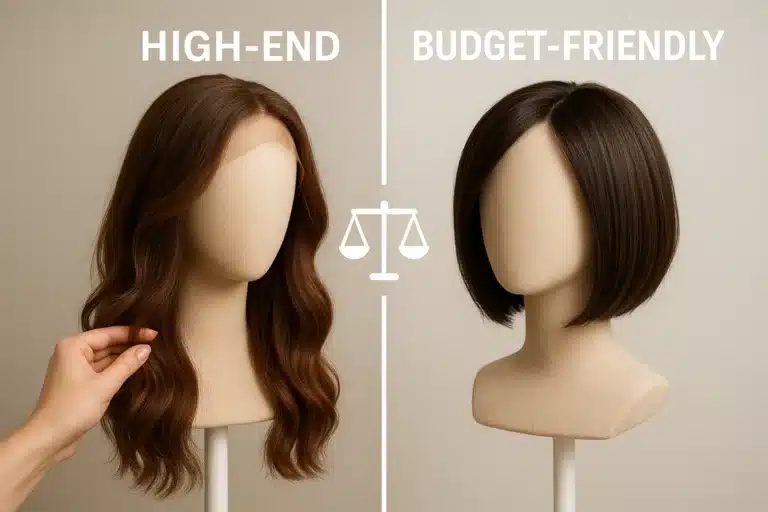
Why does a medical-grade cranial prosthesis cost $1,200 to $1,800, while a fashion wig might only cost $200? The answer lies in construction science and scalp health.
When you undergo chemotherapy or experience alopecia, your scalp becomes highly sensitive, and your immune system may be compromised. Medical wigs are designed with this in mind:
- Silicone Perimeters: These allow the unit to grip a bald scalp securely without the need for harsh, skin-irritating adhesives or glues.
- Monofilament Tops & Hand-Tied Caps: Instead of hair sewn in thick rows (wefts) that can rub against a tender scalp, medical caps feature hair individually tied to a soft, breathable mesh. This mimics natural hair growth and allows for crucial airflow.
- Polyurethane Tabs: Placed gently at the nape and temples, these provide a secure, slip-free fit specifically engineered for complete hair loss.
The Raleigh Patient’s Dilemma: Local Support vs. Online Collections
When determining where to find your cranial prosthesis, patients in the Raleigh-Durham area generally have two main avenues. Understanding the strengths of both can help you make the best decision for your lifestyle, budget, and privacy needs.
The Value of Local Raleigh Support
Visiting a local hair replacement specialist or specialized salon offers high-touch, empathetic support.
- The “Reference Cut”: Local stylists can see your natural hair before you lose it, taking note of your cowlicks, part lines, and natural density.
- Custom Fitting: A physical space allows a professional to measure your head precisely, which is critical since a well-fitting cap shouldn’t shift or cause tension headaches.
- Emotional Support: The personalized, face-to-face interaction can be incredibly comforting during a vulnerable time.
The Power of Online Specialized Collections
For many patients, transitioning to online specialized medical wig collections offers unique, undeniable benefits.
- Ultimate Discretion: Dealing with hair loss is a deeply private experience. Shopping online allows you to explore options from the comfort and privacy of your own home, away from public fitting rooms.
- Unmatched Volume and Variety: Local shops are limited by physical inventory space. Online collections give you access to a massive variety of medical-grade synthetics (which are often recommended for chemo patients due to their low-maintenance, “wash-and-wear” memory) alongside premium human hair options.
- The Hybrid Approach: Many savvy patients utilize a “best of both worlds” strategy. They purchase their specialized medical wig online to access a broader selection and better pricing, and then take it to a trusted Raleigh-based stylist for a custom “cut and blend” to frame their face perfectly.
The North Carolina Insurance Blueprint
Securing a medical wig shouldn’t be a financial burden. If you are covered by major North Carolina providers like BCBS NC, UnitedHealthcare, or Cigna, you may be eligible for 50% to 100% reimbursement—but you have to play strictly by the rules.
- Get the Right Prescription: Ask your oncologist or dermatologist for a prescription for a “Cranial Prosthesis.” Do not let them write “wig.” The prescription should include your specific diagnosis code (e.g., Alopecia Areata or chemotherapy-induced hair loss).
- Know Your HCPCS Code: When submitting your claim or asking for an invoice, ensure the receipt includes the Healthcare Common Procedure Coding System (HCPCS) code A9282 (the universal medical billing code for a cranial prosthesis).
- Submit as Out-of-Network Durable Medical Equipment (DME): Most wig providers are out-of-network. You will likely need to pay upfront and submit your prescription, the A9282-coded receipt, and a completed claim form to your insurance for reimbursement.
Action Plan: Your First 30 Days of Hair Loss
If you’ve recently received a diagnosis, taking swift, proactive steps will give you back a sense of control. Here is your medical hair loss checklist:
- Week 1: Document Your Natural Hair. Take well-lit photos of your hair from the front, back, and sides. Save a small lock of your hair to color-match later.
- Week 2: Secure Your Prescription. Speak to your doctor about writing a prescription for a Cranial Prosthesis before your hair loss becomes severe.
- Week 3: Take Your Measurements. Use a soft measuring tape to measure your circumference, front-to-nape, and ear-to-ear dimensions.
- Week 4: Prioritize Scalp Hygiene. As hair falls out, the scalp can become inflamed. Invest in gentle, fragrance-free cleansers and soft bamboo sleep caps to protect your scalp at night.
Frequently Asked Questions (FAQ)
Does my doctor need to write a prescription for me to buy a medical wig?
You do not need a prescription to purchase a medical wig out of pocket. However, if you plan to submit a claim to your insurance company for reimbursement, a doctor’s prescription for a “Cranial Prosthesis” is absolutely mandatory.
Can I wear a medical wig while sleeping or swimming?
It is highly recommended that you remove your cranial prosthesis before sleeping to prolong the life of the cap and allow your scalp to breathe. For swimming, chlorine and salt water can severely damage both synthetic and human hair fibers. Instead, consider wearing a comfortable bamboo cap, swim cap, or a dedicated, older “backup” wig.
Are synthetic wigs or human hair wigs better for chemotherapy patients?
While human hair offers beautiful, natural movement, many chemotherapy patients actually prefer medical-grade synthetic wigs. When you are fatigued from treatment, you may not have the energy to wash, blow-dry, and heat-style human hair. High-quality synthetics feature “style memory,” meaning they bounce right back into their original shape after washing, requiring zero effort.
How do I know if a wig will irritate my scalp?
Look for specific construction keywords: 100% hand-tied caps, monofilament tops, and polyurethane/silicone perimeters. Avoid traditional “wefted” or basic caps, as the thicker materials and machine-sewn tracks can rub uncomfortably against sensitive skin.
Continuing Your Journey
Navigating medical hair loss is a deeply personal journey, but you don’t have to walk it without a map. By understanding the critical differences in cap construction, learning the language of insurance reimbursement, and weighing the benefits of local styling against the massive selections found online, you are already taking empowering steps forward.
Take your time exploring your options, prioritizing materials that respect your scalp’s health, and remember that finding the perfect cranial prosthesis isn’t just about replacing hair—it’s about reclaiming your confidence.