Picture this: You’ve just invested in a stunning, high-quality wig. It looks immaculate in the showroom, the color is perfect, and you feel incredibly confident. But 48 hours later, you bring it home to Miami’s famous 85% relative humidity, take it off for the night, and suddenly realize you have nowhere safe to put it.
The biggest hurdle in the wig-buying journey rarely happens at the cash register; it happens in your bedroom when you realize you don’t have the right equipment to wash, dry, detangle, or store your beautiful new hair. If you are currently finding the best wig stores in Miami, you’ll quickly discover that the true mark of an elite boutique isn’t just their wall of beautiful hair—it’s their ability to equip you with the essential in-house maintenance hardware to protect your investment.
In a tropical climate, post-purchase hardware like ventilated stands, properly sized canvas heads, and climate-resilient adhesives aren’t just accessories; they are biological and structural necessities. Let’s demystify how to safeguard your wig against the South Florida heat, step by step.
The Tropical Maintenance Dilemma: Why Miami Humidity Changes the Game
Wigs behave differently in Miami than they do in dry climates. Whether you’re dealing with medical hair loss and wearing a wig daily, or utilizing hair enhancements for fashion, the South Florida air presents unique challenges.
When you sweat, it isn’t just water—it’s a mixture of water, salts, and sebum (natural oils). In our subtropical heat, this combination actively breaks down acrylic adhesives from the inside out, turning reliable wig glue into a gummy residue. Furthermore, placing a damp wig inside a sealed box or a dark closet creates a greenhouse effect. A wet wig cap stored without proper ventilation can cultivate mildew and a musty odor in just 48 hours.
This brings us to the golden rule of tropical wig care: Breathe First, Store Second.
The Hardware Anatomy: Stands vs. Heads vs. Blocks
If you’ve ever felt overwhelmed by the sheer variety of wig stands on the market, you aren’t alone. Viral hacks might tell you to use a doorknob or a shoebox, but these will ruin the structural integrity of your cap. Here is the hardware you actually need.
Collapsible Open-Air Lattice Stands (For Air-Drying)
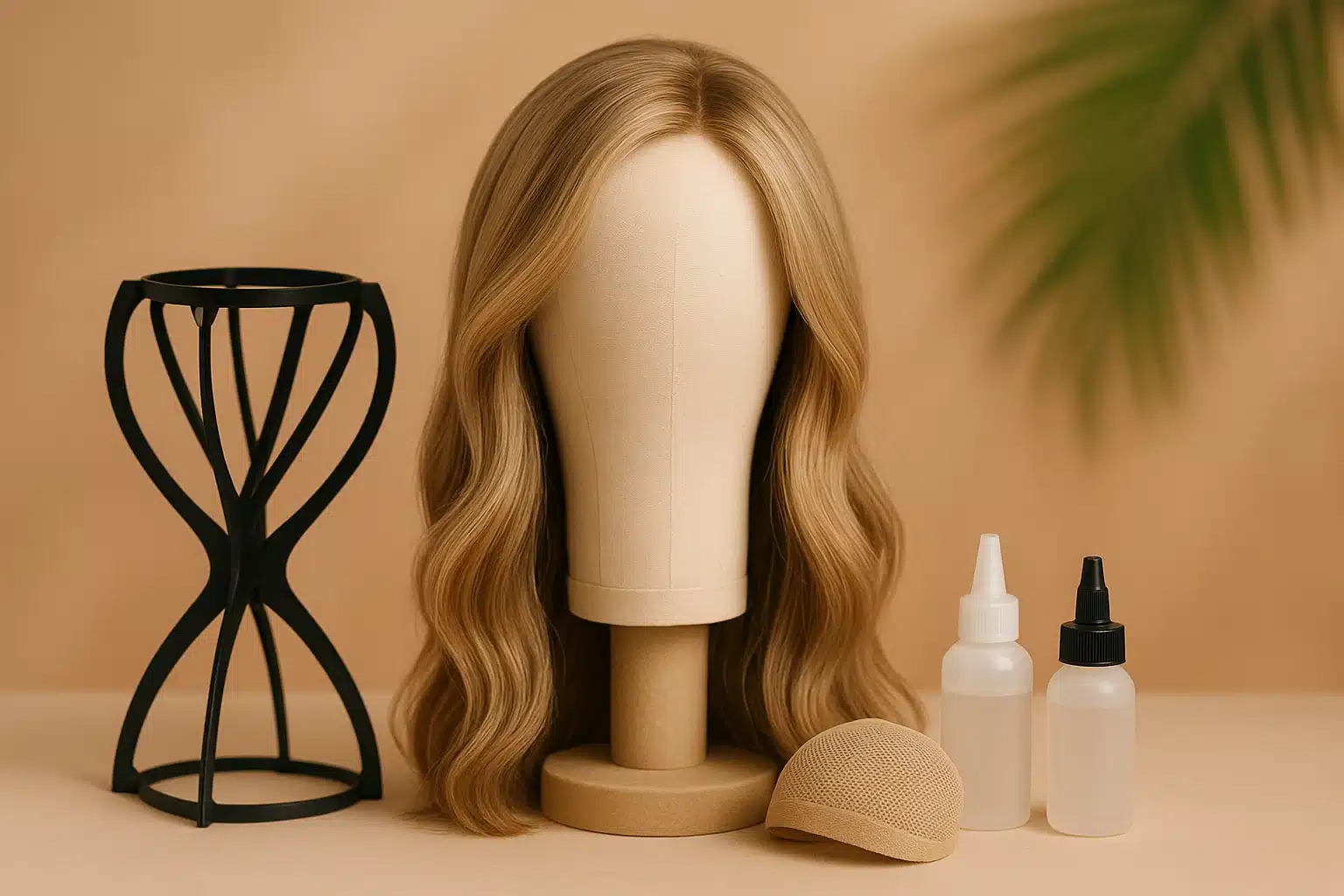
This is your post-wash non-negotiable. A hollow, open-lattice collapsible stand allows 360-degree air circulation. Because the cap needs to dry completely before you store it, this stand ensures moisture escapes the interior ribbons and lace meshes rapidly, preventing bacterial growth.
Heavy Canvas Block Heads (For Styling & Pinning)
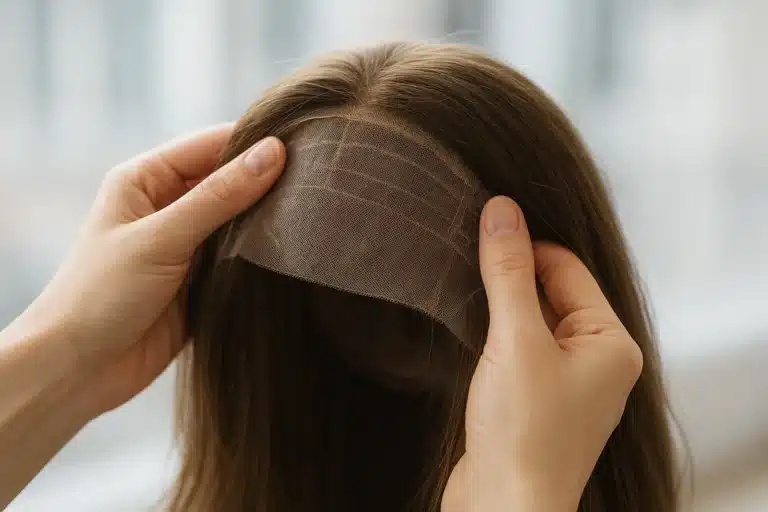
Once your wig is 100% dry, it’s time to move it to a canvas block. Serious styling, detangling, and brushing require tension. A cork or canvas block allows you to safely use T-pins to secure the lace ribbon without piercing or stretching the delicate, hand-tied frontal meshes.
The Anatomical Matching Protocol: Did you know the average adult head measures between 21.5 and 22.5 inches in circumference? Yet, standard decorative display heads often measure only 19 to 20 inches. If you pin a 22-inch cap onto an undersized head, the lace slackens and loses its secure fit. If you force it onto a 23-inch head, you permanently stretch the perimeter. When you visit a local Miami wig dealer, ask to test block fits with a soft measuring tape (measuring circumference, ear-to-ear, and temple-to-temple) before you buy.
High-Density Styrofoam Heads (The Cheap Foam Myth)
While standard styrofoam heads are cheap and easy to find, they are best reserved for temporary, overnight resting. They lack anatomical cheek and nape proportions, can easily dent under pin pressure, and are often dramatically undersized. For long-term storage or aggressive detangling, leave the styrofoam behind.
The Scalp & Security Suite: Beating the Heat
Protecting your wig also means protecting the scalp underneath it. Here is how you adapt your accessory suite to a humid environment:
Breathable Wig Caps
Not all wig caps are created equal. In hot weather, opt for bamboo liners, which offer superior sweat absorption and natural antibacterial properties. Nylon caps provide a remarkably smooth foundation for full lace units, while silicone wig grip bands are fantastic for eliminating the need for chemical glues during casual, everyday wear.
Adhesives Under Tropical Stress
Waterproof wig glue sounds great in theory, but as we learned, sebum is the real enemy. In Miami, you need a “Tropical Bond Architecture.” This involves prepping your scalp with alcohol-free sebum inhibitors, applying ultra-thin cross-linked adhesive layers, and ensuring your cap is breathable to vent trapped heat.
Style-Specific Maintenance Protocols
Different wigs require entirely different chemical and physical care routines. Here’s how to care for your specific style:
Blonde & Pink Wigs (Color Preservation)
Miami’s high UV index accelerates oxidative fading, especially on processed hair. Bleaching increases a hair strand’s porosity, making it act like a microscopic sponge that absorbs environmental humidity and frizzes. Protect vibrant colors by using low-pH cleansers to seal the cuticle, applying UV-filtering leave-in sprays, washing with cool water, and storing them in dark, closed environments away from direct sunlight.
Half Wigs & Headband Wigs (Friction & Blending)
These everyday styles interface directly with your natural hair. Maintenance here focuses on hygiene—managing sebum buildup on athletic headband wraps and detangling nape friction points. Always store structured half wigs on proper stands to avoid flattening the internal anchor combs.
Lace Front Wigs (Knot Integrity)
The hand-tied knots on HD lace are incredibly delicate. Avoid high-alkaline household cleaners (like dish soap), which strip hydration and loosen knots. When breaking down adhesive, use specialized, alcohol-free solvent chemistries that cleanly dissolve waterproof glue without degrading the lace itself.
What to Demand from Miami’s Elite Retailers
When browsing premier wig hubs across South Miami, Miami Gardens, or Lincoln Road, look past the beautiful window displays. The best local providers offer a full-suite in-house accessory experience.
Your In-Store Buyer’s Checklist:
- Measurement Services: Do they offer on-site 3-point cranial measurements to match you with the perfect canvas block size?
- Hardware Validation: Can you test-mount your specific cap style onto varying block diameters before purchasing?
- Climate-Specific Inventory: Do they carry bamboo caps, scalp anti-perspirants, and wig-formulated low-pH cleansers?
- Educational Support: Will they physically demonstrate safe lace release techniques before you leave the counter?
The Miami Wig Owner’s Maintenance Calendar
To ensure your investment lasts, follow this preventative maintenance timeline:
- Daily: Rest your unit on an open-air lattice stand overnight. If using adhesive, inspect the lace perimeter for lifting.
- Weekly: Wash everyday units using low-pH, sulfate-free cleansers. Allow them to air-dry 100% on a collapsible stand before transferring to a properly sized canvas block for detangling.
- Monthly: Perform an adhesive reset cycle. Deep clean the lace to remove all microscopic solvent residue, apply a knot sealer to reinforce hand-tied hairs, and execute a deep conditioning treatment (avoiding the roots and lace).
Frequently Asked Questions
How do I keep my wig from losing its shape overnight?
Never toss your wig on a dresser or hang it on a doorknob. Place it on an open-air collapsible stand or a properly sized canvas block head. This supports the cap’s internal architecture and prevents the hair fibers from matting.
Can I put my wet wig on a styrofoam head, or will it get moldy?
Do not put a damp wig on a solid styrofoam or canvas head. Solid forms trap moisture inside the cap’s lace and ribbons, leading to mildew. Always use a hollow, lattice-style stand for drying.
Do I really need a wig cap, and which type prevents traction alopecia in hot weather?
Yes, a wig cap creates a necessary barrier between your natural scalp oils and the wig. To prevent friction and excess sweating in Miami heat, look for breathable bamboo wig liners or velvet/silicone grip bands that secure the wig without tension.
How do I stop my wig glue from lifting when sweating under South Florida heat?
It’s less about the glue and more about the prep. Clean the hairline with 91% alcohol, apply a specialized scalp protector (a sebum inhibitor) to create a barrier, and allow your adhesive layers to dry completely clear before pressing the lace down.
Your Next Steps for Flawless Hair
Navigating hair loss or stepping into the world of luxury hair enhancement is a deeply personal journey, but you don’t have to walk it alone. By understanding the physics of head forms, the chemistry of adhesives, and the realities of the South Florida climate, you transition from a casual buyer to an educated owner.
Before you make your next purchase, take stock of your home maintenance setup. Do you have the right drying stand? Is your canvas block precisely matched to your cap size? Equipping yourself with the right in-house accessories guarantees that your wig will look just as vibrant, bouncy, and natural on day 100 as it did on day one.