Imagine this: You pull your favorite wig off its stand, ready to start the day, only to notice the dreaded “friction frizz” tangling at the nape of the neck. Or worse, you discover a tiny tear in the delicate lace front. For anyone experiencing hair loss, a high-quality wig isn’t just an accessory—it’s a daily lifeline to confidence. When that lifeline shows signs of wear, the immediate reaction is often panic, followed by mentally calculating the cost of a brand-new replacement.
But before you decide to throw away a dry, torn, or matted wig, take a deep breath. Restoration is almost always a possibility. While many people spend hours researching the top wig stores in Sacramento CA to purchase new pieces, there is an entirely different, highly specialized world dedicated to wig repair and reconditioning. Extending the lifespan of your alternative hair isn’t just a massive financial relief; it is a sustainable, empowering approach to your hair journey. Let’s explore how you can evaluate, revive, and professionally restore your beloved pieces.
The Cost & Sustainability of Wig Restoration
When alternative hair owners invest in high-quality human hair or premium synthetic units, maximizing longevity should be a top priority. Tossing a piece simply because it feels dry or has a small cap tear is a costly mistake.
Think of a premium wig like a designer silk dress or a luxury vehicle. You wouldn’t throw away a car just because it needs an oil change, nor would you discard a beautiful gown because it needs dry cleaning. Professional reconditioning and strategic repairs can breathe months—sometimes even years—of extra life into your unit. This approach not only saves you hundreds or thousands of dollars but also reduces environmental waste in the beauty industry.
Diagnosis Matrix: Can Your Wig Be Saved?
Before diving into repairs, you need to diagnose the problem. Ask yourself these questions to determine if your wig’s issue is a weekend DIY project or if it requires the meticulous hand of a Sacramento professional.
Is the damage structural or fiber-based?
- Structural Damage: This includes ripped lace, a stretched-out wig cap, separated silk tops, or noticeable bald spots where hair has shed. Verdict: Requires professional repair.
- Fiber Damage: This includes dry human hair, matted synthetic fibers, or minor tangles. Verdict: Often manageable with at-home DIY restoration.
The “T-Pin Threat”A common cause of structural damage is improper pinning. Many beginners accidentally puncture the delicate polyurethane or lace of their wig caps with thick styling T-pins when putting the wig on a canvas block. Over time, these micro-tears stretch and ruin the cap. Recognizing how the damage occurred is the first step to preventing it in the future.
The Science of Synthetic Memory: A DIY Masterclass
If your synthetic wig is suffering from matting and frizz—especially where the hair rubs against your collar—you are dealing with what professionals call “friction frizz.”
Here is the “aha” moment that changes everything: Synthetic hair is essentially extruded plastic (typically modacrylic).
When plastic gets frizzy and warped from friction, washing it in cold water won’t fix it. Furthermore, generic internet advice often suggests soaking the wig in liquid fabric softener. Do not do this. Fabric softener leaves a heavy, dulling film on plastic fibers that causes even more tangling over time.
Instead, synthetic fibers require controlled wet heat to relax the plastic polymer chains back to their original, smooth shape.
The Steam Magic Approach
To reset the fiber’s “memory,” you need steam. Using a handheld garment steamer (kept at safe temperature limits, usually under 250°F for heat-friendly synthetics), you can gently comb through the matted areas. The wet heat smooths the plastic fibers, relaxing them back into a sleek state without melting them.
Human Hair Reconditioning
If you own a 100% human hair wig, friction frizz isn’t your enemy—dryness is. Because wig hair isn’t attached to a scalp, it receives no natural sebum (oils). Reconditioning human hair at home involves deep-penetrating hydration masks and professional-grade cuticle sealers to lock moisture inside the hair shaft.
When to Call the Professionals: Sacramento’s Wig Repair Directory
While minor tangles and washing can be done at home, structural repairs require specialized tools and decades of expertise. Fortunately, Sacramento is home to vetted experts who understand the deep emotional connection clients have with their alternative hair.
The Wig Shoppe (Cottage Way)
Led by Ingrid Worley for over 30 years, The Wig Shoppe is a pillar in the local community for medical hair loss. Their approach marries personalized wig cleaning with deep empathy. If your wig needs professional washing, restyling, or routine maintenance, their localized expertise is a trusted resource.
Elite Hair Loss Solutions (Sunrise Blvd, Gold River)
For advanced restoration, Elite Hair Loss Solutions offers custom-tailored maintenance. They specialize in high-end solutions, including non-surgical hair replacement systems and sophisticated modifications for both synthetic and human hair pieces.
Professional Services Explained
What exactly do these professionals do that you can’t do at home?
- Lace Tear Repair: Instead of simply “sewing” a rip together (which creates a bumpy, unnatural ridge on your forehead), professionals use delicate structural reinforcement. They apply invisible lace patches and clear nylon threads to hide the seam completely.
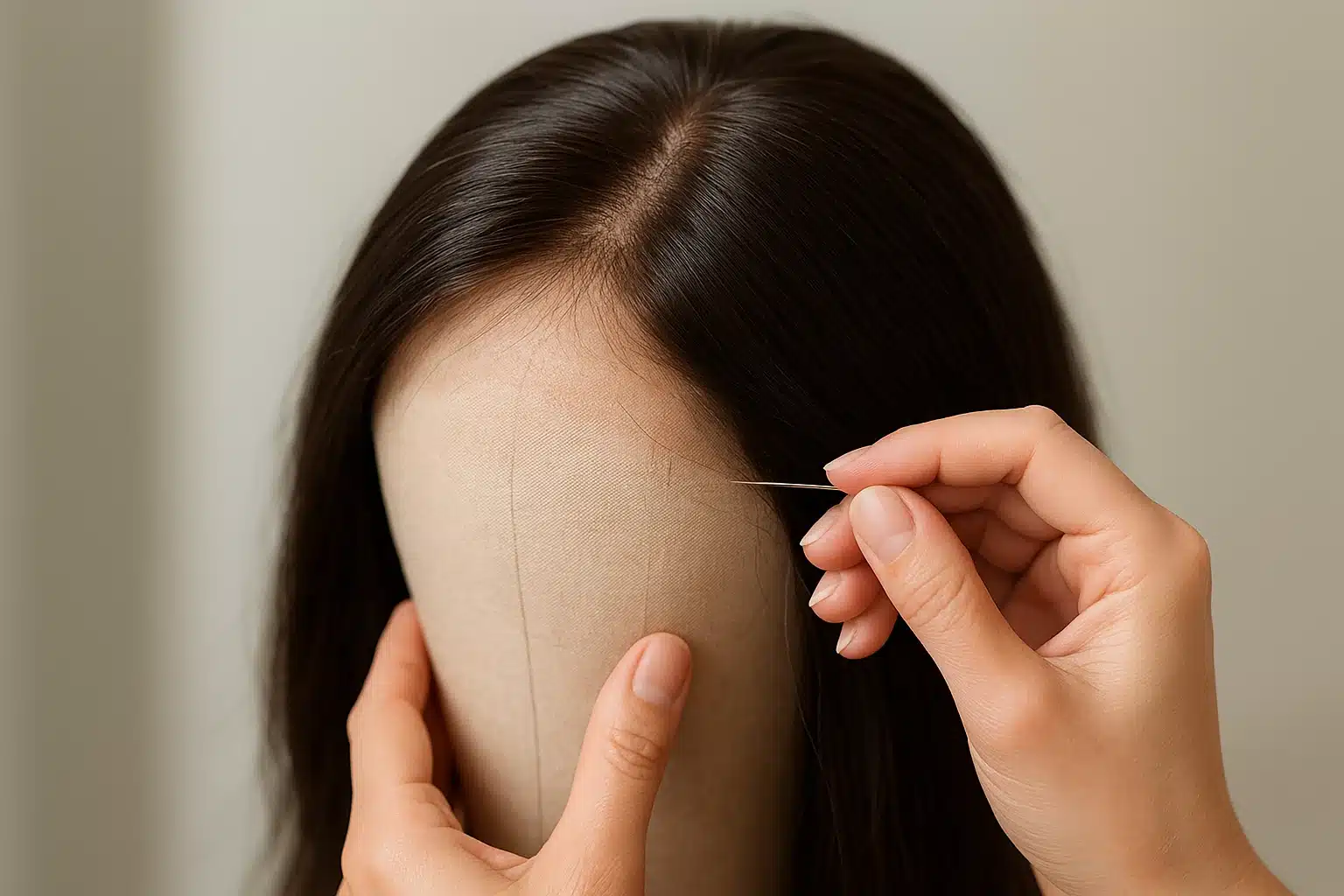
- Wig Ventilating: If your wig has bald spots from shedding, professionals don’t just glue hair in. “Ventilating” is the art of using a tiny hook to hand-tie individual strands of hair back into the microscopic holes of the lace cap, seamlessly restoring the hair density.
- Cap Resizing: If your wig has stretched out over time, specialists can perform surgical alterations to take the cap in, ensuring a snug, secure fit.
The Sacramento Search Intent Filter: Avoiding the “Restore” Noise
If you decide to look for local wig repair options online, you’ll quickly run into a uniquely Sacramento-based problem: search engine noise. If you search for terms like “restore Sacramento” or “fix Sacramento,” the internet will likely hand you a confusing list of completely unrelated businesses.
To save you time, here is our Sacramento Local Intent Map:
- Looking for Alternative Hair Care? Use precise terms like “Wig repair Sacramento,” “Wig reconditioning,” or “Wig ventilating Sacramento.”
- Do Not Confuse With “Restore Sacramento”: This will route you to the Habitat for Humanity ReStore, which sells discount home construction supplies.
- Do Not Confuse With “ServiceMaster Restore”: This is a professional water, fire, and mold damage service for houses, not hair!
- Do Not Confuse With “Fix 50 Sacramento”: This will give you updates on the Caltrans highway construction project on Highway 50.
- Do Not Confuse With “Poke Fix”: A fantastic local Hawaiian Poke restaurant on L Street, but definitely not the place to bring a torn lace front.
Frequently Asked Questions (FAQ)
I ripped my lace front hairline, can it be fixed?
Yes. As long as you don’t try to superglue or thickly sew it yourself. A professional wig technician can use clear nylon thread and a fine lace patch to structurally reinforce the tear, making it virtually invisible against your skin.
Why is my synthetic wig so frizzy at the neck and how do I smooth it?
This is “friction frizz,” caused by the synthetic plastic fibers rubbing against your body heat and clothing. It can be smoothed out using the “steam method”—applying controlled wet heat (via a handheld steamer) while gently combing with a wide-tooth comb to relax the plastic’s memory.
Can you wash a wig with regular shampoo or dish soap?
Absolutely not. Regular shampoos contain harsh sulfates that strip the protective coatings off human and synthetic wig hair. Dish soap is even worse. Always use specially formulated wig shampoos that clean without stripping, followed by leave-in conditioning sprays.
What is wig ventilating, and how do specialists add hair to bald spots?
Ventilating is the meticulous, traditional method of wig making. A specialist uses a specialized ventilating needle (similar to a tiny fishhook) to catch 1 to 3 strands of hair at a time, pulling them through the lace cap and tying them into a microscopic knot. It is highly skilled work that perfectly covers up bald patches on older wigs.
Next Steps on Your Hair Restoration Journey
Discovering that your wig is damaged doesn’t have to be the end of its lifespan. By understanding the science of the fibers you’re wearing and knowing exactly when to utilize professional Sacramento restoration services, you can protect your investment for the long haul.
Start today by evaluating your current wig. Does it just need a gentle steam session to cure some friction frizz, or is it time to take it to a local expert for a cap resizing and professional deep clean? By giving your alternative hair the specialized care it deserves, you ensure that every day remains a beautiful, confident hair day.