
When you first begin noticing significant hair loss, the search for solutions can feel incredibly isolating. If your hair loss stems from a chronic condition—like alopecia areata, trichotillomania, or hormonal thinning—rather than chemotherapy, you might quickly notice a frustrating trend. The vast majority of medical hair loss resources, and even the staff at standard retail shops, tend to treat all hair loss as a temporary side effect of oncology treatments. But what if your reality is different? What if your scalp is sensitive, your biological hair is fragile, or your hair loss is a long-term journey?
The truth is, walking into a standard boutique and buying a fashion off-the-rack wig often leads to discomfort, artificial-looking results, and even further damage to your biological hair. You don’t just need a wig; you need a medically engineered cranial prosthesis, fitted by professionals who understand the nuances of dermatological health. As you begin exploring your options along the Wasatch Front, relying on a complete guide to finding the best wig stores in Salt Lake City, UT is an essential first step to locating accredited local providers equipped to handle complex non-oncology diagnoses in private, compassionate settings.
Let’s pull back the curtain on the science of medical wigs, explore how to match cap construction to your specific condition, and demystify the medical insurance process in Utah.
Rethinking Medical Hair Loss
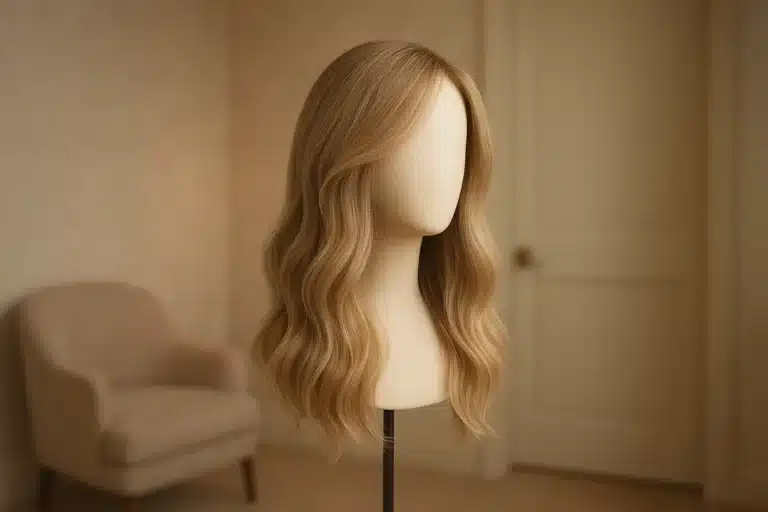
It’s completely normal to feel overwhelmed by the terminology in the hair replacement world. The most important distinction to learn early on is the difference between a standard fashion wig and a medical cranial hair prosthesis.
Fashion wigs are designed for occasional wear. They often feature heavier, less breathable materials that can irritate sensitive scalps and rely on aggressive clips or combs that pull on your natural hair.
A cranial hair prosthesis, on the other hand, is a specialized medical unit. Engineered with hypoallergenic interior linings—such as bamboo, silk, or closed polyurethane—these pieces are designed specifically for scalps experiencing follicular loss. They prevent contact dermatitis and pressure necrosis, allowing you to wear them comfortably for 12 to 14 hours a day.
The “Density Realism” Factor
Have you ever looked at a wig and instantly known it was a wig, but couldn’t pinpoint why? This is often due to the “density trap.” Standard fashion wigs are usually manufactured at 130% to 150% hair density. For women suffering from diffuse thinning or female pattern hair loss, suddenly having 150% density looks incredibly artificial. Premium cranial prostheses are customized down to 90% or 110% density, perfectly mimicking authentic, natural scalp distribution.
The Utah Micro-Climate Challenge
Living in Salt Lake City means navigating a unique, arid climate. The dry, 100-degree summers and freezing winters create environmental challenges for alternative hair. Dry friction causes synthetic fibers to frizz much faster here than in humid coastal cities. Furthermore, a lack of humidity can lead to scalp xerosis (severe dryness and itching) under a heavy wig. This makes breathable monofilament and 100% hand-tied caps not just a luxury, but a dermatological necessity in the Mountain West.
Matching Your Diagnosis to the Right Engineering
Not all hair loss is created equal, which means your cranial prosthesis must be engineered to address the specific etiology of your condition.
Alopecia Areata, Totalis, and Universalis
If you have total or near-total hair loss, the mechanics of how a wig stays on your head change entirely.
- The Scalp Friction Science: Many people are surprised to learn that complete hair loss actually allows for more secure wig attachment. Premium prostheses utilize full suction silicone caps and vacuum bases. These rely on surface tension and gentle friction against smooth skin to stay perfectly in place without the use of toxic, irritating glues.
- What to Avoid: Never use heavy liquid adhesives directly over active alopecia areata patches, as this drastically increases the risk of contact dermatitis.
Diffuse Thinning & Hormonal Hair Loss
For individuals with androgenetic alopecia, telogen effluvium, or endocrine-related thinning, the goal is often integration rather than full coverage.
- The Danger of Standard Clips: Traditional clip-in hair toppers are marketed heavily to this group, but they hide a massive risk: standard pressure clips can cause traction alopecia on fragile, actively miniaturizing hair follicles.
- The Solution: Seek out non-clip integration systems, halo wires, or micro-bead perimeter tracks that secure partial wigs for thinning hair without damaging your biological regrowth.
Trichotillomania
Behavioral hair pulling presents entirely unique challenges that most commercial wig guides completely ignore.
- Tactile Barriers: A cranial prosthesis for trichotillomania must serve as a physical and tactile barrier.
- Construction Needs: It is crucial to avoid exposed edges or rough, scratchy lace fronts that can serve as “pull cues” or sensory triggers. Breathable, 100% hand-tied caps with sealed perimeters prevent fingernail access to underlying hair while remaining incredibly comfortable.
Navigating the Salt Lake City Retail Experience
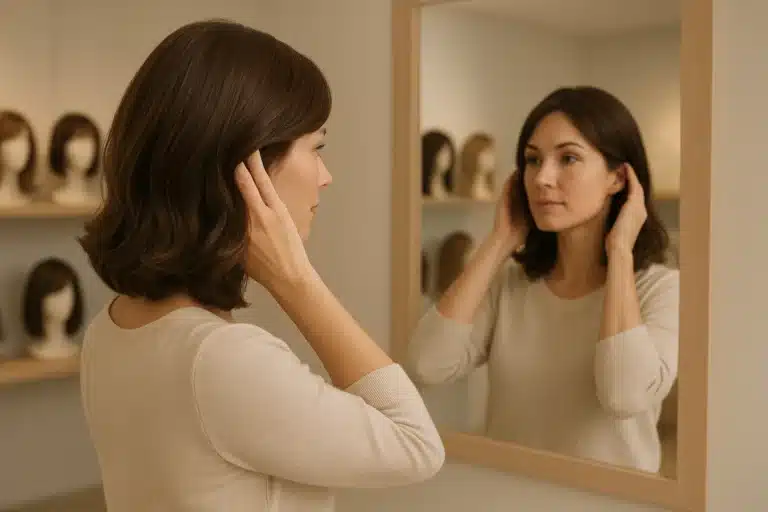
While the internet offers endless options, buying a medical prosthesis online is a risky endeavor. An in-person consultation with a certified cranial prosthetist in the Salt Lake City area provides invaluable benefits:
- 3D Head Templating: Ensuring the cap conforms precisely to the unique ridges and curvature of your skull.
- Custom Hairline Thinning: Professional stylists use razor techniques to thin the hairline, eliminating that bulky, “straight-out-of-the-box” look.
- Private Fitting Suites: Established local boutiques understand the emotional vulnerability of this process and offer dedicated, private consultation rooms away from the public eye.
The Medical Insurance & Reimbursement Roadmap
One of the best-kept secrets in the industry is that health insurance often covers custom wigs for alopecia and other conditions—but you have to know how to play the game. Insurers like SelectHealth, Regence BlueCross BlueShield of Utah, or PEHP will routinely deny claims if the receipt simply says “wig.”
The Prescription Blueprint
To successfully utilize your benefits (or HSA/FSA funds), your Utah dermatologist or primary care physician must write a highly specific Letter of Medical Necessity (LMN).
Your prescription should explicitly state:“Cranial hair prosthesis for medical hair loss due to [Insert exact ICD-10 Diagnosis Code].”
Key Insurance Codes to Know:
- HCPCS Code: A9282 (This is the universal billing code for a Cranial Hair Prosthesis)
- Common ICD-10 Codes: L63.0 (Alopecia Totalis), F63.3 (Trichotillomania), L65.9 (Non-scarring hair loss, unspecified)
Always ensure your local supplier can provide an itemized, NPI-compliant invoice that mirrors this exact medical terminology.
Frequently Asked Questions (FAQ)
What is a cranial prosthesis, and how is it different from a wig?
A cranial prosthesis is a custom-fitted hair system created specifically for individuals suffering from medical hair loss. Unlike fashion wigs, they are constructed with medically safe, breathable, and hypoallergenic materials designed to protect sensitive scalps and mimic natural hair density.
Can wearing a wig worsen my alopecia or cause hair loss?
A properly fitted medical prosthesis will not worsen alopecia areata. However, if you have diffuse thinning, wearing an improperly fitted fashion wig with harsh combs or pressure clips can cause traction alopecia, which accelerates the loss of your biological hair.
What cap construction prevents slipping on smooth bald patches?
For scalps with total or near-total hair loss, caps featuring closed polyurethane strips, silicone grips, or full vacuum bases are ideal. They create a gentle surface tension against the skin, preventing slipping without the need for harsh tapes or glues.
Does insurance cover custom-made wigs outside of chemotherapy?
Yes, many policies cover cranial prostheses for chronic conditions under HCPCS code A9282. The key is ensuring your doctor provides a prescription with the correct ICD-10 medical diagnosis code, and that your retailer provides an itemized medical invoice rather than a standard retail receipt.
Your Next Steps on This Journey
Navigating hair loss is deeply personal, but you don’t have to do it through trial and error. Now that you understand the mechanics of density realism, the importance of clip-free attachment methods, and the exact terminology needed for insurance reimbursement, you are perfectly equipped to advocate for yourself.
Your next step is to transition from online research to in-person exploration. Write down your specific questions, secure a Letter of Medical Necessity from your dermatologist, and begin reaching out to local Salt Lake City specialists to schedule a private consultation. By approaching this journey with education and self-compassion, you are already well on your way to finding a solution that restores not just your hair, but your confidence.