Investing in a high-quality wig is a transformative experience. Whether you’re navigating the sensitive journey of medical hair loss, exploring a fresh new aesthetic, or seeking a durable cranial prosthesis, that initial purchase is just the beginning. While finding the perfect piece is a major milestone—often requiring a visit to one of the premier wig shops in Charlotte NC—the true secret to keeping your hair looking flawless lies in what happens after you leave the store.
The reality is that a beautiful, expensive wig is only as resilient as the products used to care for it. Every day, beginners unknowingly cut the lifespan of their gorgeous hairpieces in half by using standard household products or incorrect tools. This guide will walk you through exactly what you need to protect your investment, why the chemistry of your supplies matters, and precisely where to buy the best wig accessories and maintenance tools right here in the Queen City.
Building Your Foundational Wig Care Toolkit
To properly care for a wig, you first need to understand what you are actually washing. The most common mistake new wig wearers make is treating their wig exactly like the hair growing out of their scalp.
The Science of Wig Fibers
Human hair wigs have cuticles—microscopic overlapping scales that need gentle hydration and delicate handling to stay smooth. Synthetic hair, on the other hand, is made from extruded modacrylic polymers. In simple terms? It is essentially delicate, high-tech plastic threading.
Because synthetic fibers do not have an open cuticle to absorb moisture, using your regular drugstore shampoo will simply coat the strands in a greasy film. Even worse, some wearers turn to DIY hacks like dish soap or fabric softener, which aggressively strip away the synthetic fiber’s factory-applied anti-static and flame-retardant finishes. You need specialized, pH-balanced wig shampoos and conditioners designed specifically for either human hair or synthetic fibers to preserve their elasticity and movement.
Essential Brushes and Styling Tools
Brushing your wig with a standard boar-bristle brush or fine-tooth comb is a recipe for disaster. Standard brushes cause micro-tears in synthetic fibers and pull aggressively at the hand-tied knots on lace caps.
What you actually need:
- Loop Brushes: Instead of straight bristles, these brushes have metal or nylon loops. They glide over the wig cap’s delicate mesh without catching, snagging, or pulling the hairs out of their knots.
- Wide-Tooth Detanglers: Essential for safely working out tangles from the ends up, especially when the hair is wet and at its most vulnerable.
The Truth About Wig Stands
If you have your wet wig perched on a classic styrofoam mannequin head right now, you might want to move it.
While styrofoam heads are great for styling dry wigs, placing a wet, freshly washed wig on one is a leading cause of cap destruction. A wet wig cap is heavy and highly stretchable. A solid styrofoam head forces the wet cap to stretch out, permanently expanding the circumference and warping delicate lace front ear tabs.
Your best options:
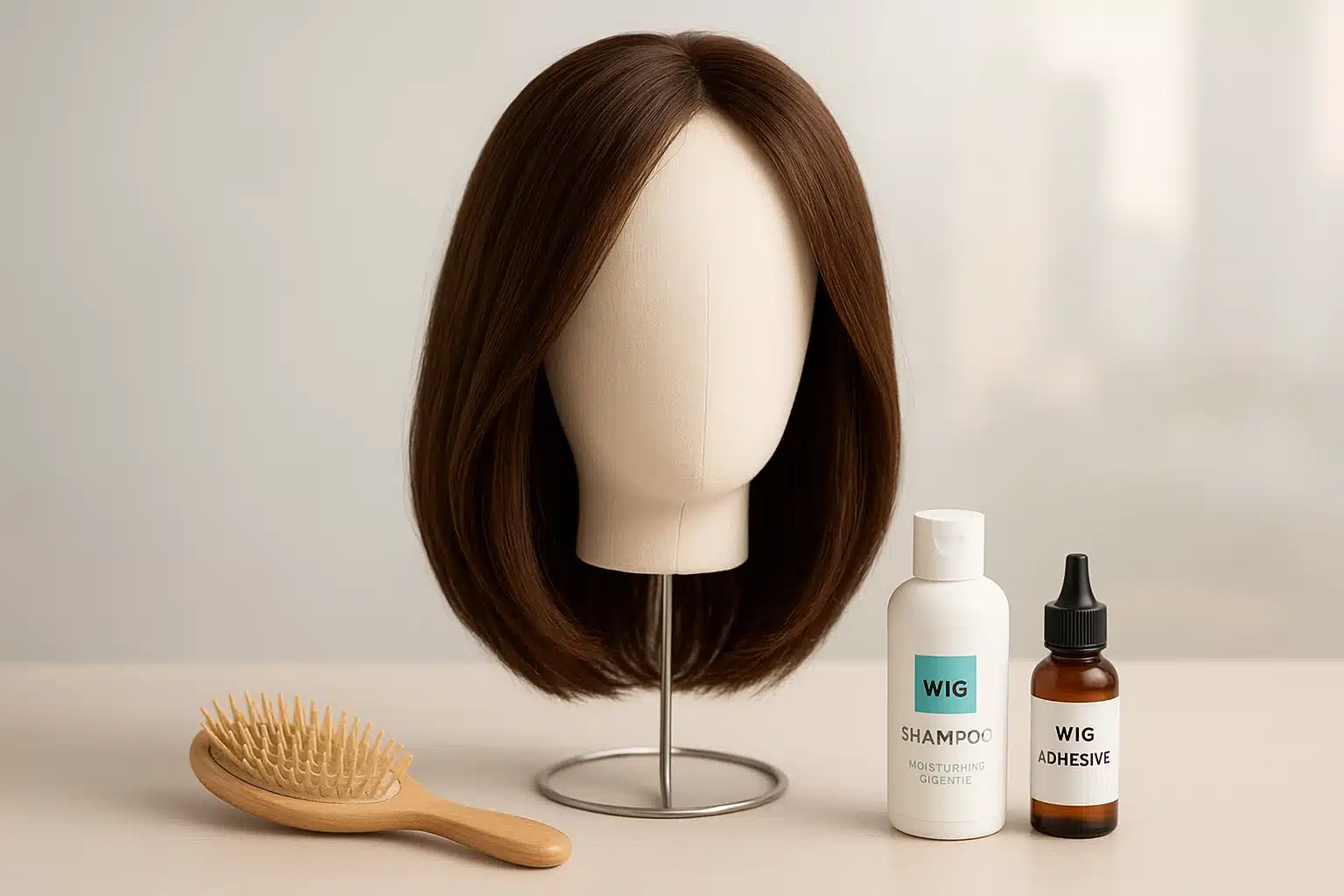
- Collapsible Wire Stands: The holy grail for drying. Their open-air design allows circulation inside the cap, preventing mildew and ensuring the cap dries back to its original shape.
- Canvas Block Heads: Filled with cork and wrapped in canvas, these are professional-grade tools used for styling and pinning. They come in specific circumference sizes to match your head perfectly.
Mastering Adhesives and Safe Removal in the Charlotte Heat
If you wear a lace front or full lace system, adhesive chemistry is going to be your best friend—or your worst enemy, depending on how you use it.
Choosing the Right Adhesive for the Piedmont Climate
Charlotte is notorious for its sweltering, 80%+ humidity summers. The moment you step outside in July, your scalp produces sweat and sebum (natural oils), which act as a natural solvent against wig glue.
- Water-Based Adhesives (e.g., Ghost Bond): Great for sensitive skin, but in the thick of a Carolina summer, high humidity can cause water-based glues to turn milky and lose their grip. If you use these, applying a specialized, antiperspirant scalp protector underneath is mandatory.
- Acrylic/Silicone-Based Adhesives (e.g., Bold Hold): These offer maximum waterproof hold for humid days and active lifestyles, but require careful, patient removal.
- Medical-Grade Double-Sided Tapes: Often preferred by beginners, tapes offer an incredibly strong, mess-free hold that is highly resistant to sweat, making them perfect for outdoor Charlotte festivals or long workdays.
The Art of Safe Removal
Never, under any circumstances, pull or rip your lace to remove your wig. This destroys the fragile Swiss lace and rips out your natural hairline edges.
You need a dedicated solvent. Citrus-based removers (like C-22) are highly effective at breaking down acrylic bonds quickly and safely. For those with sensitive skin, alcohol-free medical adhesive removers easily release the lace without leaving a greasy residue behind.
The “Downward Smooth” Method: Washing Without Ruining
When washing your wig, forget the rigorous scrubbing you see in shampoo commercials. Friction is the enemy of a wig. Rubbing the hair together causes “knot inversion”—where the hairs pull backward through the cap mesh—leading to irreversible matting.
The Golden Rule of Wig Washing:Always wash using the “Downward Smooth” method. Fill a basin with cool water (never hot, which melts synthetic fibers and damages caps) and your specialized wig shampoo. Gently submerge the wig and stroke the soapy water through the hair from the roots down to the tips in a single, smooth direction. Rinse using the same downward motion.
Where to Buy Wig Maintenance Supplies in Charlotte, NC
When an adhesive emergency strikes before a big event, waiting two days for online shipping isn’t an option. While national wholesale stores like CosmoProf and SalonCentric require a professional cosmetology license to shop, Charlotte is home to several fantastic, open-to-the-public beauty emporiums where you can touch, feel, and purchase these tools today.
North Charlotte / University City
- Tisun Beauty (N. Tryon St): A mega-store that serves as a treasure trove for wig wearers. They stock extensive retail accessories, a massive array of adhesives (including popular brands like Ghost Bond and Bold Hold), specialized wig shampoos, and affordable maintenance kits.
- Hope Beauty Supply: Another excellent stop in the northern corridor for loop brushes, stocking caps, and everyday styling needs.
South Charlotte / Pineville
- My Beauty Supply (South Blvd): A high-volume hub catering to the southern corridor. They carry an impressive lineup of brand-name accessories, quality loop brushes, wire stands, and heavy-duty tape adhesives.
- Sally Beauty Supply (Multiple Locations including Rea Rd): Accessible and beginner-friendly, Sally Beauty is your go-to for standard wig shampoos, conditioners, and basic synthetic care essentials.
West Charlotte
- Charlotte Beauty Supply (Freedom Dr): A true community staple. This is a reliable destination for lace supplies, skin protectors, solvents, and weave maintenance tools.
Professional Salons & Custom Specialists
- Roland’s Wig Salon: If you have invested in a high-end medical prosthesis or human hair piece that needs deep sanitization, cap repair, or professional re-setting, visiting a dedicated salon is highly recommended. Salons offer specialized knowledge that retail stores cannot match.
Frequently Asked Questions About Wig Maintenance
Why does my wig glue turn white and flakey around the edges?
This usually happens for two reasons: either the adhesive was not allowed to dry clear before the lace was pressed down, or high humidity and scalp sweat have broken down a water-based adhesive. Using a scalp protector spray before applying glue can prevent this in hot weather.
Can I use a regular curling iron on my synthetic wig?
Only if it is specifically labeled as a “Heat-Friendly” or “Heat-Defiant” synthetic wig. Standard synthetic wigs will melt instantly upon contact with high heat. Even with heat-friendly synthetics, you should keep your tools below 280°F (138°C) to prevent the plastic fibers from frying.
Is it true I can soften my synthetic wig with fabric softener?
This is a pervasive internet myth that does more harm than good. While fabric softener might make the wig feel temporarily slick, it leaves behind a heavy chemical residue that attracts dirt, degrades the fiber’s longevity, and breaks down the cap construction over time. Stick to synthetic-safe leave-in conditioning mists.
Setting Yourself Up for Success
The journey of wearing a wig is incredibly empowering, and building the right care routine is the best way to honor that investment. By understanding the unique chemistry of your hairpiece, avoiding damaging friction, and knowing exactly where to source the right tools in Charlotte, you can ensure your wig stays vibrant, secure, and beautiful for months—and even years—to come.