Dealing with medical hair loss—whether from chemotherapy, alopecia, cranial radiation, or other conditions—carries an immense physical and emotional weight. For many patients in the South Sound region, the realization that they need a wig is quickly followed by a stressful question: How am I going to pay for this?
The good news is that health insurance often covers the cost of medical wigs. The bad news? The healthcare landscape can be notoriously confusing, hiding this coverage behind complex billing codes and bureaucratic red tape. Whether you’re consulting with your oncologist at MultiCare Regional Cancer Center, or you are just beginning to look for wigs in Tacoma, WA, having an exact blueprint turns an overwhelming barrier into a manageable, reimbursed solution.
This guide will walk you through exactly how to decode insurance jargon, gather the right paperwork, and successfully claim coverage for your medical wig in Washington State.
The “Magic Word” That Changes Everything: Cranial Prosthesis
If there is only one thing you take away from this guide, let it be this: Never use the word “wig” when speaking with your insurance company.
Insurance algorithms are trained to automatically reject the word “wig” because they classify it as a non-covered, cosmetic grooming item. However, when a medical-grade wig is prescribed to replace hair lost due to a medical condition or treatment, it transitions from a cosmetic item to a medical necessity.
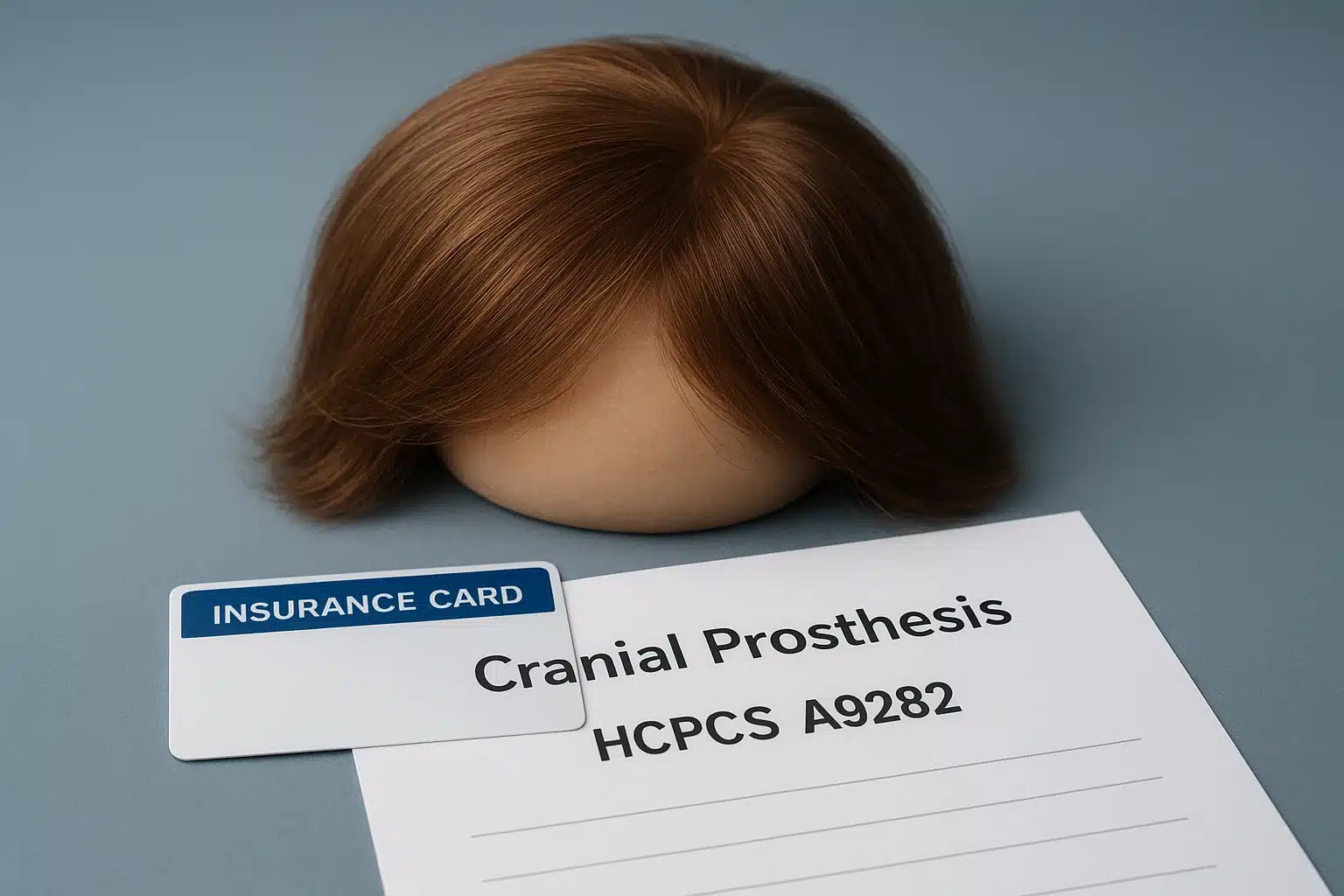
In the medical billing world, this is called a Cranial Prosthesis (or sometimes an extra-cranial prosthesis).
A true cranial prosthesis is fundamentally different from a costume or fashion wig. They are constructed with medical-grade caps, silicone grips, and non-allergenic materials specifically designed to protect sensitive, bare scalps. When billed correctly using the clinical designation of a cranial prosthesis, many insurance providers will approve full or partial coverage.
Navigating Your Specific Health Plan in Pierce County
Insurance coverage isn’t one-size-fits-all, and policies can vary wildly depending on your provider. Here is what patients in the Tacoma area need to know about the most common regional health plans:
Commercial Insurers
Providers like Premera Blue Cross, Regence BlueShield of WA, Kaiser Permanente, and Aetna typically offer coverage for cranial prostheses, but the terms vary. Many plans have a specific benefit limit (often ranging from $350 to $3,500) or will cover 80% to 100% of the cost after your deductible is met.
TRICARE & Military Families
With Joint Base Lewis-McChord (JBLM) right in our backyard, many Tacoma families rely on TRICARE (Prime, Select, or TRICARE for Life). TRICARE has very specific guidelines: they cover one wig or hairpiece per lifetime for hair loss specifically resulting from the treatment of a malignant disease. You will need coordination with your military treatment facility, such as Madigan Army Medical Center, to ensure the prescription is authorized.
Medicare and Apple Health (WA Medicaid)
Original Medicare (Part A and B) categorically excludes wigs, citing statutory cosmetic rules, though federal legislative efforts are continually fighting to change this. However, if you have a Medicare Advantage (Part C) plan, you may have supplemental allowances or “flex cards” that can be used.
Washington Apple Health (Medicaid) rarely approves cranial prosthetics under standard schedules. Getting coverage requires a strict Prior Authorization (PA) and an Exception to Rule (ETR) petition through the Washington Health Care Authority, which your treating physician must champion.
The Washington State “Network Gap Exception”
Here is a common roadblock many Washingtonians face: Your insurance tells you they cover cranial prostheses, but you must buy from an “in-network Durable Medical Equipment (DME) provider.”
The problem? Almost no private wig boutiques or salons in Washington State are contracted as in-network DME providers.
If you find yourself in this situation, you don’t have to settle for out-of-network penalty fees. You can formally request a Network Deficiency Exception (also known as a Gap Exception). By invoking this rule, you are telling your insurance company: “Because you do not have any contracted providers in my area who supply this necessary medical equipment, you must cover my out-of-network purchase at the in-network rate.”
The Paperwork Trio: Your Blueprint for Claim Approval
An approved claim almost always hinges on three synchronized documents. They must match perfectly, down to the exact spelling and billing codes.
1. The Physician’s Prescription
Your oncologist or dermatologist must write a prescription. It cannot just say “wig for patient.” It must explicitly state “Cranial Scalp Prosthesis” and include the correct ICD-10 Diagnosis Code for your condition. Common codes include:
Z51.11(Encounter for antineoplastic chemotherapy)L63.0(Alopecia totalis)L63.9(Alopecia areata, unspecified)F63.3(Trichotillomania)
2. The Letter of Medical Necessity (LMN)
Alongside the prescription, your doctor should provide a Letter of Medical Necessity. This letter explains why the prosthesis is required, detailing both the physical need (protecting a sensitive scalp from the elements) and the psychological necessity (preventing emotional impairment during recovery).
3. The Retailer’s Itemized Invoice
When you purchase your cranial prosthesis at a specialized Tacoma store, your standard credit card receipt won’t cut it. You need a formal, itemized invoice that includes:
- The term “Cranial Prosthesis”
- The universal HCPCS Billing Code: A9282 (Wig, any type, each)
- The store’s Tax ID number (EIN) or National Provider Identifier (NPI)
- An itemized list of any customization or fitting fees
Alternative Financial Lifelines and Tax Strategies
If insurance denies your claim or you are facing high deductibles, there are other financial avenues to explore.
HSA and FSA Accounts: Because a cranial prosthesis prescribed by a doctor is considered a medical expense, you can legally use funds from your Health Savings Account (HSA) or Flexible Spending Account (FSA) to pay for it.
Tax Deductibility: Under IRS Publication 502, cranial prostheses prescribed by a physician for hair loss caused by disease or treatment qualify as deductible medical care. If your total unreimbursed medical expenses for the year exceed 7.5% of your Adjusted Gross Income (AGI), you can deduct the cost of your wig on your taxes.
Local Support: Don’t hesitate to lean on local hospital foundations, like the MultiCare Good Samaritan Foundation or Franciscan Foundation, as well as national non-profit wig banks, which frequently offer financial assistance for cancer patients.
Frequently Asked Questions (FAQ)
What exactly should I ask my insurance company when I call?
Before shopping, call the customer service number on the back of your insurance card. Ask them: “Does my policy cover cranial prostheses under HCPCS code A9282?” If they say yes, follow up by asking what your benefit limit is, if you need pre-authorization, and if you have out-of-network benefits.
What do I do if my insurance denies my claim as a “cosmetic exclusion”?
Do not give up. Denials are incredibly common on the first try. You have the right to file an appeal. Submit a letter restating that the item is a prescribed medical prosthetic, not a cosmetic wig. If your commercial insurer continually denies a legitimate claim unjustly, you can file a complaint with the Washington State Office of the Insurance Commissioner (800-562-6900).
Can I buy a wig online and submit it to insurance?
Yes, as long as the online retailer can provide you with the proper itemized medical invoice that includes their EIN/Tax ID and the HCPCS A9282 code. However, many patients prefer visiting a local store in the South Sound area to ensure the medical cap fits perfectly on their scalp, as sizing is crucial for comfort during treatment.
Taking Your Next Steps
Navigating medical hair loss is tough enough without having to become a medical billing expert overnight. But by understanding the terminology, securing the “Paperwork Trio,” and knowing your rights regarding network exceptions, you can confidently advocate for the coverage you deserve.
Take it one step at a time: Start by having a conversation with your treating physician about writing a prescription for a cranial prosthesis, and then reach out to a specialized local retailer who understands the emotional and procedural nuances of medical hair replacement. You don’t have to walk this journey alone.