Investing in a premium hair system can transform your daily confidence, but keeping that piece looking flawless requires understanding how to care for it long after your initial purchase. Whether you bought your system to combat medical hair loss or simply to express your style, finding the right fit and maintaining its structural integrity is essential. In fact, before your wig ever needs a physical repair, ensuring your cap is properly sized during your initial purchase at reputable wig shops in san francisco is the absolute best way to prevent the excessive tension and pulling that leads to early lace tears.
When structural wear does happen, you don’t have to throw your favorite piece away. From localized balding at the crown to stretched lace frontals, professional wig repair and restoration services in San Francisco can breathe new life into your hairpiece, saving you thousands of dollars while dramatically extending its lifespan.
The Anatomy of Wig Damage: A Diagnostic Blueprint
Before rushing to book a repair, it helps to understand what you’re actually looking at. Assessing wig damage isn’t just about spotting a flaw; it’s about understanding the material science behind it.
Here is how master technicians evaluate a piece before beginning restoration:
- The Tissue Test for Lace: Is the delicate front lace merely frayed at the edges, or has it suffered a structural rip? A frayed edge can often be carefully trimmed, but a structural tear requires a patch-and-darn technique to redistribute tension.
- The Density Check: If your wig is shedding, a technician will evaluate the base. Is the underlying lace strong enough to support new knots, or has the foundation degraded?
- Synthetic vs. Human Hair Diagnostics: Natural and synthetic fibers require completely opposite restoration paths. What revitalizes human hair will instantly destroy synthetic fibers, and vice versa.
The 5 Core Wig Repair Methodologies
When you hand your piece over to a master technician, they aren’t just “fixing” it—they are structurally rebuilding it. Here are the five core methodologies used in professional wig repair.
1. Cap Resizing & Alterations (Resolving the Squeezed Cap)
A wig cap that feels too tight will not only cause you headaches, but the excessive tension will eventually rip the lace. Technicians solve this issue through surgical slicing of the wig cap and the integration of elasticized mesh panels. This safely expands the circumference of the wig without shifting the ear-tabs or distorting how the hair falls at the crown.
2. Lace Patching & Hairline Re-building
The front hairline is the “face” of your wig. When repeated pulling during adhesive removal causes the lace to tear, technicians use an “invisible seam” patch method. By sewing a new piece of lace underneath the tear and carefully darning the edges, they can rebuild a damaged lace frontal so the repair is virtually undetectable against your skin.
3. Hand-Ventilation (Re-Knotting)
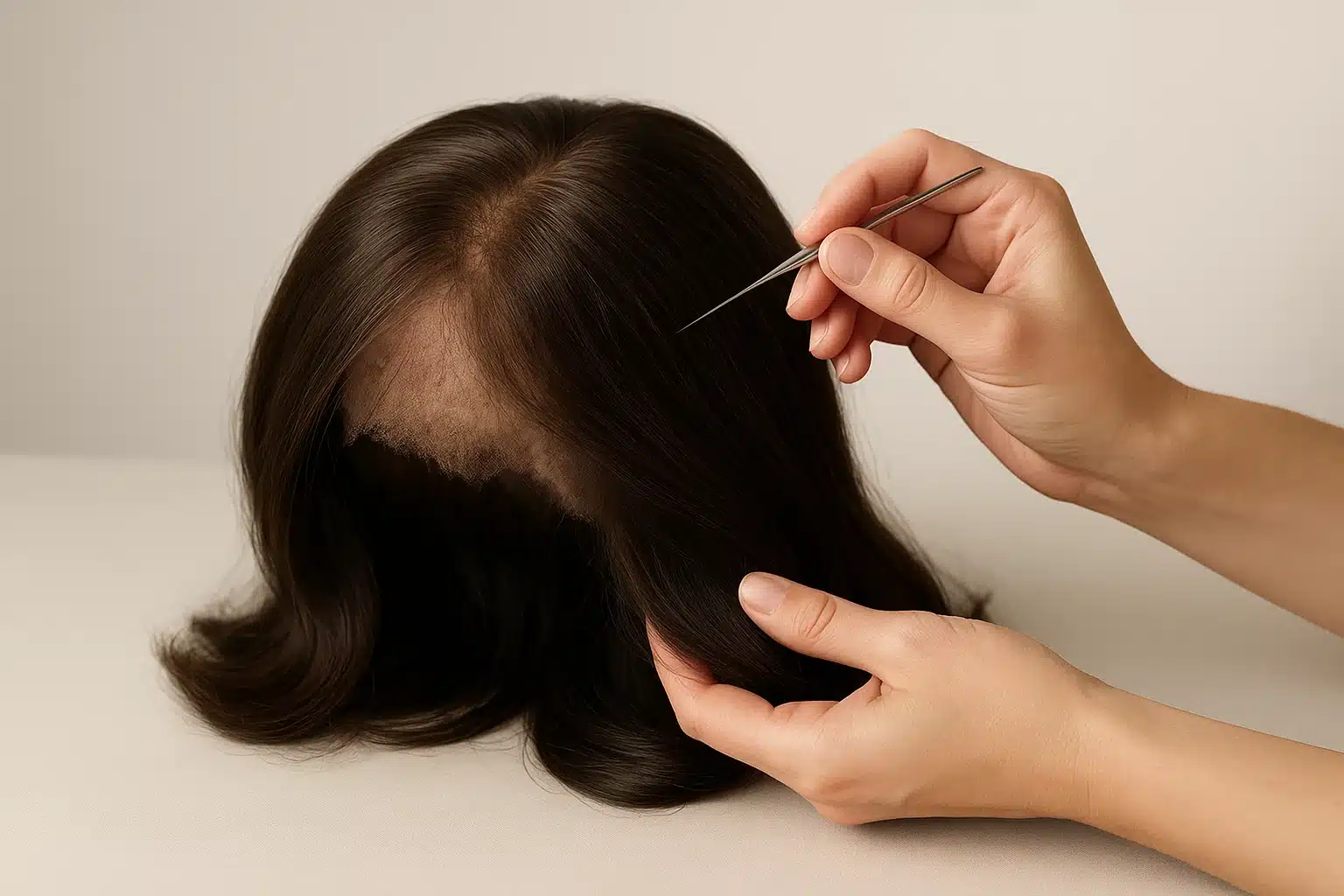
Over time, aggressive brushing can cause localized balding. Hand-ventilation is the meticulous process of hand-tying individual strands of hair back into the lace or monofilament top using a tiny, hooked ventilating needle. Depending on the area, a technician will use single knots (for a delicate, natural hairline) or double knots (for durability at the crown).
4. Weft Splicing and Cap Reinforcement
If the back of your wig feels thin or the internal structure is sagging, professionals will splice in matching hair wefts. This process also involves repairing broken elastic bands, replacing worn-out clips, and reinforcing thinning areas to restore the original volume and secure fit.
5. Advanced Fiber Science: Human vs. Synthetic Restoration
- Premium European Hair: Ultra-high-end human hair wigs require specialized, lipid-restoring, pH-balanced washes. Any ventilation refills must use premium, matching raw European hair to maintain that signature silkiness.
- Synthetic Fiber Restoration (e.g., Kanekalon or BS219 models): Budget-friendly synthetic wigs are prone to rapid friction-frizz at the nape of the neck. Technicians use low-temperature steam-sealing and hot water therapy to reset the “synthetic memory” of the polymer fibers, smoothing them back to a like-new condition.
Masterclass: Specialty & Subculture Restoration
Not all wigs serve the same purpose, and highly specialized pieces require highly specialized care.
Medical Cranial Prosthesis Repair
Medical-grade wigs worn by individuals experiencing alopecia or undergoing chemotherapy are built differently than cosmetic wigs. They often feature medical-grade silicone bases, anti-bacterial lace materials, and polyurethane (PU) non-slip perimeters. Repairing these cranial prosthesis toppers (CPTs) requires sterile handling and hypoallergenic materials to ensure they remain safe and comfortable for sensitive scalps.
Cosplay & Avant-Garde Structural Reinforcement
Heavy styling puts immense strain on a wig’s architecture.
- The “Silvervale” Style: High-density, multi-tonal cosplay wigs with heavy, high-tension clip-on ponytails require internal cap reinforcement to prevent sagging and weft separation under the sheer weight of the attachments.
- The “2hollis” / Alt-Goth Style: Highly textured, heavily hairsprayed, distressed alternative styles require a delicate de-gunking process. Experts deep-clean and steam-reset these pieces without melting the synthetic fibers.
- The “Rasputia” / Large-Theatrical Style: Massive, high-volume synthetic wigs often suffer from extreme friction matting. This requires a deep detangling process using specialized silicon slip agents and precise wide-tooth paddle brush mechanics to save the piece.
Navigating San Francisco’s Top Restoration Experts
You might be tempted to jump on a booking app like StyleSeat to find someone to fix your wig. However, while those platforms are excellent for finding stylists to install your hair, they rarely feature master technicians equipped with the industrial sewing machines, ventilating blocks, and raw hair inventories required for structural repair.
San Francisco is home to several premier wig restoration studios that handle everything from cosmetic mends to medical-grade reconstructions:
- David Carver-Ford’s San Francisco Wig Studio (Diva Hair): Located in the Mission District, this studio is renowned for custom fittings, precision cutting, and highly individualized hair system restorations—particularly for medical hair loss.
- Studio Hair Prosthetics & Wigs: With over 50 years of excellence in SF, they specialize heavily in medical-grade cranial prostheses, topper repair, base adjustments, and delicate lace restoration.
- New Hair for Men and Women: Situated in the heart of the city, they are specialists in structural cap alterations, fitting, shaping, and integrating custom hair systems.
- Celebration Salon | Wigs & Extensions: A boutique Bay Area salon offering comprehensive non-surgical hair loss solutions, ongoing topper maintenance, and custom weft sewing.
- Hansen Fontana: An acclaimed hair restoration clinic excellent for patients needing medical-grade cap resizing, perimeter polyurethane replacements, and customized adjustments.
Fascinating Follicles: The “Lawyer’s Wig” Mushroom
Taking a quick detour from hair science into nature: Did you know there is a wild fungus called the “Lawyer’s Wig” Mushroom (Coprinus comatus)? Also known as the Shaggy Mane, its peeling, fibrous white cap looks exactly like the traditional powdered barristers’ wigs worn in British courts! However, unlike a beautifully maintained human-hair wig, this natural organism self-digests into a black, inky liquid within hours of being picked. It’s a great reminder of why we use long-term maintenance practices to keep our actual wigs looking pristine for years.
The “Wear-and-Tear” Lifespan Calculator
Wondering whether you should try to fix your wig yourself, take it to a pro, or simply buy a new one? Use this quick decision matrix:
- Minor Friction Frizz at the Nape (Synthetic): DIY Triage. Use a wide-tooth comb and a silicone-based synthetic wig detangler.
- Small Lace Fraying at the Edges: DIY Triage. Carefully trim the frayed edge with pinking shears, avoiding the hairline knots.
- Cap Feels Too Tight / Causes Headaches: Professional Repair. Do not try to cut the cap yourself; a professional needs to splice in elastic panels.
- Visible Balding at the Crown / Torn Lace Front: Professional Repair. Requires expert hand-ventilation and lace patching.
- Severely Matted, Brittle, or Burned Fibers (Synthetic): Full Replacement. Once synthetic fibers are melted or structurally shattered beyond what steam can fix, it is more cost-effective to replace the unit.
Temperature Safety Tip: Never boil a synthetic wig! Kanekalon fibers typically melt around 160°C (320°F). Always use a specialized fabric steamer rather than direct dry heat to smooth synthetic strands.
Frequently Asked Questions (FAQ)
Can a torn lace front be fixed, or do I have to throw it away?
Yes, it can be fixed! Master technicians use an invisible darning technique to patch the lace from underneath, redistributing the tension so the wig can be worn safely again.
Why is my expensive human hair wig balding at the crown?
Balding at the crown is usually caused by over-brushing, using the wrong type of comb, or applying heavy conditioners directly to the roots, which causes the hand-tied knots to slip and untie. A professional can re-knot (ventilate) new hair into the bald spots.
What is the difference between hair ventilation and sewing in tracks?
Sewing in tracks (wefts) involves attaching long curtains of machine-sewn hair to the internal cap structure for volume. Ventilation is the meticulous process of hand-tying individual strands of hair directly into the sheer lace or monofilament, creating the illusion of hair growing directly from a scalp.
How do I detangle a heavily matted synthetic wig without melting the fibers?
Never use high heat or standard hairbrushes. You must use a silicone slip agent (or a specialized synthetic wig conditioner) and a wide-tooth comb, starting from the very bottom tips of the hair and slowly working your way up to the roots. If the fibers are kinked, low-temperature steam can reset them.
Your Next Steps in Wig Care
Understanding how your wig is constructed is the first step toward extending its life. By treating your hair system as an investment rather than a disposable accessory, you empower yourself to make smarter choices about maintenance, styling, and structural care.
If your piece is showing signs of wear, don’t panic. Reach out to a specialized technician in the San Francisco area to discuss your restoration options. And if you decide it’s time for a fresh start, focus on finding a high-quality, perfectly sized piece that aligns with your lifestyle and comfort needs. At Wig Superstore, we believe that education and compassionate care are the foundations of a beautiful, confident hair journey.