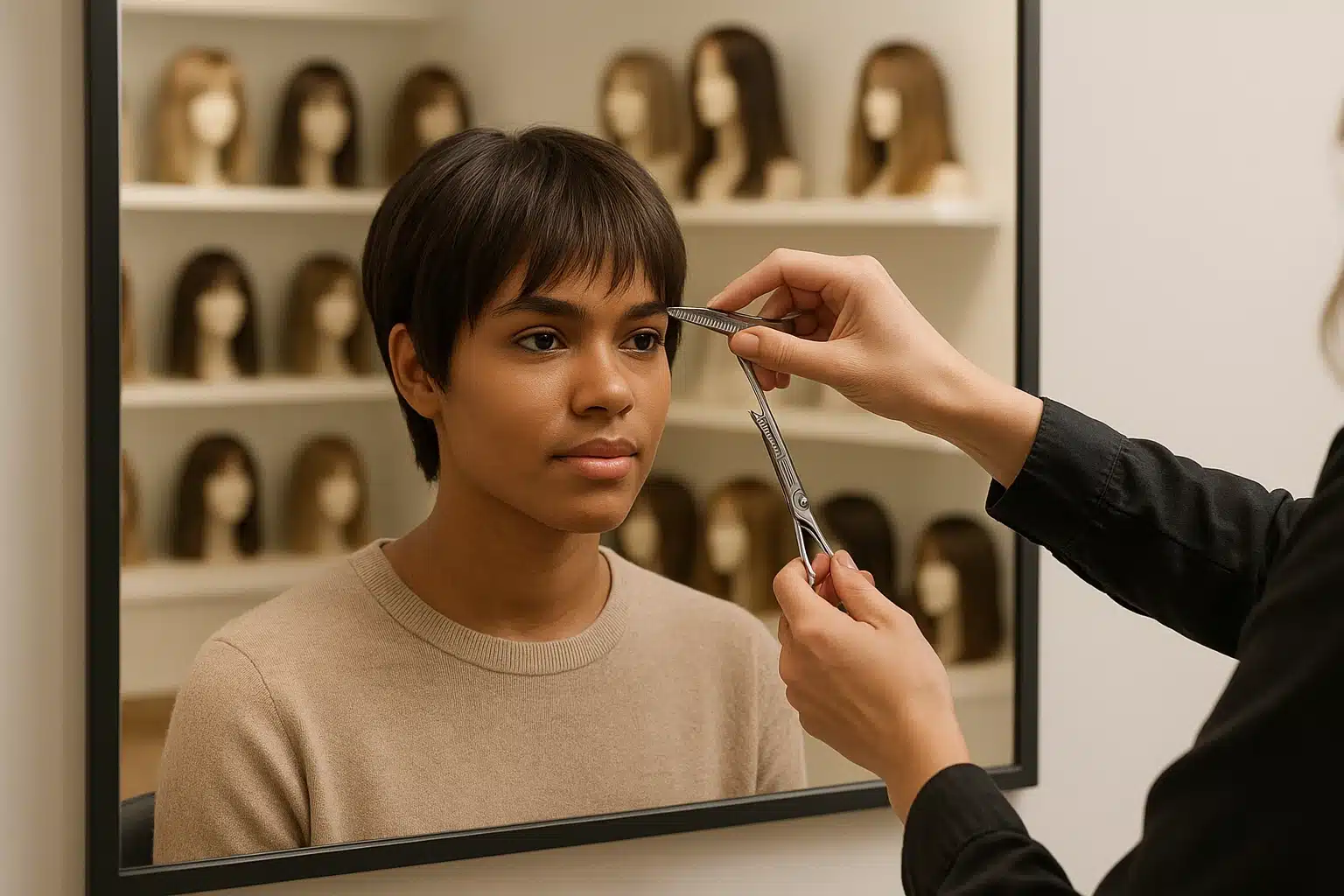
There is a distinct moment of excitement when you finally try on a brand-new wig. The color is stunning, the texture is gorgeous, yet as you look in the mirror, something feels a little off. The bangs might fall just past your eyelashes, the face-framing layers might hit your cheekbones at the wrong angle, or the volume might simply overwhelm your features.
This is incredibly common. Wigs are manufactured to fit average proportions, but your face shape, hairline, and style preferences are entirely unique. If you are currently in the process of selecting the best wig stores in Santa Cruz, CA, finding a local boutique that provides immediate, on-the-spot trimming with your purchase is the secret to bridging the gap between a factory mold and a perfectly personalized, ready-to-wear look.
Understanding what to expect from a basic in-store styling session—and why it matters so much—can transform your entire hair-wearing experience.
The “Out-of-the-Box” Dilemma
When a wig comes fresh from the manufacturer, it possesses a standardized “factory-set” style. Because makers know that customers will want to customize their pieces, they intentionally leave bangs and layers slightly long.
A 15-minute point-of-sale customization at a specialized local wig boutique fixes this immediately. This is distinctly different from a 90-minute full salon restructuring. Basic on-the-spot trimming isn’t about completely redesigning the wig’s silhouette; it’s about making micro-adjustments—shortening the fringe, softening harsh edges, and trimming the lace front—so the piece frames your unique bone structure beautifully.
Why Your Regular Hairdresser Might Say “No”
A logical first thought for many buyers is simply taking their new wig to their trusted hometown hairstylist. However, you might be surprised to find that many traditional salons politely decline to cut wigs. This isn’t out of unhelpfulness; it comes down to the physics of wig fibers.
Traditional cosmetologists are trained in the “growing hair” paradigm. If they cut natural hair slightly too short, it grows back. Wigs lack elasticity and natural regrowth—once a fiber is cut, it is gone forever. Consequently, wig trims must be executed in highly conservative, 1/8-inch increments.
Furthermore, standard salon shears dull incredibly fast when cutting synthetic fibers. A specialized wig stylist will instead use hair-shaping razors or notched thinning shears. These specific tools allow them to use a technique called “point-cutting” or “slide-cutting,” which prevents the blunt, unnatural “stair-step” edges that regular scissors can leave on synthetic hair. Finally, cutting a wig requires an understanding of cap construction; an untrained stylist risks accidentally snipping the delicate lace wefts that hold the hair together.
The Core Mechanics of an In-Store Trim
When you purchase a wig from a full-service boutique, the on-the-spot customization process usually happens while you are wearing the piece. Wigs must be cut on a living head (or a customized canvas block) rather than a flat surface to ensure the hair falls naturally.
Step 1: The Three-Point Anatomical Alignment
Before the first snip happens, your stylist will help you align the wig to your head. They will check the Three-Point Anatomical Alignment:
- The Front Hairline: Resting precisely where your natural hairline begins.
- The Ear Tabs: Sitting evenly in front of your ears, acting as anchors.
- The Nape: Pulling snugly down snugly against the back of your neck.
Step 2: The “Four-Finger Rule”
If you are getting bangs trimmed, the stylist will likely use the “Four-Finger Rule.” By placing four fingers horizontally across your forehead—resting the bottom pinky finger on your eyebrow bone—they can locate the exact mathematical starting point for a natural-looking front hairline. This ensures the bangs don’t look artificial or overly heavy.
Step 3: Dry Cutting and Face Framing
Because synthetic fibers do not shrink when they dry like biological hair does, the stylist will perform the cut while the hair is completely dry. They will customize the face-framing layers to highlight your jawline and cheekbones, blending the factory edges into a soft, natural silhouette.
Weatherproofing Your Style for the Santa Cruz Climate
Buying your wig in Santa Cruz offers a unique advantage: local stylists understand the coastal environment. If you’ve spent any time on the Central Coast, you know the marine layer fog, afternoon ocean breezes, and salty air can wreak havoc on certain hairstyles.
Local boutique experts can advise you on how environmental humidity affects your specific piece. For example, human hair wigs will react to the Santa Cruz fog by frizzing or absorbing moisture, requiring specialized anti-humectant serums. On the other hand, heat-friendly synthetic fibers have a “style memory” that holds up beautifully against damp coastal air, but they require careful protection against the friction caused by ocean winds. A local expert will often trim the delicate ends at the nape of the neck just slightly shorter to prevent the fibers from tangling in the wind against your heavy winter coats or scarves.
Your In-Store Trimming Checklist
To ensure you get the most out of your point-of-sale customization, keep these tips in mind while you sit in the boutique chair:
- Communicate Your Daily Routine: Tell the stylist if you frequently tuck your hair behind your ears or wear glasses. They can thin out the ear-tab area to make your frames fit comfortably without pushing the wig up.
- Ask About Store Policies: While many boutiques offer a complimentary basic trim with a new in-store purchase, modifying an outside wig (one bought online or elsewhere) usually incurs a fee, similar to a consultation credit system.
- Tipping Etiquette: Just like at a traditional salon, it is customary to tip your wig stylist for their time and expertise, especially if they are meticulously customizing your fringe and layers.
Frequently Asked Questions (FAQ) About Wig Trimming
Can I use regular scissors to trim my synthetic wig bangs at home?
It is highly discouraged. Regular household or even standard hairdressing scissors can create harsh, blunt lines on synthetic fibers. Professional wig stylists use specialized texturizing tools to create soft, tapered ends that mimic natural hair growth.
What is the difference between a basic trim and full custom styling?
A basic trim takes about 15 to 20 minutes and involves minor refinements like shortening bangs, softening face-framing layers, or trimming lace. Full custom styling can take over an hour and involves entirely reshaping the wig, thinning out major density, or applying custom heat styling.
How do I protect freshly cut lace and fiber ends?
To protect your newly customized edges—especially in coastal environments—use a wig-specific detangling spray or a light synthetic-safe serum on the ends. Avoid applying heavy natural hair oils to synthetic fibers, as they can attract dirt and degrade the material.
Taking the Next Step in Your Journey
Walking into a local wig boutique shouldn’t feel intimidating—it should feel empowering. By understanding the mechanics of wig trimming, the specialized tools required, and the regional factors of coastal living, you can take an active role in customizing your look.
The next time you try on a wig, remember that the piece you pull out of the box is just a starting canvas. With the right local expert and a quick 15-minute adjustment, you can walk out the door with a beautifully tailored style that feels uniquely, authentically yours.