There is a specific moment of hesitation every new wig wearer experiences: holding a styling tool in one hand, a strand of their beautiful new hair in the other, and wondering, “Is this about to melt?” It’s a valid fear. Unlike biological hair, which might just get a little dry if overheated, synthetic fibers can undergo irreversible chemical changes if treated incorrectly.
However, heat styling isn’t strictly off-limits—it simply requires a new set of rules. When choosing your Amore wig, understanding the fiber’s limitations is just as important as the style itself to ensure long-term satisfaction. Amore wigs, known for their medical-grade comfort and double monofilament tops, utilize a hierarchy of fibers that range from “bulletproof” durability to heat-friendly flexibility. This guide will demystify those categories so you can style with confidence.
The Fear Factor: Why Fiber Chemistry Matters
The most common misconception in the wig world is that “synthetic” means “plastic.” While technically true, high-end wig fibers are sophisticated polymers designed to mimic the light reflection and movement of biological hair.
Amore wigs generally fall into two primary synthetic categories, plus their human hair offerings. Understanding the difference is critical because they react to heat in opposite ways:
- Standard Synthetic (“Bulletproof” Style): These fibers have a “memory.” They are baked into a specific style during manufacturing. You can wash them, shake them, and they return to their original shape. This makes them excellent for travel and low maintenance, but they are generally intolerant of heat.
- Heat-Friendly Synthetic: These fibers are devoid of “memory” until you give them one. They are more dynamic and allow for style changes, but they require heat to maintain their texture and prevent friction frizz.
The Amore Fiber-to-Tool Compatibility Matrix
Before you plug in any tools, you must identify your specific wig model and fiber type. If you are unsure, check the tag inside the nape of the wig cap or consult the original box.
1. Standard Synthetic & “Natural Movement” Fibers
Models like the popular Tatum or Rohan often use these fibers.
- Heat Tolerance: 0°F (Dry Heat).
- The Rule: Do not use curling irons, flat irons, or hot rollers. Even the “low” setting on a standard iron is often too hot.
- The Exception: Steam. Professional steamers are safe because the moisture buffers the heat, allowing you to smooth out fibers without melting them. However, this is intended for maintenance (removing friction frizz), not necessarily for changing the curl pattern significantly.
2. Heat-Friendly (HF) Synthetic
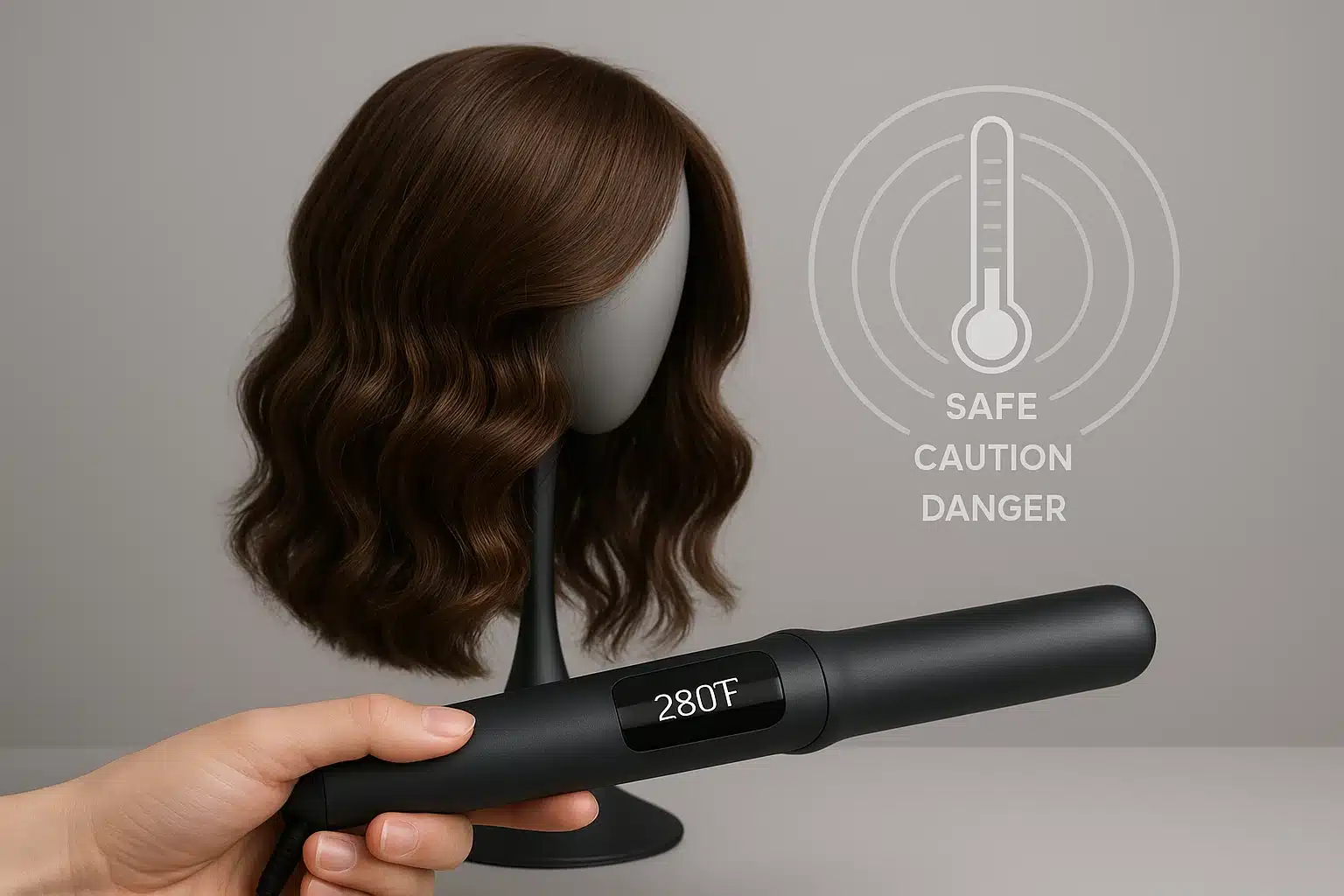
- Heat Tolerance: 275°F – 300°F (Optimal) | 340°F (Maximum Danger Zone).
- The Rule: You must use tools with variable temperature controls. Many standard flat irons have a fixed temperature of 400°F+, which will instantly damage these fibers.
- Recommended Tool: A digital iron where you can lock in 270°F-280°F.
3. Human Hair / Human Hair Blends
- Heat Tolerance: Up to 350°F.
- The Rule: Treat this similarly to biological hair, but be gentler. Because the hair is not receiving oils from the scalp, always use a heat protectant spray prior to styling to prevent dryness and breakage.
The “Cooling Rule”: The Secret to Synthetic Curls
If you have a Heat-Friendly Amore wig and you’ve tried curling it, you might have experienced the frustration of the curl falling out the second you drop it from the iron. This happens because of a fundamental difference in physics between bio hair and synthetic fiber.
- Biological Hair: Reacts to heat. You heat it, it changes shape, you release it.
- Synthetic Fiber: Reacts to cooling. Heat softens the bond, but the cool air is what sets the new shape.
The “Hold and Cool” Technique
To successfully curl a heat-friendly wig, follow these steps:
- Heat the strand around your tool (keeping it under 300°F).
- Slide the tool out without letting the curl drop.
- Pin the curl in place against the head (or hold it in your gloved hand).
- Wait until the fiber is completely cool to the touch.
- Release. The style is now “baked” in and will stay until heat is applied again.
Tool Logic: Why Your Expensive Iron Might Be the Enemy
Many wig wearers assume that expensive tools (like Dyson or GHD) are safer. While these are incredible for biological hair, they often lack the granular low-temperature controls necessary for synthetic fibers.
For Amore synthetic wigs, a $40 travel iron with a dial that goes down to 250°F is often safer than a $300 smart-styler that auto-adjusts to 365°F.
The Steam Alternative:For refreshing a style without changing it, a handheld fabric steamer is the unsung hero of wig care. Steaming an Amore wig (while it is on a wig stand, never on your head) adds moisture back into the fiber and relaxes the kinks that occur at the nape of the neck from rubbing against collars.
Frequently Asked Questions
Can I use a hairdryer on my Amore synthetic wig?
For standard synthetic wigs, absolutely not. The concentrated heat can singe the fibers. For Heat-Friendly wigs, you can use a blow dryer on a low heat/cool shot setting, but air drying is always recommended to prolong the lifespan of the fibers.
How do I fix “frizzy ends” on my wig?
This is usually “friction frizz,” caused by the hair rubbing against your clothes. For standard Amore wigs, a professional steamer is the best way to smooth this out. Gently comb through the hair with a wide-tooth comb while applying steam.
What happens if I accidentally use high heat?
If synthetic fiber is exposed to temperatures above 350°F, it can singe or melt. The fiber will look crinkled, feel rough (like distinct ridges), and lose its shine. unfortunately, melted fiber cannot be repaired and must be trimmed off.
Is the Amore “Natural Movement” fiber heat friendly?
Generally, no. The term “Natural Movement” refers to the density and denier of the fiber, making it look like bio hair, but it typically falls under the Standard Synthetic category regarding heat. Always treat it as non-heat-friendly unless the specific model tag says “HD” or “Heat Defiant.”
Confidence Comes from Knowledge
The beauty of Amore wigs lies in their craftsmanship and comfort. By understanding the specific chemistry of your wig’s fiber, you protect your investment and ensure it looks as flawless on day 100 as it did on day 1. Whether you prefer the “shake-and-go” ease of standard synthetic or the styling versatility of heat-friendly options, the right temperature and techniques make all the difference.