There is a specific moment of anxiety that almost every new wig wearer experiences. It’s not about whether the hair looks realistic or if the color matches—it’s the sudden, intrusive thought: “What if it falls off?” Whether you are bending down to tie your shoe, stepping out into a windy day, or heading to a yoga class, the fear of slippage can prevent you from fully enjoying your day.
However, a truly secure wig offers more than just peace of mind; it is actually the secret to extending the lifespan of your hairpiece. Before we dive into the mechanics of securing your piece, it is vital to start with the correct size. If you are still in the preliminary stages of your journey, we recommend reviewing our resource on Choosing Your Amore Wig: The Complete Guide to ensure your foundation is solid before attempting any customization.
The “Fit-to-Fiber” Connection
Most people view “fit” and “maintenance” as two separate categories. You fit the wig to wear it; you maintain the wig to keep it looking new. In reality, these two concepts are deeply intertwined.
The primary cause of tangling at the nape of the neck—a notorious issue for mid-to-long length synthetic wigs—is friction. When a wig fits loosely, it shifts and slides against the back of your neck and shoulders with every movement. This constant micro-friction creates heat and static, causing the fibers to mat and tangle. By achieving a snug, customized fit, you aren’t just securing your look; you are actively preventing premature wear and tear on your investment.
The Foundation: The Four-Finger Rule
Before tightening straps or applying adhesives, you must ensure the wig is seated correctly on your head. A common mistake beginners make is pulling the wig too far down over the forehead, which not only looks unnatural but also compromises the fit at the nape.
To find your “Sweet Spot,” use the Four-Finger Rule:
- Place four fingers flat against your forehead, with your pinky resting on your eyebrows.
- Your index finger now marks where your natural hairline would sit.
- Align the front lace or rim of your Amore wig with this point.
If the wig is placed too low, it creates excess room at the crown (“the gape”). If placed too high, it creates tension that forces the wig to slide backward (“the slip”).
Mechanical Adjustments: Using What You Have
Amore wigs are renowned for their Double Monofilament cap construction, designed specifically for those with sensitive scalps or total hair loss. Because comfort is paramount to this design, the built-in adjustment features are subtle yet effective.
The Nape Adjusters
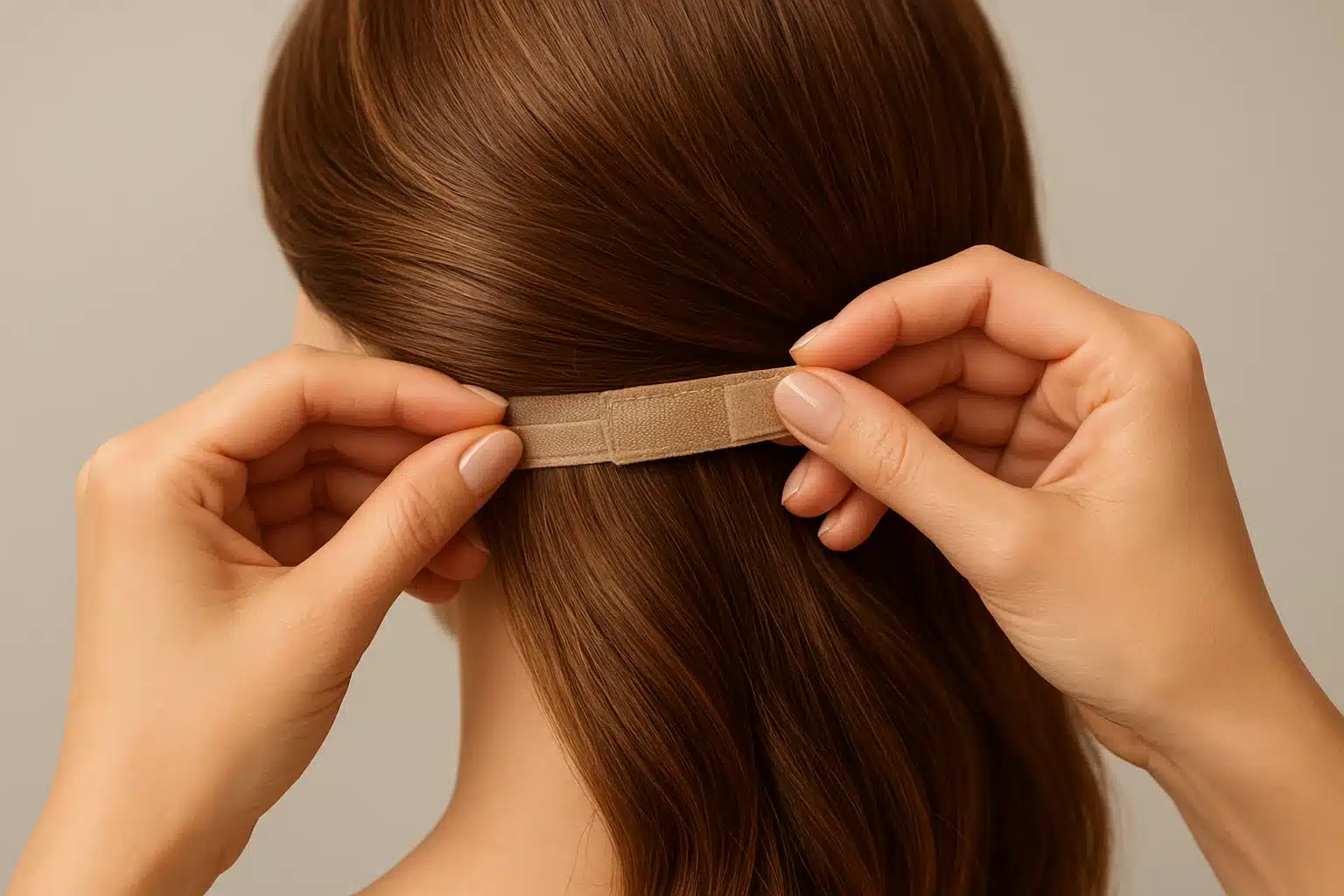
Turn your wig inside out and look at the nape (the back neck area). You will see adjustable tabs—typically utilizing a Velcro-style system or bra-strap style hooks. These allow you to adjust the circumference of the cap by up to one inch.
- To Tighten: Pull the tabs toward the center of the nape.
- To Loosen: Move the tabs outward toward the ear tabs.
The Shake Test: Once you have adjusted the straps, put the wig on and give your head a gentle shake from side to side. The wig should move with your skin, not slide over it. If you feel movement independent of your scalp, you need a tighter adjustment.
The Security Stack: Leveling Up Your Hold
For daily wear, the mechanical adjusters are often sufficient. However, for active lifestyles or long days where you want zero friction, you can implement a “Security Stack.” This involves layering different methods based on your activity level and skin sensitivity.
Level 1: Velvet Wig Grips (Highly Recommended)
For Amore wearers, who often choose the brand for its soft, medical-grade interior, a velvet wig grip is the gold standard. This is a headband made of crushed velvet that you wear under the wig.
- How it works: The friction of the velvet catches the wig cap, preventing it from sliding back.
- Why we love it: It relieves pressure from the clips or tension, and it adds a layer of cushion. Crucially, it creates security without using sticky glues on sensitive skin.
Level 2: Medical-Grade Adhesives (Tape)
If you require a bond that withstands sweat or high activity, double-sided wig tape is an option. However, with Amore’s high-quality Double Monofilament tops, placement is everything.
The Golden Rule of Adhesives: Never apply tape or glue directly to the monofilament mesh (the sheer material at the top). Removing adhesive from this delicate mesh can tear the hand-tied knots, ruining the wig.
- Where to apply: Only apply tape to the polyurethane tabs (often found at the ear tabs or the nape) or the durable glass-silk areas.
- Removal: Always use an adhesive release spray. Peeling tape off dry can stretch the cap and damage the fibers.
Troubleshooting Common Fit Issues
Even with a high-quality brand like Amore, unique head shapes can present challenges. Here is how to solve the two most common fit anomalies.
The Crown Gape
- The Symptom: The wig fits the circumference of your head, but feels “pointy” or empty at the very top.
- The Cause: Your head shape may be slightly flatter at the crown than the mold used for the wig.
- The Fix: If you have biological hair, pile it at the crown rather than the nape to fill the space. If you have total hair loss, a small foam pad or a gathered nylon wig cap can provide the necessary lift to round out the shape.
The Ear Tab Collision
- The Symptom: The ear tabs dig into the top of your ears, causing pain.
- The Cause: The wig is sitting too low, or the cap size is slightly too large (specifically in the “ear-to-ear” measurement).
- The Fix: First, re-check your Four-Finger placement. If the height is correct, you can gently bend the metal stays inside the ear tabs upward to contour around the ear rather than resting on it.
Frequently Asked Questions
Can I wear my Amore wig to the gym?
Yes, but friction and sweat are factors to manage. We recommend using a wig grip to absorb sweat and prevent slipping. Afterwards, air out the wig immediately to prevent moisture buildup in the cap.
Will tightening the straps stretch the wig out over time?
Elastics do eventually lose resilience over years of use. To prevent premature stretching, only tighten the straps as much as necessary. If you find yourself maxing out the tightest setting, it may be time to consider a smaller cap size or a wig grip to bridge the gap.
Is glue safe for the Double Monofilament top?
We strongly advise against using liquid glue or tape on the Double Monofilament section. This area is hand-tied and delicate. Stick to the polyurethane ear tabs for adhesives, or rely on the friction of a velvet grip for the top area.
Confidence Comes from Security
Customizing the fit of your wig is a process of trial and error. What works for a dinner party might not work for a hiking trip. By understanding the mechanical adjusters and experimenting with grips and placement, you move from simply “wearing a wig” to making it an extension of yourself. When you trust your fit, you stop checking your reflection and start living your life.