You know that feeling—you step out of your car in Buckhead or Midtown, and the Georgia humidity hits you like a wall. Your once-sleek wig suddenly feels a bit “crunchy” at the nape or starts to lose its bounce. It is a common struggle for wig wearers in our city. While many people focus solely on the initial purchase, the secret to true hair confidence lies in how you handle the months after you bring your hair home.
Maintaining a wig in the South requires more than just a mannequin head and a bottle of shampoo. When searching for the best wig stores in Atlanta that offer professional maintenance, it’s vital to understand the difference between a simple wash and a full structural restoration. This guide is your roadmap to determining whether your cherished hairpiece needs a quick refresh or a professional intervention to turn a tired unit back into a crown of glory.
The Atlanta Factor: Why Your Wig Needs Special Care
If you have ever wondered why your wig seems to age faster here than it might elsewhere, the answer is likely in the air. Atlanta’s climate averages over 70% humidity for much of the year. For wig wearers, this poses unique challenges depending on the fiber of your hairpiece.
For Human Hair Wigs, excess moisture in the air causes the hair shaft to swell. This lifts the cuticle, leading to the dreaded “frizz halo” and tangling at the nape where sweat accumulates.
For Synthetic Wigs, the issue is often friction combined with heat. The humidity makes the skin sticky, increasing drag against the wig fibers near the neck. This friction generates heat, which slowly damages the synthetic fibers, causing them to frizz and fray—a condition often called “cold frizz.” Understanding this environmental context is the first step in diagnosing your wig’s condition.
Diagnosis: Does It Need a Refresh, a Revamp, or a Repair?
Before you attempt to fix a wig, you must categorize the level of care it requires. Local experts often use a tiered model to assess damage. Learning to triage your own units can save you time and prevent you from accidentally worsening the problem.
1. The Refresh (Light Maintenance)
This is routine care. The hair feels slightly dry, or the curls have dropped.
- Signs: Minor tangles that come out easily, lack of shine, “wiggy” smell.
- Solution: A proper wash, deep condition, and restyle.
2. The Revamp (Moderate Restoration)
The wig is wearable but looks tired. It lacks movement and feels heavy.
- Signs: Frizz at the nape, undefined curls, heavy product buildup making the hair look dull.
- Solution: Steam treatment (for synthetics), clarifying treatments, and trimming split ends.
3. The Repair (Structural Fixes)
This involves damage to the cap or significant fiber degradation.
- Signs: Ripped lace, bald spots, broken adjustable straps, or severe matting that defies a wide-tooth comb.
- Solution: Professional ventilation, lace patching, or cap resizing.
The Science of “Wig Healing”
Many beginners assume that once a synthetic wig becomes frizzy, it is destined for the trash. However, understanding the science of fibers can unlock a second life for your hairpieces.
The “Steam vs. Heat” Breakthrough
There is a common misconception that heat is the enemy of synthetic hair. While dry heat (like a curling iron on a non-heat-friendly wig) can melt fibers, steam is actually a healer. Synthetic hair is essentially thermoplastic. When it becomes frizzy, the fibers have developed microscopic kinks.
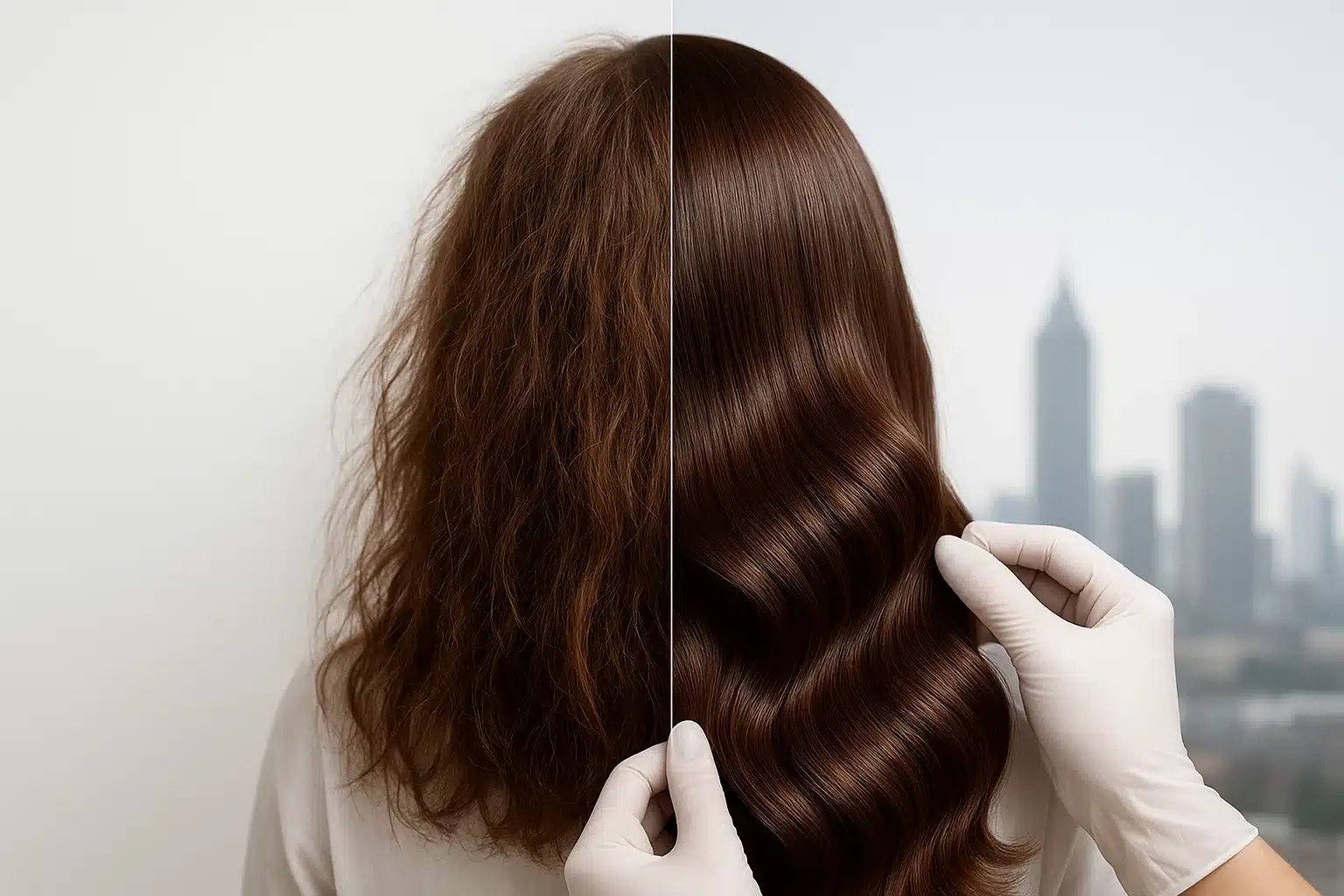
Applying controlled steam relaxes these fibers, resetting their molecular shape back to smooth and straight. This “blanching” technique is often used by top wig stores in atlanta during professional refurbishment services to make old wigs look brand new.
Human Hair Rehabilitation
For human hair, the focus is on moisture retention. Because the hair is no longer attached to a scalp, it receives no natural oils. Revitalization often involves “double process” conditioning or protein treatments to fill in gaps in the hair cuticle, restoring that silky, manageable feel.
Advanced Technical Repairs: The Invisible Art
Sometimes, the issue isn’t the hair—it’s the foundation. This is where professional services bridge the gap between a DIY fix and expert craftsmanship.
Lace Triage and Patching
A tear in your lace frontal can feel catastrophic. However, skilled technicians can perform lace patching. This involves taking a small piece of matching lace and meticulously sewing it over the tear using invisible thread. When done correctly, the repair is undetectable to the naked eye.
The Art of Ventilation
Have you ever noticed a bald spot on your part line or thinning edges? This requires “ventilating”—the process of knotting individual strands of hair into the lace mesh using a tiny hooked needle. It is a labor-intensive, artistic process that mimics natural hair growth. While it is a higher-ticket service, it is significantly cheaper than replacing a high-end custom unit.
DIY vs. Professional Intervention
We believe in empowering you to care for your hair, but wisdom lies in knowing when to call in the experts.
You can likely handle it if:
- The wig needs a wash and condition.
- There is minor tangling at the ends.
- You are re-curling a heat-friendly synthetic wig (using proper low-heat tools).
Seek a Professional in Atlanta if:
- The Lace is Ripped: DIY gluing often creates a crusty mess that ruins the unit permanently.
- Severe Matting: If you cannot run four fingers through the hair, aggressive brushing will only rip the hair out of the wefts.
- Chemical Alterations: attempting to dye a human hair wig at home can result in patchy color or dried-out hair.
- Cap Resizing: If your wig is too loose or too tight, taking in the cap requires precise sewing to ensure the wig lays flat and fits securely.
Extending the Lifespan: Daily Habits
To minimize your trips to the “wig doctor,” adopt these preventative habits suitable for the Georgia climate:
- Rotation is Key: Just like shoes, wigs need a break. Rotating between two units reduces wear and tear significantly.
- The Friction Barrier: In winter, scarves and high collars are wig killers. Wear silk or satin scarves around your neck to create a slip barrier between the wig fibers and your wool coat.
- Product Discipline: Avoid drugstore products designed for natural hair growing from a scalp. They often contain oils and alcohols that degrade wig knots and attract dirt. Stick to water-soluble products specifically formulated for wigs.
Frequently Asked Questions
How often should I wash my wig in Atlanta?
Given the humidity and pollen, we recommend washing your wig every 6 to 8 wears. If you use a lot of styling products or sweat heavily, you may need to wash it more frequently.
Can I dye my old synthetic wig to refresh the color?
Generally, no. Standard hair dyes do not work on synthetic fibers because they lack a cuticle to absorb the color. While there are DIY methods using fabric dye, they are unpredictable and can stain the lace cap.
Is it worth repairing a synthetic wig?
It depends on the “Bin It” threshold. If professional repair costs more than 50% of the wig’s original price, it is usually better to replace it. However, for a beloved style that has been discontinued, restoration is priceless.
Can I fix a headband wig if the band loses elasticity?
Yes! Over time, the elastic in a headband wig can stretch out. A professional can open the seams and replace the elastic band, restoring the snug fit without altering the hair itself.
How do I find a reputable specialist?
Look for wig store atlanta locations that specifically list “maintenance,” “ventilation,” or “customization” on their service menu. Ask to see before-and-after photos of their repairs, specifically for the type of damage your wig has.
Moving Forward
Your wig is an investment in your confidence and image. By understanding the unique challenges posed by the local climate and knowing when to seek professional help, you can double or even triple the lifespan of your hairpieces. Whether you decide to master the art of steaming at home or build a relationship with a local specialist, the power to keep your hair looking flawless is in your hands.