Stepping into a wig store for the first time is rarely just a shopping trip; it is often a deeply vulnerable milestone. If you are experiencing medical hair loss due to chemotherapy, alopecia, or thinning, the thought of trying on alternative hair in front of a mirror in a brightly lit, public storefront can feel completely overwhelming. You aren’t just looking for hair—you are looking for a return to normalcy, and that deeply personal journey requires a safe, compassionate environment.
When navigating this landscape, knowing where to start makes all the difference. As you begin evaluating the wig stores in San Diego CA, prioritizing salons that offer dedicated, private consultation suites should be your very first step. A discreet environment transforms a high-anxiety errand into a supportive, educational, and empowering experience. Let’s walk through exactly what you should expect, look for, and ask when booking your first private wig fitting.
The Difference Between a Retail Shop and a “Safe Haven”
Not all private rooms are created equal. When researching salons across San Diego, you will notice a distinct difference between fashion-focused wig retailers and empathy-driven boutiques designed for medical hair loss.
Many standard beauty supply shops offer a “fitting area” that might simply be a tucked-away chair or a space separated by a thin curtain. While fine for someone buying a fashion wig for a weekend event, this setup often falls short for a sensitive shopper who needs true privacy to remove a head covering, examine their scalp, or express their emotions freely.
A true “safe haven” salon offers fully enclosed, private fitting suites. These rooms have solid doors, soft, flattering lighting, and enough space for you to bring a trusted friend or family member. They are designed to shut out the hustle and bustle of the retail floor, allowing you to focus entirely on finding a solution that makes you feel like yourself again.
What to Expect in the First 15 Minutes
The most anxiety-inducing part of the wig shopping experience is usually the moment you walk through the door. Knowing exactly what will happen in those first 15 minutes can drastically reduce “first-timer anxiety.”
When you arrive for a private consultation, you should be greeted warmly and guided immediately to your private suite. You won’t be expected to browse the racks in public unless you want to. Once settled in the room, an alternative hair specialist will sit down with you for an emotional and practical check-in. They will ask about your lifestyle, your natural hair color and style (bringing old photos is highly recommended!), and where you are in your hair loss journey.
This is the time when they will gently measure your head. Because a proper fit is essential for comfort—especially if your scalp is sensitive—your specialist will take specific measurements. If you are preparing for this step at home, reviewing a comprehensive wig size guide beforehand can help you understand exactly what these measurements mean.
Medical Wigs vs. Fashion Wigs: Understanding the Distinction
One of the biggest “aha moments” for first-time buyers is learning that what they are looking for isn’t just a wig—it’s a cranial prosthesis.
While fashion wigs are designed with heavier caps and mass-market styling, a cranial prosthesis is a medical-grade hairpiece created specifically for total or partial hair loss. The difference lies almost entirely in the cap construction, which is paramount for a sensitive scalp:
- Monofilament Tops (Mono-Tops): Hair is hand-tied individually to a sheer, breathable mesh. This creates the illusion of natural hair growth at the scalp and is incredibly gentle against bare skin.
- 100% Hand-Tied Caps: These feature a stretchy, soft material where every single hair is tied by hand. It provides the softest possible feel and mimics natural movement.
- Specialty Linings: Medical wigs often incorporate bamboo, silk, or soft velvet linings to prevent the friction and irritation that standard wigs can cause on a sensitive, bare scalp.
Navigating the Financial Side
Understanding this medical distinction isn’t just about comfort; it’s about your finances. Many patients wonder, does health insurance cover hair loss treatment or alternative hair? The answer is often yes, provided your doctor writes a prescription specifically for a “cranial prosthesis” rather than a “wig.” Reputable San Diego salons that specialize in medical hair loss will often help you navigate the paperwork needed to submit an insurance claim.
The Discretion Checklist: Questions to Ask Before You Book
You are the advocate for your own comfort. Before you drive to a salon, call ahead and use this “Discretion Checklist” to ensure the environment meets your needs:
- “Is your fitting room fully enclosed with a solid door?” (Ensure it is not just a curtained-off corner).
- “Do your stylists specialize in medical hair loss?” (You want someone trained to handle sensitive scalps and emotional clients).
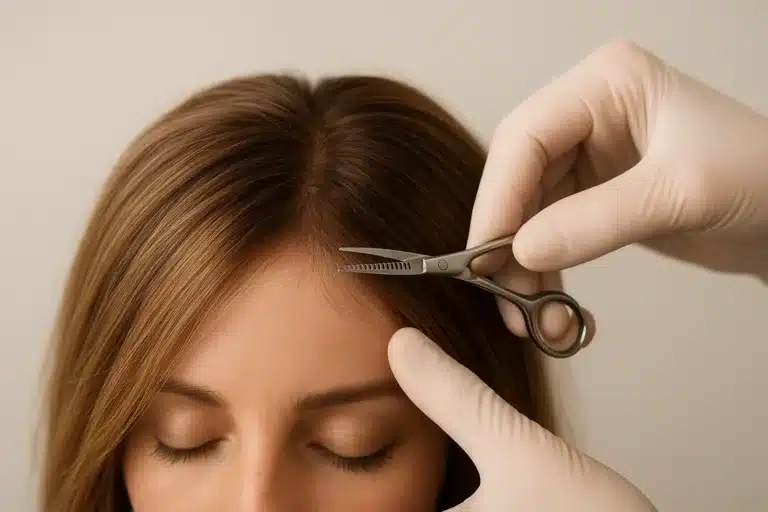
- “Do you offer professional customization services in-house?” (A great wig needs to be trimmed, thinned, and styled specifically to frame your unique face shape).
- “Can I bring a support person with me into the room?” (A spacious suite should easily accommodate a friend or family member).
Pro Tip: When you go to your appointment, bring a soft scarf or hat to wear home just in case you don’t find the perfect piece on day one. Also, bring your insurance card, photos of your natural hair, and an open mind.
A Practical Nugget: The 4-Finger Rule
During your fitting, your stylist will teach you how to properly place your wig. One of the most common mistakes beginners make is pulling the wig too far down on their forehead, which immediately makes it look unnatural.
Enter the 4-Finger Rule: Simply place four of your fingers horizontally across your forehead, starting from your brow bone. The top of your top finger is precisely where your natural hairline begins. Align the front edge of your wig with this invisible line, and you will instantly see a more natural, flattering fit.
Frequently Asked Questions (FAQ)
Do insurance policies cover wigs for chemotherapy patients?
Yes, many insurance policies offer partial or full coverage for alternative hair if it is prescribed as a “cranial prosthesis” for medical hair loss. You will need a prescription from your oncologist or dermatologist, along with the correct NPI (National Provider Identifier) code. Always verify your specific benefits with your provider before purchasing.
How do I measure my head for a medical wig?
Using a soft measuring tape, you will typically need three core measurements: the circumference (around the hairline), ear-to-ear (across the top of the head), and front-to-back (from the center of the front hairline to the nape of the neck). A specialist at a private salon will do this for you, ensuring an exact fit for maximum comfort.
What is the difference between synthetic and human hair for sensitive scalps?
The impact on a sensitive scalp comes down to the cap construction more than the hair fiber itself. However, high-quality synthetic wigs are incredibly lightweight and hold their style effortlessly, which is wonderful when you are fatigued from medical treatments. Human hair wigs offer unparalleled realism and versatility but are slightly heavier and require more styling effort.
How can I secure a wig without glue during active hair loss?
You do not need adhesives to secure a high-quality medical wig! Most cranial prostheses feature adjustable velcro or hook straps at the nape of the neck to customize the tension. Additionally, you can use a velvet wig grip—a soft headband worn underneath the wig that uses friction to keep the hairpiece securely anchored without any messy or irritating glues.
Taking Your Next Steps with Confidence
Finding your perfect hairpiece in San Diego shouldn’t feel like a chore; it should feel like a sigh of relief. By seeking out salons that prioritize private fitting rooms, medical-grade cap constructions, and empathetic, one-on-one consultations, you are setting yourself up for a successful and supportive experience.
Remember, there is no rush. Take your time, ask questions, and insist on the privacy and respect you deserve during this journey. Educating yourself on the options available is the very first step toward reclaiming your confidence and feeling beautifully, authentically you.