Imagine opening a box to reveal a beautiful new hairstyle. The color is radiant, the texture is soft, and it looks perfect in the package. But when you put it on, something feels… off. Perhaps it sits a little too high on the forehead, or the hair feels overwhelmingly thick, or it simply doesn’t move the way your biological hair used to.
This is a common moment of hesitation for many first-time wig wearers, but it shouldn’t be a moment of discouragement. The truth is, a high-quality wig out of the box is like a designer dress off the rack—it is a beautiful foundation, but it isn’t finished until it has been tailored to you.
Navigating the world of hair replacement can be overwhelming. Understanding the nuances of identifying quality: what makes a wig store ‘top-tier’ in any US city? is essential for anyone looking to transition from a basic purchase to a perfectly customized fit. A truly exceptional wig provider understands that the transaction doesn’t end at the sale; rather, that is where the artistry of customization begins.
The “Out-of-the-Box” Myth
One of the biggest misconceptions in the wig industry is that a hairpiece is “ready-to-wear” in the literal sense. While many modern synthetic wigs are pre-styled, manufacturers produce these pieces based on averages. They often include 10-20% more hair density than the average person naturally has. Why? Because it is far easier for a stylist to remove hair than to add it.
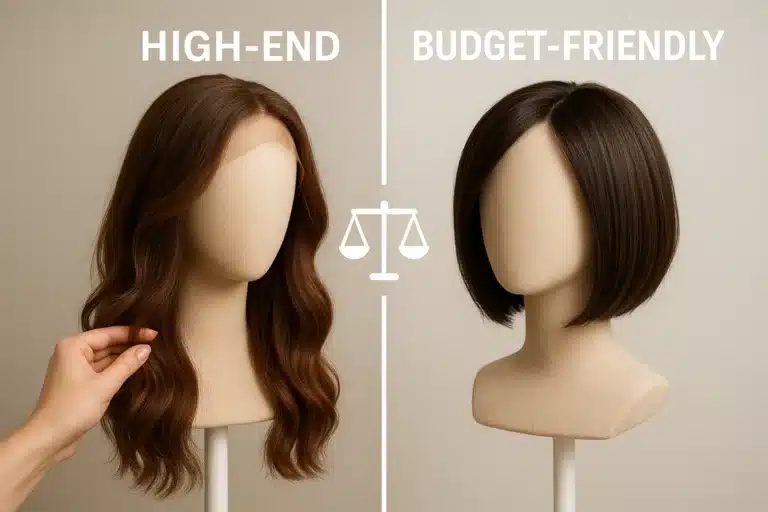
A standard retailer sells a product. A customized service provider sells a result: realism. The difference between a wig that looks like a wig and one that looks like your own hair lies entirely in the “Aftercare & Customization” ecosystem.
The Fitting Lab: It’s More Than Just Straps
Most people believe that if a wig feels loose or tight, they simply need to adjust the velcro straps at the nape of the neck. While this helps with tension, it doesn’t solve structural fit issues.
A professional customization service starts with a Fitting Lab approach. This goes beyond circumference measurements and looks at the ear-to-ear and front-to-back ratios.
Darting vs. Cinches
If a wig cap is too large, the excess material can bunch up, causing the wig to look bumpy or distorted. A top-tier stylist performs darting—a technique where small tucks are sewn into the cap’s structure to permanently reduce its size without damaging the wefts (the tracks of hair). This ensures the cap lays completely flat against the head, mimicking the scalp’s natural contour.
The “Aha” Moment: A perfect fit isn’t just about the wig staying on; it’s about the ear tabs aligning perfectly with your temples. If the ear tabs sit too high or cover your ears, the illusion is broken instantly.
The Cutting Room: Why You Can’t Use Regular Scissors
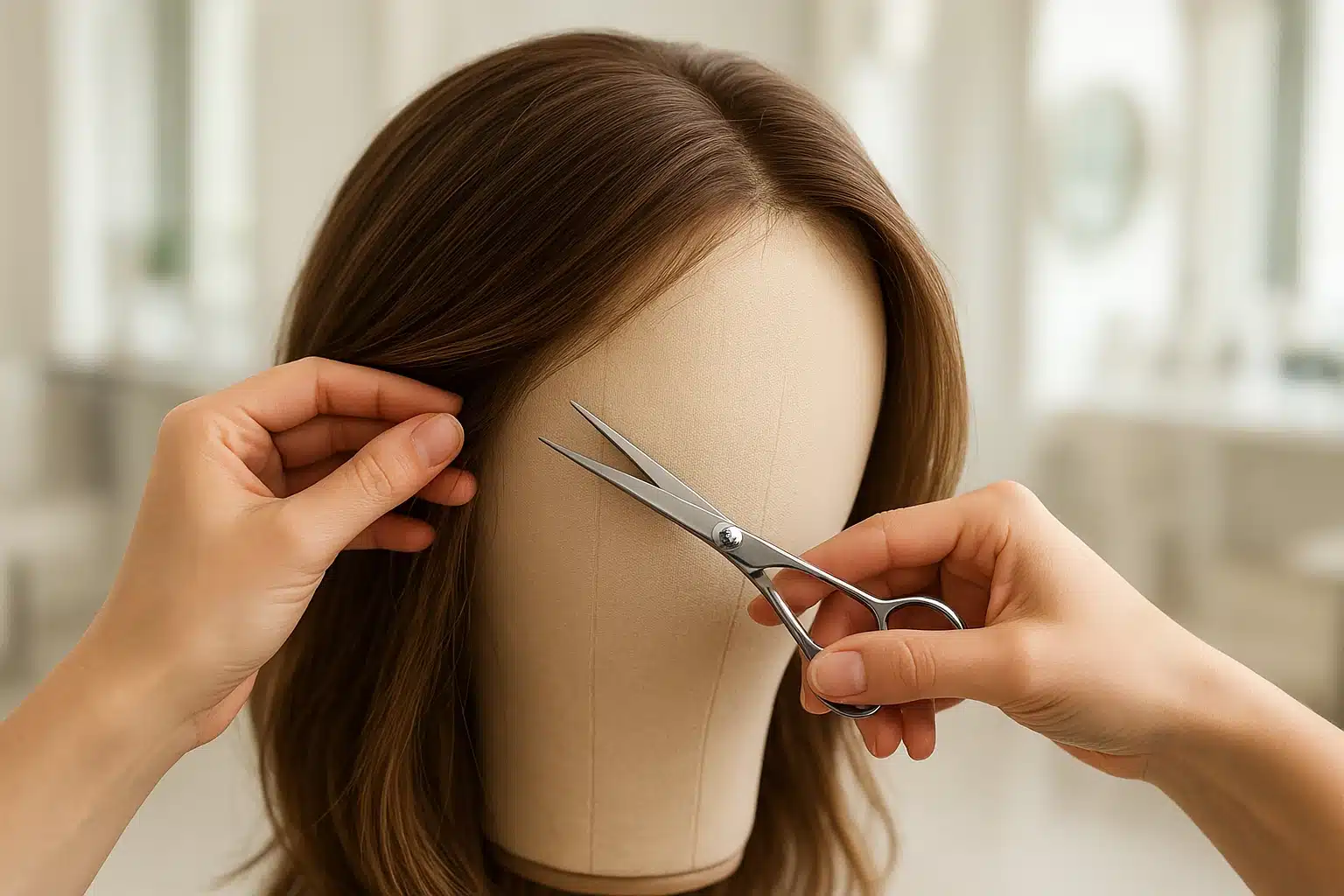
Cutting a wig is fundamentally different from cutting biological hair. If you cut human hair bluntly, it grows out and softens over a few weeks. If you cut synthetic fiber bluntly, it remains blunt forever, resulting in a “blocky” or “choppy” appearance.
Expert wig stylists utilize specific techniques to ensure the fiber moves naturally:
- Point Cutting: Instead of cutting across the hair, the stylist cuts vertically into the ends. This softens the edge and allows the layers to blend seamlessly.
- The Sliding Cut: This technique is used to de-bulk heavy areas. By sliding the shears down the hair shaft, the stylist removes weight without losing length.
Thinning vs. Tapering
There is a critical distinction often missed in general hair care:
- Thinning reduces the overall density (heaviness) of the hair so it doesn’t look like a “helmet.”
- Tapering is specific to the neckline and hairline. For those experiencing medical hair loss, a tapered nape is crucial. It ensures the hair hugs the neck rather than flaring out, which is a tell-tale sign of a synthetic piece.
Advanced Customization: The Art of Realism
Once the fit and cut are established, advanced customization brings the piece to life. This is where technical knowledge meets artistic vision.
The Hairline and Ventilation
The hairline is the most scrutinized part of any wig. Manufacturers often create hairlines that are too perfect, creating a harsh, straight border on the forehead.
Customization involves plucking, where individual strands are carefully removed from the lace front to create a gradual density shift. This mimics the way natural hair grows—finer and thinner at the very edge, becoming thicker further back.
Texture and Steam Manipulation
Did you know that “shiny” hair is often seen as a flaw in the wig world? Excessive shine can make synthetic fiber look plastic. A skilled specialist knows how to use steam to alter the texture of the fiber. Steam can remove unnatural shine, change a curl pattern, or even create a “wet look” style that holds its shape.
This expertise extends to character styling as well. Whether you are looking for a specific everyday look or something as complex as a cosplay character style, a top-tier store has the capability to sculpt fiber using heat and hold products designed specifically for wigs, ensuring the style lasts without damaging the fiber.
The Service-to-Style Matrix
To help you understand what services you might need, we’ve created this simple matrix to connect common problems with their professional solutions.
| If your wig feels… | The Professional Solution is… | What it does… |
|---|---|---|
| Too “Big” or “Poofy” | Internal Thinning | Removes bulk from the mid-lengths so the hair lays flatter against the head. |
| Like a Helmet | De-bulking & Tapering | Softens the edges and layers so the silhouette looks natural, not heavy. |
| Unnaturally Shiny | Steam Treatment & Dry Shampoo | Dulls the fiber surface to mimic the texture of biological hair. |
| Loose or Bumpy | Cap Resizing (Darting) | Tailors the structural foundation of the wig for a glove-like fit. |
| Too Perfect | Hairline Plucking | Creates “baby hairs” and irregularities that trick the eye into seeing natural growth. |
The Realism Checklist: Before You Leave the Chair
How do you know if your customization service was successful? Use this checklist before you leave the store or finalize your setup at home.
- The Four-Finger Rule: The hairline should generally start three to four fingers width above your eyebrows. Any lower, and it closes off your face; any higher, and it may look like it’s slipping.
- Ear Tab Alignment: The ear tabs should sit flat against your temples, just in front of your ears, and should be level with each other.
- The Shake Test: When you turn your head quickly, the hair should move independently of the cap. If the whole unit moves as one block, it may need more thinning or a better fit.
- No “Lumpy” Crown: Run your hand over the back of your head. It should feel smooth and round, mimicking your skull shape.
Frequently Asked Questions
Q: Can I take a wig I bought online to a local salon for customization?
A: It depends. Most standard hair salons are trained on biological hair. Synthetic fiber requires different tools (shears that are sharper or serrated) and techniques (no heat unless it’s heat-friendly). It is always safer to find a specialist trained in alternative hair.
Q: How much does a custom wig cost compared to a standard one?
A: Customization is usually a service fee added to the base price of the wig. Think of it like alterations for a wedding dress. The investment varies, but the result is a piece that looks significantly more expensive and realistic than a standard unit.
Q: Can a stylist change the color of my wig?
A: If the wig is made of human hair, yes, professional colorists can add roots, balayage, or lowlights. Synthetic wigs cannot be dyed with traditional hair color (the ammonia will ruin the fiber). However, experts can sometimes use specific ink-based techniques for root smudging to add dimension.
Q: What is the difference between a wig and a hair system?
A: Generally, a wig covers the entire head and is removable daily. A hair system (often used for partial hair loss) may be semi-permanently attached using adhesives and is designed to be worn for weeks at a time. Both require customization for a natural look.
Taking the Next Step
Understanding customization changes the way you shop. You are no longer looking for a wig that is “perfect” the moment you see it on the shelf. Instead, you are looking for the perfect foundation—the right color and approximate length—knowing that a skilled professional can mold it into a style that is uniquely yours.
If you are exploring your options, remember to ask potential providers about their “aftercare” and “customization” capabilities. A true expert will talk to you about your face shape, your lifestyle, and how they can tailor the piece to you, rather than just checking out your cart.
Ready to learn more about maintaining your look? Stay tuned for our upcoming guides on washing protocols and fiber maintenance.