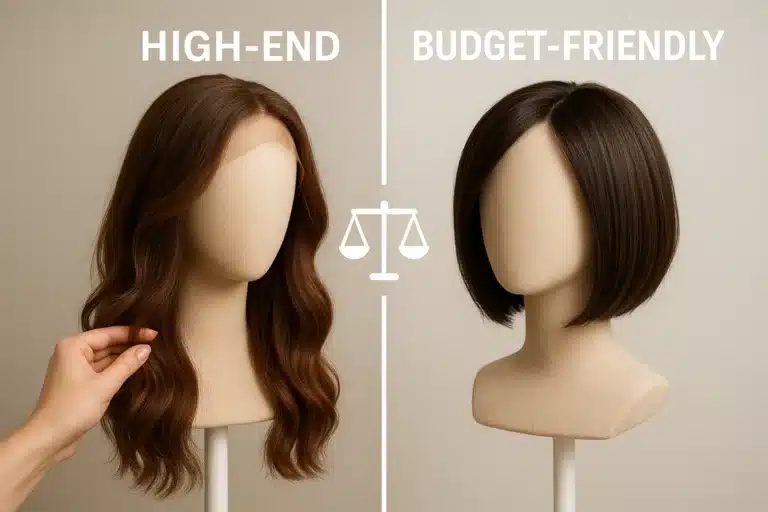
We have all been there. You are scrolling through social media, and a video stops you in your tracks: a stunning, silky, hand-tied wig with a perfectly natural hairline, being offered for an unbelievably low price. The caption might read “Warehouse Closing Sale” or “Direct from Factory.” It feels like a lucky find, but often, this is the first step into the sophisticated world of counterfeit wigs.
For those beginning their journey into alternative hair, distinguishing between a genuine investment piece and a fraudulent copy can be daunting. The technology used by scammers has evolved, moving from obvious fakes to sophisticated operations that use stolen imagery from legitimate boutiques to sell inferior products. Navigating the market requires a keen eye for identifying quality: what makes a wig store ‘top-tier’ in any US city?, serving as your first line of defense against disappointment.
The Digital Detective: Spotting Red Flags Before You Buy
Before a wig ever arrives at your doorstep, there are digital hallmarks that can reveal the legitimacy of a retailer. Scammers rely on impulse purchases, hoping you won’t look too closely at the details of their website.
The “Price Mirror” and “Too Good to Be True” Discounts
Historically, counterfeiters relied on rock-bottom pricing to lure victims ($30 for a wig that should cost $300). However, a new trend called the “Price Mirror” scam has emerged. Scammers are now pricing fakes slightly higher—around the $100–$150 range—to mimic the legitimacy of a discounted luxury item.
If you see a brand-new, high-end human hair wig listed for 80% off, treat it with extreme skepticism. Legitimate authorized retailers have strict pricing agreements with manufacturers and rarely, if ever, offer current styles at liquidation prices.
Domain and Policy Forensics
Take a moment to look at the URL and the site’s fine print.
- The URL Extension: Be wary of unusual domain extensions like
.club,.top,.vip, or.shopattached to a generic name. Most established retailers use.com. - The “About Us” Page: Counterfeit sites often use generic, copied text full of grammatical errors or vague mission statements that don’t mention specific headquarters or history.
- The Return Policy Trap: A common tactic is the “48-hour return window” combined with an overseas return address. They know that by the time you receive the wig and realize it’s fake, the cost of shipping it back to the factory is higher than the refund itself.
The Physical Inspection: “Home Forensic” Tests
If you have already purchased a piece and are unsure of its authenticity, there are specific physical tests you can perform. These are particularly useful if you have purchased what was advertised as a human hair piece or a high-end synthetic.
The Burn Test (For Human Hair Claims)
One of the most common scams is selling high-heat synthetic fibers as “100% human hair.” To test this, you can perform a burn test on a single strand of hair (do not burn the wig itself).
- Real Human Hair: Will burn quickly, smell like burnt hair, and turn into ash that crumbles between your fingers.
- Synthetic/Counterfeit: Will melt rather than burn, smell like burning plastic, and form a hard, sticky bead that does not crumble.
The Lace and Knotting Check
The construction of the cap is often where counterfeiters cut corners. Genuine wig cap construction involves intricate, often hand-tied knotting that allows for natural movement.
- The Lace Texture: Authentic Swiss or French lace is soft and disappears against the skin. Counterfeit lace is often thick, scratchy, and resembles a grid-like screen door material.
- The Knotting Pattern: On high-quality wigs, knots are bleached or tied finely to mimic hair growing from the scalp. Fakes often have heavy, dark “plugs” where the hair is injected into the base in uniform rows, creating a “doll hair” appearance.
To understand the engineering behind genuine caps, it helps to review the science of quality control in wig manufacturing, which explains why authentic caps justify their value.
Decoding Brand Hallmarks
Top-tier manufacturers like Jon Renau, Raquel Welch, and Ellen Wille use specific coding systems and labeling standards that counterfeiters rarely get right. Understanding these codes is like learning a secret language that verifies authenticity.
Color and Fiber Codes
Legitimate brands use standardized codes on their tags. For example, a Jon Renau wig might be labeled with “12FS8” (a specific blonde blend with a shaded root). Counterfeits often just say “Blonde” or use a generic number like “No. 613” without the brand-specific nuance.
Furthermore, the technology behind fibers is complex. Distinguishing between standard synthetic wigs and heat-friendly options is vital for care. You can learn more about these differences in a comparison of fiber technologies. If a “brand name” wig arrives without specific color codes or care instructions on the tag, it is a major red flag.
The “Authorized Dealer” Badge
Legitimate manufacturers protect their brand integrity by only allowing vetted stores to sell their products. Most of the best wig brands provide a digital “Authorized Retailer” badge to their partners. However, images can be copied.
To verify a dealer:
- Go to the manufacturer’s official website (e.g., Jon Renau or Raquel Welch).
- Use their “Store Locator” or “Where to Buy” tool.
- If the online store you are browsing isn’t listed there, they are likely not selling authentic merchandise.
For a deeper dive into which manufacturers set the standard for quality, reviewing a guide to premier wig brands can help you recognize the names that are most frequently targeted by counterfeiters.
Common Scams in Men’s Systems
The market for men’s hair replacement is also fraught with deception. A common scam involves “wigs for men real hair” listings that use images of custom, salon-fitted systems but deliver a generic, thick-skinned stock piece.
- The Hairline Test: A genuine men’s system usually has a graduated hairline (lighter density at the front). Fakes often have a “wall” of hair that looks unnatural immediately.
- The Base Thickness: If the base feels like thick plastic rather than a second skin, it is likely a mass-produced counterfeit not designed for long-term wear or bonding.
Frequently Asked Questions
Why do counterfeit wigs look so good in the ads?
Scammers steal videos and photos from legitimate influencers, salons, and manufacturers. The wig you see in the video is real; the wig they mail to you is a cheap imitation.
Can I trust wigs sold on third-party marketplaces like Amazon or eBay?
While there are legitimate sellers on these platforms, they are also havens for unauthorized dealers. It is always safer to purchase directly from a dedicated wig retailer’s website where the chain of custody is guaranteed.
I bought a fake wig. Can I style it to make it look better?
Usually, no. Counterfeit wigs often lack the internal structure to hold a style. Furthermore, if the fiber is cheap plastic, applying heat (curling irons or straighteners) will instantly melt and ruin the fiber.
What is the “Four Finger Rule”?
This is a general guideline for placement, suggesting the hairline should sit roughly four fingers width above your eyebrows. Counterfeit wigs often have rigid, closed ear tabs or uneven hairlines that make proper placement impossible, leading to an uncomfortable fit.
Moving Forward with Confidence
Knowledge is your best accessory. By understanding the difference between a high-definition photo and a high-quality reality, you protect not just your wallet, but your confidence. Authentic wigs are engineering marvels designed to provide comfort, realism, and beauty. Taking the time to verify your source ensures that when you look in the mirror, you see the quality you deserve.