When you receive a medical diagnosis that leads to hair loss, your world shifts instantly. Suddenly, you’re navigating an overwhelming maze of medical treatments, doctor appointments, and the deeply personal, emotional reality of losing your hair. It’s entirely normal to feel a mix of grief and confusion. For many, the first step is simply getting a lay of the land, perhaps by evaluating the best wig stores in San Diego, CA: your complete buyer’s guide to understand what styles, caps, and materials exist locally.
But finding the perfect alternative hair is only half the journey. Figuring out how to pay for it is a hurdle many patients face but rarely talk about. You might be surprised to learn that there are pathways to get your medical hairpiece covered, either partially or fully, through insurance and local San Diego grants. The secret? Understanding the system and learning the exact language you need to use.
Let’s demystify the process of securing financial assistance and insurance coverage for your medical hair loss journey.
The Terminology Pivot: Why the Word “Wig” Might Cost You
If there is one “aha moment” you take away from this guide, let it be this: in the eyes of an insurance company, a “wig” is a cosmetic, fashion accessory. If you submit a claim or a receipt for a wig, it will almost certainly be denied.
To unlock insurance benefits, you need to use the legal and medical terminology. You are not purchasing a wig; you are being prescribed a “Cranial Prosthesis” (or an Extra-Cranial Prosthesis).
If you’ve ever found yourself asking your doctor, does health insurance cover hair loss treatment, the answer is often yes—but only if you speak the exact language of insurance claim adjusters. The moment you pivot your vocabulary from “fashion wig” to “durable medical equipment,” you open the door to potential reimbursement.
Decoding California Insurance for Medical Hair Loss
Filing a successful insurance claim in California requires a blend of the right prescription, the right vendor, and the exact right codes.
The Magic Codes
When your oncologist or dermatologist writes your prescription for a cranial prosthesis, a simple note won’t suffice. They need to use specific medical terminology, most notably the proper cranial prosthesis cpt code (HCPCS code A9282) and the correct ICD-10 diagnosis code for your specific condition (such as L63.x for alopecia or the appropriate code for chemotherapy-induced hair loss).
The NPI Requirement
Here is a frequent stumbling block for San Diego residents: you cannot buy a piece from just any online fashion retailer and expect reimbursement. Your insurance company will look for an NPI (National Provider Identifier) number on your receipt. You must purchase your prosthesis from a boutique or provider that is registered to issue medical invoices.
Navigating the “Kaiser Paradox” in San Diego
Many San Diego residents are covered by Kaiser Permanente. Kaiser has highly specific, often rigid pathways for Durable Medical Equipment (DME). Because Kaiser operates as both the insurer and the healthcare provider, they typically require you to use their in-house contracted vendors for a cranial prosthesis. If you have Kaiser, your first step should be contacting your specific case manager or the DME department before making any purchases, as out-of-network claims are notoriously difficult to get approved.
Your San Diego Action Plan: Step-by-Step Claim Filing
Ready to take action? Here is your step-by-step battle plan for filing a medical hair loss claim in California.
- Secure the Medical Necessity Letter: Ask your doctor for a prescription for a “Cranial Prosthesis.” Ensure it includes the A9282 code, your diagnosis code, and their provider signature.
- Find an NPI-Registered Vendor: Shop at a reputable vendor that specializes in medical hair loss and can provide an itemized medical receipt featuring their NPI number and Tax ID.
- Fill Out the CMS-1500 Form: This is the standard health insurance claim form. Insider tip: Pay special attention to Box 24, which is where the HCPCS code A9282 must be placed precisely for the claim to process automatically.
- Submit and Follow Up: Send your prescription, your itemized medical receipt, and the claim form to your insurance provider’s claims department. Keep copies of absolutely everything.
Local Lifelines: San Diego Wig Grants and Foundations
Even with the best preparation, insurance doesn’t always cover the full cost. Some policies have high deductibles, and others exclude cranial prostheses altogether. If you hit a roadblock, there are still wonderful avenues to explore for financial aid for medical wigs.
San Diego is home to incredible local resources and hospital-affiliated wig banks:
- Hospital Wig Banks: Several local healthcare systems, including Sharp HealthCare, Scripps Health, and UCSD Health, have patient resource centers. They often host “wig banks” where patients undergoing treatment can receive gently used or brand-new synthetic wigs at no cost.
- The American Cancer Society (ACS): The local San Diego branches often participate in programs that provide free head coverings and hairpieces to active cancer patients.
- Sharsheret (California Region): This incredible organization offers support for Jewish women facing breast cancer and ovarian cancer, including financial subsidies for cranial prostheses.
- National Grants: Programs like The Pink Wig Project or the National Alopecia Areata Foundation (NAAF) Ascot Fund provide direct financial grants to help individuals purchase their alternative hair.
What to Do If Your Claim Is Denied (The Troubleshooting Flowchart)
Receiving a denial letter is frustrating, but in the insurance world, a “no” is often just a request for more information. If your California claim is denied, ask yourself these troubleshooting questions:
- Did they deny it as a “cosmetic” item?
- Action: Check your invoice. Did the vendor write “wig”? You will need to appeal with an updated invoice that explicitly states “Cranial Prosthesis.”
- Did they claim the provider was out of network?
- Action: Check your policy’s out-of-network DME benefits. You may need to write an appeal letter explaining that an in-network provider for this specific medical equipment was not available within a reasonable distance in San Diego.
- Was the coding missing?
- Action: Resubmit the claim ensuring Box 24 on the CMS-1500 form clearly lists code A9282.
Frequently Asked Questions (FAQ)
How much does a medical wig typically cost?
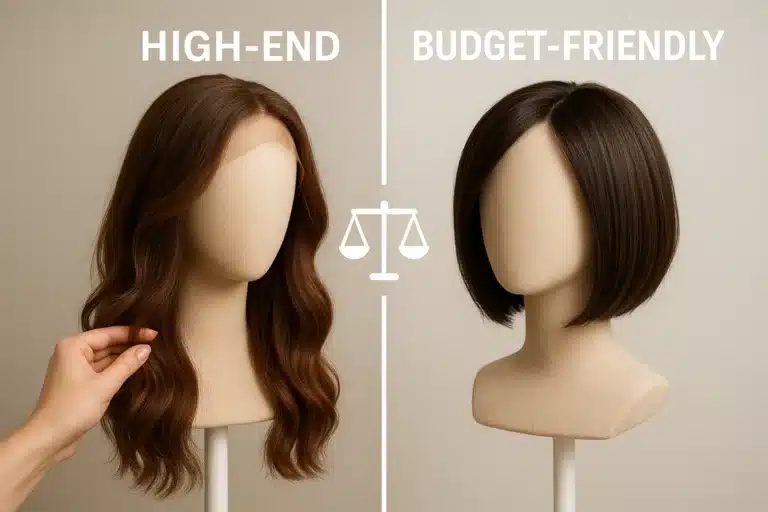
Prices vary widely based on the material. High-quality synthetic cranial prostheses can range from $200 to $800, while 100% human hair prostheses often start around $1,000 and can go upwards of $3,000. This is why securing insurance coverage or grant funding is so vital.
Can my doctor just write “wig” on the prescription?
No. Using the word “wig” is the number one reason claims are automatically denied by insurance algorithms. Always ensure the prescription reads “Cranial Prosthesis” or “Hair Prosthesis.”
How long does it take for an insurance claim to be processed?
In California, most standard insurance claims take between 30 to 45 days to process. If you need to file an appeal, the timeline can extend by another 30 to 60 days.
Do I have to pay upfront and get reimbursed?
Typically, yes. Most boutique and online providers require payment upfront. You will then submit the medical invoice and your doctor’s prescription to your insurance company to be reimbursed directly.
Next Steps on Your Journey
Navigating medical hair loss is an deeply personal transition, but you don’t have to walk the path alone or empty-handed. By understanding the terminology, advocating for the right medical codes, and tapping into San Diego’s rich local resources, you can ease the financial burden of finding the perfect cranial prosthesis.
Take it one step at a time. Start by speaking with your doctor to secure that all-important medical necessity letter. Then, explore your local resources, armed with the knowledge that you have every right to advocate for the coverage and care you deserve.