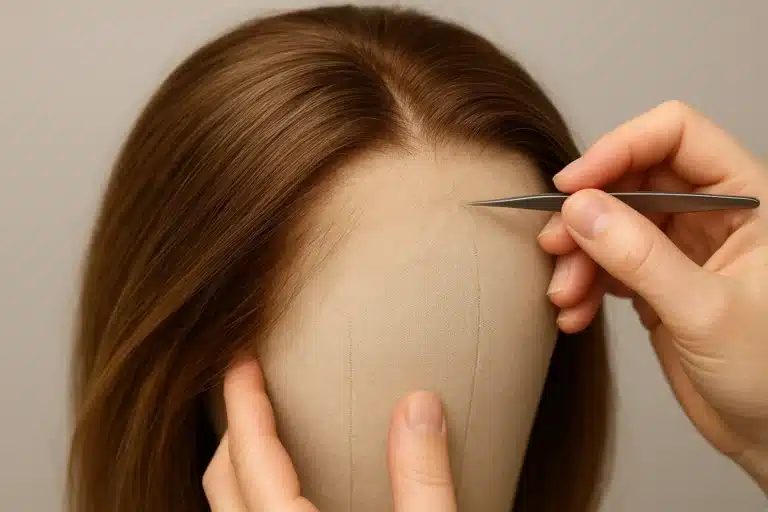
Imagine running your fingers through a beautifully crafted, brand-new human hair wig. It feels remarkably soft, perfectly smooth, and ready to give you the confidence you’ve been looking for. But as you look at those strands, have you ever paused to wonder about the person they originally belonged to?
The human hair industry is a massive global market, projected to reach a staggering $28 billion by 2032. Yet, despite its size and luxury status, it remains one of the least regulated industries in the world. For consumers navigating the emotional journey of hair loss, finding the perfect piece is already overwhelming. Adding the complexity of supply chain ethics can feel like an impossible puzzle.
But here is the beautiful truth: when you pull back the curtain on fair trade hair, you don’t just find quality—you find incredible human stories. Ethical sourcing isn’t just an industry buzzword; it’s a powerful mechanism that ensures donors are compensated fairly, communities are funded, and consumers receive beautiful products they can wear with pride.
Let’s demystify where human hair comes from, how fair trade practices empower donor communities, and how you can become an empowered, ethically-minded buyer.
The Human Story Behind Your Hair
When we talk about hair sourcing, we have to look at the geopolitical reality. In unregulated “black markets,” the demand for human hair has led to exploitation. In vulnerable regions across South America—such as Venezuela—and parts of Southeast Asia like Cambodia, economic desperation has led to deeply unfair practices. Women in poverty are sometimes pressured into selling their hair for pennies, or tragically, targeted by hair theft.
This is why fair trade and ethical sourcing matter profoundly.
Ethical sourcing flips this exploitative script. It operates on the principles of documented, voluntary consent and fair compensation. When a woman chooses to sell her hair in a fair trade ecosystem, she is paid an equitable market rate. For many women in developing economies, this voluntary transaction acts as a vital micro-economic boost, helping them pay for their children’s education, start small businesses, or secure critical healthcare.
The “Tonsure” Economy: How Temple Hair Funds Communities
Not all ethically sourced hair involves a direct financial transaction with the donor. In fact, some of the highest-quality hair in the world comes from a deeply spiritual practice in India known as “tonsure.”
Many consumers mistakenly believe that temple hair is “stolen” or “free.” The reality is a fascinating, highly organized micro-economy. At the Tirumala Venkateswara Temple in India, thousands of pilgrims voluntarily shave their heads daily as an act of religious devotion and gratitude.
The temple then gathers this hair and auctions it to reputable distributors. But where does the money go?
- The auctions generate upward of ₹150–180 crore (over $20 million USD) annually.
- This revenue is directly reinvested into the local community.
- It funds local hospitals, builds regional infrastructure, and supports massive feeding programs that provide over 30,000 free meals daily to those in need.
By understanding the “Tonsure Economy,” we can reframe this practice. It isn’t merely a religious donation; it is a profound community investment.
Demystifying Hair Jargon: “Fallen Hair” vs. “Cut Hair”
If you’ve ever bought a hairpiece that felt incredibly soft in the store, only to have it turn into a matted, tangled mess after just three washes, you’ve likely fallen victim to the “Silicon Coating Trap.” To understand why this happens, we need to talk about the difference between fallen hair and cut hair.
The Danger of “Fallen Hair”
Most unethical, low-quality hair on the market is “fallen hair.” This is hair that has been collected from salon floors, hairbrushes, or shower drains. Because this hair is gathered randomly, the cuticles (the microscopic scales on the outside of the hair shaft) run in all different directions. If left this way, the hair would instantly lock and mat together.
To hide this, unregulated factories process the hair in harsh acid baths to strip the cuticles entirely, then coat the naked strands in heavy silicone. It feels silky in the box, but once that silicone washes away, the hair is ruined.
The Standard of “Cut Hair”
Ethical, fair trade hair is almost always “cut hair.” It is carefully sectioned and cut directly from a single donor in a ponytail. This ensures that all the cuticles remain intact and perfectly aligned in the same direction (a standard known as “Remy”). Because it is ethically sourced and gently processed, it doesn’t need to be hidden under a layer of silicone. It behaves like your natural hair because it is natural hair.
Ultimately, fair trade sourcing is the ultimate proxy for high performance. When a company cares about the human being donating the hair, they care about the integrity of the hair itself.
The Economics of Ethical Sourcing: Buy Less, Buy Better
It’s no secret that fair trade, ethically sourced hair comes with a higher initial price tag. But let’s look at the actual math of your investment, calculating the “Cost-Per-Wear.”
- The “Fast Hair” Cycle: You purchase a lower-quality, unethically sourced wig for $150. Because of the acid stripping and silicone traps, it mats and becomes unwearable in 3 months. Over the course of a single year, you have to replace it four times. Total annual cost: $600.
- The Ethical Investment: You invest in a beautifully crafted, ethically sourced human hair piece for $500. Because the cuticles are intact and the sourcing was pristine, this piece lasts beautifully for 12 to 24 months with proper care. Total annual cost: $500 (or less, if it lasts two years).
Ethical sourcing isn’t just an investment in global human rights; it is a deeply practical investment in your own confidence and wallet. You are buying less, but you are buying much better.
Your Buyer’s Toolkit: How to Verify Ethical Sourcing
Navigating the market can be tricky, especially because there is no single, universal “Fair Trade” certification board for human hair. Because of this, consumers have to be their own supply chain detectives.
The “Greenwashing” Red Flag Glossary
Watch out for vague marketing terms.
- Red Flag: “100% Natural Human Hair” (This is legally meaningless and often points to fallen hair).
- Green Light: “Single Donor, Documented Consent” or “100% Intact Cuticle Remy” (These point to a much higher standard of sourcing and accountability).
The Ethical Verification Script
The next time you are speaking with a stylist, distributor, or wig specialist, use these questions to verify their standards:
- “Can you tell me exactly which country and region this hair was sourced from?”
- “Is this hair single-donor ‘cut hair’ or gathered ‘fallen hair’?”
- “Does the manufacturer have a documented process for donor consent and fair compensation?”
- “Has this hair undergone an acid bath or silicone coating process?”
A reputable brand will welcome these questions with open arms and transparent answers.
Frequently Asked Questions About Fair Trade Hair
What exactly does “Remy” mean, and is it the same as Fair Trade?
“Remy” simply means the hair cuticles are kept intact and facing the same direction. While almost all fair trade hair is Remy, not all Remy hair is fair trade. Some companies use the term loosely, which is why asking about their ethical sourcing and donor compensation is so important.
Can I find ethically sourced synthetic hair?
Yes! While synthetic hair doesn’t involve human donors, the ethics shift toward environmental impact. Many forward-thinking brands are exploring eco-friendly guides and plant-based alternatives, moving away from standard plastics.
Does ethically sourced hair require different care?
Actually, it requires less specialized repair than heavily processed hair. Because ethically sourced human hair retains its natural integrity, you care for it much like your own biological hair—using gentle, sulfate-free shampoos and focusing on hydration.
Continuing Your Educational Journey
At Wig Superstore, we have spent nearly two decades deeply immersed in the hair industry. We believe that compassion shouldn’t just be reserved for the moment a customer tries on a wig; it must extend all the way back to the person who originally grew the hair.
Losing your hair is a vulnerable experience, and regaining your confidence should be empowering from start to finish. When you choose ethically sourced, high-quality hairpieces, you become part of a beautiful, global cycle of women supporting women.
We encourage you to continue learning. Take the verification script with you as you explore your options. Ask the hard questions. And when you are ready to find a piece that aligns with both your aesthetic goals and your personal values, we are here to help you navigate every step of the journey.